Artwork
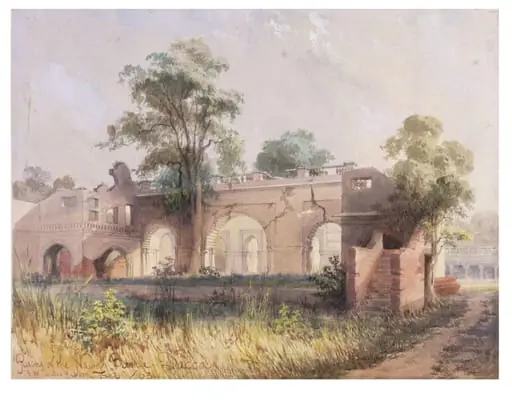
Ruined Mosque - Dacca
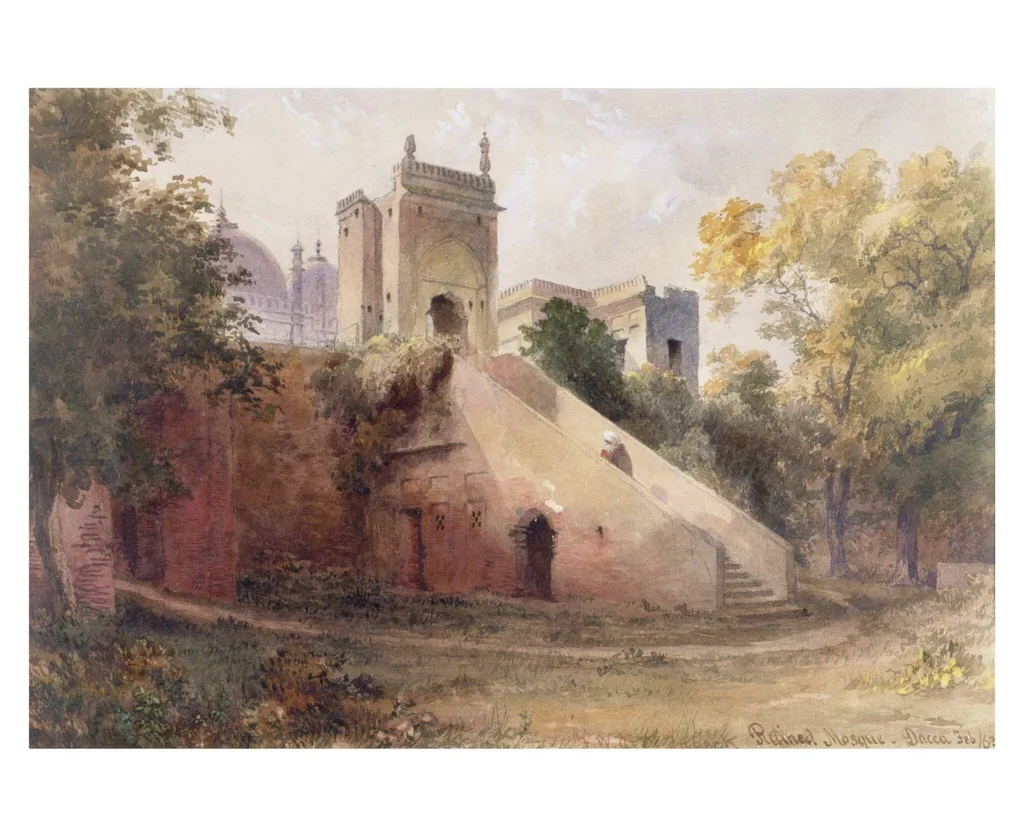
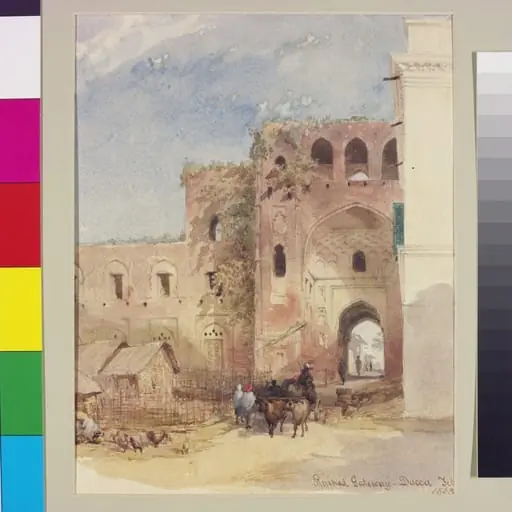
Ruined Mosque - Dacca is a paint painting by the Impressionist artist Frederick William Alexander De Fabeck. It dates from 1863 and is held in the collection of the Victoria and Albert Museum.
About this work
Overview
Painted in 1863, this watercolor and pencil work by Frederick William Alexander De Fabeck captures the remnants of a mosque in Dhaka. Executed on paper, it belongs to a group of topographical studies gathered by the artist during his time in Bengal. The piece entered the museum’s collection in 1913 through a donation by Mrs. Laura de Fabeck, cataloged under reference RP 1913-681 M.
Subject & Meaning
The subject is a decaying Islamic structure, its arches and minaret softened by time and vegetation. The presence of climbing plants and overgrown trees suggests nature reclaiming human architecture. Rather than celebrating grandeur, the image conveys quiet decay, reflecting a colonial-era fascination with ruins as symbols of impermanence and historical layering.
Technique & Style
The technique aligns with topographical drawing traditions of the period, prioritizing observation over embellishment.
De Fabeck employed loose, fluid brushwork and subtle pencil lines to suggest form without rigid definition. Light is rendered through delicate washes, creating contrast between sunlit brickwork and deep shadows. The palette is restrained—soft greens, ochres, and pale skies—emphasizing atmosphere over detail. The technique aligns with topographical drawing traditions of the period, prioritizing observation over embellishment.
History & Provenance
The painting was part of a larger collection of sketches and watercolors made by De Fabeck during his travels in British India. After his death, his widow, Mrs. Laura de Fabeck, donated the entire group to the museum in 1913. The donation included multiple works documenting architectural sites across Bengal, preserving a visual record of structures in varying states of preservation.
Context
In the mid-19th century, British officials and travelers frequently documented South Asian architecture, often focusing on ruins as evidence of past civilizations. De Fabeck’s work fits within this trend, yet avoids overt romanticism. His attention to natural encroachment and subtle lighting reflects a more observational, less idealized approach than contemporary Orientalist paintings.
Legacy
The painting remains a modest but valuable record of Dhaka’s architectural heritage during the colonial era. It contributes to scholarly understanding of how British artists perceived and recorded indigenous structures. Its preservation in a public collection ensures continued access for researchers studying the intersection of colonial documentation and South Asian heritage.
Own this work as a print
Artist & collection
Artist
Frederick William Alexander De Fabeck
Frederick William Alexander De Fabeck painted scenes of crumbling buildings and busy river crossings in India.

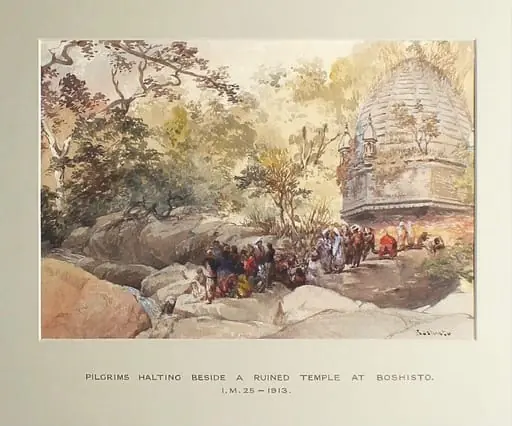
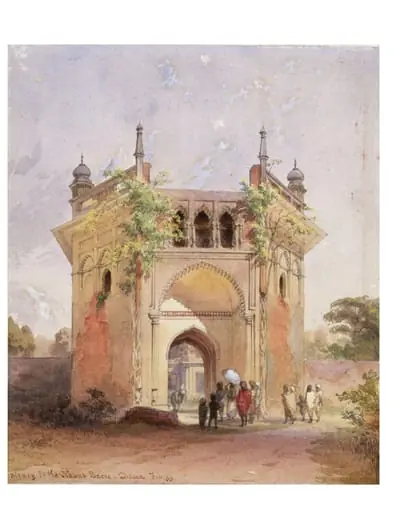 Gateway to the Nawab Baree - Dacca
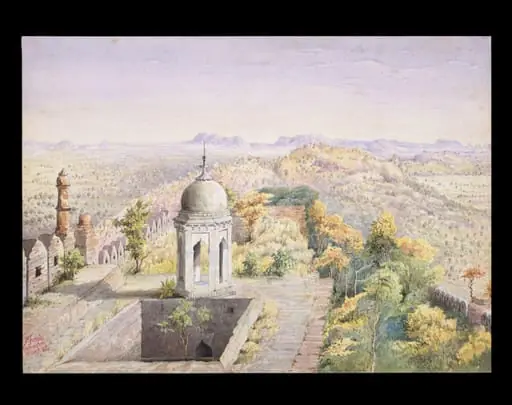 Landscape in Ambagarh, Bhandara (Central Provinces), India
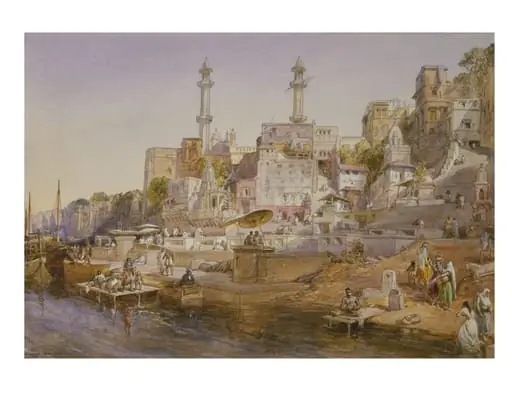 The Mosque of Aurangzeb and Panchganga Ghat from the Ganges, Benares.
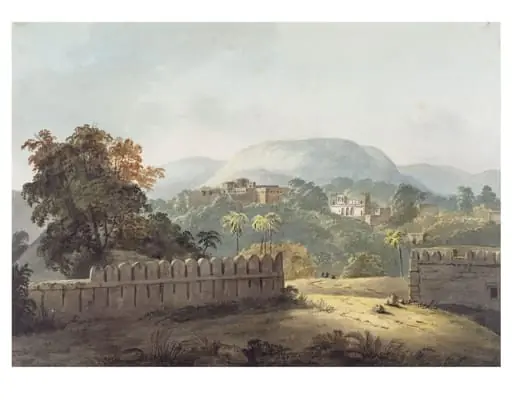 View of Latifgarh near Chunar
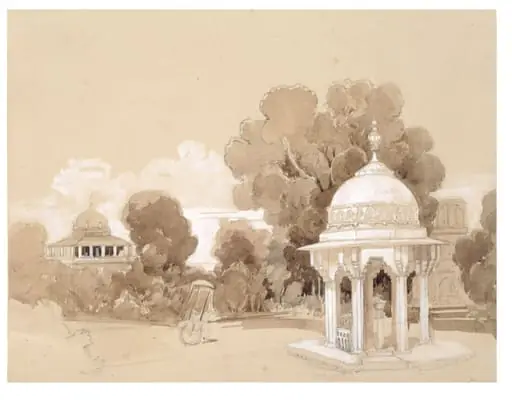 Album of topographical views in India
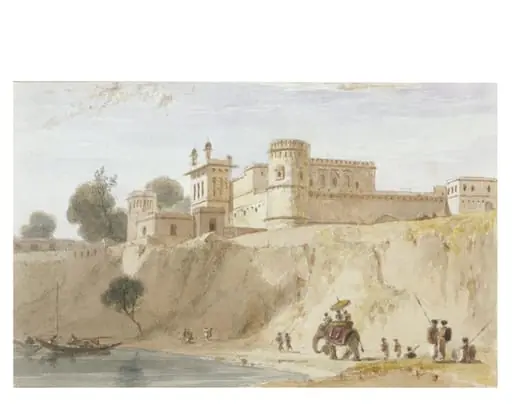 Anopshur
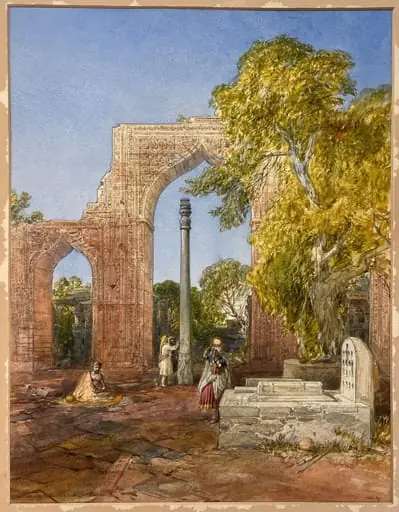 Iron Laht at the Kootub, Old Delhi
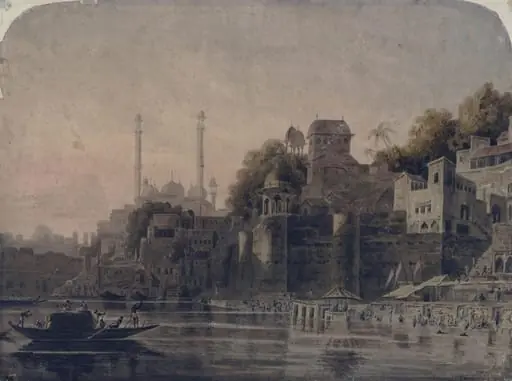 Benares on the Ganges
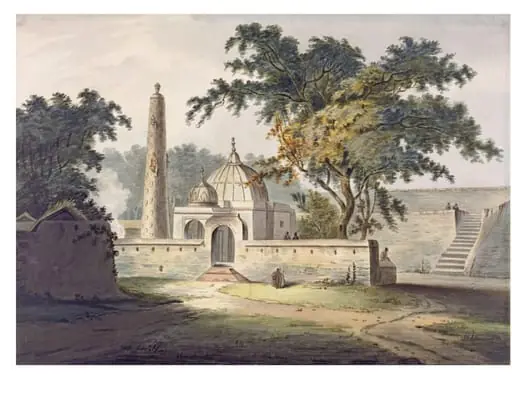 Tomb of an unidentified Muslim saint at Anupshahr
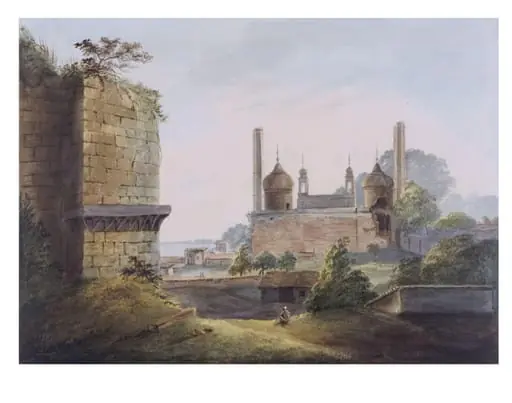 Mosque on the bank of the River Gumti near Lucknow
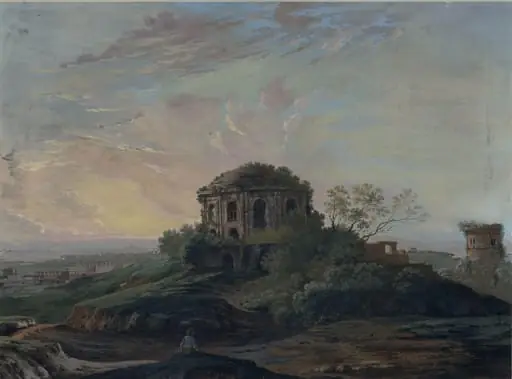 Tempio della Tosse
 Ruins of the Nawab Baree - Dacca