Artwork
St John the Baptist

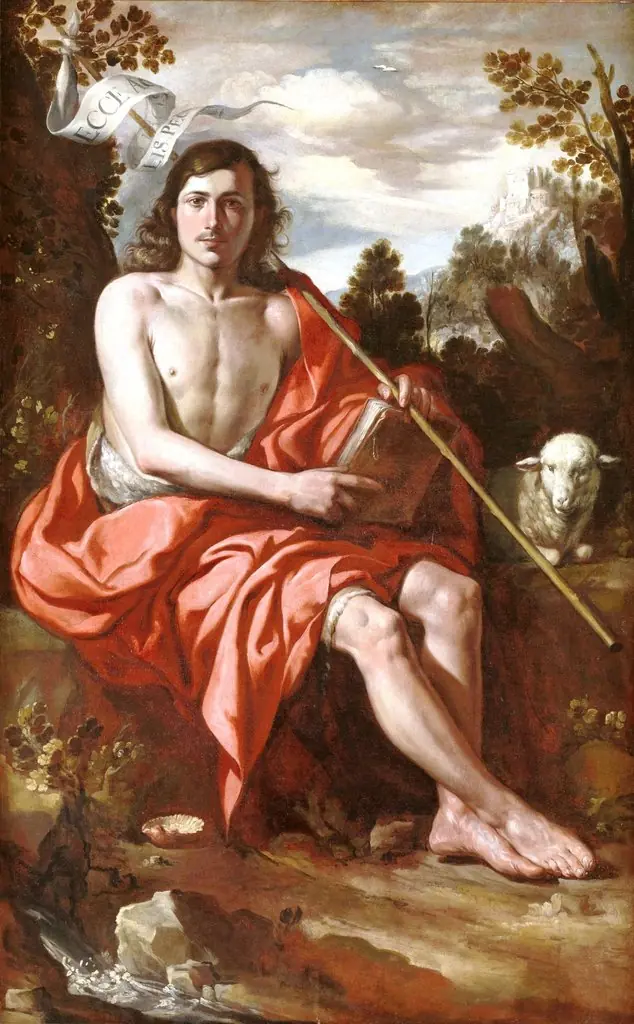
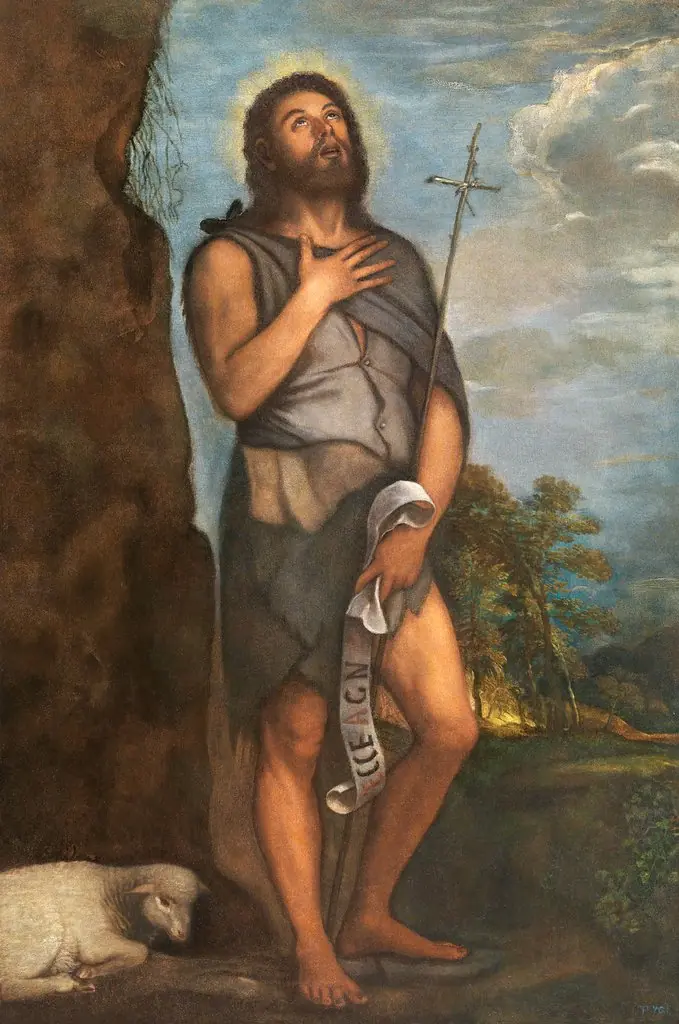
St John the Baptist is an unspecified painting by Ortolano. It dates from 1515 and is held in the collection of the Fitzwilliam Museum.
About this work
Overview
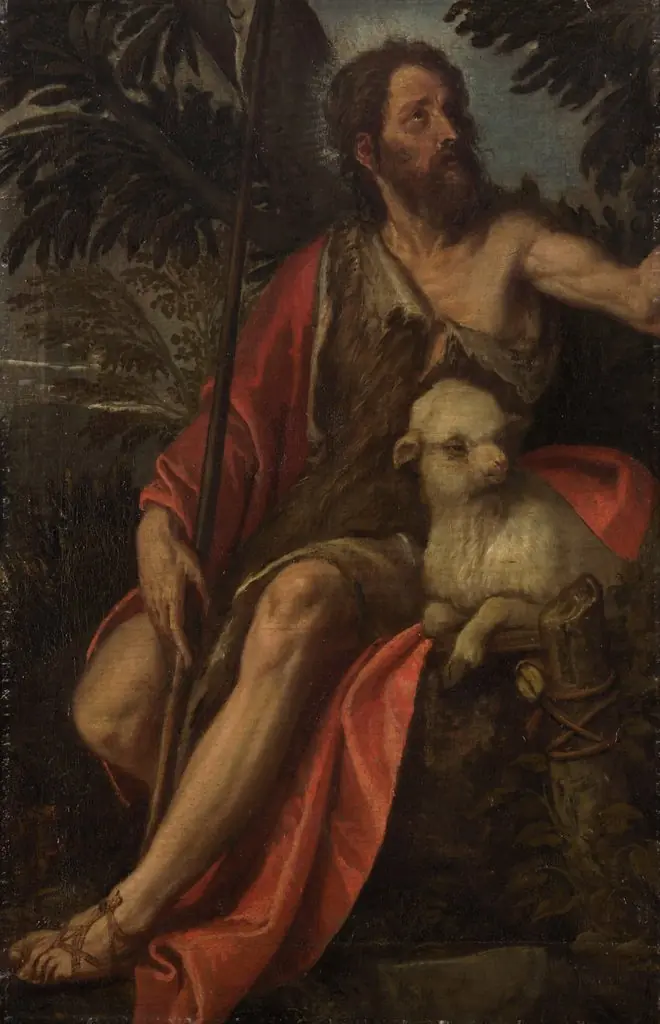
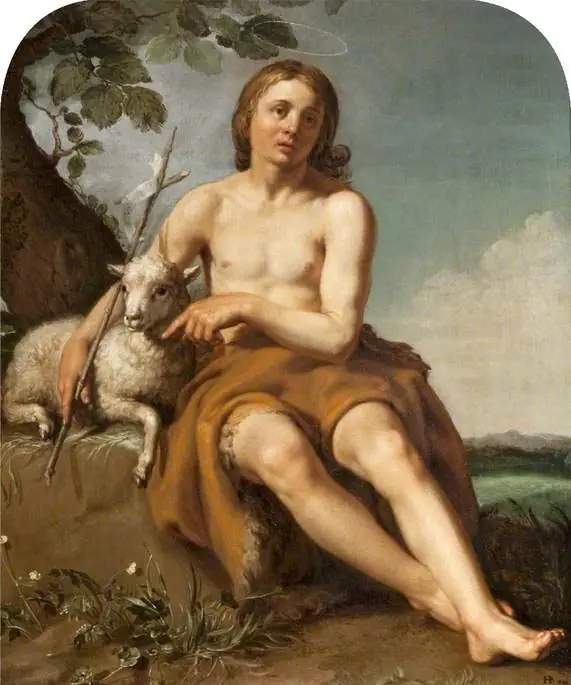
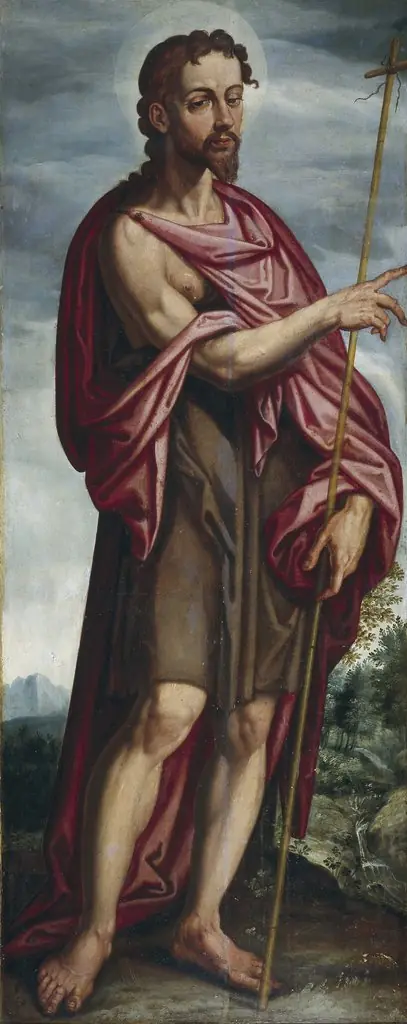
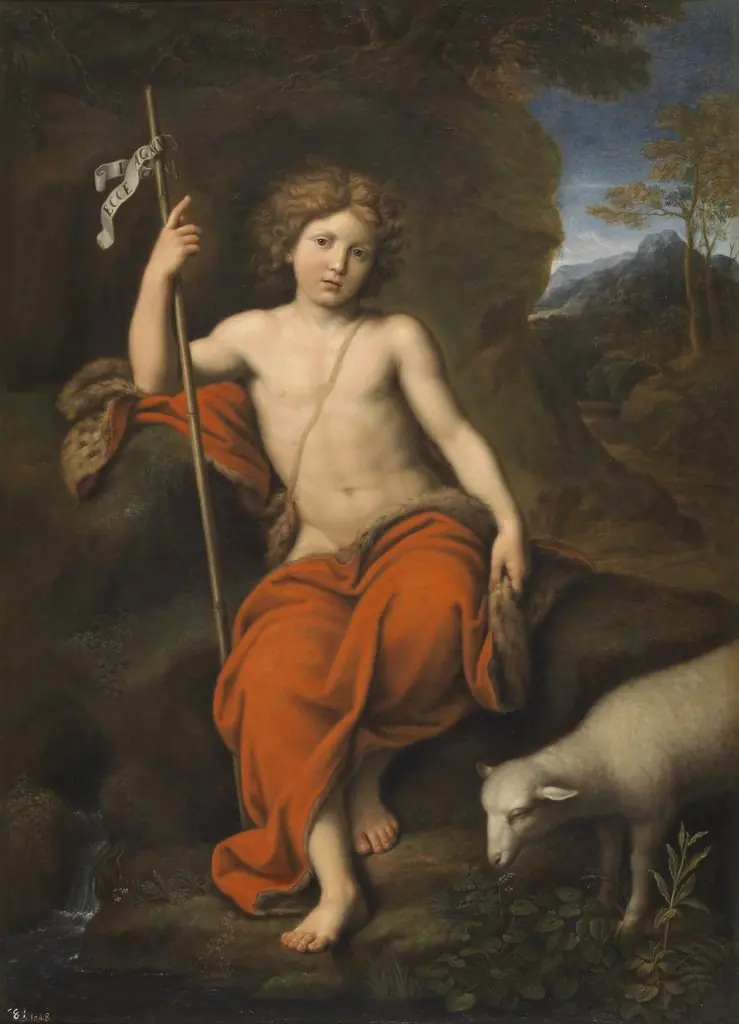
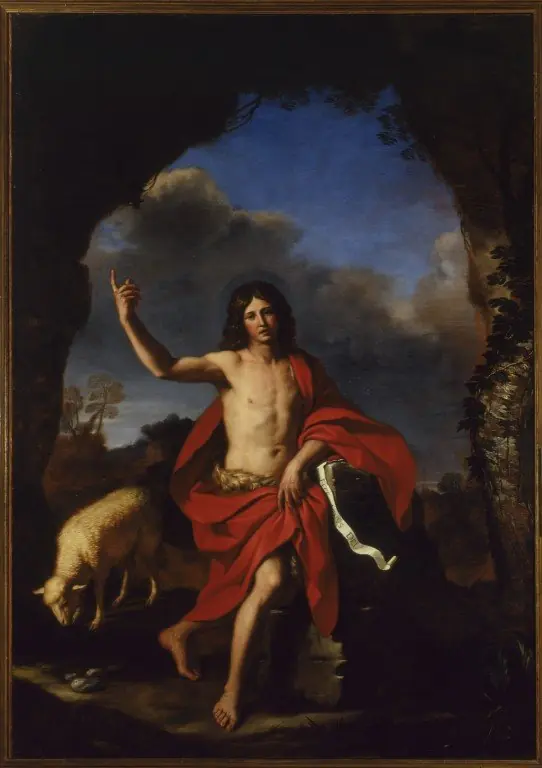
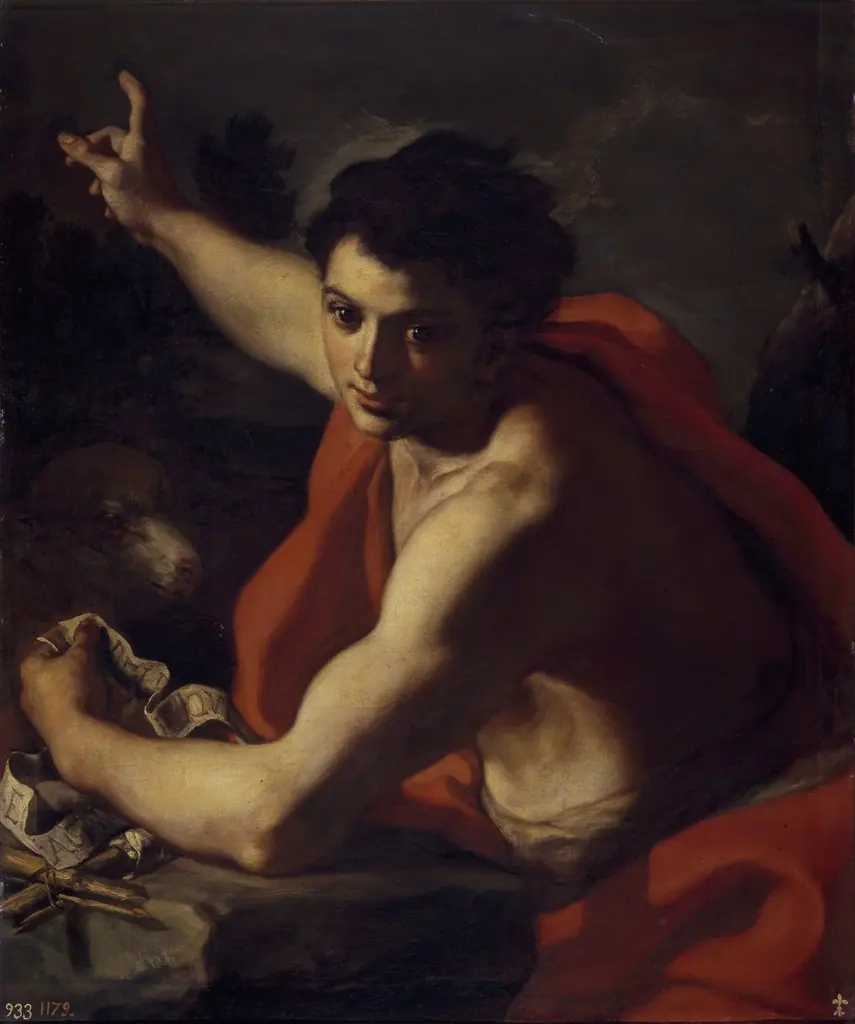
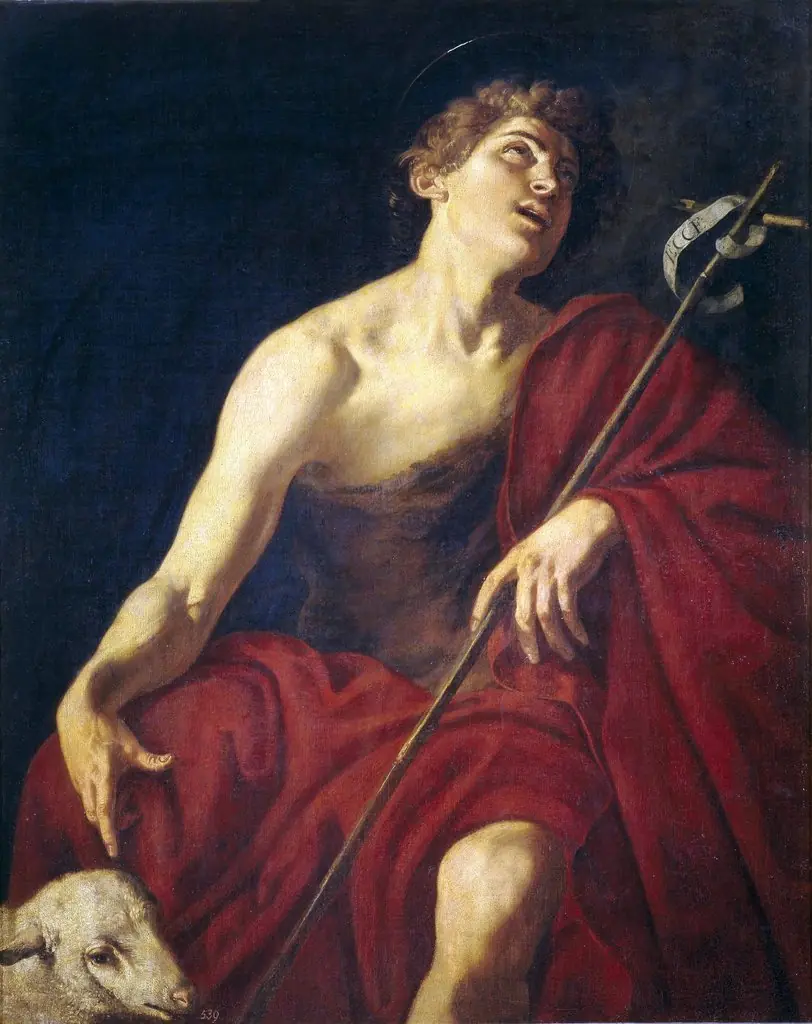
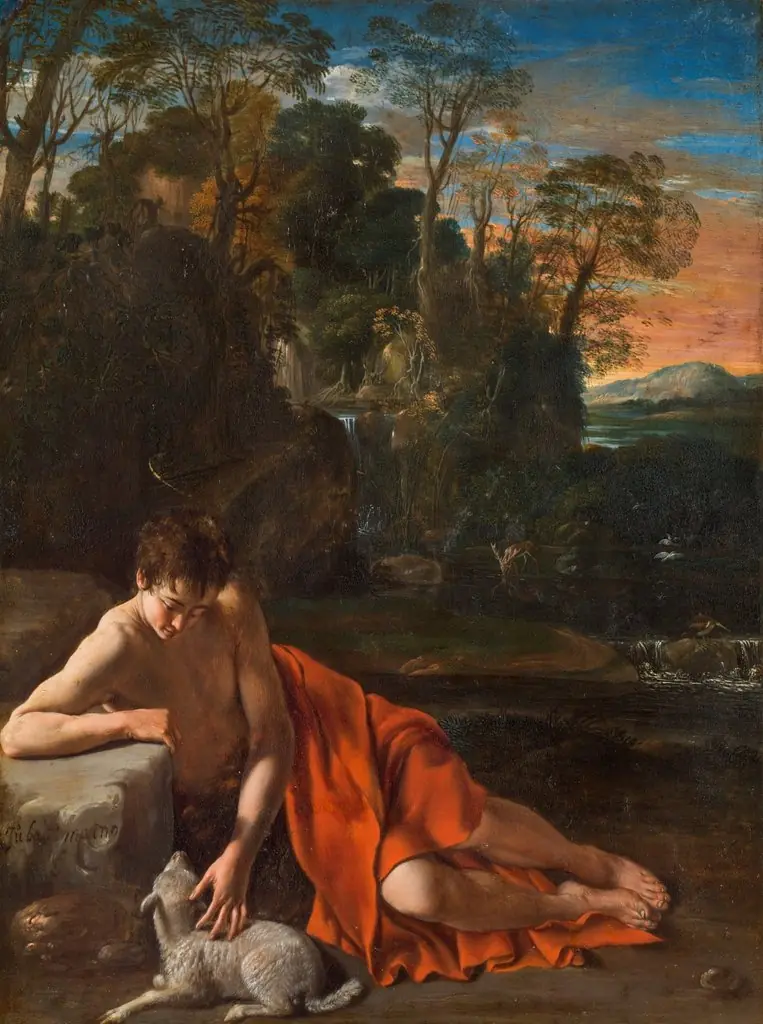
Created circa 1515 by the Ferrara‑born painter known as Ortolano, this oil on panel presents a standing figure identified as John the Baptist. The work belongs to the collection of the Fitzwilliam Museum in Cambridge and exemplifies the regional Renaissance style of early sixteenth‑century Italy.
Subject & Meaning
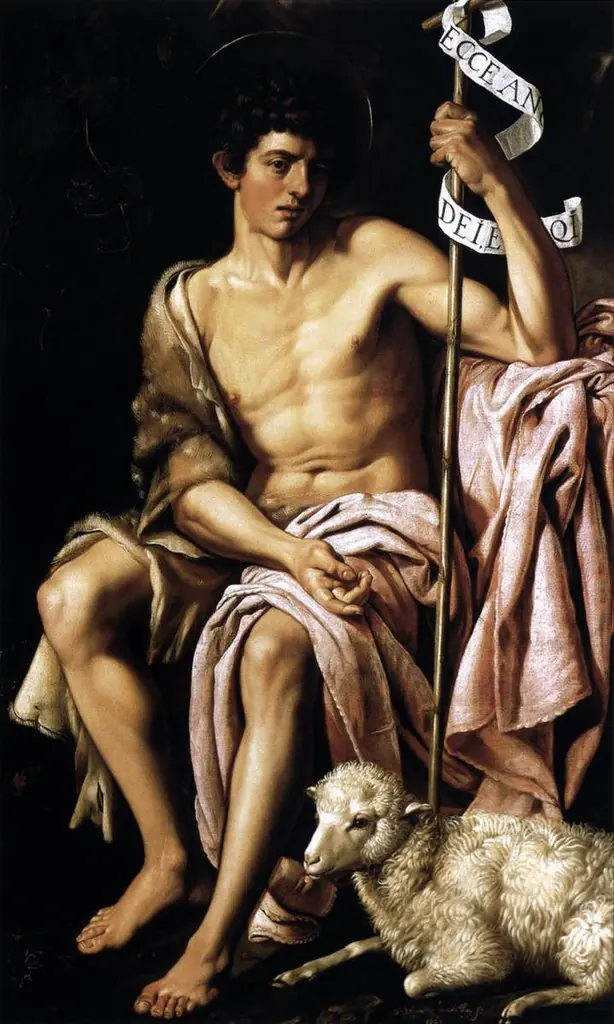
The central figure is a barefoot man in a red mantle draped over one shoulder, a white cloth tied at his waist, and curly hair. He holds a staff in his right hand and a book in his left, while a lamb and a dog lie at his feet, traditional symbols associated with the biblical prophet.
Technique & Style
Ortolano employs a muted palette dominated by greens, browns and blues, rendering the surrounding landscape of water, trees and distant mountains with restrained tonal values. Visible brushwork and careful texturing give the garments and foliage a tactile quality, while the composition balances figure and environment in a measured, Renaissance manner.
History & Provenance
Born around 1480, Ortolano was a leading artist of the Ferrara School, contributing to its distinctive visual language. The painting entered the Fitzwilliam Museum’s holdings in the twentieth century, where it remains on display as part of the museum’s Renaissance collection.
Context
Within the Ferrara artistic milieu, Ortolano’s work reflects the courtly taste for narrative religious subjects rendered with naturalistic detail. The inclusion of animal symbols and a serene landscape aligns the piece with contemporary devotional imagery intended for private contemplation.
Artist & collection
Artist
Ortolano was an Italian painter of the Ferrara School, active in the Renaissance period. Ticozzi cites his birth as ca. 1480.