Artwork
Rocky River Bridge
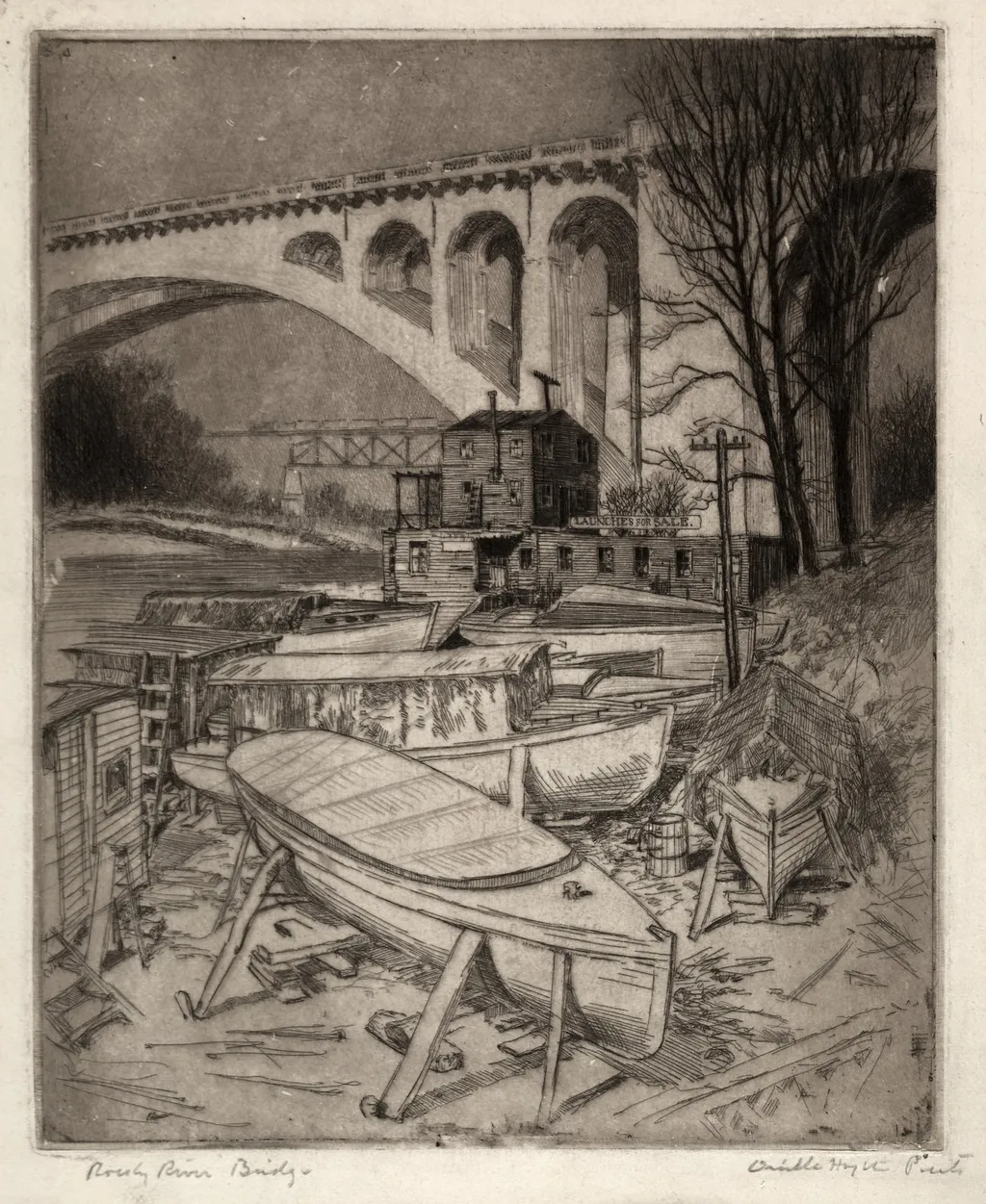
Rocky River Bridge is a print by Orville Houghton Peets. It dates from 1934 and is held in the collection of the Cleveland Museum of Art.
About this work
Overview
The print is part of the collection at The Cleveland Museum of Art, where it reflects Peets’s interest in regional landscapes and everyday industrial settings.
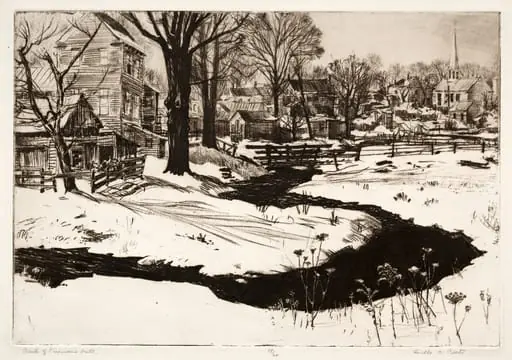
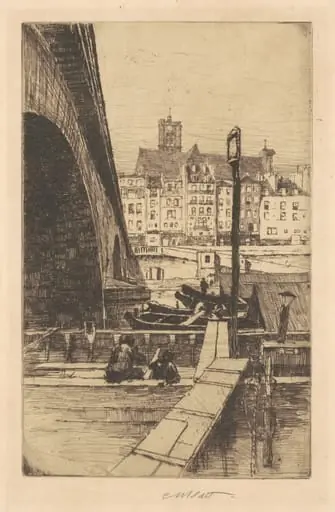
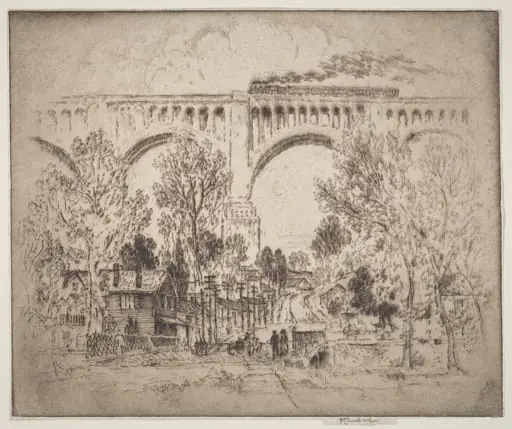
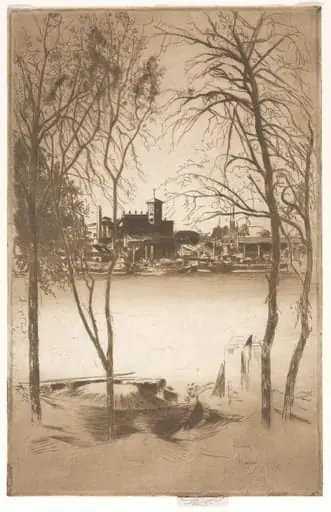
Rocky River Bridge is a monochrome print created around 1934 by Orville Houghton Peets. It depicts a modest wooden structure beside a river, with a series of arched bridges spanning the distance in the background. The scene is rendered entirely in grayscale, emphasizing texture and form over color. The print is part of the collection at The Cleveland Museum of Art, where it reflects Peets’s interest in regional landscapes and everyday industrial settings.
Subject & Meaning
The scene centers on a small riverside building marked 'Launches For Sale,' suggesting a quiet commercial activity tied to local water transport. Stacked boats in the water and the bridge imply a functional, working landscape rather than a picturesque one. The bare trees and muted tones convey a sense of stillness and seasonal transition, evoking the unadorned rhythm of rural life along the Rocky River without romanticizing it.
Technique & Style
Peets employed precise linework and controlled tonal contrasts to define the grain of wood, the ripples of water, and the structure of the bridge. The print’s monochromatic palette enhances the emphasis on texture and form, with sharp edges and layered hatching giving depth to the surfaces. The composition is deliberately restrained, directing attention to the interplay between architecture and natural elements without dramatic flourish.
History & Provenance
Created circa 1934, the print entered the collection of The Cleveland Museum of Art at an early stage, likely through direct acquisition or donation. Peets, a regional artist active in Ohio, produced works documenting local environments during the Great Depression. The print’s preservation in a major institution reflects its value as a document of midwestern vernacular architecture and printmaking practices of the era.
Context
During the 1930s, American artists increasingly turned to everyday scenes as subjects, influenced by regionalism and New Deal cultural programs. Peets’s focus on a modest riverside launch business aligns with this trend, capturing the quiet utility of local infrastructure. Unlike grand landscapes, his work highlights the overlooked details of daily life, offering a grounded perspective on the American Midwest during a time of economic hardship.
Legacy
Rocky River Bridge remains a representative example of Peets’s commitment to recording regional environments through precise, unembellished printmaking. While not widely known outside Ohio, the work contributes to the broader understanding of Depression-era American art that valued observation over spectacle. Its presence in The Cleveland Museum of Art ensures continued access for study and appreciation within the context of regional artistic practice.
Artist & collection