Artwork
Arnheim
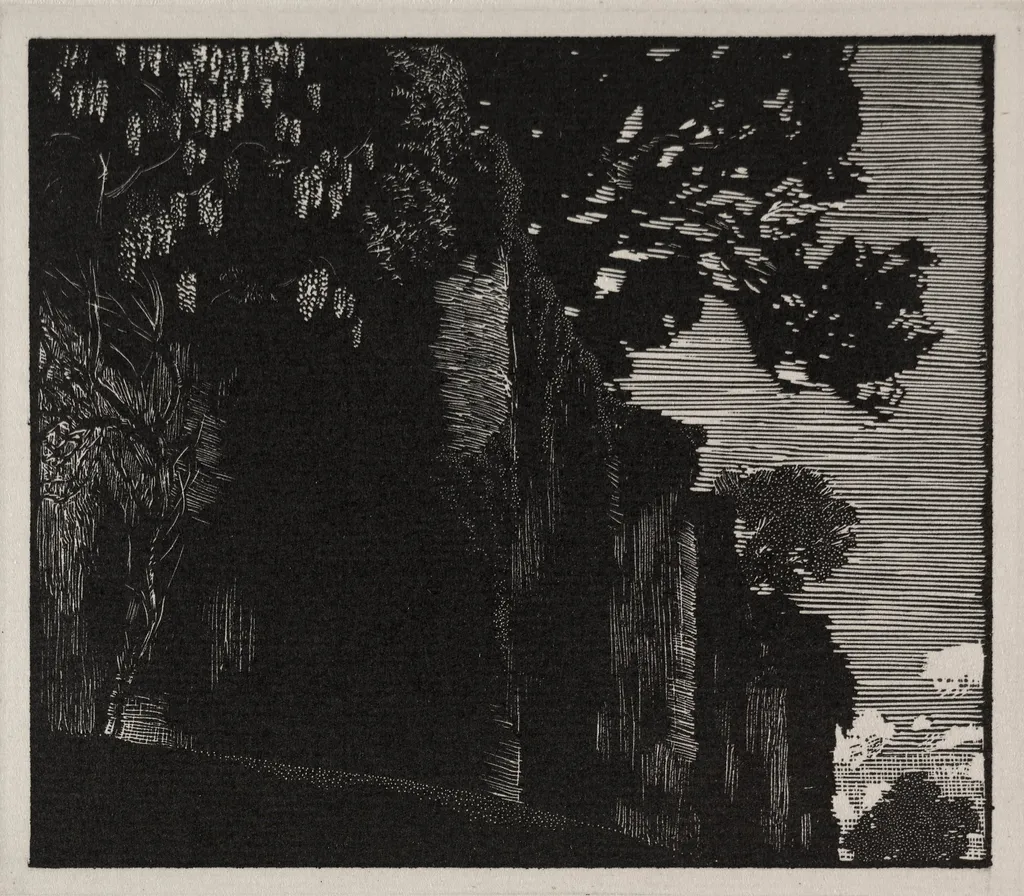
Arnheim is a print by Orville Houghton Peets. It dates from 1934 and is held in the collection of the Cleveland Museum of Art.
About this work
Overview
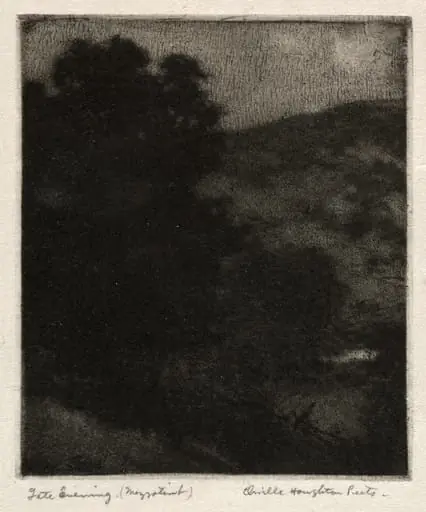
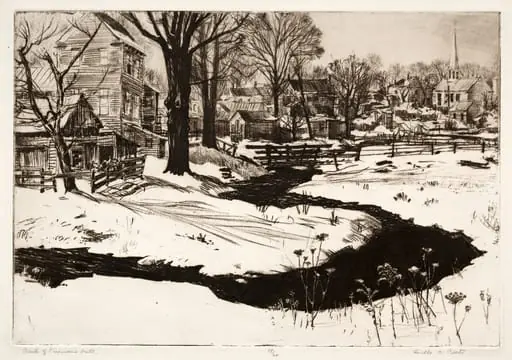
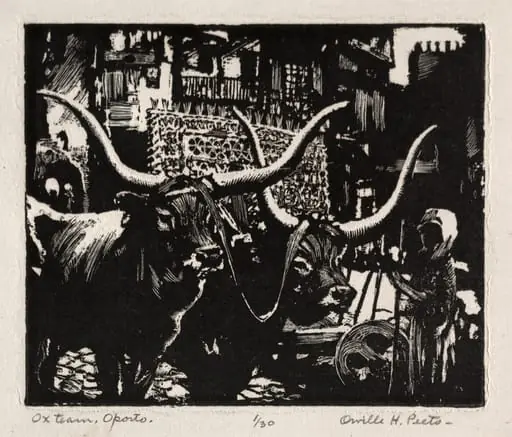
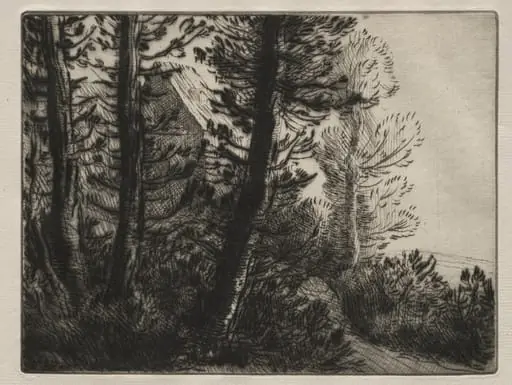
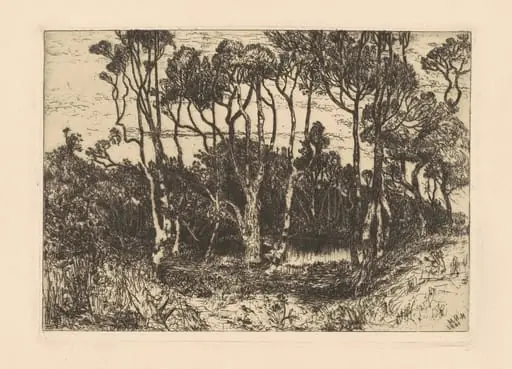
Arnheim is a black‑and‑white print executed around 1934 by American artist Orville H. Peets. The image is part of the collection of the Cleveland Museum of Art. It presents a stark, nocturnal woodland scene rendered in dense, graphic contrast, emphasizing the interplay of shadow and minimal illumination.
Subject & Meaning
The composition depicts a forest of slender, upward‑reaching trees whose twisted branches converge toward an unseen source of light. The limited break in the canopy suggests a faint, perhaps distant, illumination, inviting contemplation of the unknown or the tension between concealment and revelation within a natural setting.
Technique & Style
Peets achieved the stark chiaroscuro effect through a single‑tool incising method that produces sharply defined lines and a textured, almost carved surface. The lack of soft gradations and the emphasis on bold, angular forms give the print a graphic, woodcut‑like quality, reinforcing the sense of depth through stark contrast rather than tonal shading.
History & Provenance
Created circa 1934, Arnheim entered the Cleveland Museum of Art’s holdings as part of its early‑20th‑century American prints collection. The museum acquired the work through a donation (or purchase) that reflects its commitment to preserving representative examples of American graphic art from the interwar period.
Context
The print aligns with a broader interwar interest in dramatic light effects and simplified forms, echoing the influence of European chiaroscuro traditions while retaining a distinctly American sensibility. Its stark aesthetic resonates with contemporary explorations of mood and atmosphere in printmaking, situating Peets within the era’s graphic experimentation.
Artist & collection