Artwork
Hulks
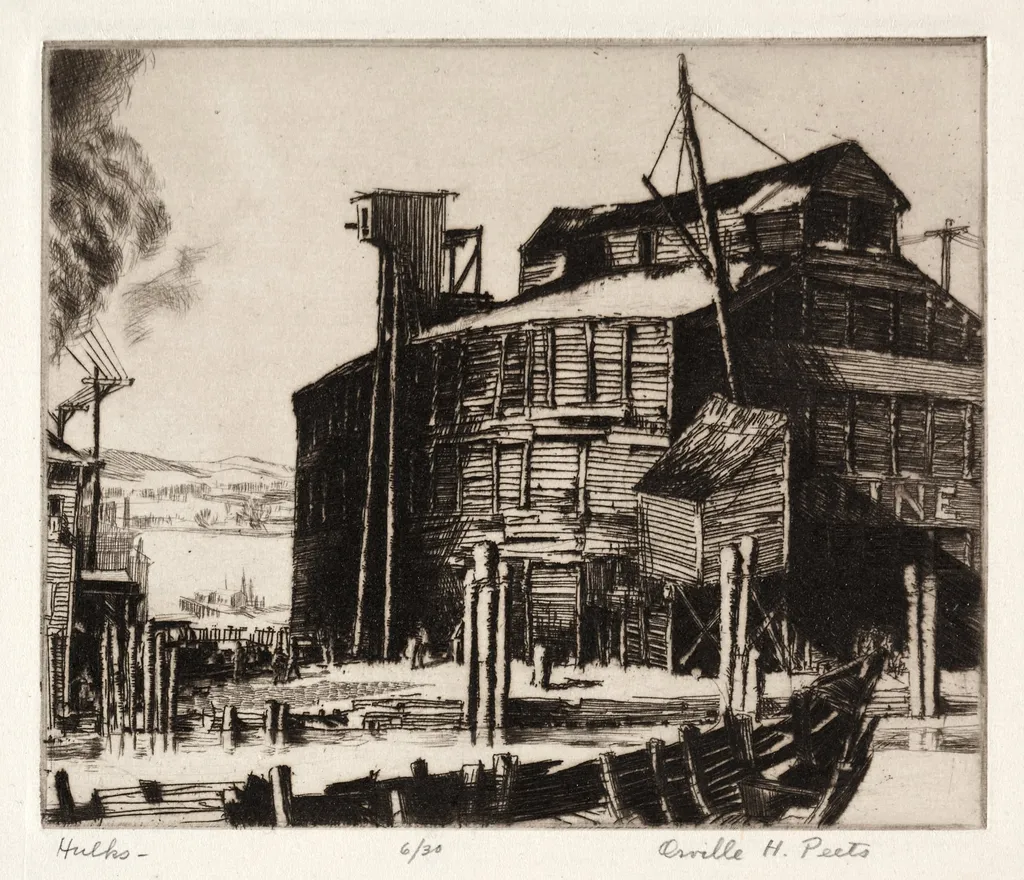
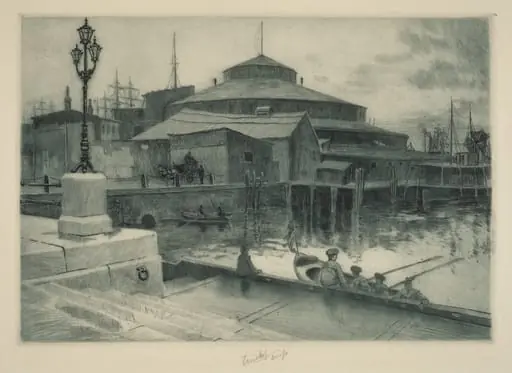
Hulks is a print by Orville Houghton Peets. It dates from 1934 and is held in the collection of the Cleveland Museum of Art.
About this work
Overview
Hulks, created around 1934 by Orville Houghton Peets, is a print that captures the quiet decay of maritime infrastructure.
Hulks, created around 1934 by Orville Houghton Peets, is a print that captures the quiet decay of maritime infrastructure. The work is part of the collection at The Cleveland Museum of Art, where it contributes to a broader understanding of American regional art during the early 20th century. Its subdued palette and focus on neglected structures reflect an interest in the overlooked corners of industrial life.
Subject & Meaning
The scene portrays weathered buildings and derelict vessels along a shoreline, their surfaces marked by time and exposure. No figures are present, emphasizing solitude and abandonment. The composition invites reflection on entropy and the slow erosion of human endeavor, suggesting a meditation on impermanence rather than a narrative of loss or nostalgia.
Technique & Style
Peets employs tonal contrasts to model form and suggest depth, using careful gradations of light and shadow to animate the textures of rotting wood and rusted metal. The print’s linear precision and restrained detail align with regionalist traditions, avoiding dramatic flair in favor of observational clarity and atmospheric stillness.
History & Provenance
The work entered The Cleveland Museum of Art’s collection in the mid-20th century, likely acquired as part of a broader effort to document regional artistic responses to industrial change. Its provenance remains modest, with no record of public exhibition prior to its institutional acquisition, suggesting a quiet, localized reception during the artist’s lifetime.
Context
Created during the Great Depression, Hulks resonates with a cultural moment marked by economic hardship and shifting labor patterns. While not overtly political, the image aligns with contemporaneous efforts by artists to document the fading infrastructure of America’s working waterfronts, reflecting a broader interest in vernacular landscapes.
Legacy
Though Peets is not widely known today, Hulks endures as a quiet example of regional printmaking that prioritizes observation over sentiment. It contributes to the historical record of American artists who found meaning in the mundane and the decaying, offering a restrained counterpoint to more dramatic narratives of the era.
Artist & collection

 Norwich Castle
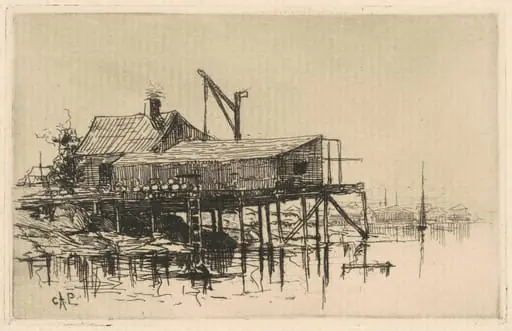 Salt Shanties
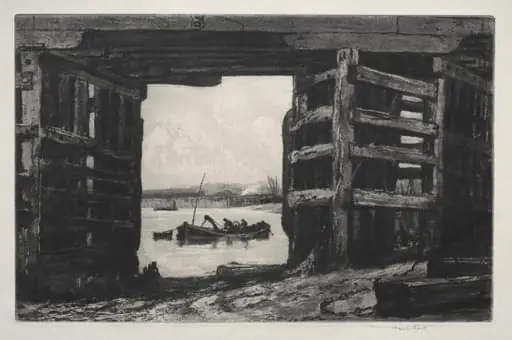 A Span of Old Battersea Bridge
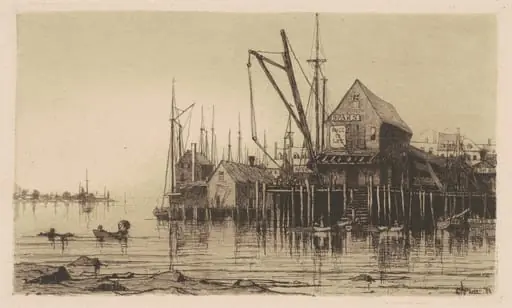 Old Boat-House
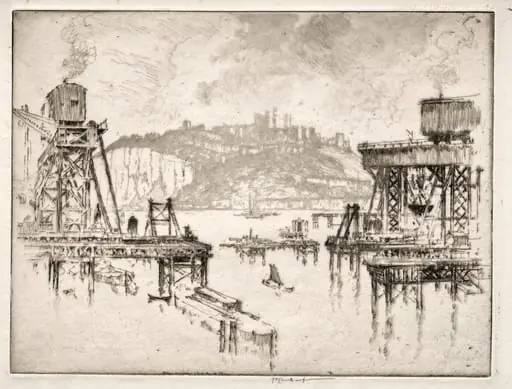 Building Dover Pier
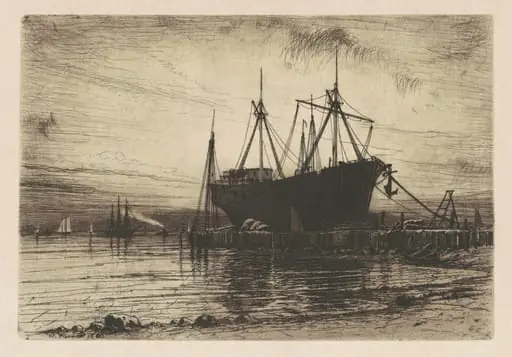 Sunset—Gowanus Bay
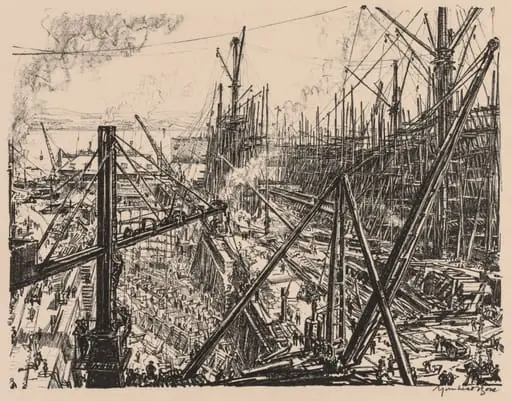 On the Clyde, 1917-1918: Reconstructing a Clyde Shipyard
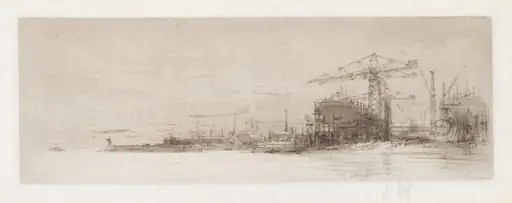 The Clyde from the series The Arteries of Great Britain
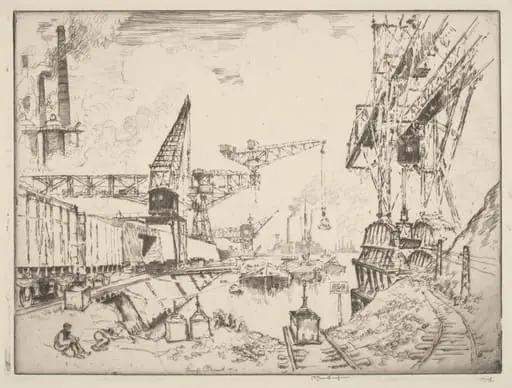 Cranes at Duisburg
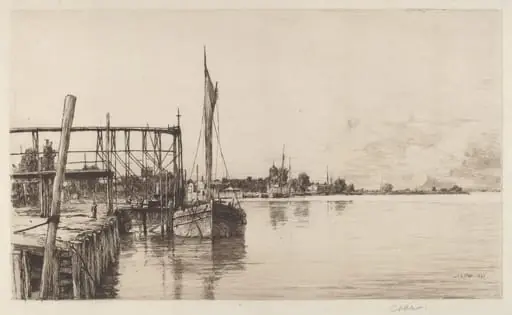 Connecticut River
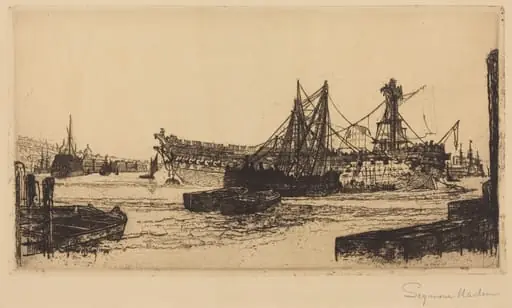 Breaking Up of the Agamemnon (The Second Plate)
 Castle Garden