Artwork
Low Tide, Oporto
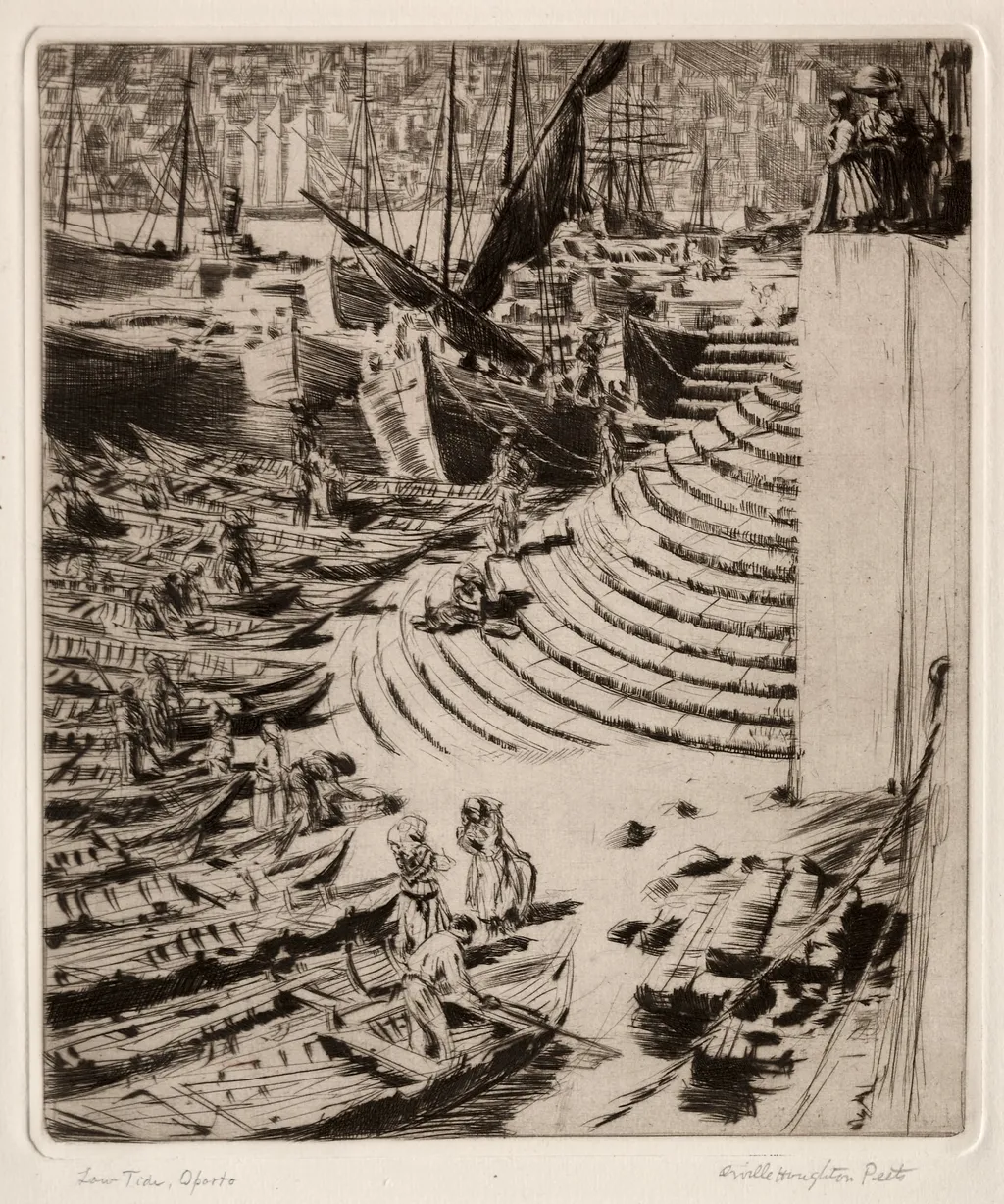
Low Tide, Oporto is a print by Orville Houghton Peets. It dates from 1934 and is held in the collection of the Cleveland Museum of Art.
About this work
Overview
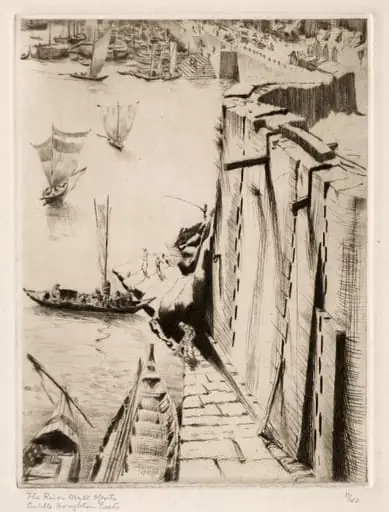
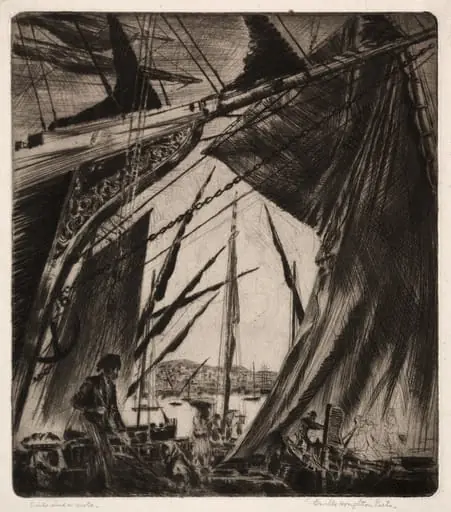
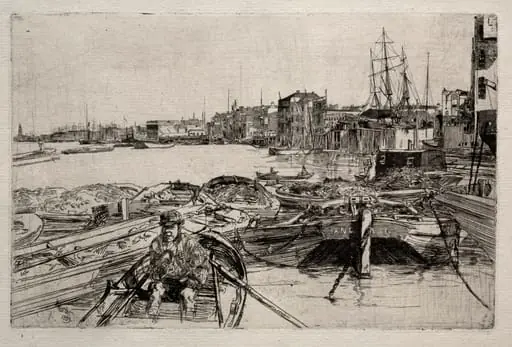
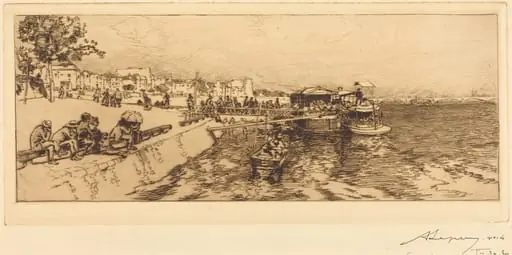
Created around 1934, Low Tide, Oporto is a print by American artist Orville Houghton Peets. The image captures a bustling port at low water, where numerous masted vessels dominate the scene. The work is part of the collection of the Cleveland Museum of Art, where it is displayed among other early‑20th‑century prints.
Subject & Meaning
The composition depicts a crowded harbor at low tide, emphasizing the dense arrangement of ships whose masts and rigging intersect in a tangled mass. Small human figures appear on the docks, suggesting everyday labor, while the overall focus remains on the energetic interplay of vessels and water, evoking the hectic rhythm of maritime commerce.
Technique & Style
Peets employed rapid, angular strokes to render the water’s surface and the tangled ropes, creating a sense of movement and texture. The use of jagged, scratchy lines gives the print a dynamic, almost frantic quality, as if the ink itself struggles to keep pace with the bustling scene. The approach reflects a loose, expressive handling of line typical of printmaking in the 1930s.
History & Provenance
Low Tide, Oporto was produced circa 1934, a period when Peets was active in printmaking. The work entered the Cleveland Museum of Art’s collection through acquisition (or donation) and has remained there, providing scholars and visitors with an example of the artist’s engagement with urban and industrial subjects during the interwar years.
Artist & collection