Artwork
Untitled
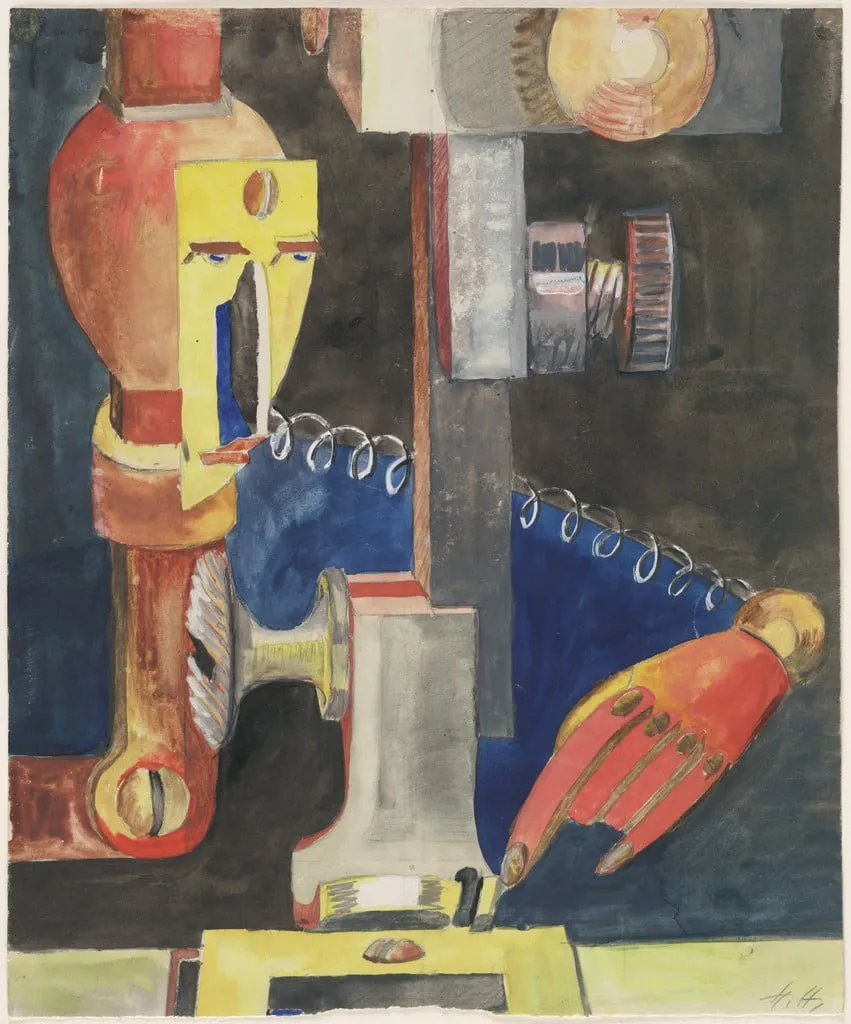
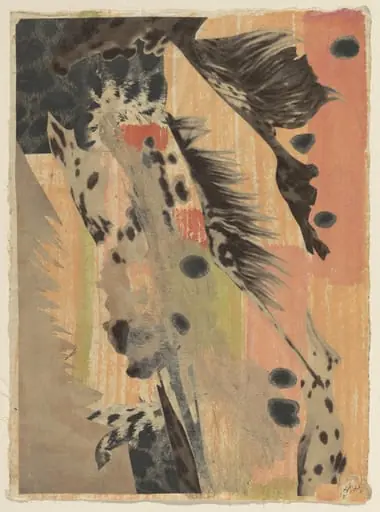
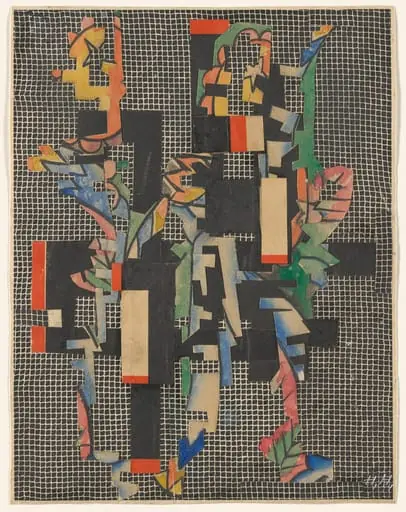
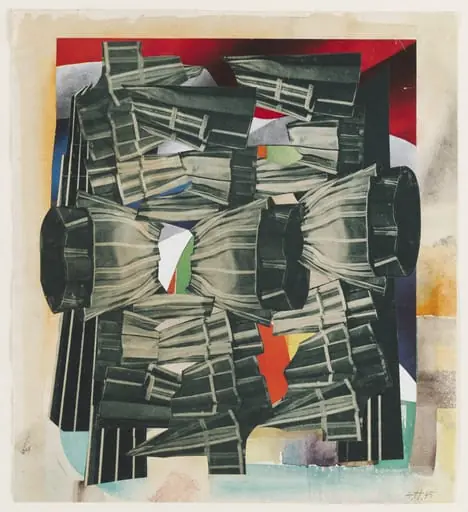
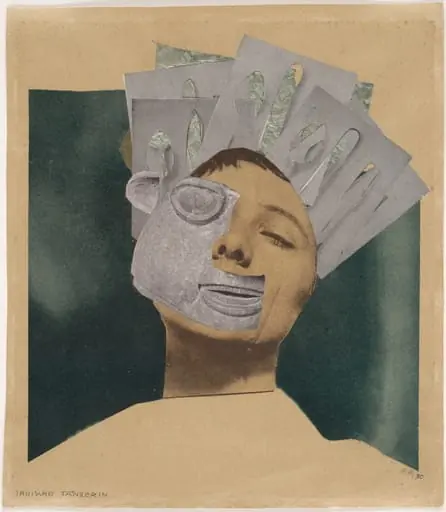
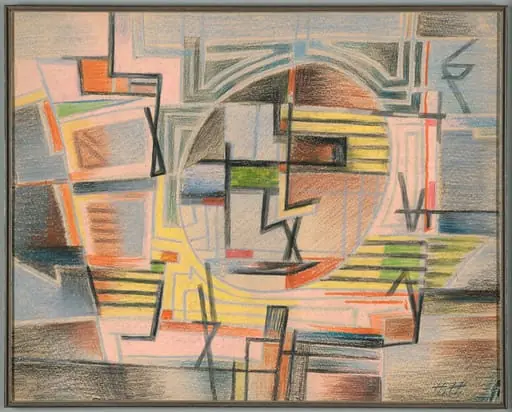
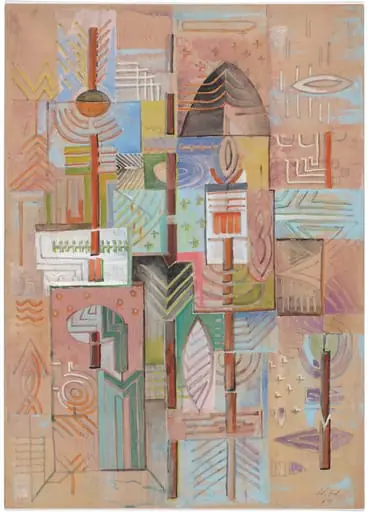
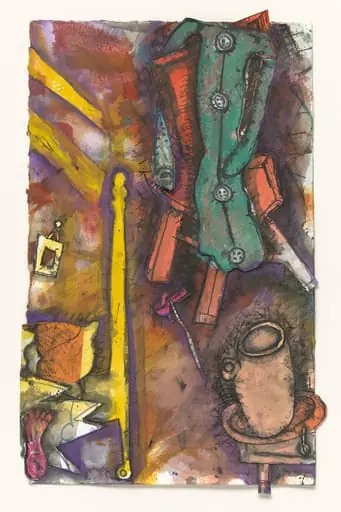
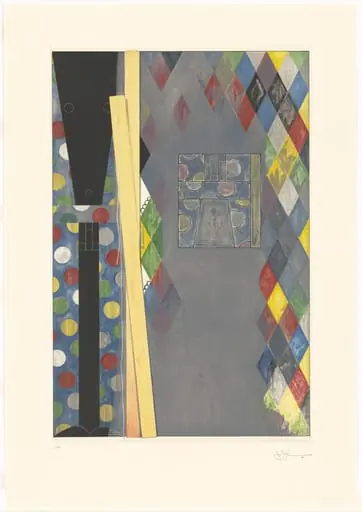
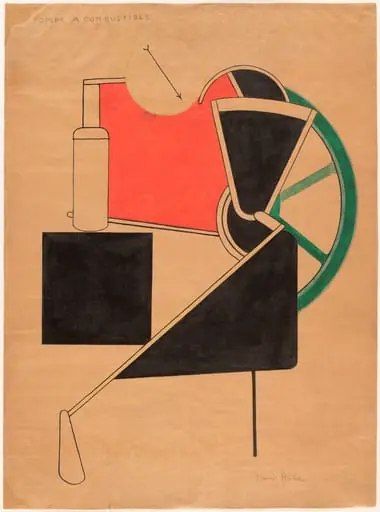
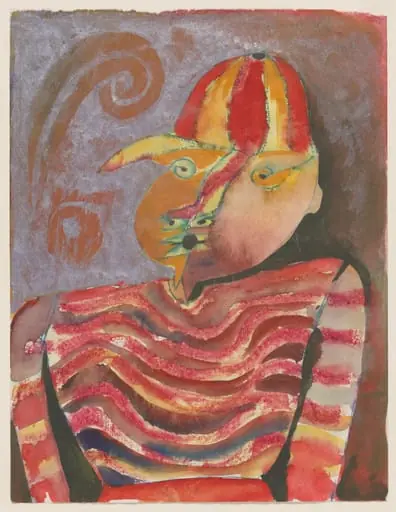
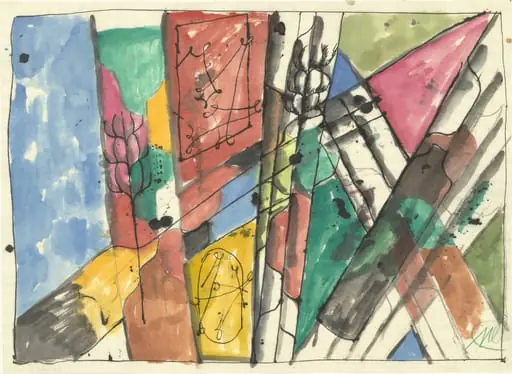
Untitled is a watercolor drawing by Hannah Höch. It dates from 1921 and is held in the collection of the Museum of Modern Art.
About this work
Overview
Though often associated with photomontage, this piece uses hand-drawn forms and collage elements to explore abstraction and fragmentation.
Created in 1921, this drawing by Hannah Höch combines watercolor, gouache, and pencil on paper. Though often associated with photomontage, this piece uses hand-drawn forms and collage elements to explore abstraction and fragmentation. Its non-representational figures and layered background reflect Höch’s interest in disrupting conventional visual logic, aligning with Dada’s rejection of traditional aesthetics and narrative coherence.
Subject & Meaning
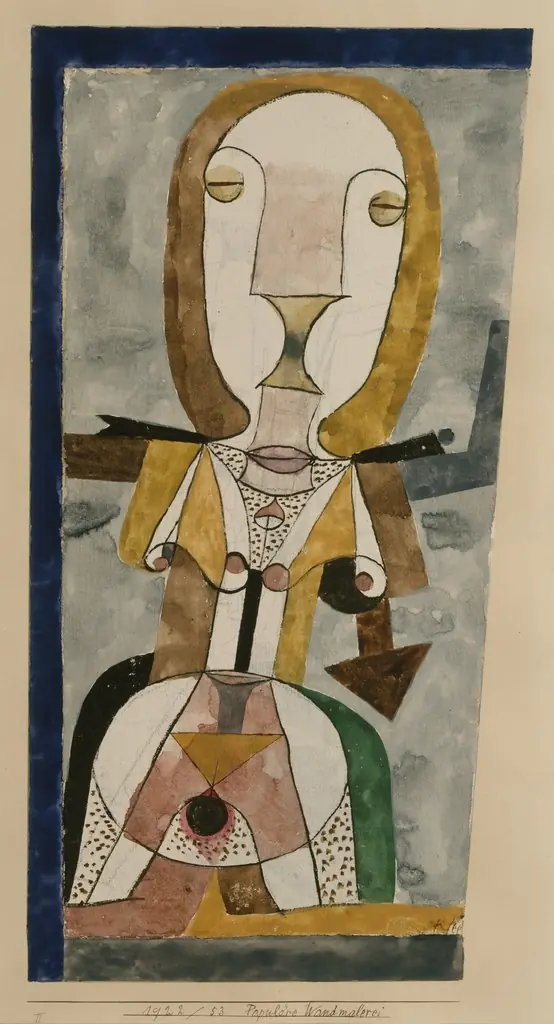
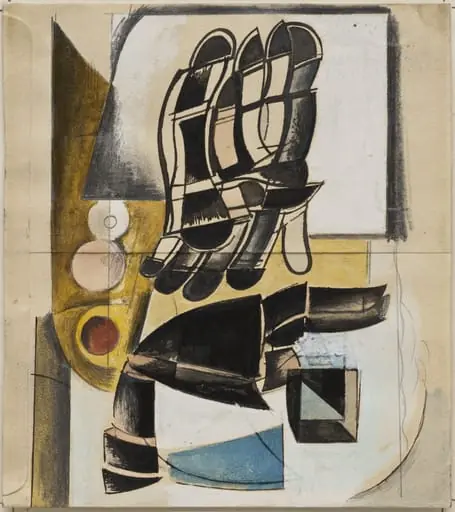
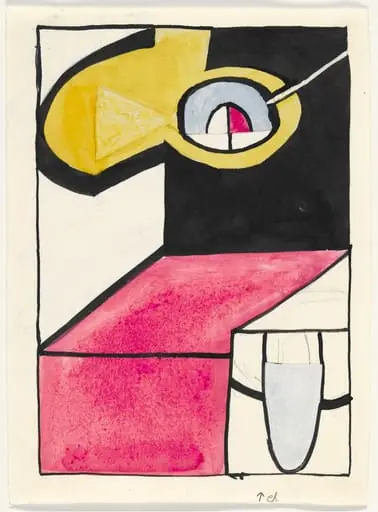
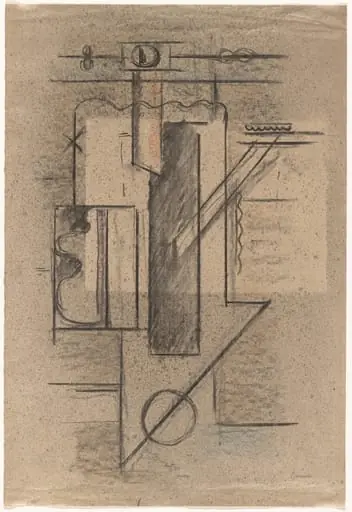
Two stylized, disjointed figures dominate the composition—one upright, the other curled—suggesting contrasting states of being without clear narrative. Their artificial construction, with mismatched limbs and geometric forms, evokes a critique of fixed identities, particularly gendered roles. The inclusion of a small object resembling a shoe or toy introduces domestic symbolism, subtly questioning the confinement of women to private spheres during the Weimar era.
Technique & Style
Höch employs bold, flat colors and sharp, angular shapes to construct figures that appear assembled rather than drawn. The background integrates torn paper fragments, mechanical motifs like gears, and a clock face, creating a sense of layered time and industrial disruption. The use of gouache and watercolor adds subtle texture, while pencil lines ground the composition, blending spontaneity with deliberate arrangement.
History & Provenance
This work dates from Höch’s most active period in Berlin, during which she participated in Dada exhibitions and collaborated with artists like George Grosz and John Heartfield. Though not publicly exhibited at the time, it reflects her private experiments with form and material. The piece remained in her personal collection until her death, later entering institutional holdings through her estate.
Context
In early 1920s Germany, rapid social change and the rise of the 'New Woman' prompted intense cultural debate. Höch’s work responded to these shifts by deconstructing visual representations of femininity. Her use of collage and abstraction mirrored broader Dadaist efforts to dismantle artistic norms and expose the constructed nature of identity, class, and gender in postwar society.
Legacy
Though lesser known than her photomontages, this drawing exemplifies Höch’s consistent interrogation of representation through material and form. It influenced later feminist and conceptual artists who adopted collage and fragmentation to challenge patriarchal imagery. Its quiet innovation helped expand the boundaries of drawing as a medium for political and psychological inquiry.
Artist & collection
Artist
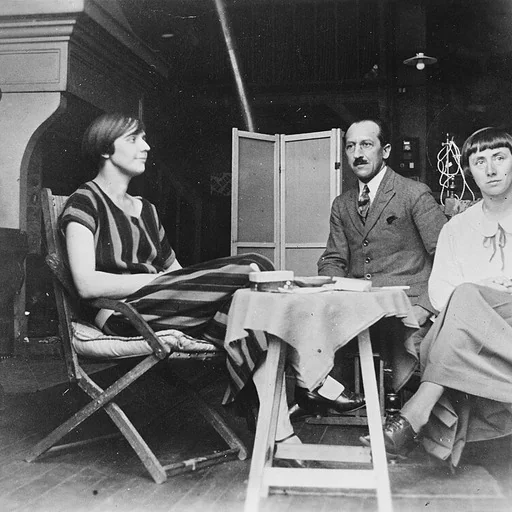
Hannah Höch (German: ; 1 November 1889 – 31 May 1978) was a German Dada artist. She is best known for her work of the Weimar period, when she was one of the originators of photomontage. Photomontage, or fotomontage, is…