Artwork
Untitled
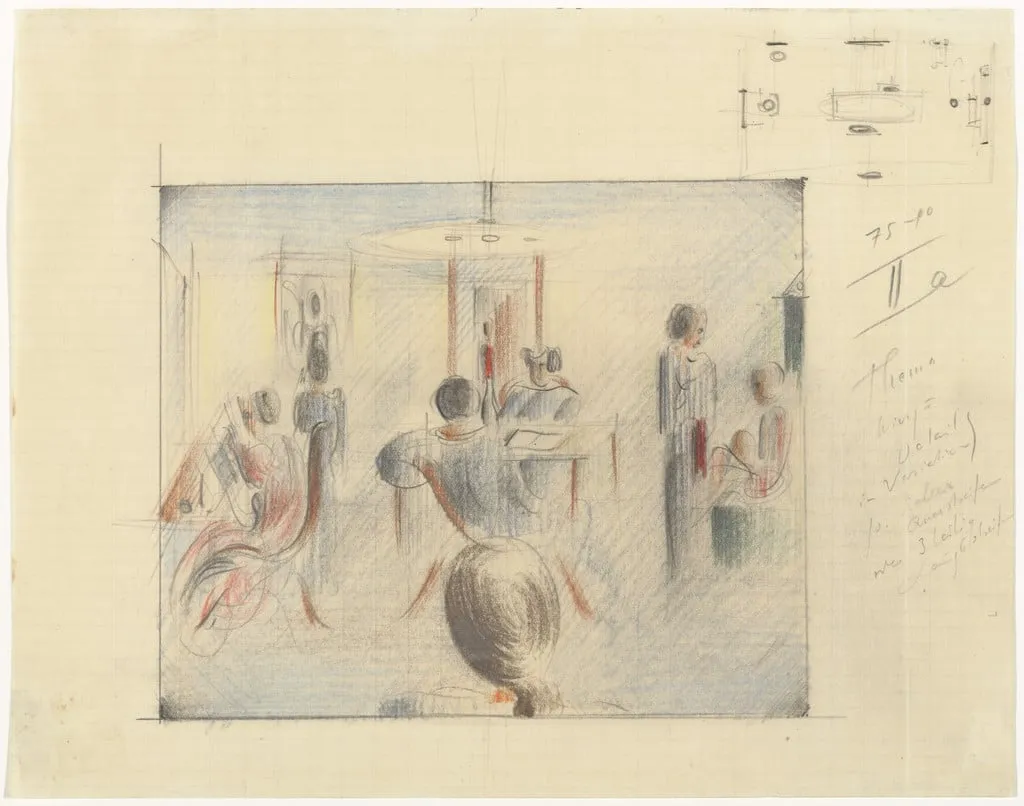
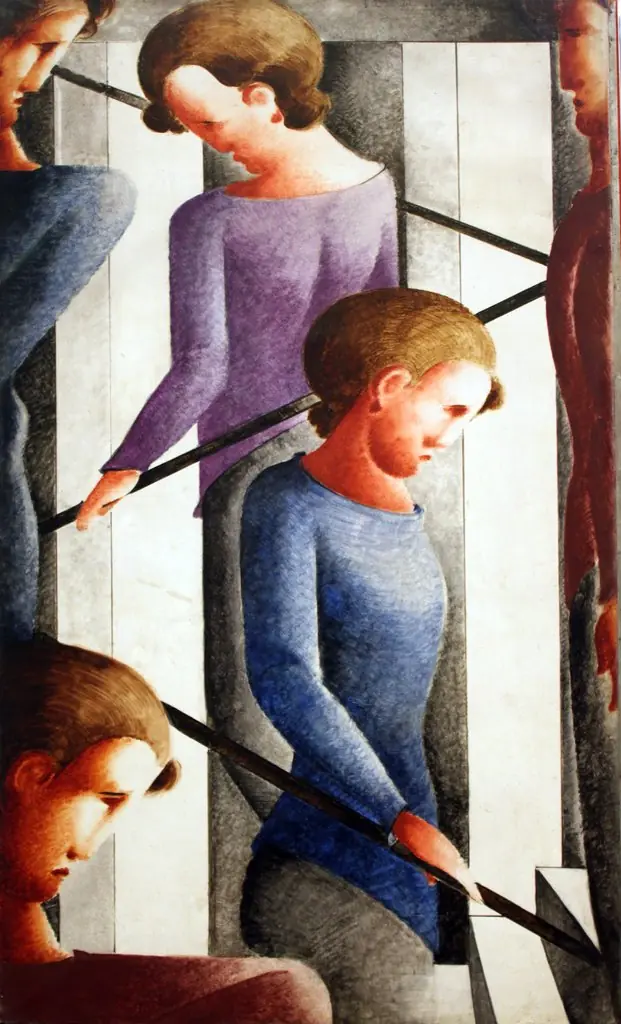
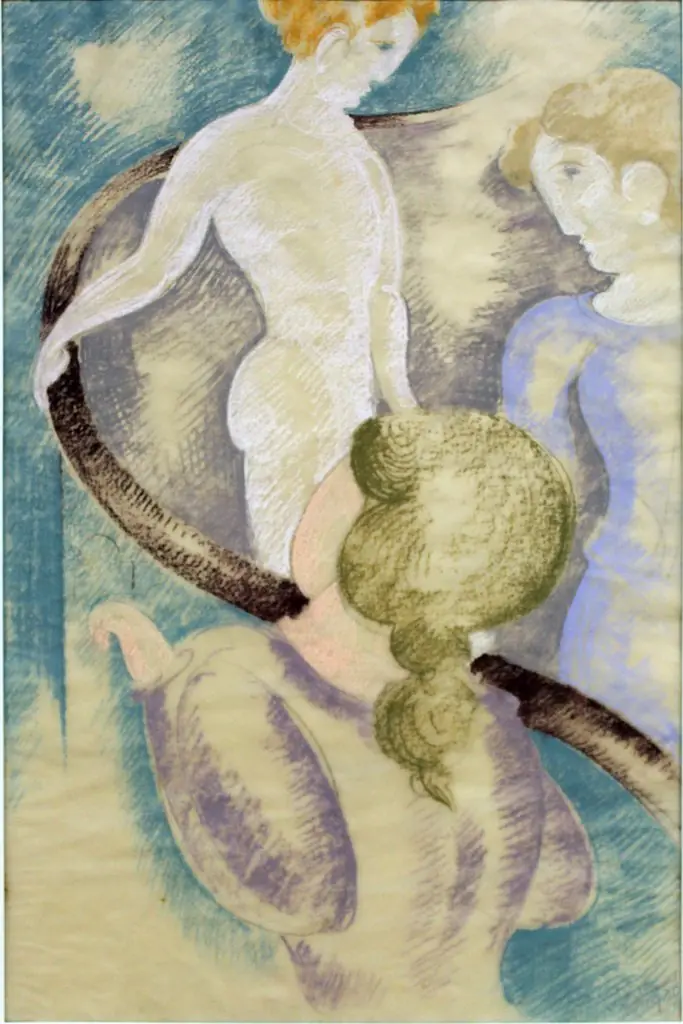
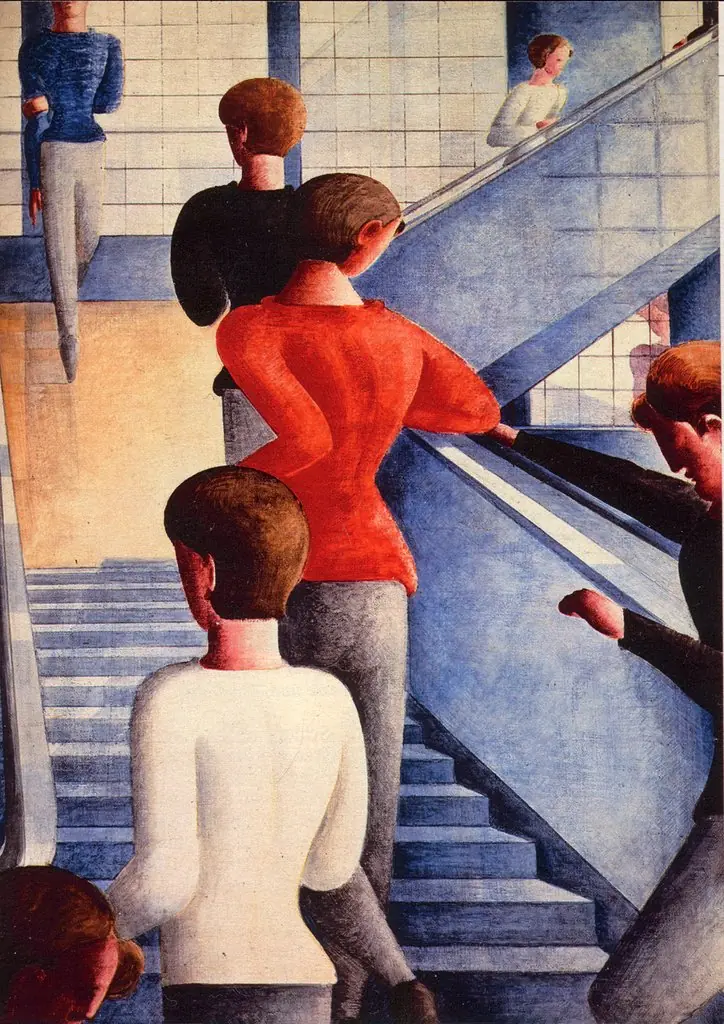
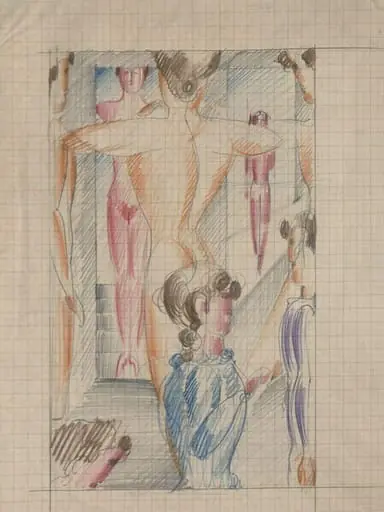
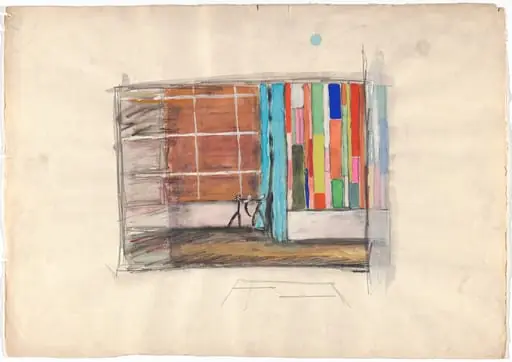
Untitled is a graphite drawing by Oskar Schlemmer. It dates from 1936 and is held in the collection of the Museum of Modern Art.
About this work
Overview
The work is part of a broader body of studies stemming from his time at the Bauhaus, where he explored the relationship between form, space, and human movement.
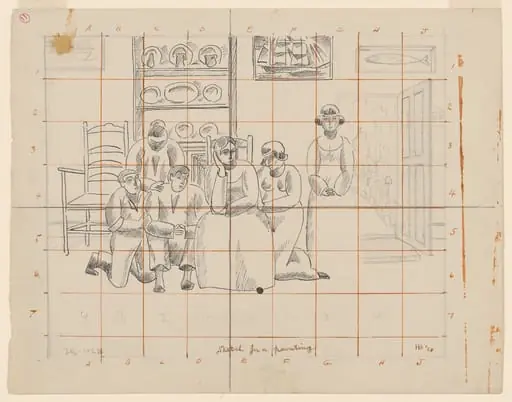
Created in 1936, this unfinished drawing by Oskar Schlemmer uses pencil and crayon on graph paper, reflecting his ongoing interest in structured composition. The work is part of a broader body of studies stemming from his time at the Bauhaus, where he explored the relationship between form, space, and human movement. Its raw, unpolished state suggests it was a working sketch rather than a finished piece.
Subject & Meaning
The drawing depicts five simplified human figures in a sparse interior: one seated at a table beneath a lamp, another resting against a wall, and a third near a window. The figures, rendered as loose outlines, suggest quiet, everyday moments. Their minimalism and placement imply a focus on spatial relationships rather than narrative, aligning with Schlemmer’s interest in the human form as an element within a defined environment.
Technique & Style
Schlemmer employed faint crayon in blues, reds, and grays over a grid of pencil lines, allowing the underlying structure to guide composition. Lines are hesitant and uneven, with partial forms and scribbled annotations in the margins—possibly notes for a larger design. The absence of shading and the use of quick, unrefined strokes emphasize process over finish, characteristic of his preparatory work.
History & Provenance
Made during Schlemmer’s later years, after his formal Bauhaus tenure, the drawing reflects his continued engagement with spatial and performative ideas. Though not publicly exhibited during his lifetime, it was preserved among his personal studies. Its survival offers insight into his private creative process, separate from the more polished works associated with his public legacy.
Context
In 1936, Schlemmer was working under increasing political pressure in Nazi Germany, which viewed avant-garde art as degenerate. His focus on geometric abstraction and human form persisted despite isolation from institutional support. This sketch, like others from the period, reveals a quiet persistence in exploring formal questions, even as public avenues for such work diminished.
Legacy
The drawing exemplifies Schlemmer’s enduring commitment to translating bodily presence into structured visual language. Though modest in scale and unfinished, it contributes to understanding his method: using simple tools and grids to investigate proportion, posture, and spatial dynamics. It stands as a quiet testament to his belief in art as a disciplined inquiry, not merely an aesthetic outcome.
Artist & collection
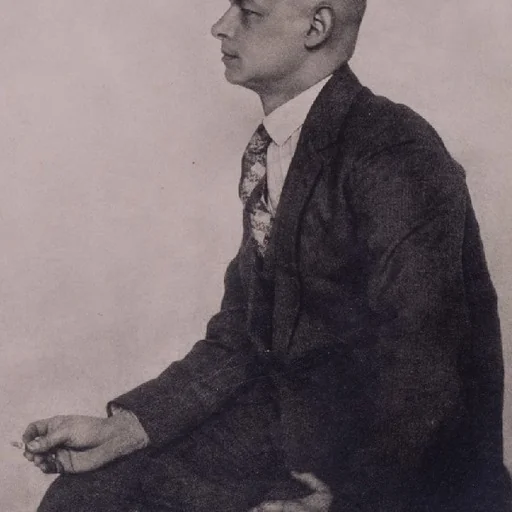
Artist
Oskar Schlemmer (German pronunciation: ; 4 September 1888 – 13 April 1943) was a German painter, sculptor, designer and choreographer associated with the Bauhaus school.