Artwork
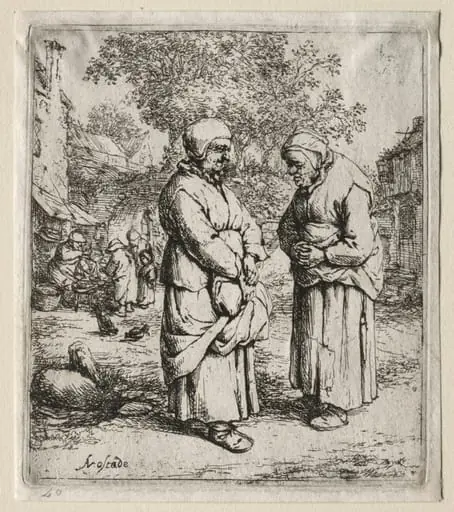
Man and Woman Conversing In Front of an Inn
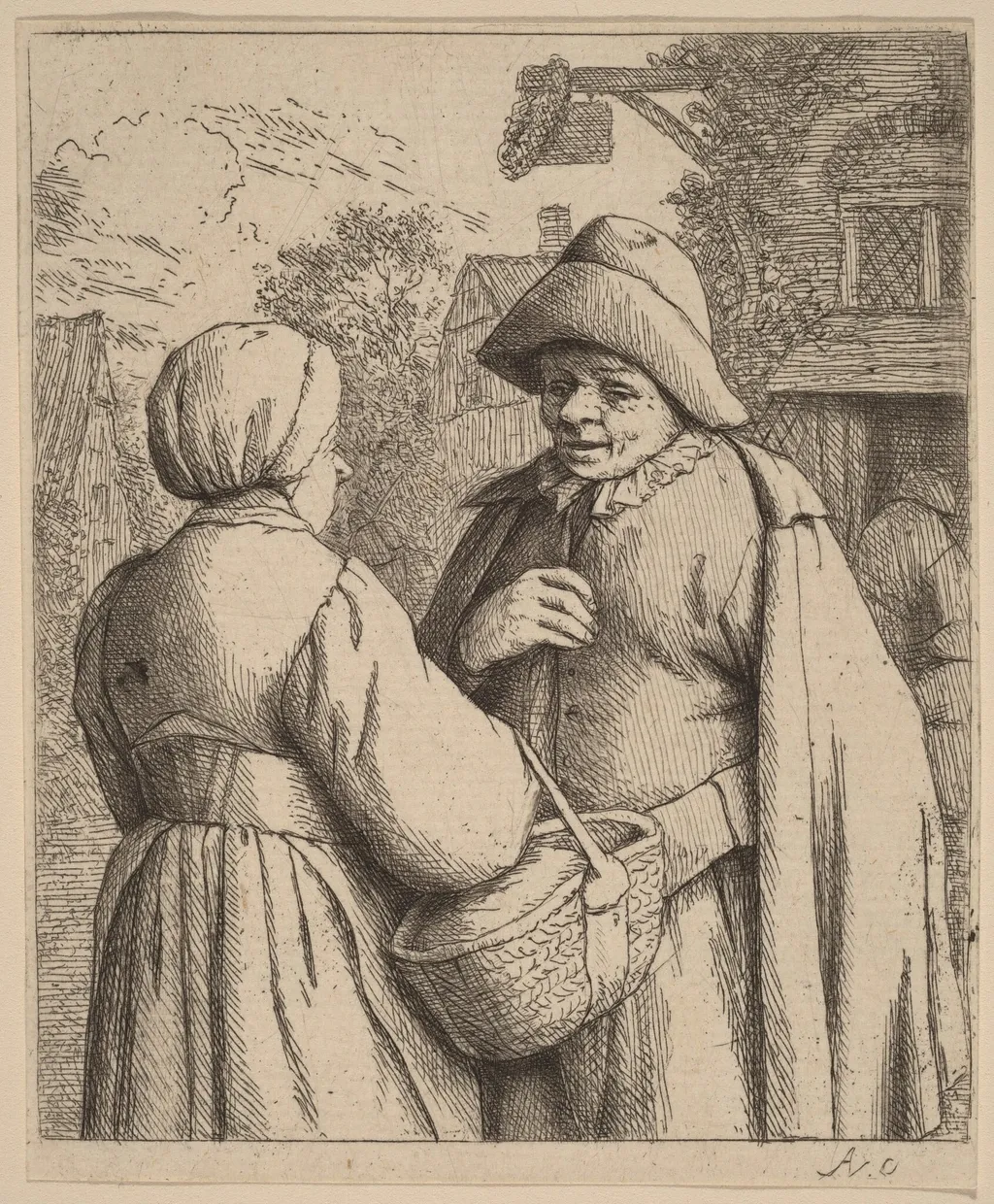
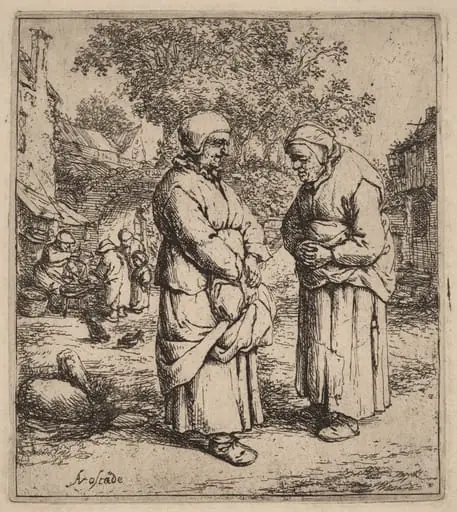
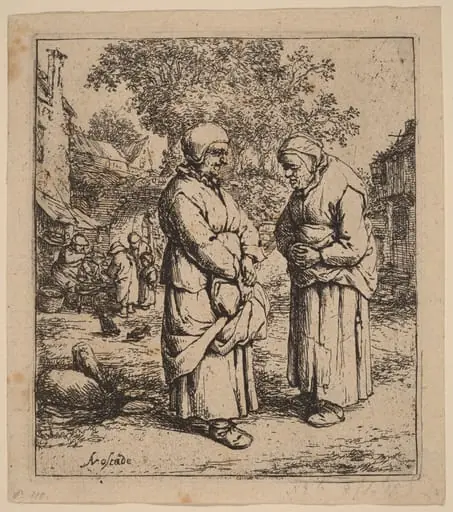
Man and Woman Conversing In Front of an Inn is an ink print by the Baroque artist Adriaen van Ostade. It dates from 1671 and is held in the collection of the National Gallery of Art.
About this work
Overview
The composition balances intimate human interaction with a modest natural setting, reflecting a broader cultural interest in the rhythms of common existence.
Created around 1671 by Adriaen van Ostade, this print captures a quiet exchange between two figures outside a rural inn. Executed in etching and drypoint on laid paper, it exemplifies the artist’s dedication to scenes of ordinary life during the Dutch Golden Age. The composition balances intimate human interaction with a modest natural setting, reflecting a broader cultural interest in the rhythms of common existence.
Subject & Meaning
A man in a wide-brimmed hat and cloak, carrying a basket, engages a woman who faces him with her back turned. Their posture suggests a moment of informal dialogue—perhaps a transaction, a greeting, or a passing exchange. The absence of facial detail on the woman invites interpretation, emphasizing the universality of such encounters rather than individual identity. The scene holds no grand narrative, only the quiet dignity of daily life.
Technique & Style
Van Ostade employed etching for fine lines and drypoint for rich, velvety shadows, enhancing the tactile quality of the man’s cloak, the rough texture of the ground, and the delicate rendering of foliage. The contrast between dense inked areas and sparse, open spaces creates depth without overt perspective. The style is unembellished, favoring observational accuracy over theatricality, characteristic of Dutch genre printmaking of the period.
History & Provenance
The print resides in the collection of the National Gallery of Art in Washington, D.C., acquired as part of a broader effort to preserve Dutch graphic works from the 17th century. Its survival in good condition reflects careful handling over centuries. While its early ownership is undocumented, its presence in a major institution underscores its recognition as a representative example of van Ostade’s printmaking output.
Context
In the late 17th century, Dutch artists increasingly turned to scenes of rural and working-class life as subjects worthy of artistic attention. Van Ostade, among others, moved away from idealized imagery to portray the unvarnished moments of taverns, fields, and village paths. This print aligns with a growing market for prints that appealed to middle-class collectors seeking relatable, morally neutral depictions of everyday reality.
Legacy
Van Ostade’s prints, including this one, helped establish genre scenes as a legitimate and enduring form in European printmaking. His technical precision and empathetic observation influenced later artists interested in capturing the subtleties of human behavior. Though less celebrated than his paintings, his etchings remain vital for understanding the breadth of Dutch visual culture beyond grand historical or religious themes.
Artist & collection
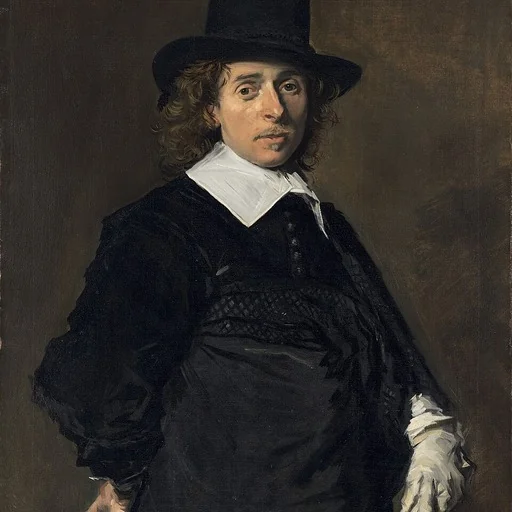
Artist
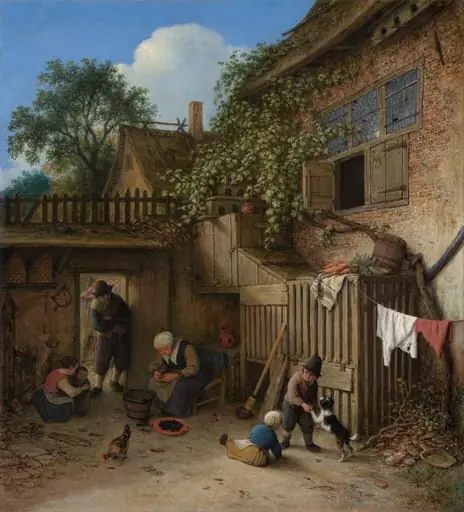
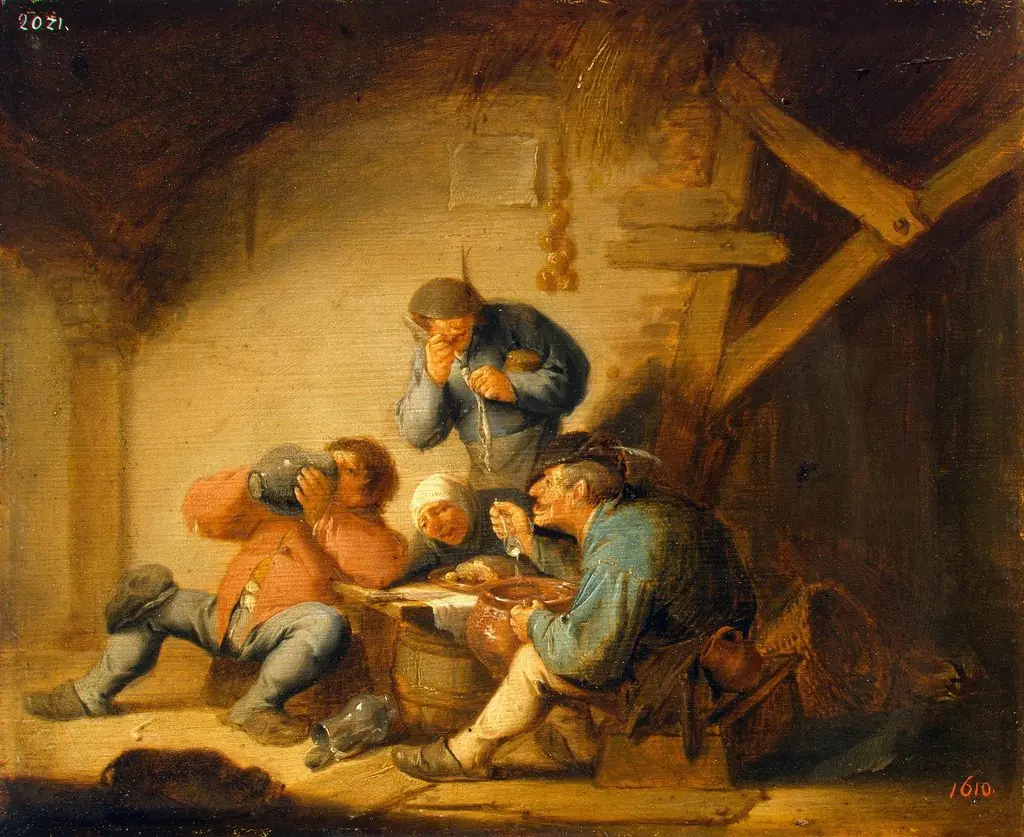
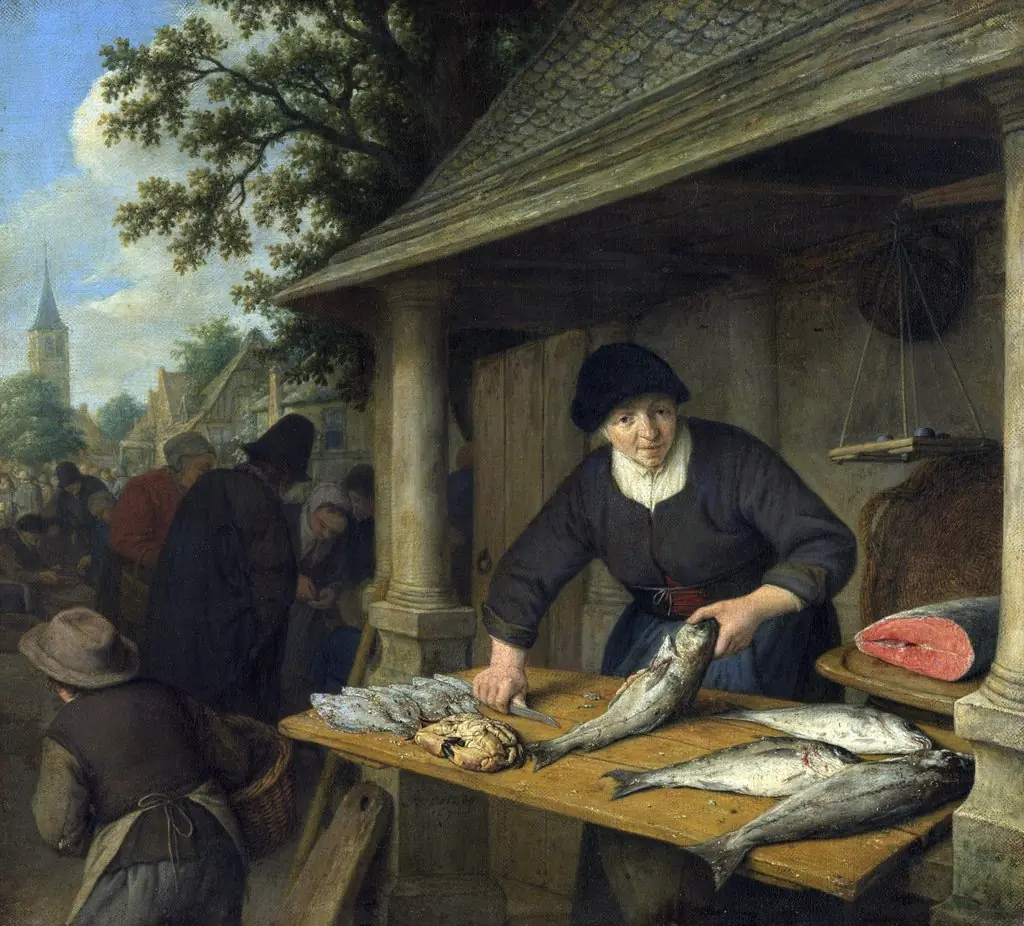
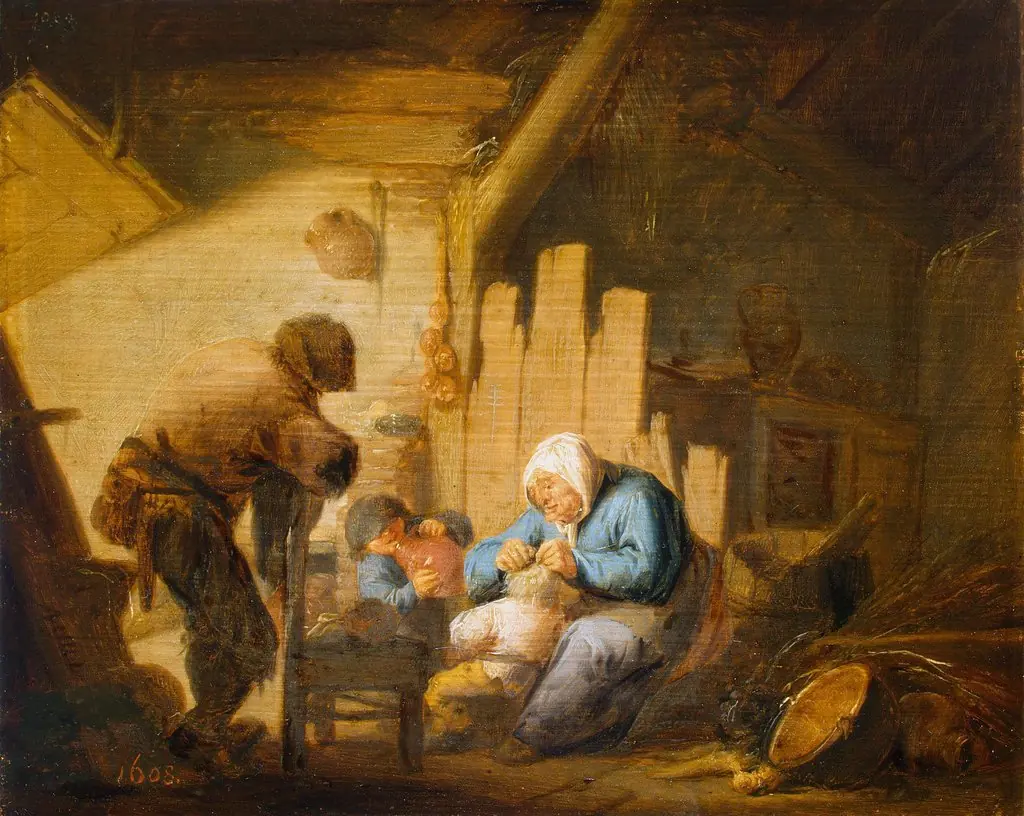
Adriaen van Ostade (baptized as Adriaen Jansz Hendricx 10 December 1610 – buried 2 May 1685) was a Dutch Golden Age painter of genre works, showing the everyday life of ordinary men and women.