Artwork
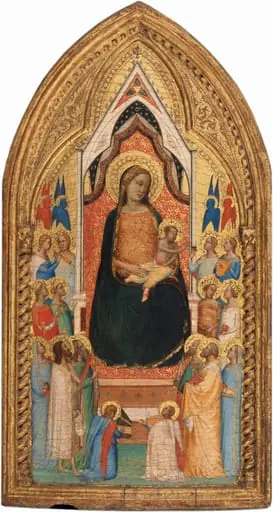
Madonna and Child between Saint Magdalene and Saint Stephen Protomartyr
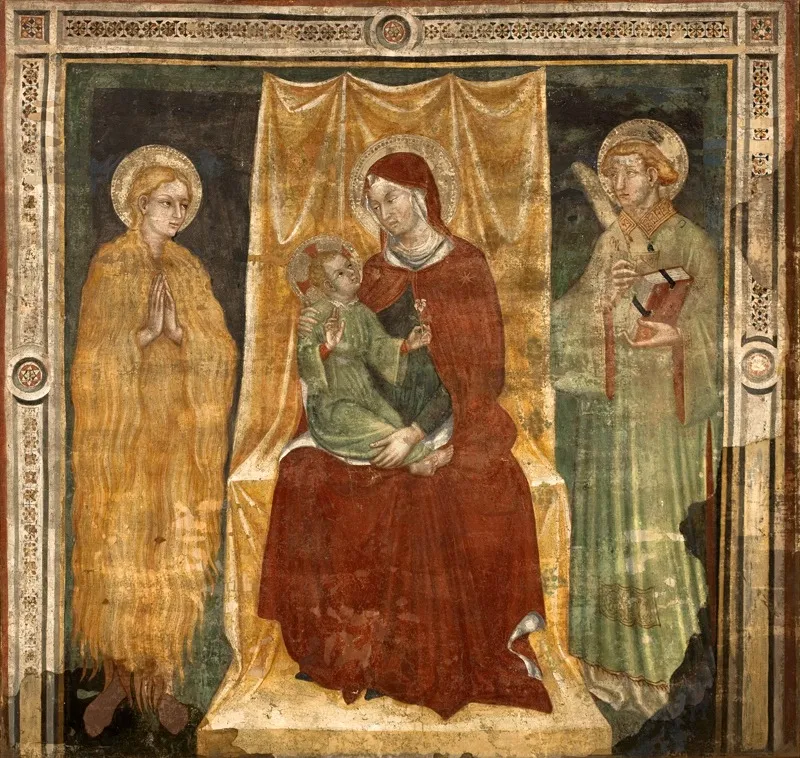
Madonna and Child between Saint Magdalene and Saint Stephen Protomartyr is a fresco painting by the Early Renaissance artist Ottaviano Nelli. It is held in the collection of the São Paulo Museum of Art.
About this work
Overview
Painted around 1450 by Ottaviano Nelli, this work is a devotional panel depicting the Virgin and Child flanked by two saints.
Painted around 1450 by Ottaviano Nelli, this work is a devotional panel depicting the Virgin and Child flanked by two saints. Executed in tempera on canvas, it reflects the transitional style of early Renaissance Umbrian painting. Nelli, a regional master known for fresco cycles and altarpieces, produced this piece during a period when religious imagery remained central to artistic production in central Italy.
Subject & Meaning
The composition centers on the Virgin Mary holding the Christ Child, symbolizing divine grace and maternal tenderness. To her left, Mary Magdalene, identified by her long hair and yellow garment, represents penitence and devotion. To the right, Saint Stephen, the first Christian martyr, holds a book, signifying his role as a preacher and witness to faith. Together, the figures form a sacred ensemble meant to inspire contemplation and reverence.
Technique & Style
Nelli employed tempera on canvas, a less common support than wood in this period, suggesting regional adaptation. The figures are rendered with soft modeling and restrained gestures, typical of Umbrian school aesthetics. A flat, gold-hued curtain behind them creates a stage-like setting, while the ornate border frames the scene with decorative precision, emphasizing its liturgical function over spatial illusion.
History & Provenance
The painting has been part of the São Paulo Museum of Art’s collection since the mid-20th century, acquired through the museum’s broader efforts to assemble European religious art. Its earlier history remains undocumented, though its style and materials align with works produced in Gubbio or nearby centers where Nelli was active. No records confirm its original altar or chapel setting.
Context
Created during the early Quattrocento, the painting reflects the persistence of medieval iconographic traditions even as naturalism began to emerge in Florence and Venice. Nelli’s work, rooted in local workshops and devotional needs, contrasts with the more advanced perspective and anatomy explored by contemporaries in larger cities, illustrating the regional diversity of Renaissance art.
Legacy
Though Nelli’s influence was primarily local, his training of pupils helped sustain a regional style in Umbria. This painting, like others by him, contributed to the visual language of small-scale devotional art in central Italy. It remains a representative example of how religious narratives were sustained through quiet, intimate compositions rather than dramatic innovation.
Artist & collection
Artist
Ottaviano Nelli (1375–1444?) was an Italian painter of the early Quattrocento. Nelli primarily painted frescoes, but also panel paintings. He had several pupils and two painters were influenced by him.

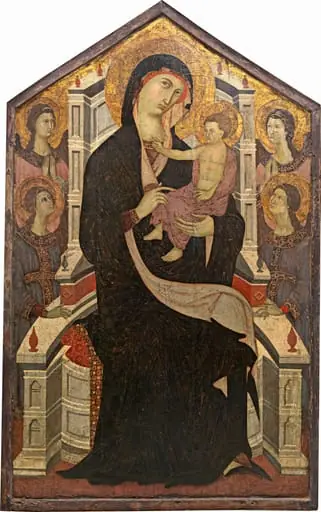 Maestà (Madonna and Child with Four Angels)
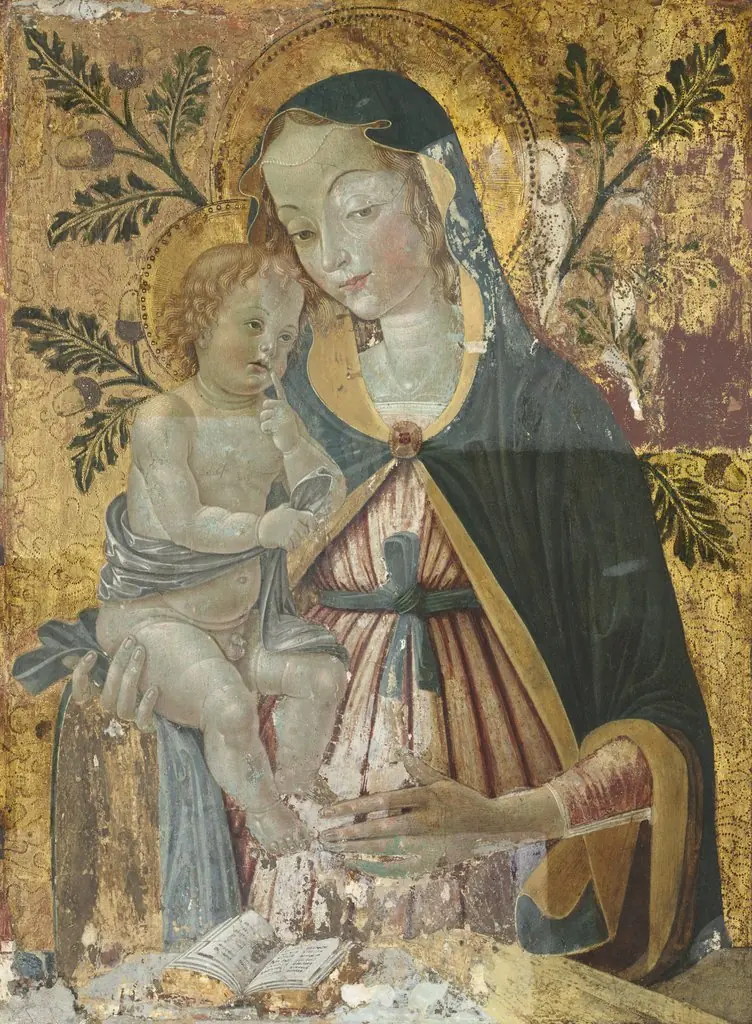 Virgin and Child
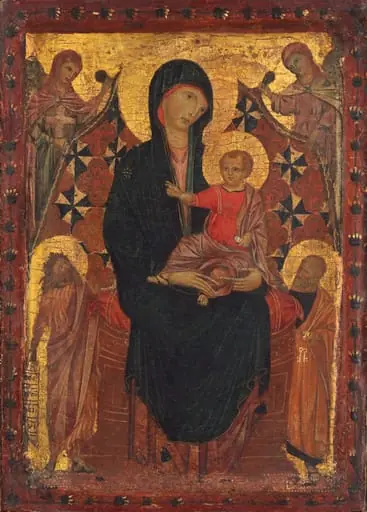 Madonna and Child with Saint John the Baptist, Saint Peter, and Two Angels
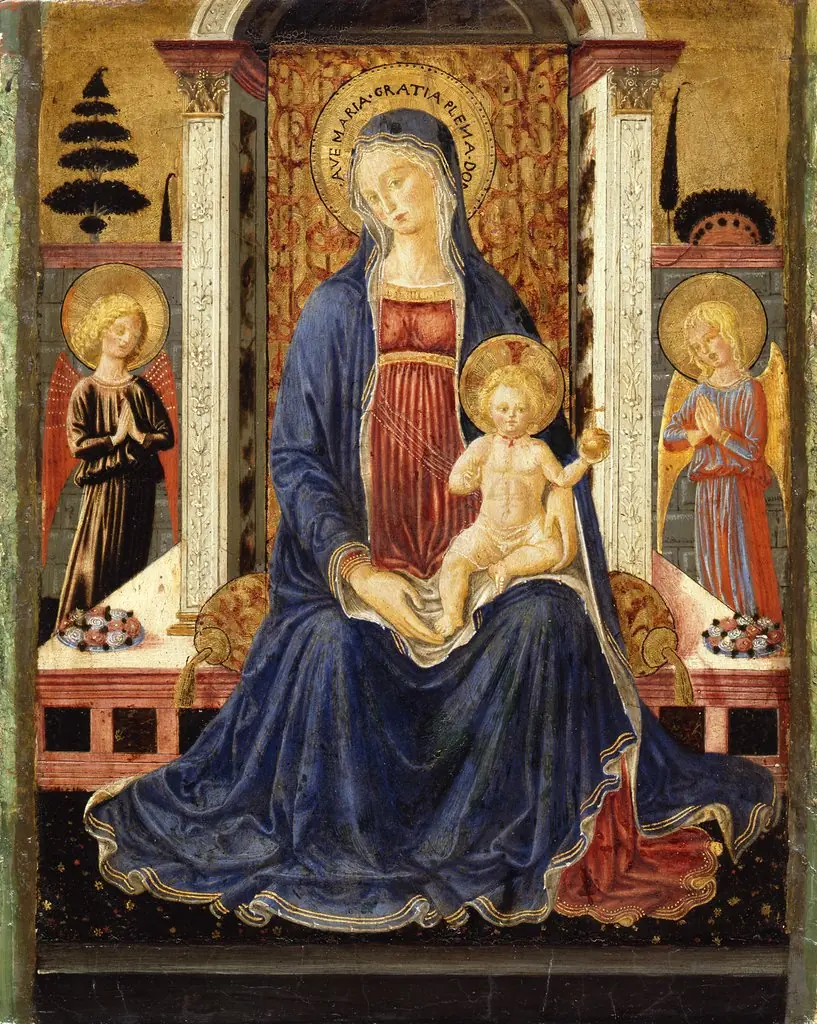 The Virgin and Child enthroned with two angels
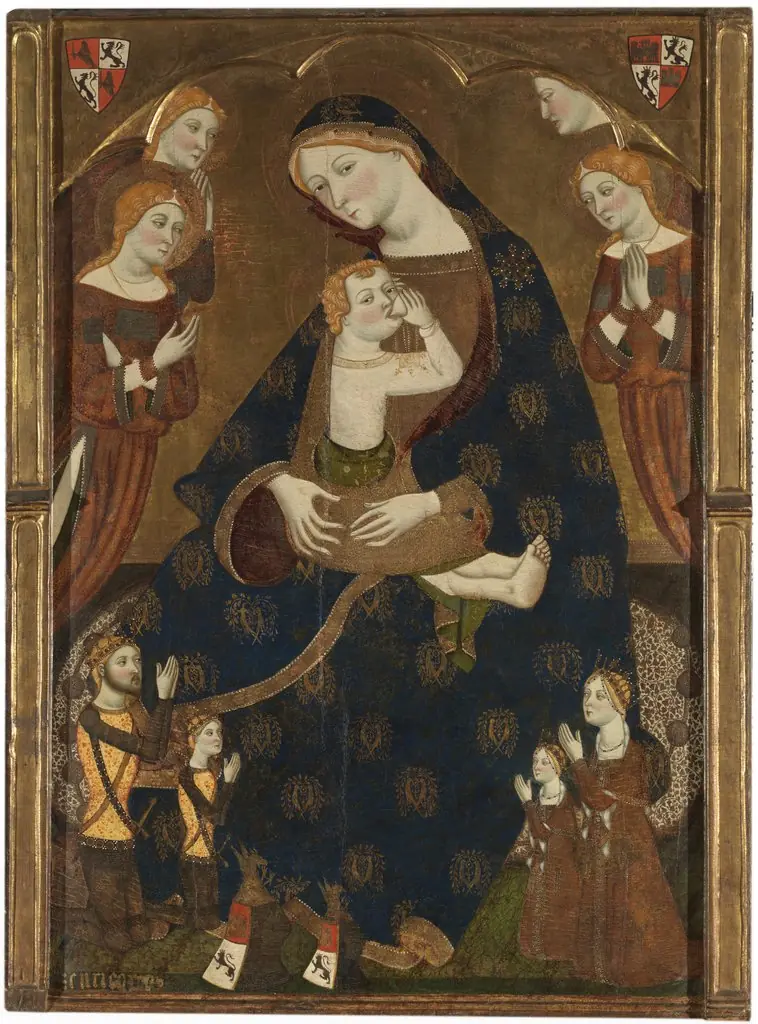 Madonna and Child
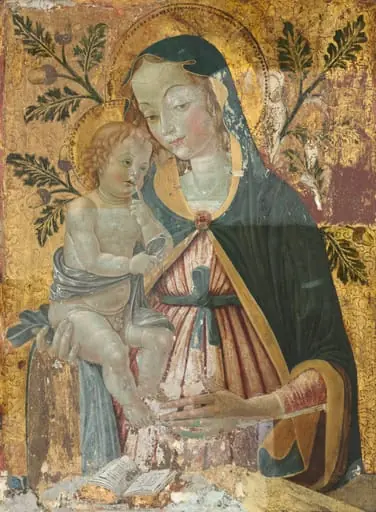 Virgin and Child
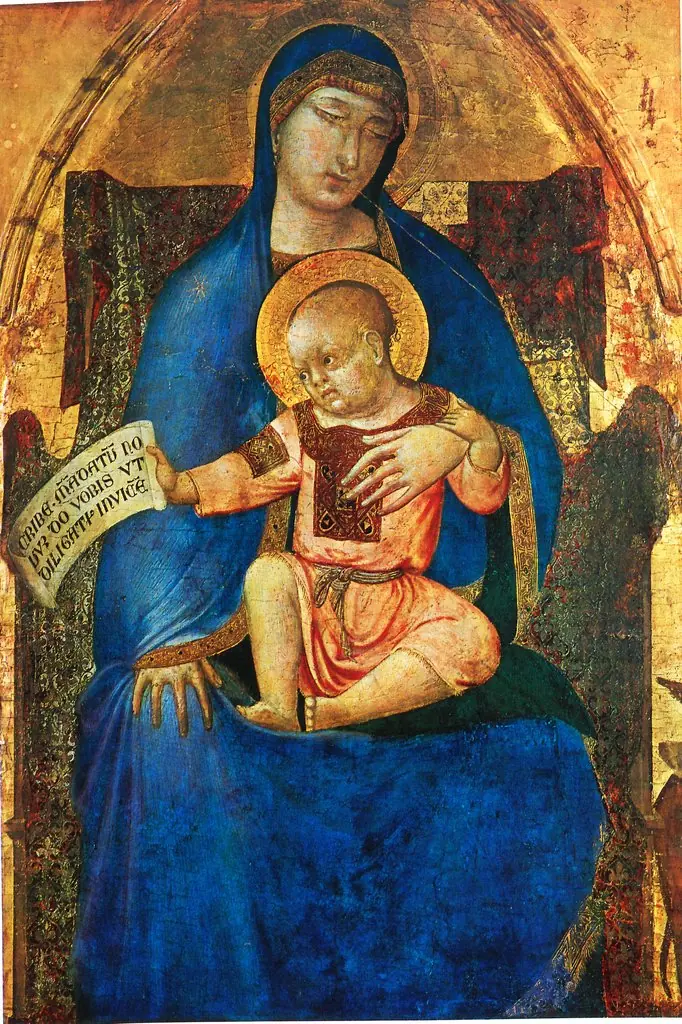 Madonna and Child Enthroned (fragment of an altarpiece)
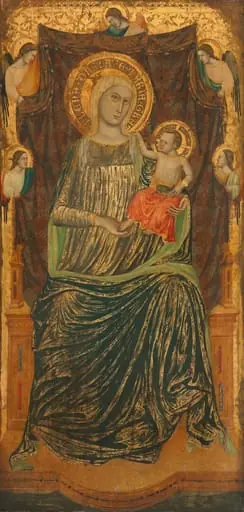 Madonna and Child with Five Angels
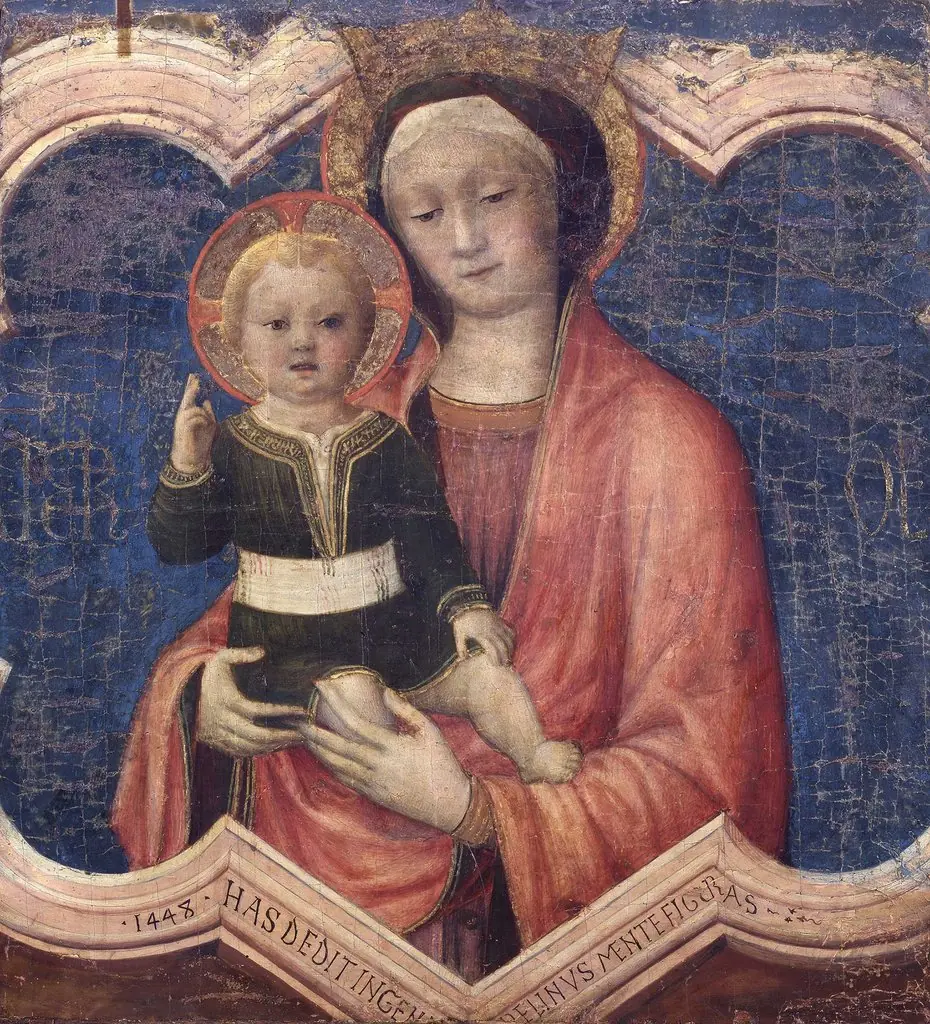 Madonna and Child
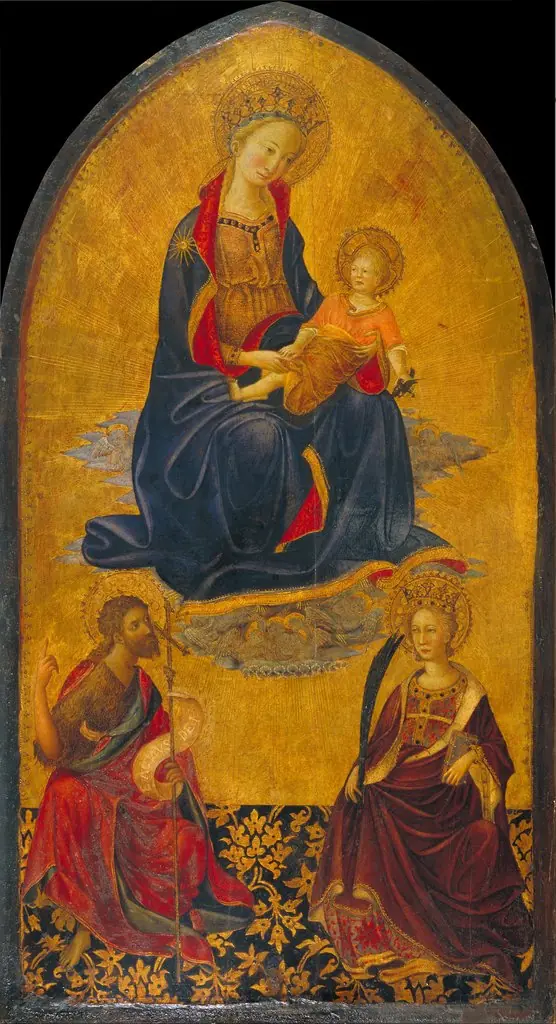 Adoration of the Virgin and Child by Saint John the Baptist and Saint Catherine
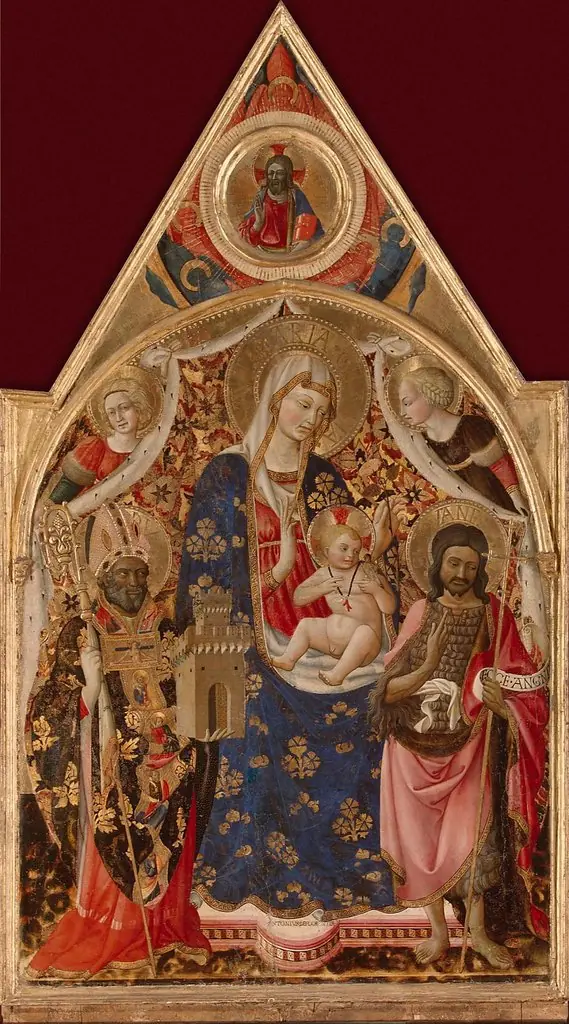 Madonna and Child, with a Bishop, St John The Baptist and Angels
 Madonna and Child with Saints and Angels