Artwork
Madonna and Child Enthroned (fragment of an altarpiece)
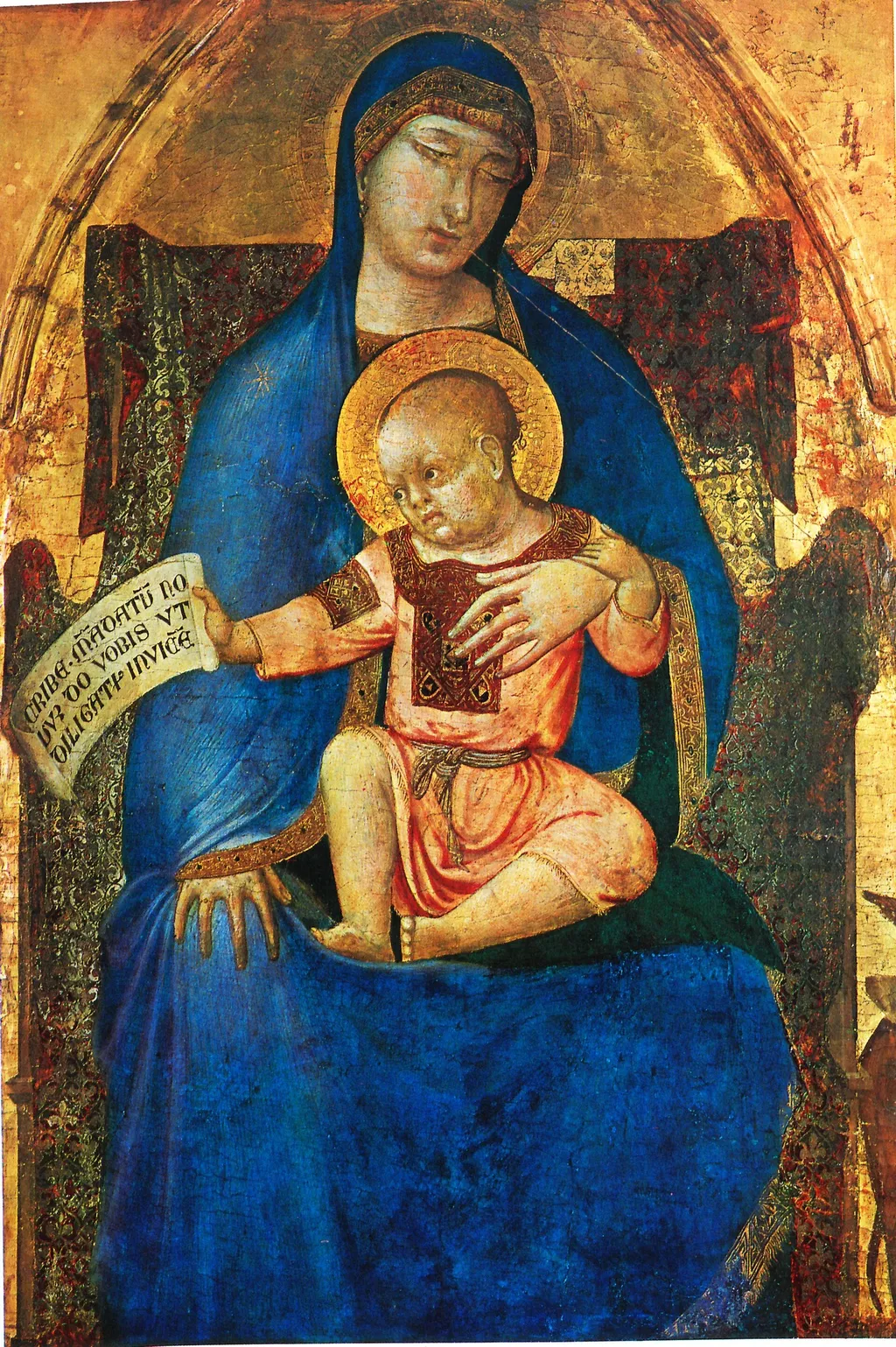
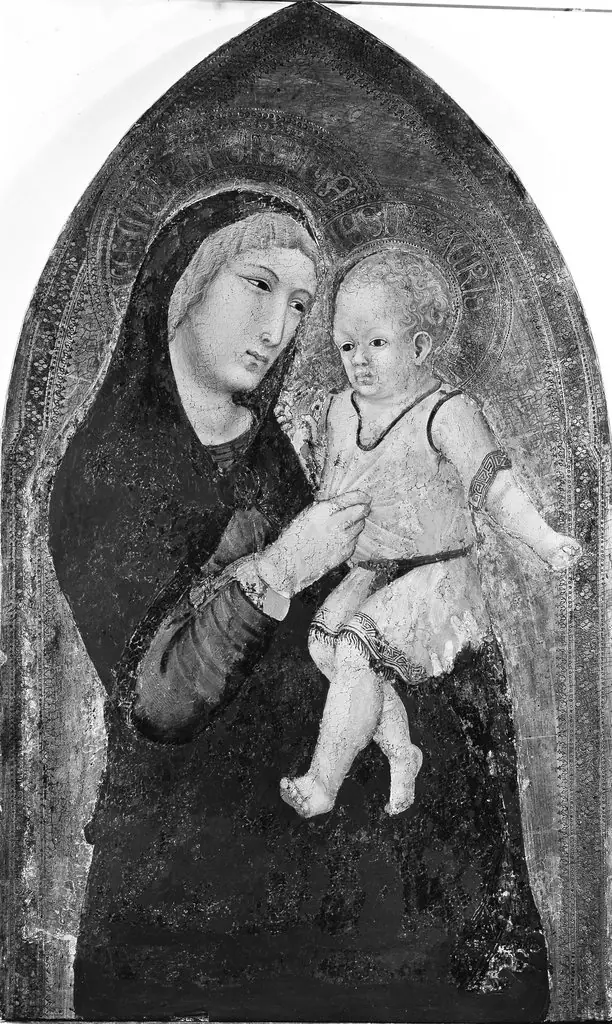
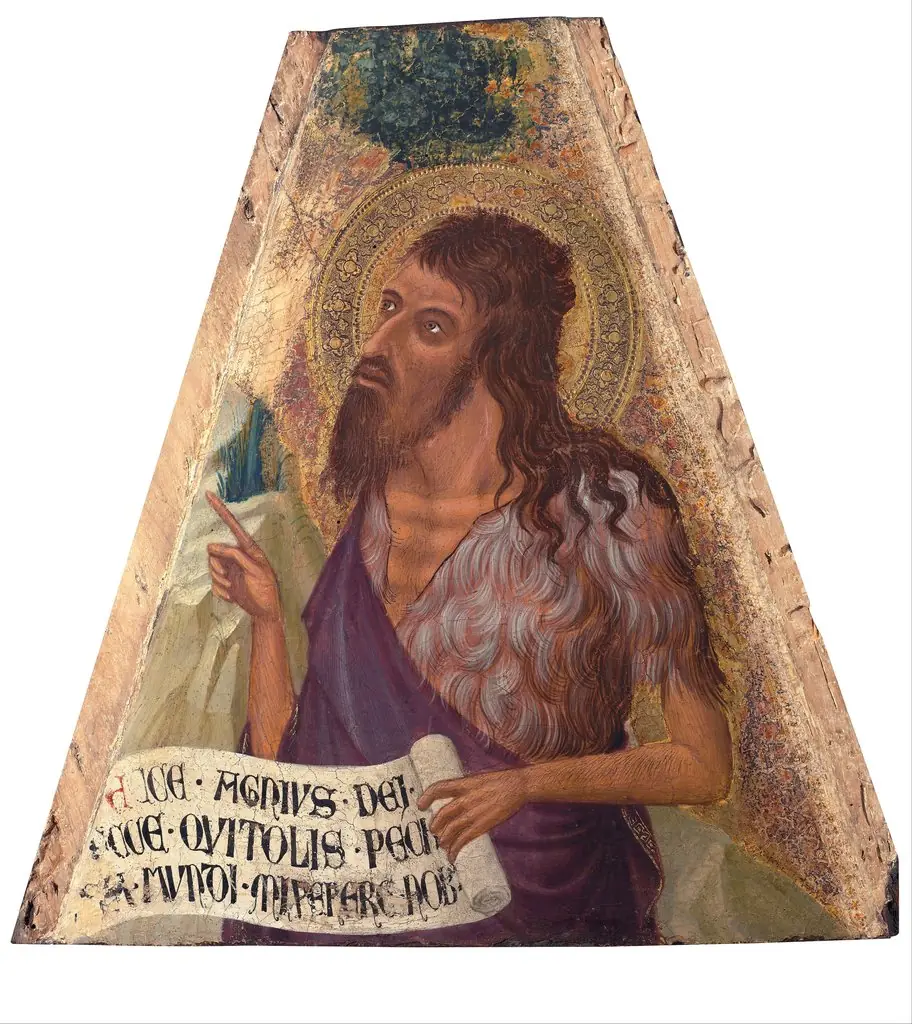
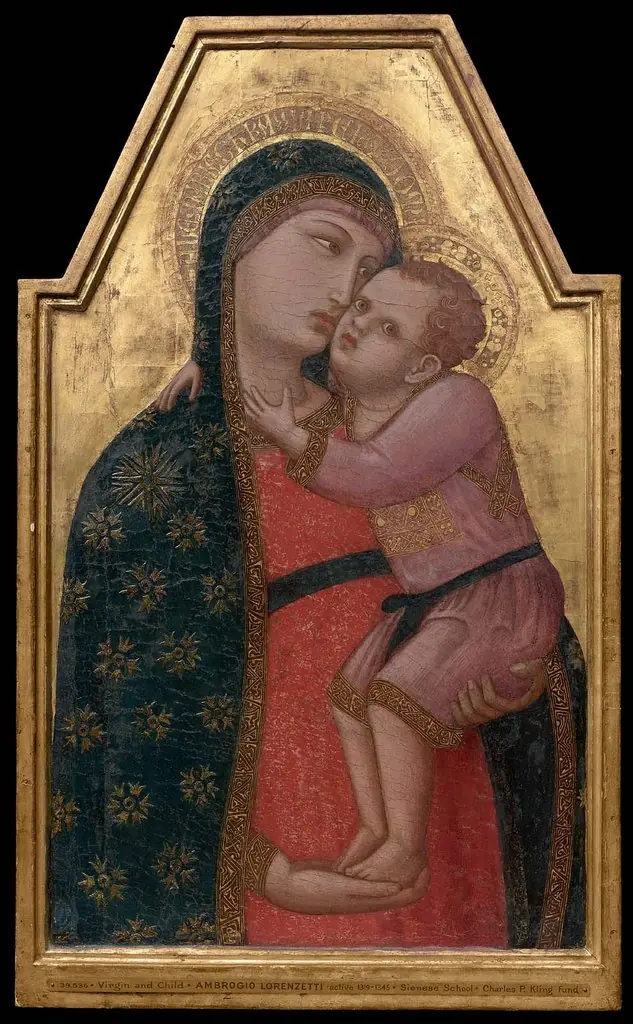
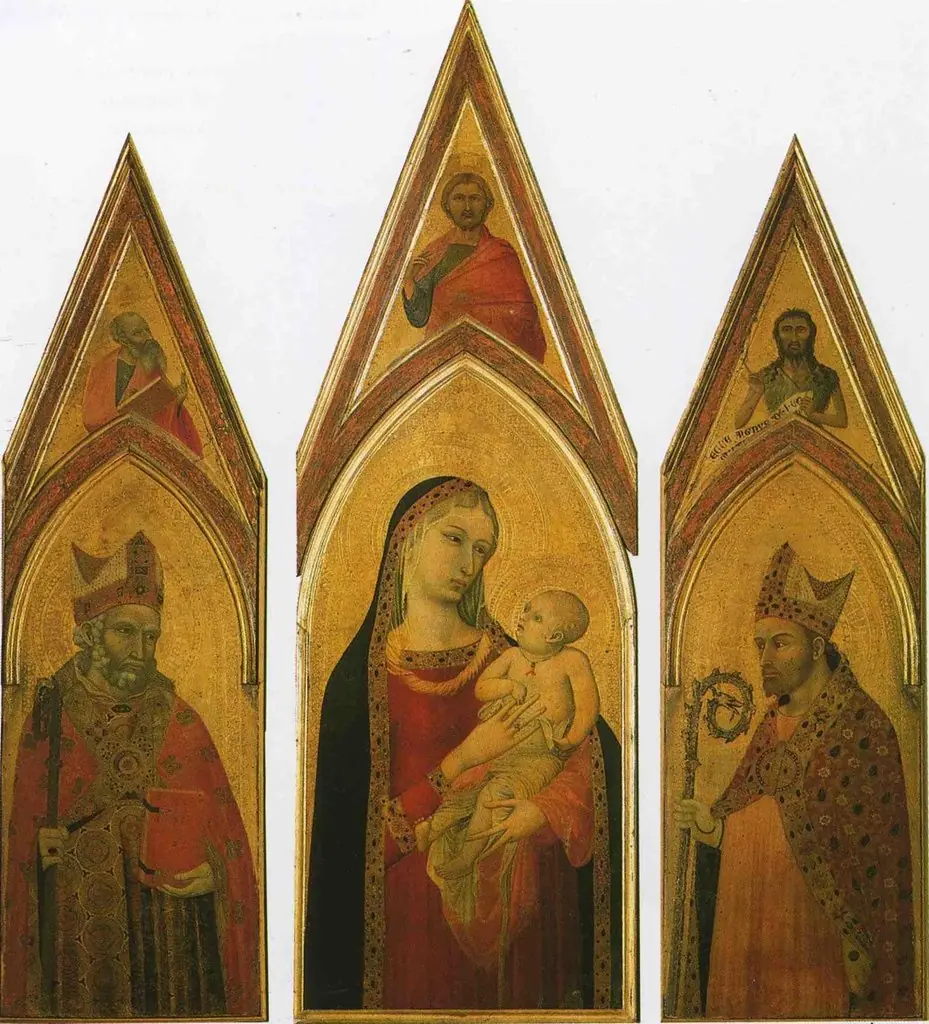
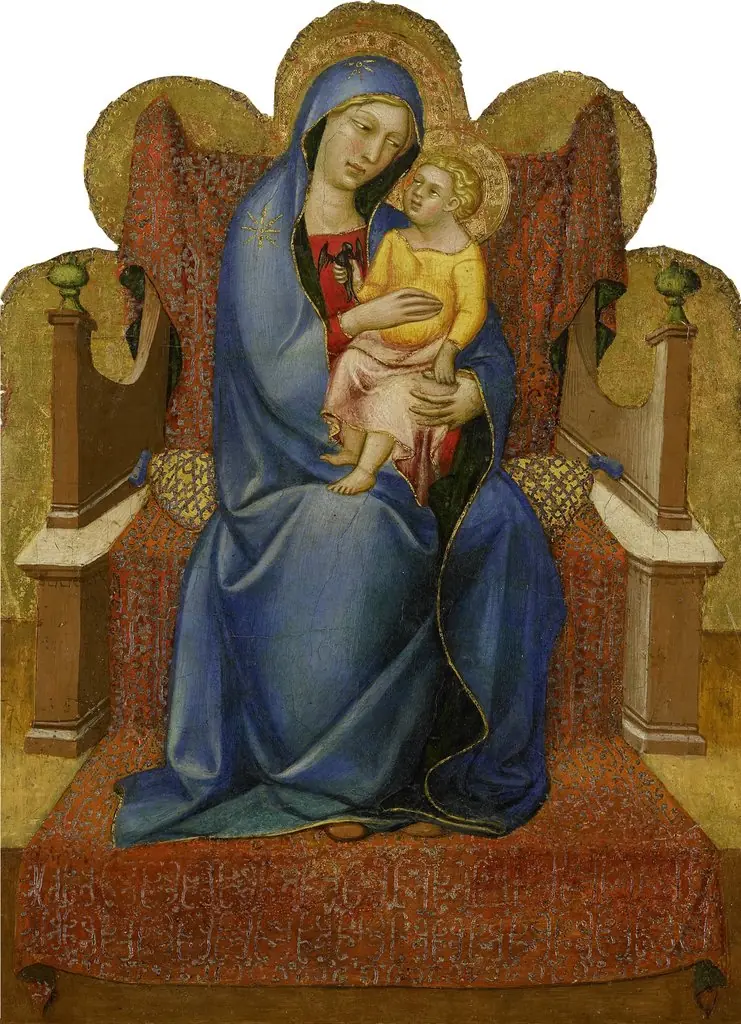
Madonna and Child Enthroned (fragment of an altarpiece) is an unspecified painting by the Byzantine icon painting artist Ambrogio Lorenzetti. It dates from 1341 and is held in the collection of the Museum of Fine Arts, Budapest.
About this work
Overview
This fragment originates from a larger altarpiece commissioned around 1341 by Ambrogio Lorenzetti, a leading figure in the Sienese painting tradition.
This fragment originates from a larger altarpiece commissioned around 1341 by Ambrogio Lorenzetti, a leading figure in the Sienese painting tradition. Executed on wooden panel, it preserves a central devotional image of the Virgin and Child, rendered with the formal gravity typical of early 14th-century religious art. Though incomplete, the panel retains enough detail to convey its original liturgical function and aesthetic ambition.
Subject & Meaning
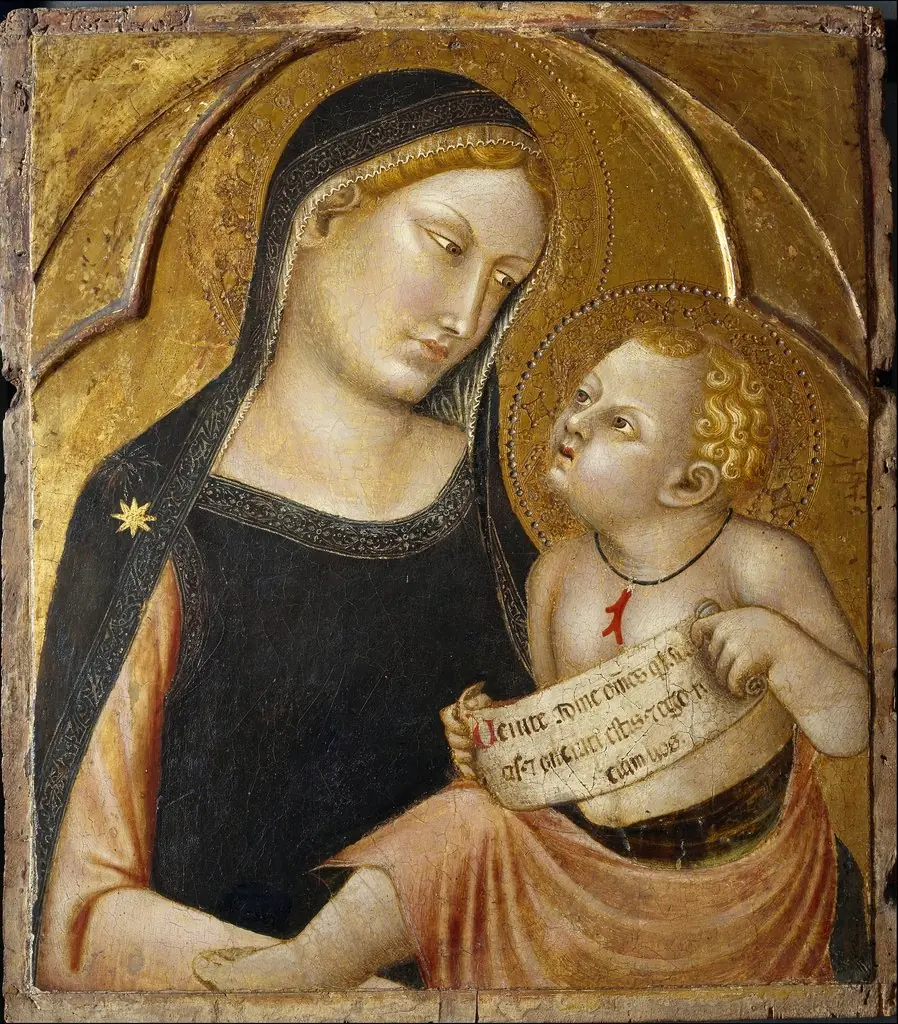
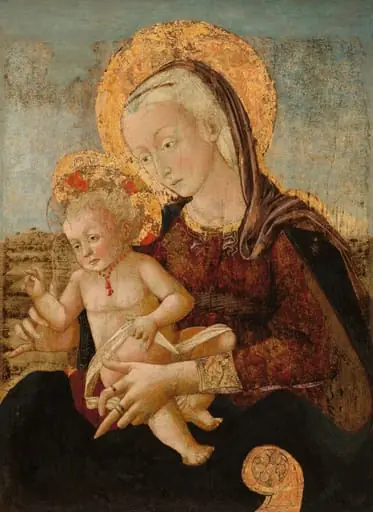
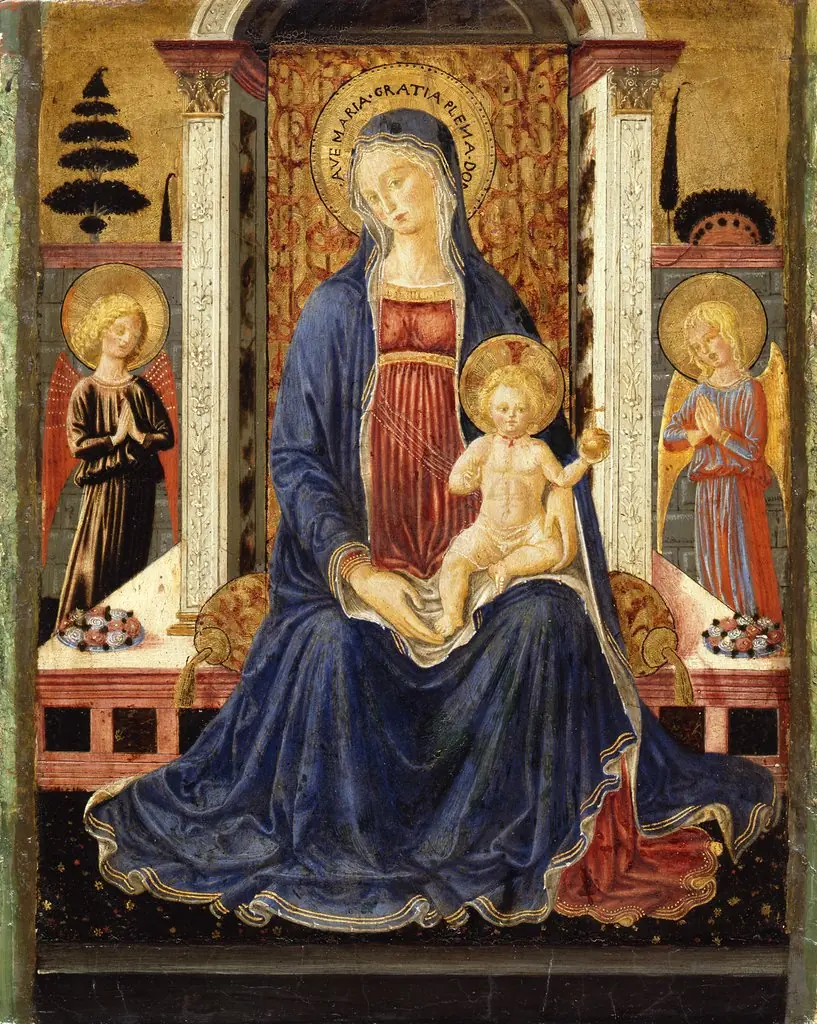
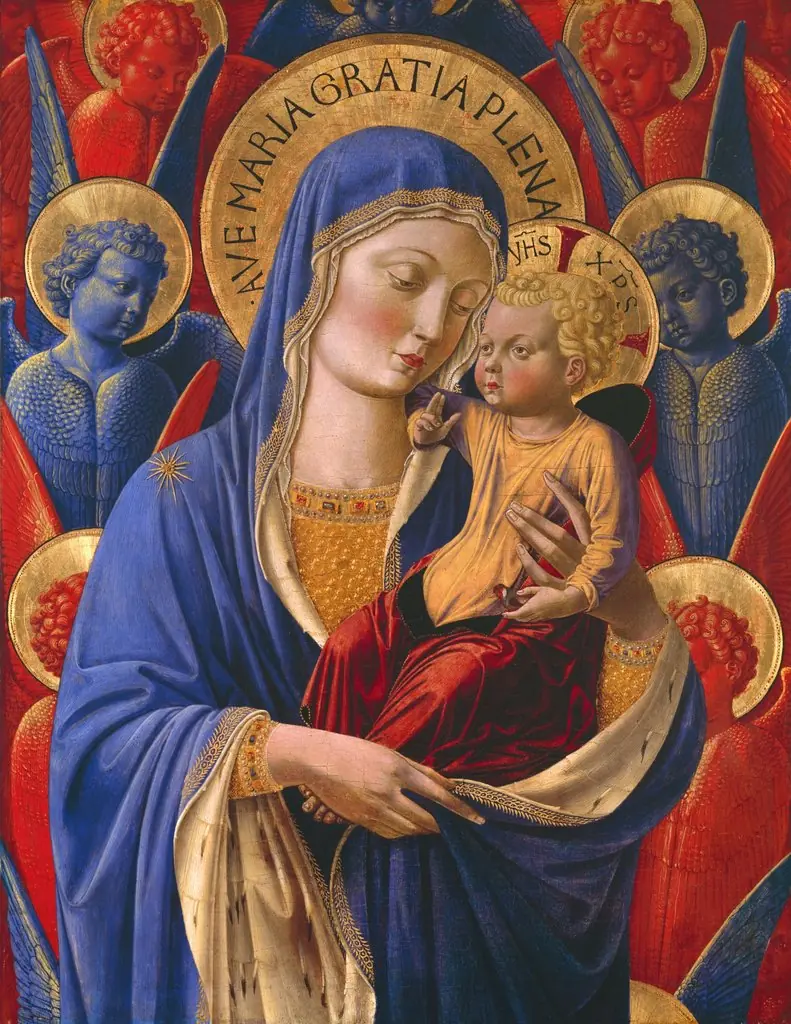
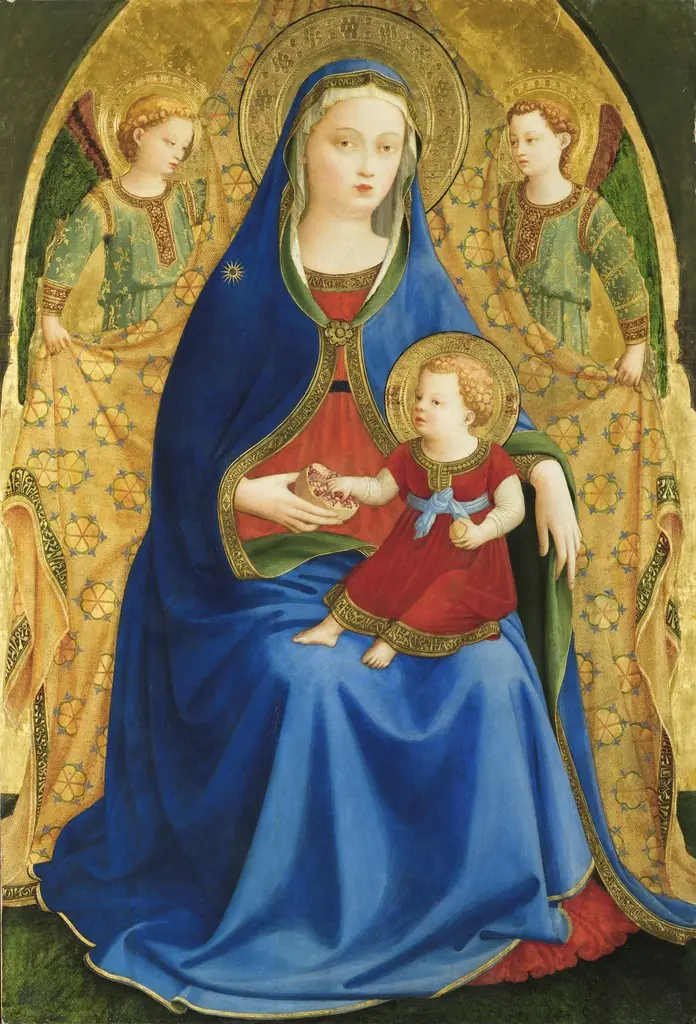
The Virgin Mary, seated on a throne, holds the Christ Child, both crowned with halos to signify their sacred status. Jesus is depicted holding a scroll, likely inscribed with scriptural text, symbolizing his role as divine teacher. The composition follows Byzantine conventions, emphasizing spiritual authority over naturalism. The figures' solemn expressions and frontal orientation invite contemplation, aligning with devotional practices of the time.
Technique & Style
Lorenzetti employed tempera and gold leaf on panel, achieving luminous surfaces through meticulous layering. The Virgin’s blue robe features intricate patterns, while the gold background, though flat, suggests divine space rather than physical depth. Figures are elongated and stylized, with careful attention to drapery folds and textile detail. The palette—deep ultramarine, rich reds, and radiant gold—enhances the image’s ceremonial character without abandoning the Sienese love of refined ornament.
History & Provenance
The panel was once part of a multi-paneled altarpiece, likely created for a church or chapel in Siena. Over time, the larger work was dismantled, and this fragment survived into modern collections. It entered the Museum of Fine Arts, Budapest, where it remains today. Its survival as a standalone piece reflects both the fragility of medieval altarpieces and the 19th-century trend of dispersing religious art into secular museums.
Context
Ambrogio Lorenzetti worked alongside his brother Pietro, both contributing to the evolution of Sienese painting during a period of intense religious patronage. While Byzantine models still dominated sacred imagery, artists like Lorenzetti began incorporating subtle spatial awareness and richer textures. This fragment captures a moment of transition—rooted in tradition yet hinting at emerging naturalistic tendencies in Italian art.
Legacy
Though only a fragment, the work exemplifies the technical precision and devotional intensity characteristic of Lorenzetti’s output. It stands as a testament to the enduring influence of Byzantine iconography in Tuscany and the role of panel painting in medieval worship. Its preservation in Budapest underscores the international circulation of Italian art after the dissolution of ecclesiastical collections in the early modern era.
Artist & collection
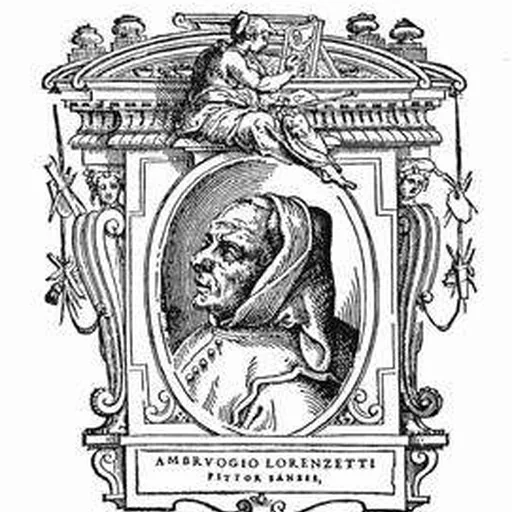
Artist
Ambrogio Lorenzetti (Italian pronunciation: ; c. 1290 – after 9 August 1348) was an Italian painter of the Sienese school. He was active from approximately 1317 to 1348. He painted The Allegory of Good and Bad…