Artwork
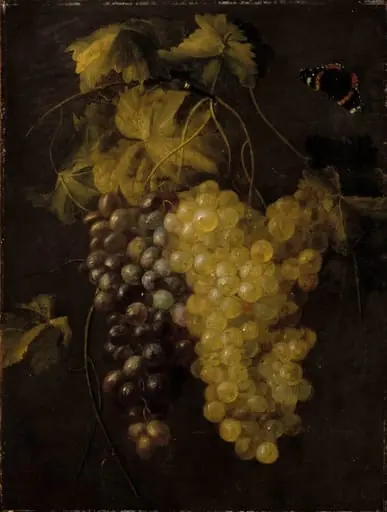
Weintrauben mit drei Trauben und Schmetterlingen
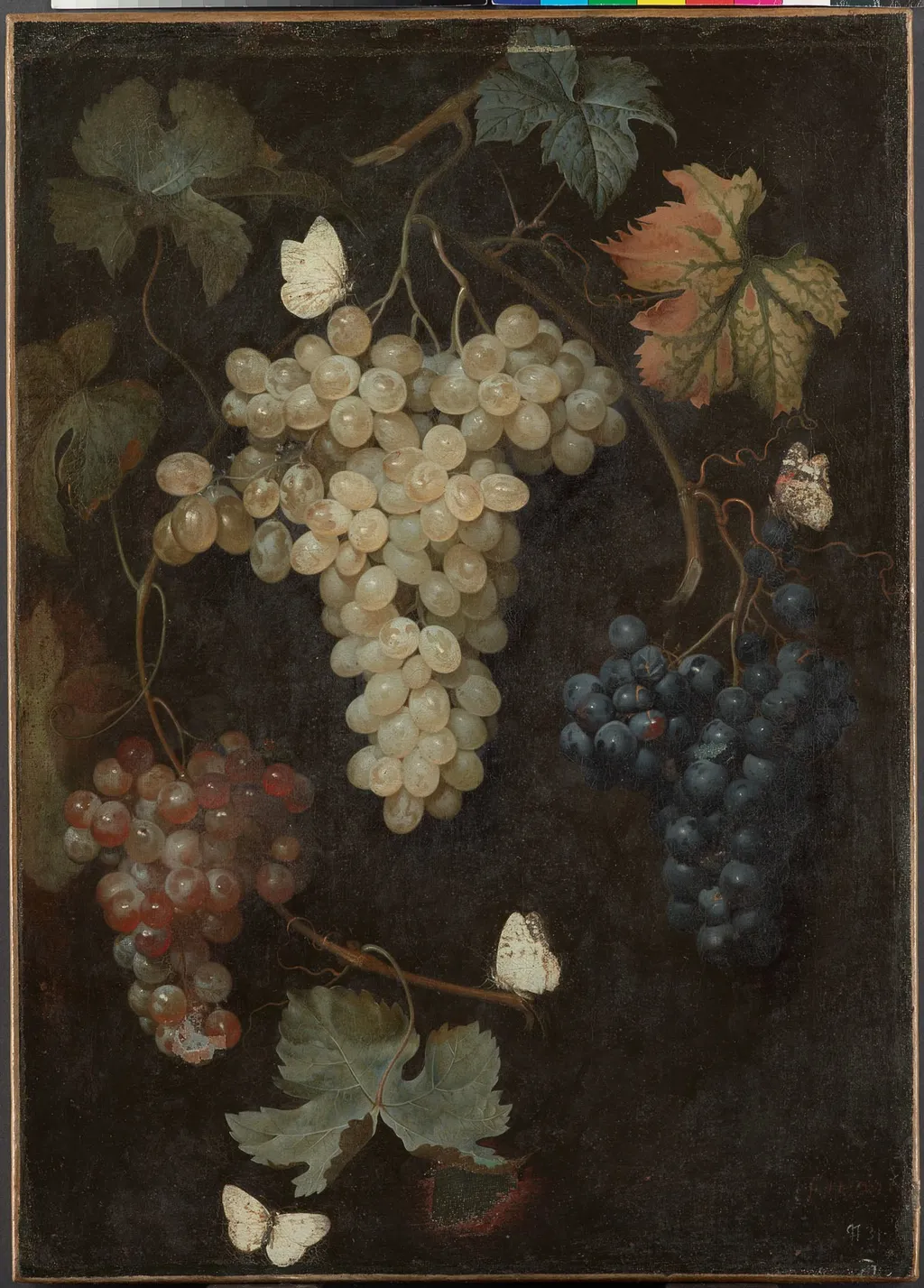
Weintrauben mit drei Trauben und Schmetterlingen is an unspecified painting by Philipp Ferdinand de Hamilton. It dates from 1714 and is held in the collection of the Kunsthistorisches Museum.
About this work
Overview
Philipp Ferdinand de Hamilton, an 18th‑century painter of Southern Netherlandish origin active in Austria, produced the still‑life titled *Weintrauben mit drei Trauben und Schmetterlingen* circa 1714. The work is part of the Kunsthistorisches Museum’s collection and exemplifies the period’s interest in detailed natural subjects.
Subject & Meaning
The composition presents a cluster of grapes rendered in varying hues—white, red and purple—accompanied by foliage and a few butterflies. The insects, with white wings marked by brown spots, hover near the fruit, creating a subtle dialogue between the fleeting and the cultivated.
Technique & Style
Hamilton employs a dark, almost tenebristic background that heightens the luminosity of the grapes, giving them a polished, ripe appearance. The leaves show a slight wilt, adding texture, while the fine brushwork on the butterflies captures delicate wing patterns.
History & Provenance
Created around 1714, the painting entered the Kunsthistorisches Museum’s holdings at an unspecified date, remaining there as a representative example of Hamilton’s oeuvre and of Austrian still‑life painting of the early 18th century.
Context
The work aligns with the broader still‑life tradition flourishing in the Southern Netherlands and Austria, where artists such as Willem Kalf and Jan Davidsz de Heem explored similar themes of abundance, texture, and the transience suggested by insects among fruit.
Artist & collection
Artist
Philipp Ferdinand de Hamilton (c. 1664 – 1750), was an 18th-century painter from the Southern Netherlands active in Austria.

 Kaksi rypäleterttua
 Still Life
 Still Life
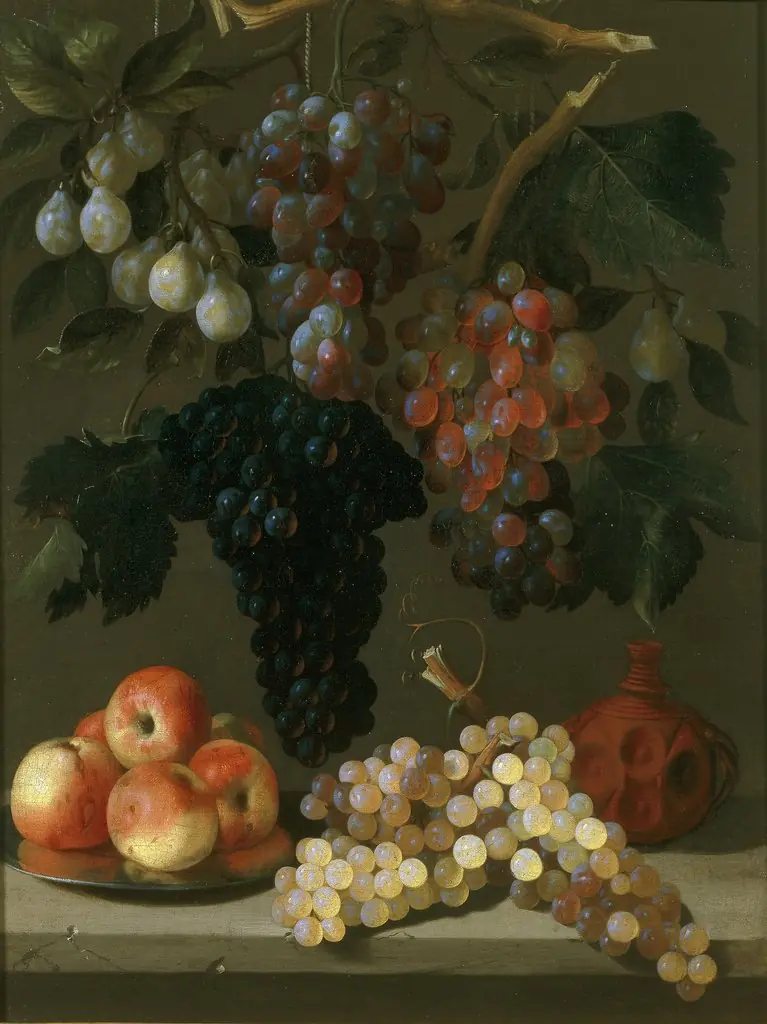 Still Life with Grapes, Apples and Plums
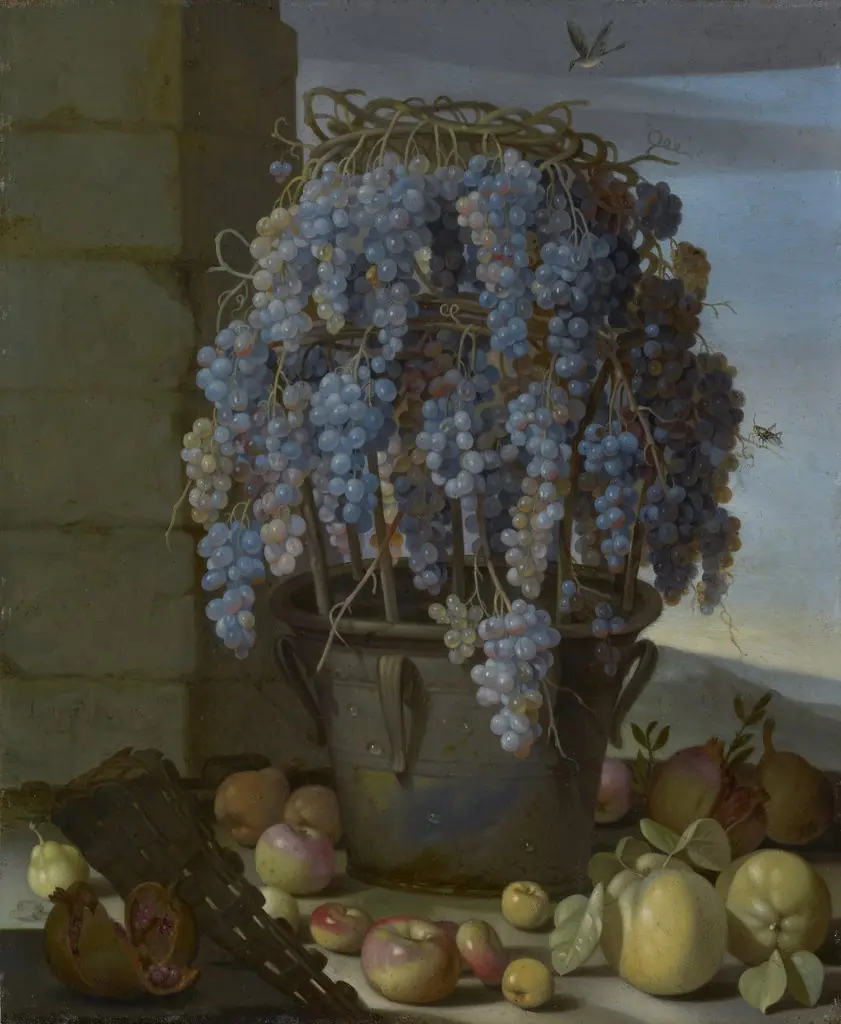 Still Life with Grapes and other Fruit
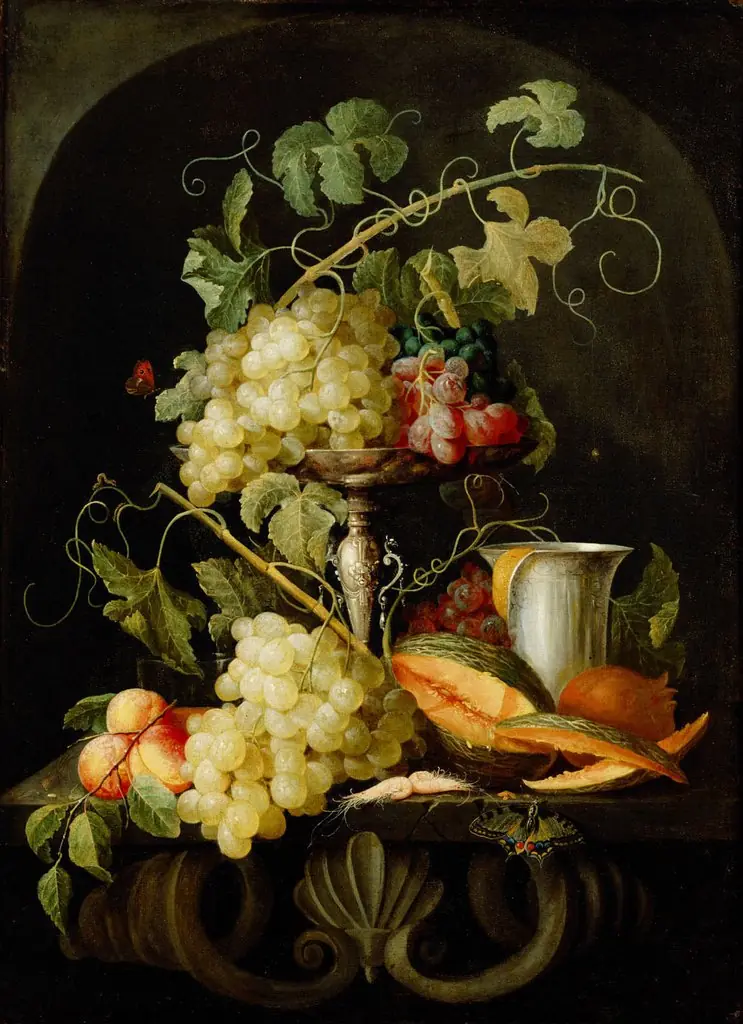 Still life with fruit
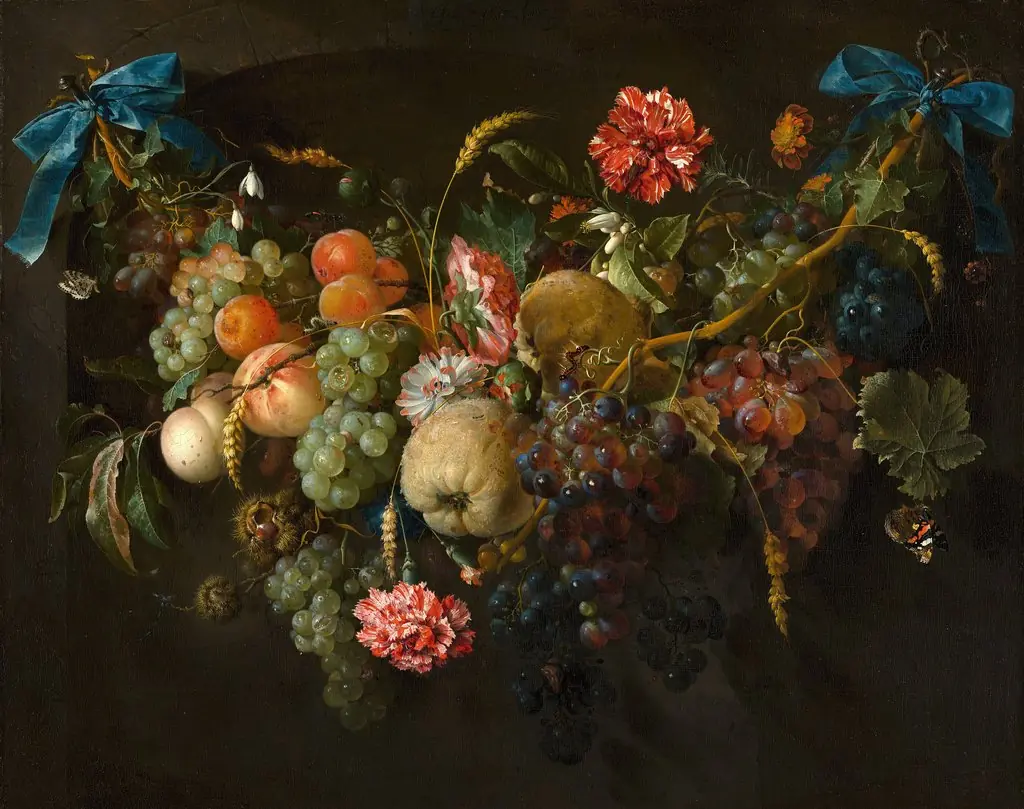 Garland of Fruit and Flowers
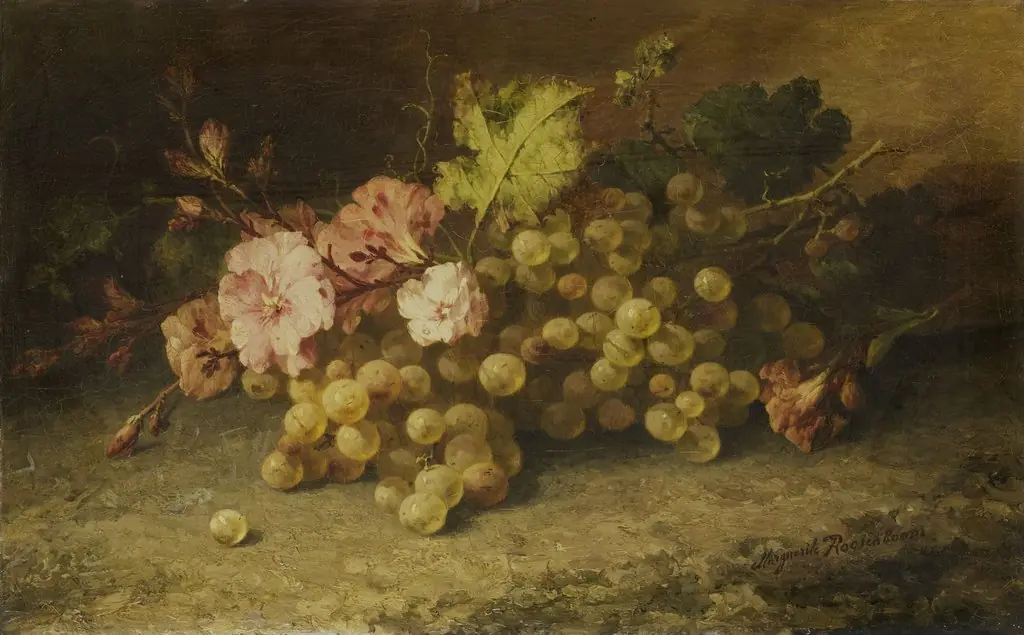 Still life with grapes
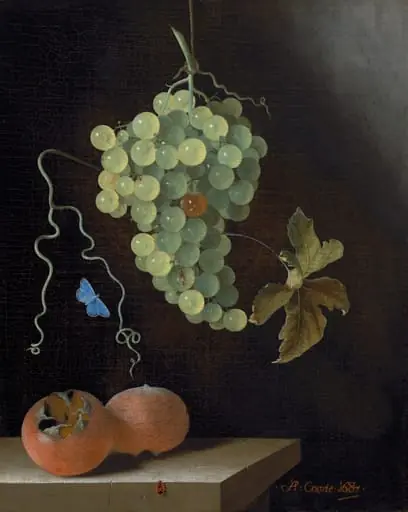 Still Life with a Hanging Bunch of Grapes, Two Medlars, and a Butterfly
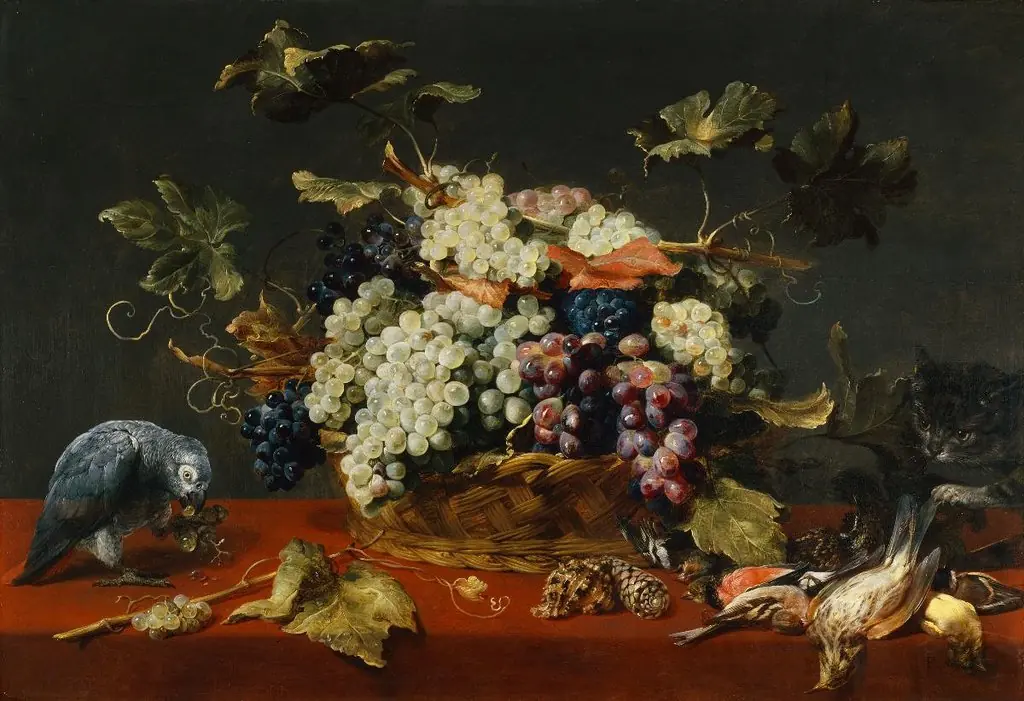 Traubenkorb mit Papagei und Katze
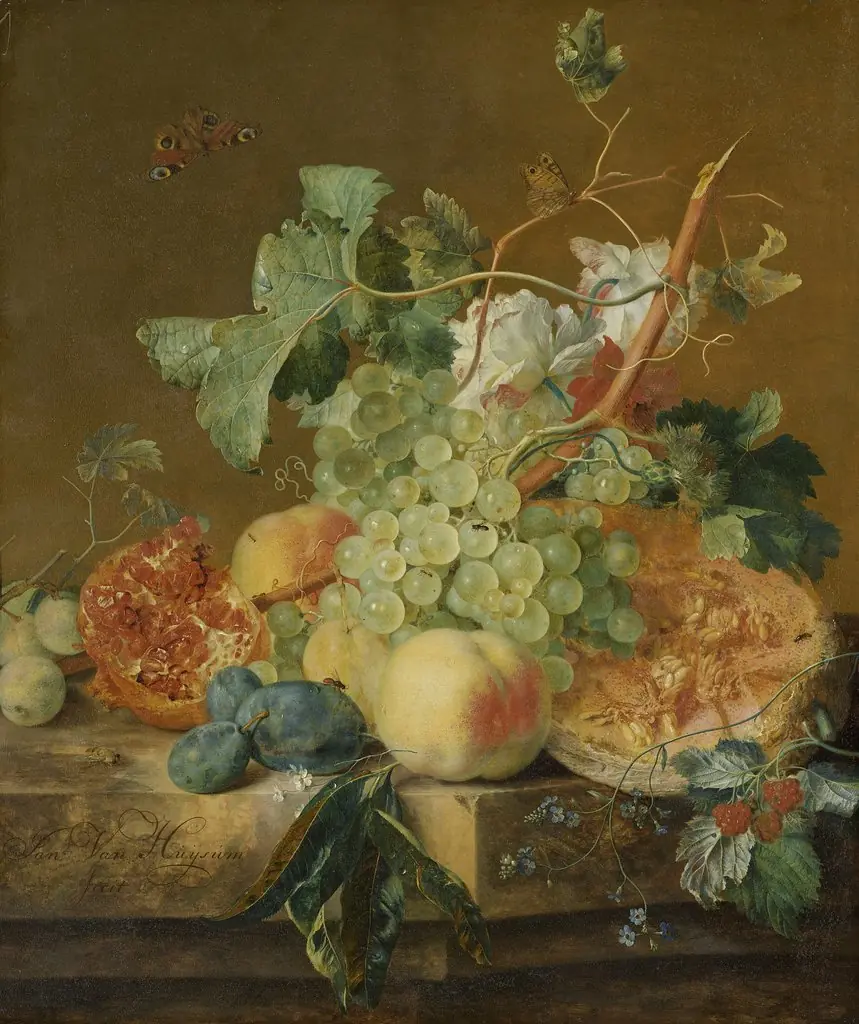 Still Life with Fruit
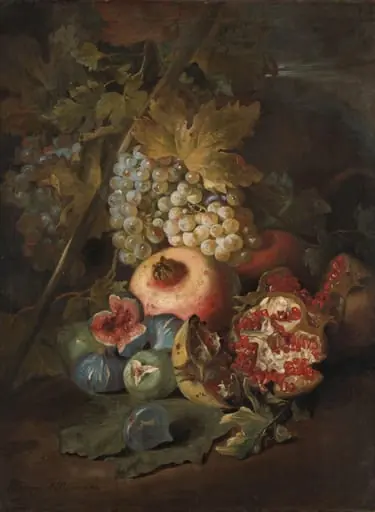 Bunches of Grapes, Pomegranates and Figs in a Landscape