Artwork
Standing Woman
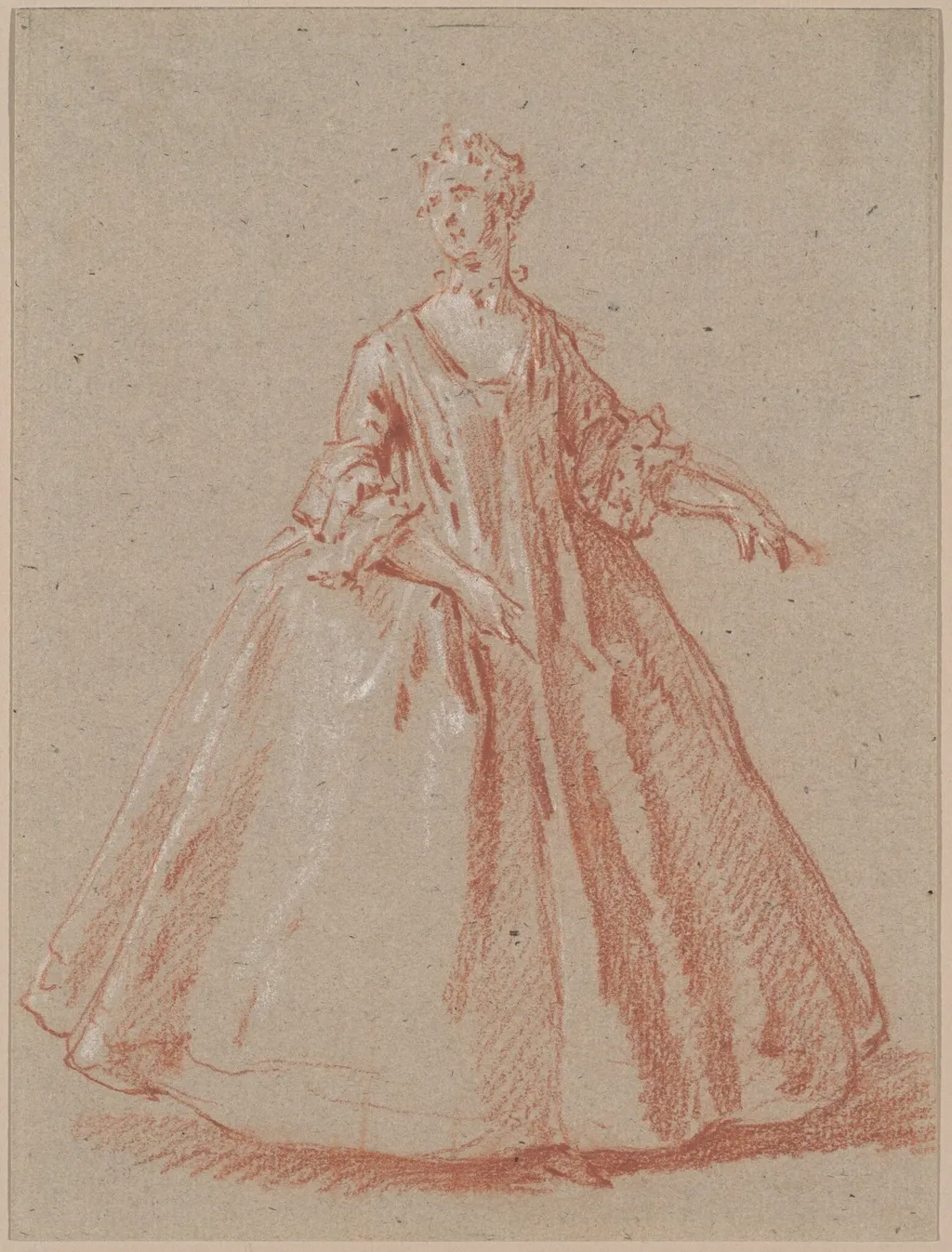
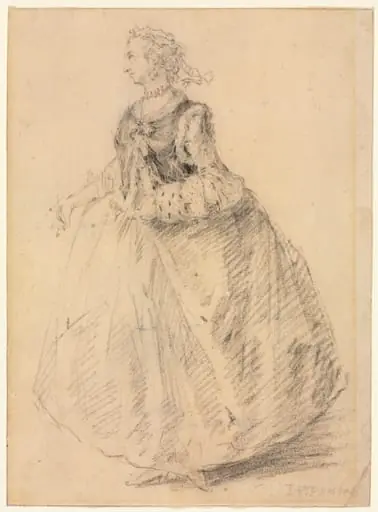
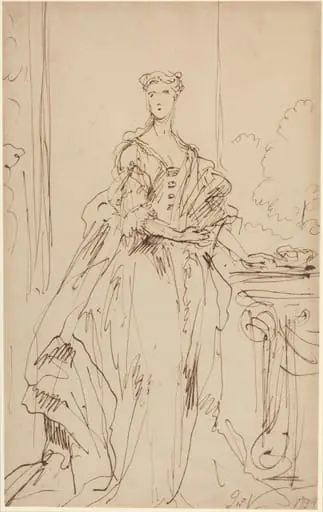
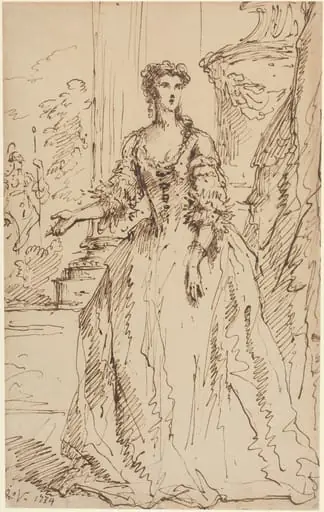
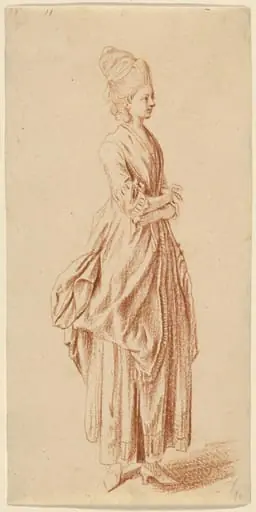
Standing Woman is a chalk drawing by the Baroque artist Jean-Baptiste Oudry. It dates from 1730 and is held in the collection of the National Gallery of Art.
About this work
Overview
Standing Woman is a red and white chalk drawing on gray laid paper, created by Jean-Baptiste Oudry around 1730. Characterized by loose, quick lines, the work appears more sketch-like than finished, yet effectively conveys a sense of confident pose and soft, flowing attire.
Subject & Meaning
The subject, a woman standing with one hand on her hip, exudes confidence. Her long, high-necklined dress with puffy sleeves is meticulously rendered, with the artist's focus on capturing lifelike detail and elegant pose.
Technique & Style
Oudry employed red and white chalk on gray paper to achieve warm, earthy tones and nuanced light and shadow. The drawing embodies Rococo's blend of decorative elegance and observational precision, though its loose execution suggests a preliminary or study piece.
History & Provenance
Created circa 1730 by Jean-Baptiste Oudry, a French Rococo artist known for naturalistic scenes and tapestry designs. While specific provenance details are not provided, the work aligns with Oudry's broader contributions to 18th-century French art.
Context
Standing Woman reflects the Rococo period's emphasis on elegance and realism. In contrast to the dramatic movement of the preceding Baroque style, this piece focuses on subtle, confident pose and detailed rendering of everyday attire.
Legacy
As part of Oudry's oeuvre, Standing Woman contributes to the artist's reputation for blending decorative flair with observational skill, influencing French art in the 18th century through both his drawings and tapestry designs.
Artist & collection

Artist
Jean-Baptiste Oudry was a French Rococo painter, engraver, and tapestry designer. He is particularly well known for his naturalistic pictures of animals and his hunt pieces depicting game. His son, Jacques-Charles Oudry, was also a painter.