Artwork
The Barbaric Dance (Before Salomé and Herod)
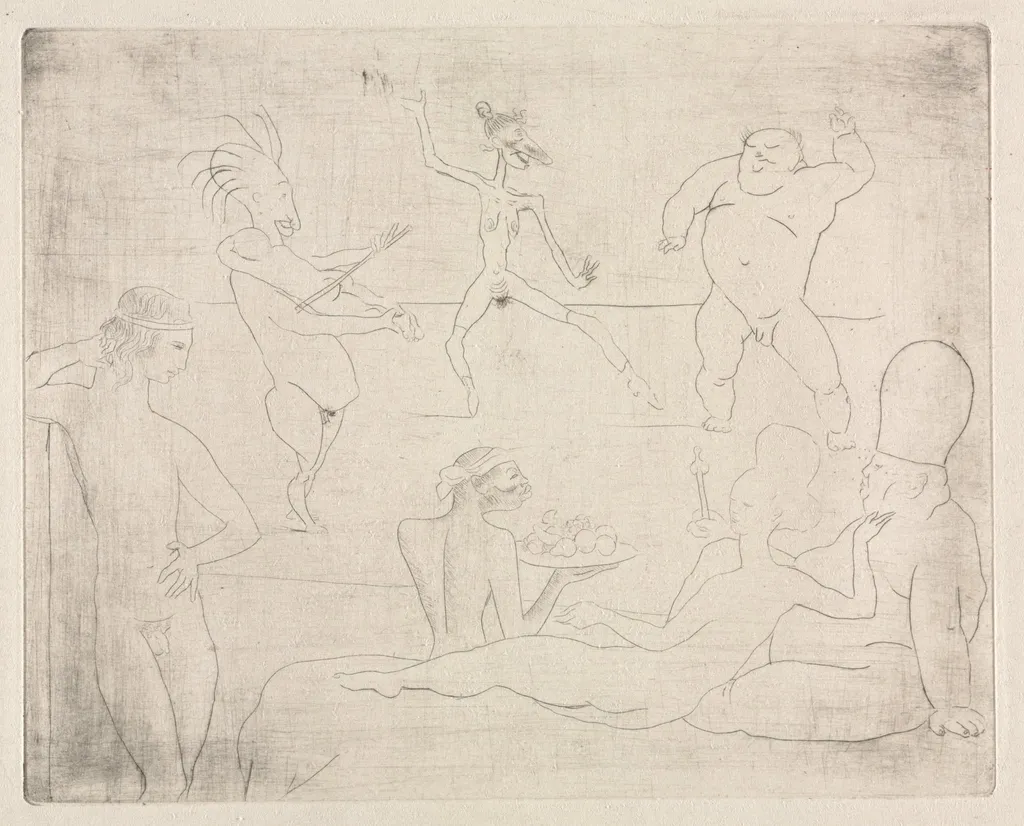
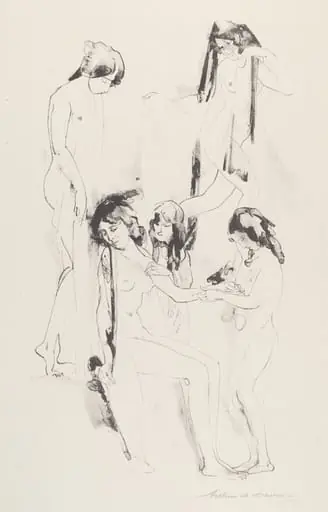
The Barbaric Dance (Before Salomé and Herod) is a print by Pablo Picasso. It dates from 1905 and is held in the collection of the Cleveland Museum of Art.
About this work
This painting shows a wild, crowded scene with dancing figures and a large head in the background.
This painting shows a wild, crowded scene with dancing figures and a large head in the background. The colors are mostly dull greys and browns. The shapes are rough and sharp, almost like broken glass.
Picasso made this in 1905, during a time when he wasn’t using bright colors. He focused more on strange, twisted forms. It feels raw and a little scary, like a nightmare.
Look up Pablo Picasso (Spanish, 1881–1973) to see more like this.
Overview
Created in 1905 by Pablo Picasso, *The Barbaric Dance (Before Salomé and Herod)* is a print embodying the artist's early experimental style, characterized by somber tones and distorted forms.
Subject & Meaning
The work likely draws inspiration from the biblical narrative of Salomé and Herod, depicting a chaotic dance scene with dynamic, expressive figures set against a prominent background figure.
Technique & Style
Executed during Picasso's somber, pre-Cubist period, the piece features muted grey and brown hues, sharp, angular forms, and a sense of raw intensity.
History & Provenance
*The Barbaric Dance* is part of The Cleveland Museum of Art's collection, created during a pivotal time in Picasso's career marked by stylistic exploration.
Context
This work reflects Picasso's transitional phase away from brighter colors towards more subdued, emotionally charged palettes and distorted figural representations.
Artist & collection
Artist
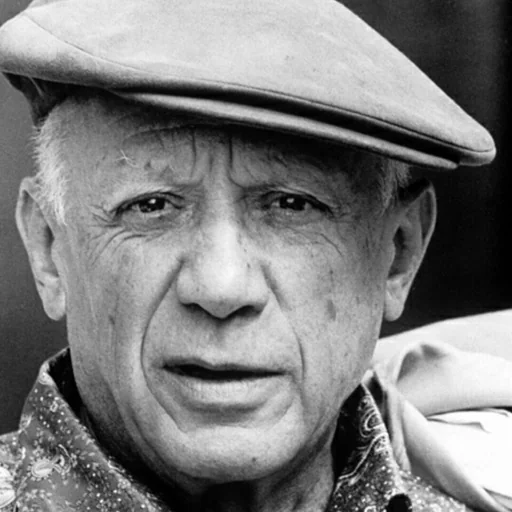
Pablo Ruiz Picasso (25 October 1881 – 8 April 1973) was a Spanish painter and sculptor who spent most of his adult life in France.

 Large Resurrection (Grosse Auferstehung)
 Untitled
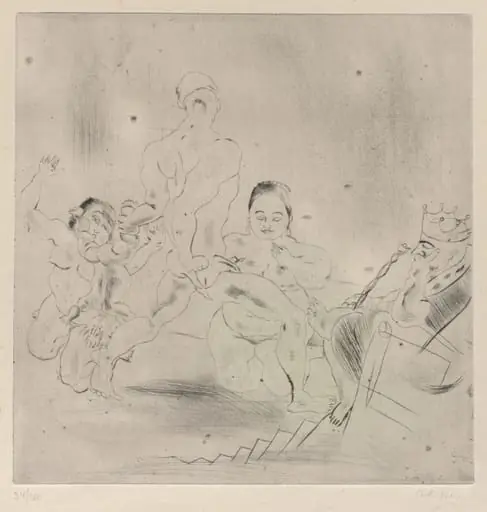 The Judgment of Solomon
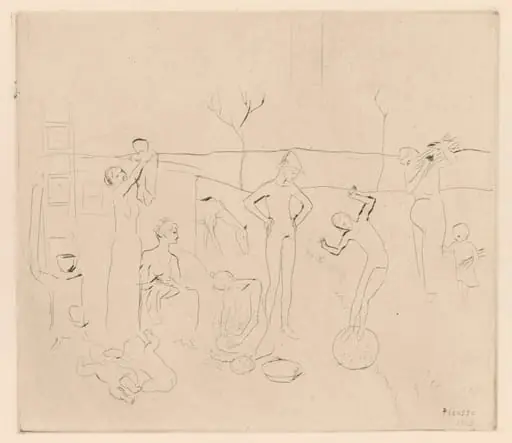 The Saltimbanques
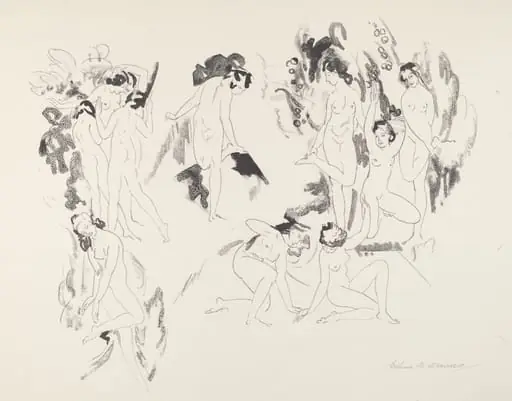 Recurrence
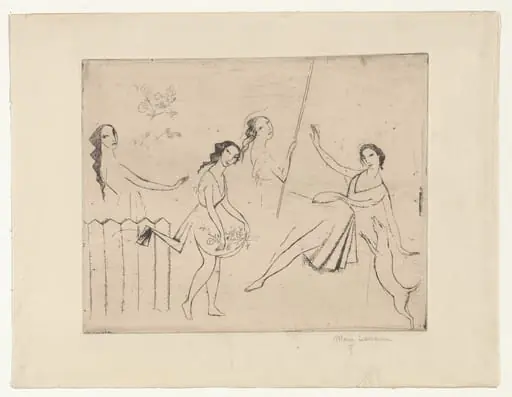 Untitled
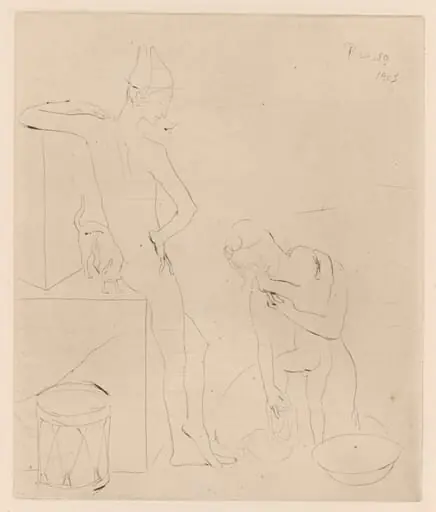 The Bath
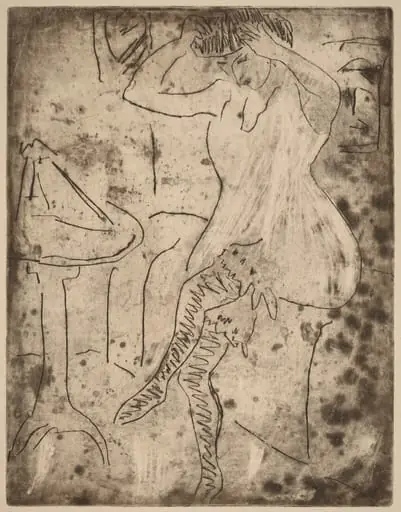 Dodo Arranging Her Hair
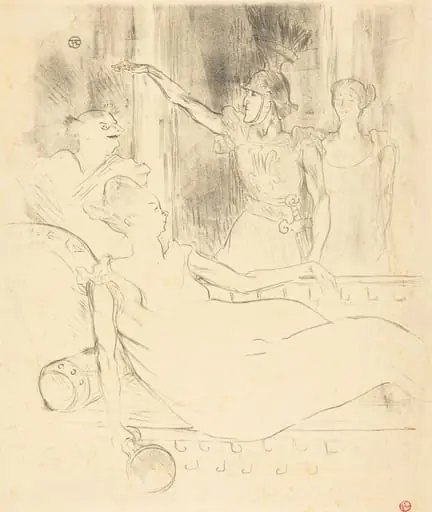 Mme. Simon-Girard, Brasseur, and Guy in "La belle Helene" (Mme. Simon-Girard, Brasseur et Guy dans "La belle Hélène")
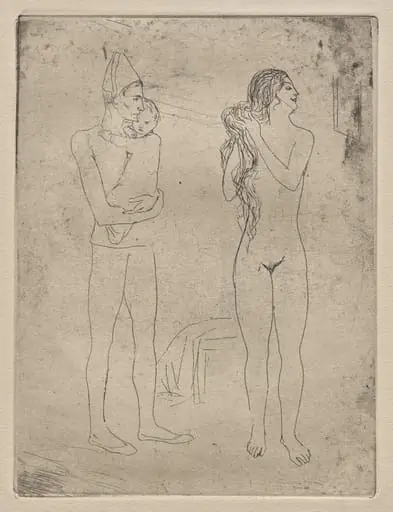 The Mother at Her Toilette
 Stir of Shadowed Melodies