Artwork
Untitled
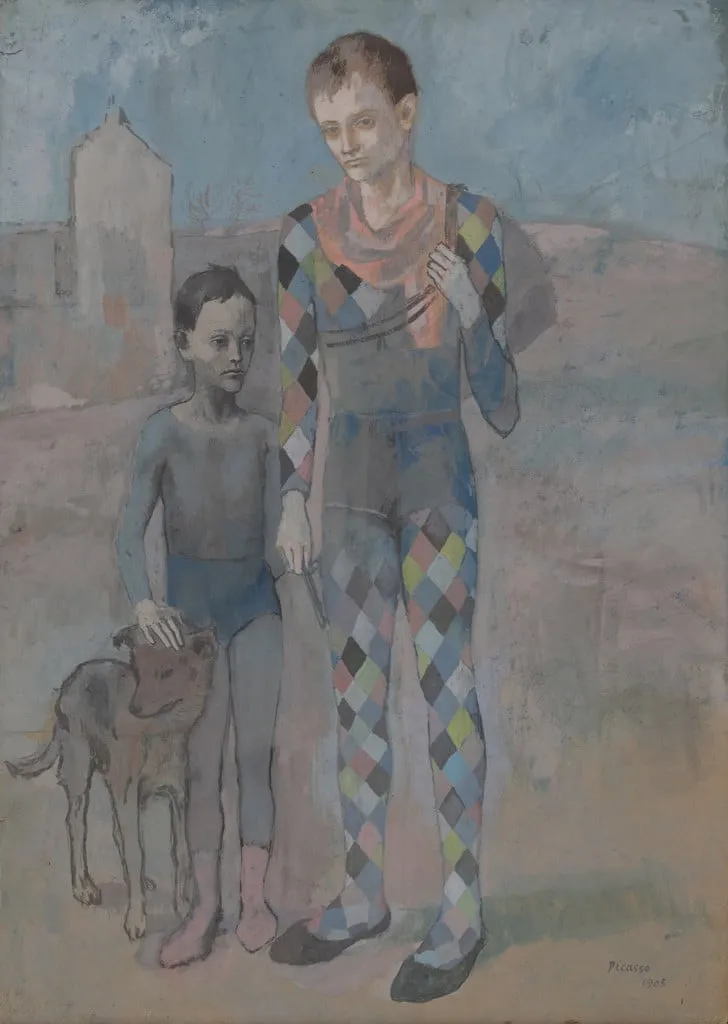
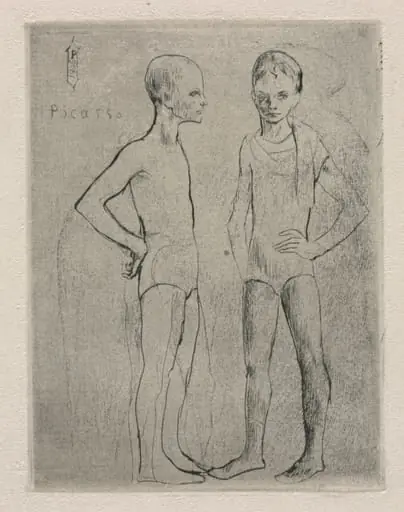
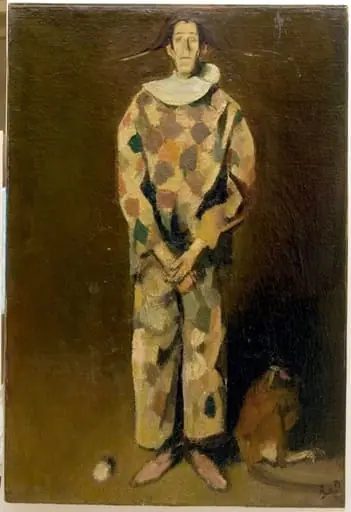
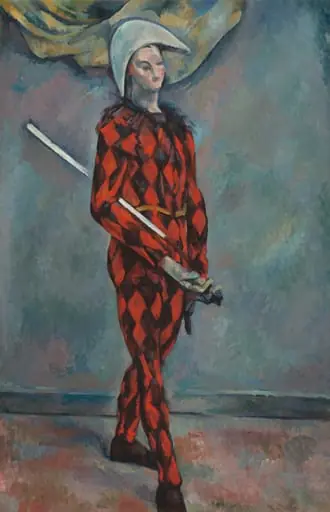
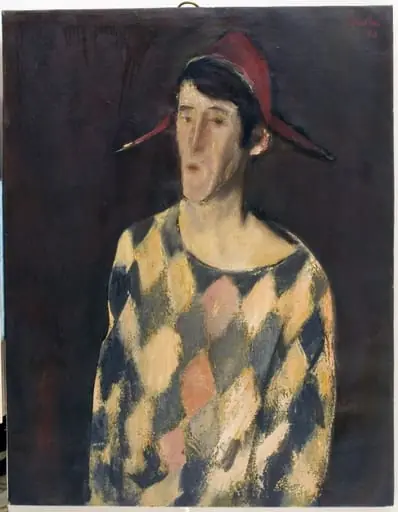
Untitled is a gouache drawing by Pablo Picasso. It dates from 1905 and is held in the collection of the Museum of Modern Art.
About this work
Overview
Though not part of a named series, the work belongs to a transitional phase in his career, preceding the radical innovations of Cubism.
Pablo Picasso created this gouache on board drawing in 1905 during his early years in Paris. Though not part of a named series, the work belongs to a transitional phase in his career, preceding the radical innovations of Cubism. The medium—gouache applied to a rigid support—allowed for opaque, matte surfaces that contrasted with his earlier watercolor studies. Its modest scale and quiet tone reflect an interest in intimate, observational subjects rather than grand narratives.
Subject & Meaning
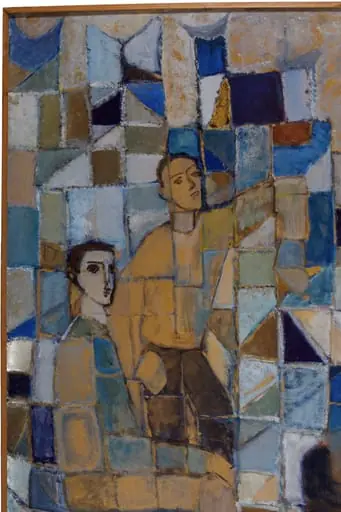
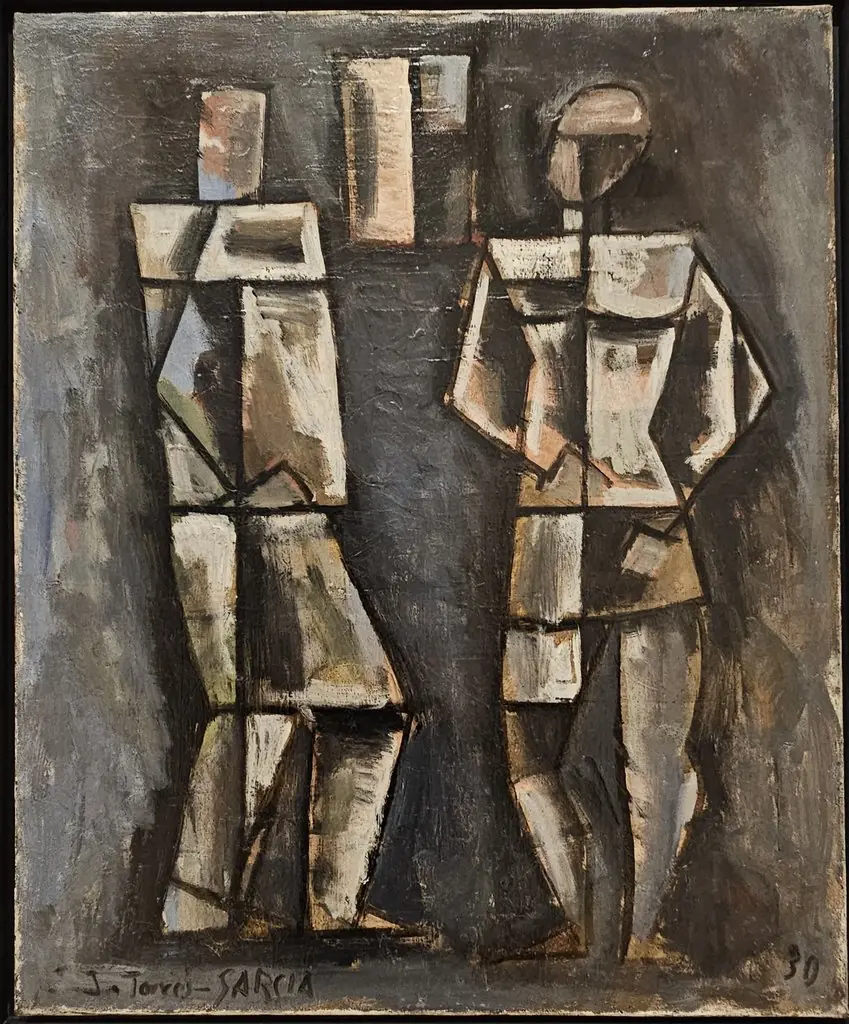
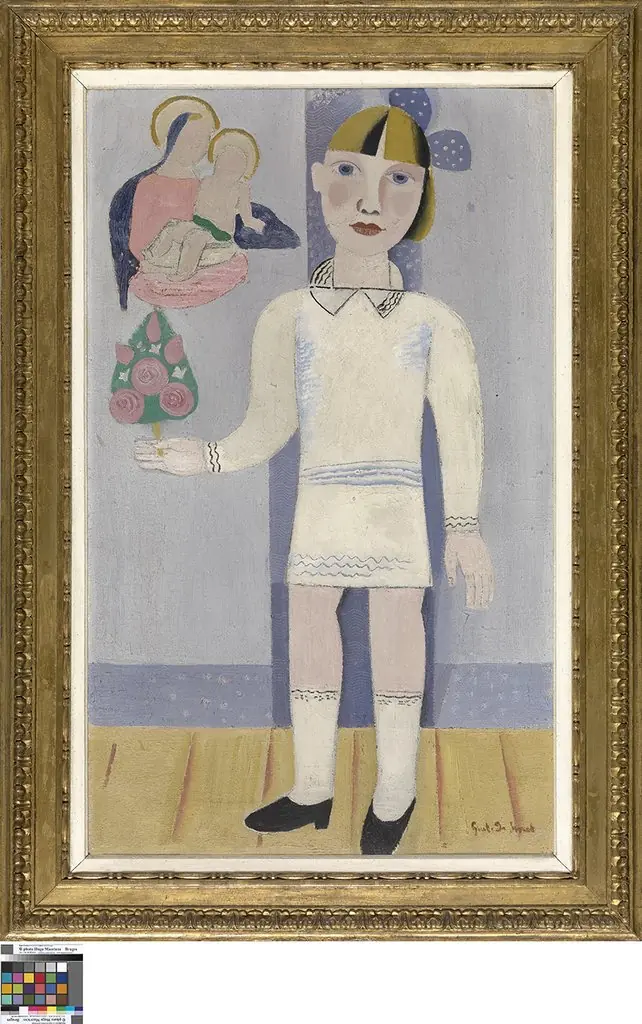
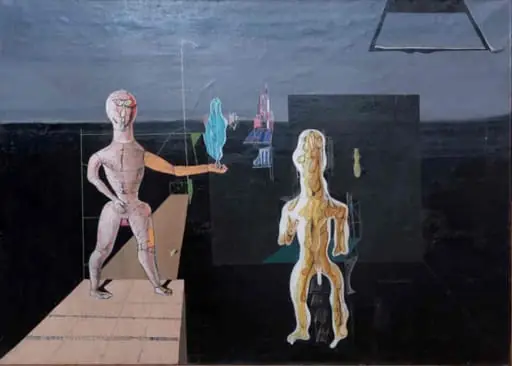
The composition features two figures: a man in a patterned garment and a young boy in a blue leotard, standing side by side. The boy’s hand rests on a dog, while the man holds a slender, ambiguous object—possibly a cane or staff. Their postures suggest a quiet, unspoken bond. The absence of narrative detail or dramatic action invites contemplation rather than interpretation, aligning with Picasso’s interest in human presence over storytelling during this period.
Technique & Style
Picasso employed gouache for its dense, non-transparent quality, building form through flat planes of color rather than gradation. The board support provided a stable surface for sharp edges and layered washes, enhancing the tactile presence of the figures. The muted blue-gray background isolates the subjects, emphasizing their simplified contours. The diamond-patterned costume and the boy’s leotard introduce subtle rhythmic contrasts, hinting at decorative influences without overt stylization.
History & Provenance
The work entered the collection of The Museum of Modern Art in New York, where it remains today. While its early ownership history is not fully documented, its inclusion in MoMA’s holdings reflects its significance as an example of Picasso’s pre-Cubist explorations. The piece was likely acquired during the museum’s formative years, when its curators actively sought works that illustrated the evolution of modern European art.
Context
In 1905, Picasso was navigating between his Blue and Rose Periods, moving from melancholic themes toward warmer, more tender subjects. This work coincides with his growing engagement with circus performers and itinerant figures, common motifs in his work at the time. The subdued palette and restrained composition reflect broader trends in Parisian avant-garde circles, where artists were rethinking representation through simplified forms and emotional restraint.
Legacy
Though not widely exhibited, this drawing contributes to understanding Picasso’s gradual shift toward abstraction. Its use of flat color and deliberate simplification foreshadows later developments in his work, particularly in how form is distilled to essential shapes. As a small-scale study in observation and material, it stands as a quiet but deliberate step in the broader trajectory of 20th-century modernism.
Artist & collection
Artist
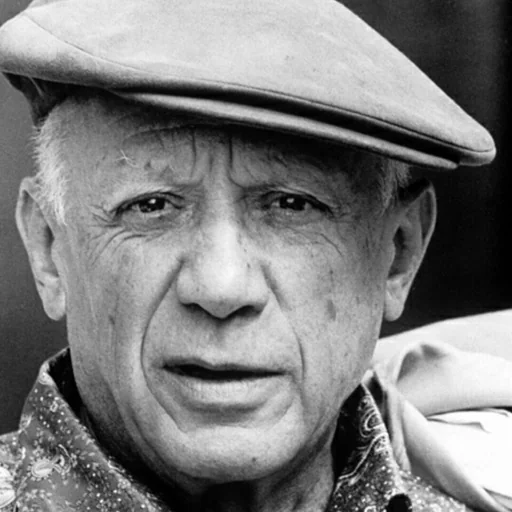
Pablo Ruiz Picasso (25 October 1881 – 8 April 1973) was a Spanish painter and sculptor who spent most of his adult life in France.