Artwork
Peisaj-Tulcea
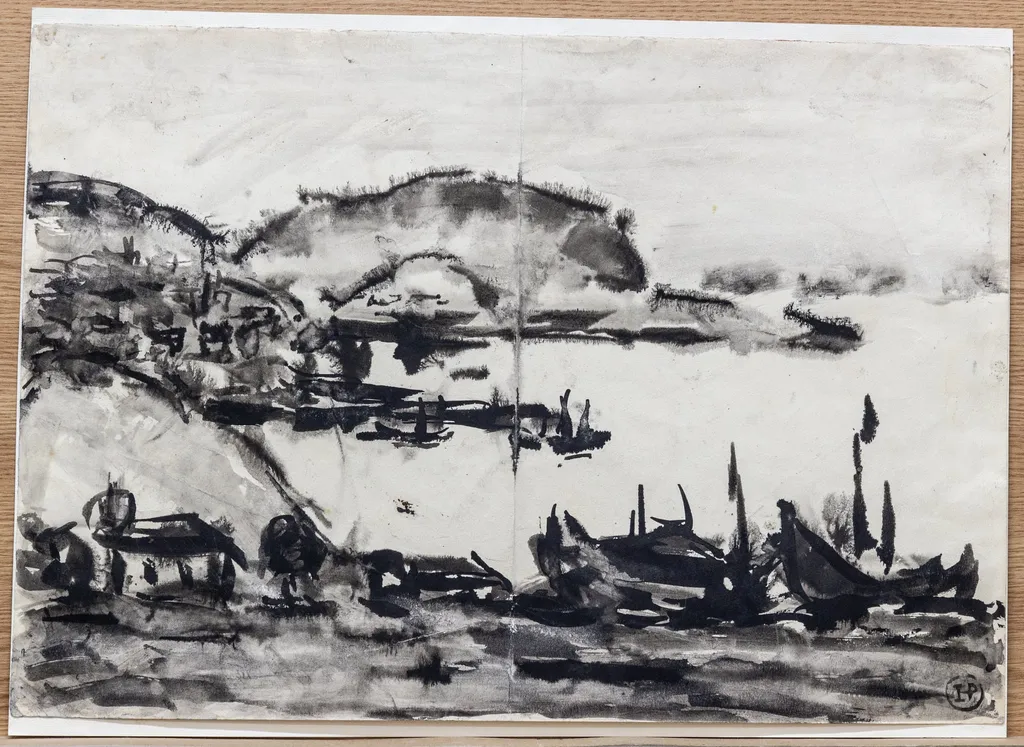
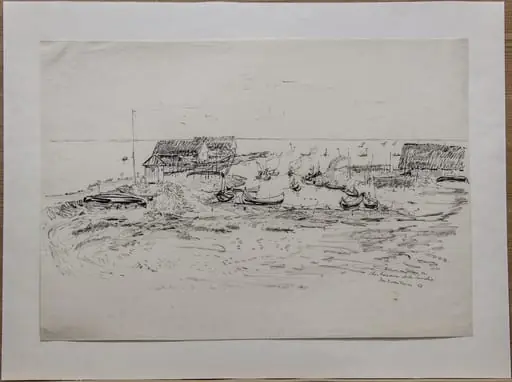
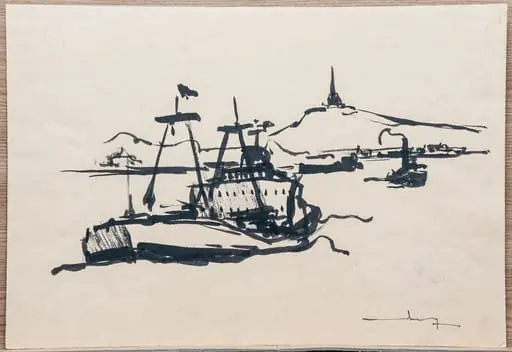
Peisaj-Tulcea is a drawing by Ion Pacea. It dates from 1950 and is held in the collection of the Gavrila Simion Eco-Museum Research Institute Tulcea.
About this work
Overview
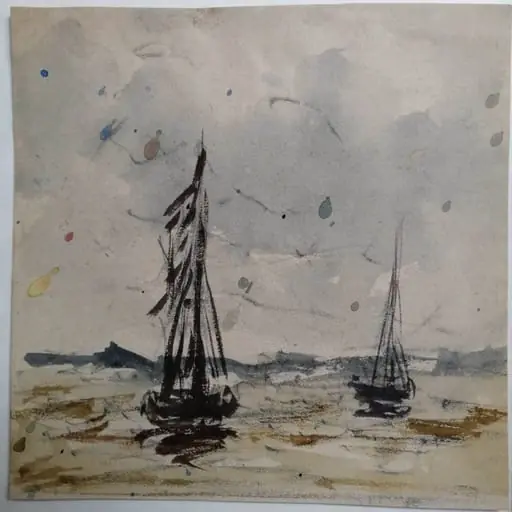
Peisaj‑Tulcea, attributed to Ion Pacea and dated to around 1950, is an ink drawing preserved in the Museum of Ethnography. The composition presents a coastal scene rendered with a loose, gestural hand, emphasizing the rugged character of the shoreline.
Subject & Meaning
The image depicts a rocky riverbank or seashore where jagged stones dominate the lower field and a few modest boats float on the water. Sparse vegetation crowns the upper edge, suggesting a natural, perhaps remote, locale. The minimal detail invites viewers to contemplate the stark interaction between land, water, and human presence.
Technique & Style
Pacea employed swift, uneven ink strokes, favoring suggestion over precise rendering. Dark, cross‑hatched lines define the rocks and water, while large blank areas create contrast and a sense of openness. The overall approach reflects a sketch‑like spontaneity, using line density to convey depth and texture rather than elaborate modeling.
History & Provenance
Created circa 1950, the drawing entered the collection of the Museum of Ethnography, where it remains accessible for study. Its attribution to Pacea is based on stylistic analysis and museum records, linking the work to the artist’s mid‑century output.
Artist & collection
Artist
Ion Pacea’s small prints and drawings show quiet corners of the Danube Delta—houses along the shore, river landings, and marshy light.
Museum
Gavrila Simion Eco-Museum Research Institute Tulcea
Continue through works from the same source collection.