Artwork
Peisaj
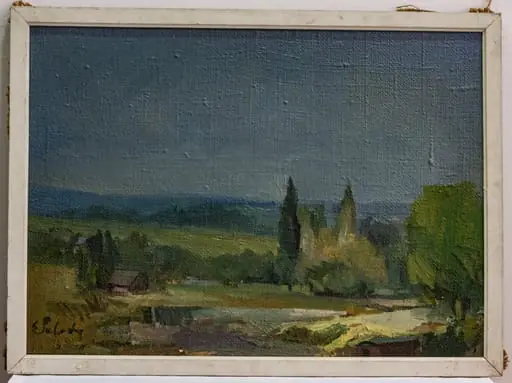
Peisaj is a print by Palade Eugen. It dates from 1978 and is held in the collection of the Gavrila Simion Eco-Museum Research Institute Tulcea.
About this work
If you're interested in learning more about the artist who created this painting, you might want to look up Palade Eugen.
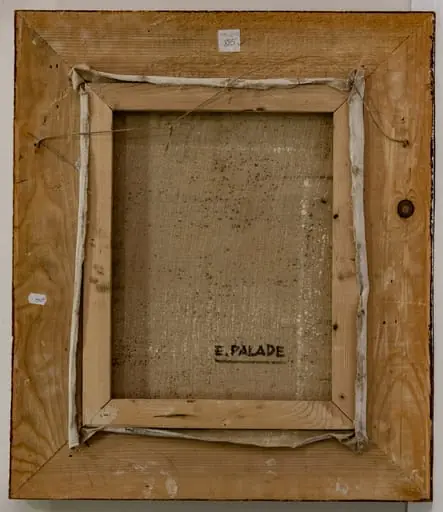
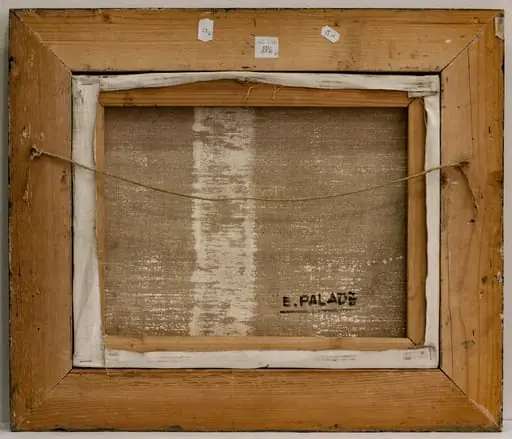
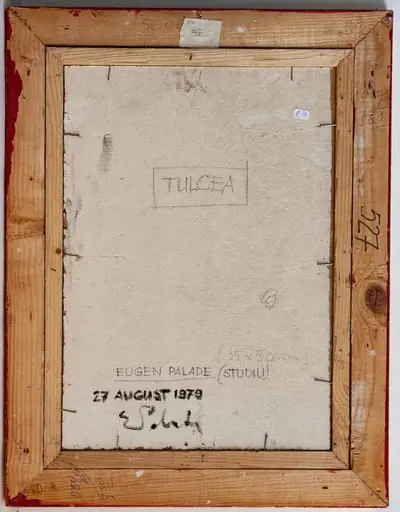
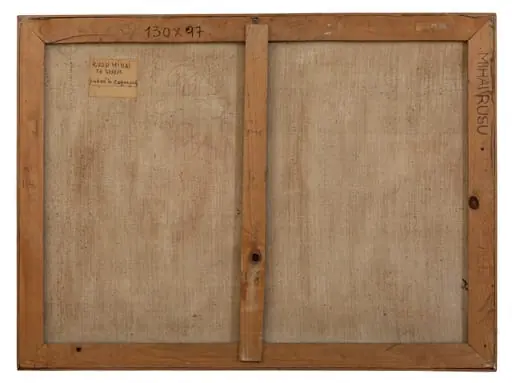
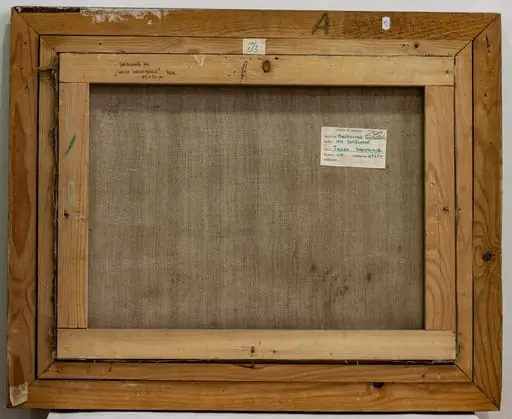
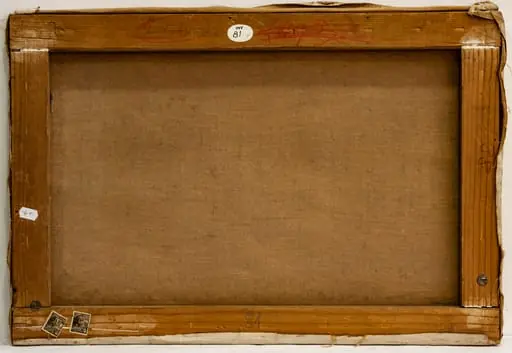
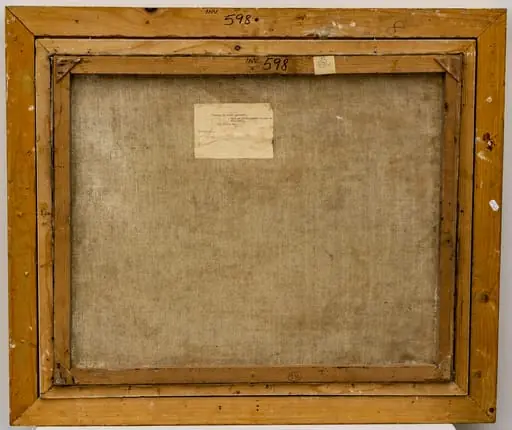
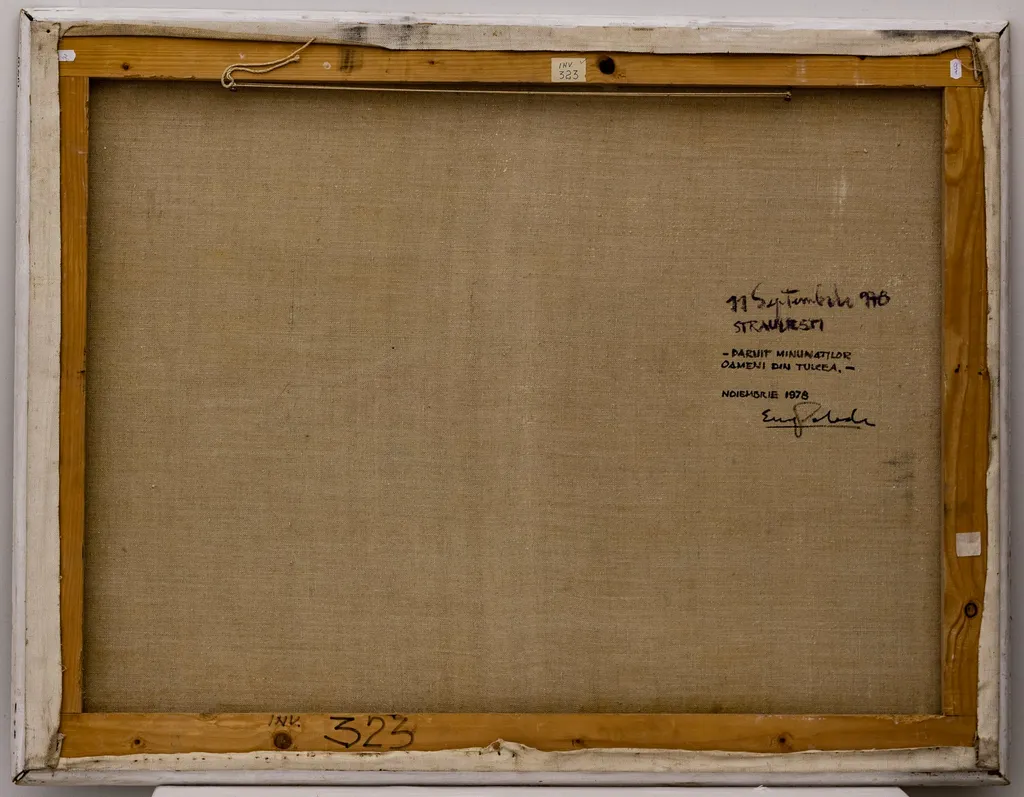
This image shows the back of a framed painting, with a beige canvas and a white wooden frame. The frame has a small hole at the top, and a piece of string is attached to it. There are some handwritten notes on the canvas, including the title "Peisaj" and the date "1978". The notes are written in black ink.
The frame is made of wood and has a simple design. It is not ornate or decorative, but rather functional. The canvas is stretched tightly over the frame, and it appears to be a standard size.
If you're interested in learning more about the artist who created this painting, you might want to look up Palade Eugen.
Overview
Peisaj is a 1978 landscape painting by Romanian artist Palade Eugen, currently in the collection of the Museum of Ethnography. The work is presented in its original, unadorned wooden frame with a simple string hanger. Handwritten annotations on the canvas confirm the title and date, suggesting the piece was not intended for formal exhibition but rather retained as a personal or working study.
Subject & Meaning
The title 'Peisaj'—Romanian for 'landscape'—indicates the painting’s subject, though the image itself is not visible in the provided description. The absence of decorative framing and the presence of handwritten notes imply the work may have served as a private exercise or field study, reflecting the artist’s engagement with natural scenery rather than a polished public composition.
Technique & Style
The canvas is stretched taut over a standard wooden frame, indicating conventional preparation methods. The lack of ornamental framing and the utilitarian presentation suggest an emphasis on process over presentation. The use of black ink for labeling points to a working environment where documentation was integrated directly into the object, typical of artists prioritizing function in their studio practice.
History & Provenance
The painting entered the Museum of Ethnography’s collection as part of Palade Eugen’s archive, likely donated or acquired posthumously. Its unpolished state—exposed canvas, handwritten notes, basic frame—suggests it was preserved not for aesthetic value but as a documentary artifact of the artist’s daily practice, offering insight into his working methods.
Context
Created in 1978 during Romania’s communist era, the work reflects a period when artistic expression was often constrained. The modest presentation of Peisaj may indicate a retreat from public display, favoring personal observation. Such unassuming works were common among artists who maintained private creative spaces outside state-sanctioned norms.
Legacy
Peisaj survives not as a celebrated work but as a quiet record of an artist’s routine. Its preservation in a museum of ethnography underscores its value as a cultural artifact—evidence of individual practice within a broader social and political context. It invites reflection on how artistic labor is documented beyond finished exhibitions.
Artist & collection
Artist
Eugen Palade made prints that capture quiet places: poplar-lined lanes, sunflowers, and old faces framed by trees.
Museum
Gavrila Simion Eco-Museum Research Institute Tulcea
Continue through works from the same source collection.