Artwork
Flori gabene
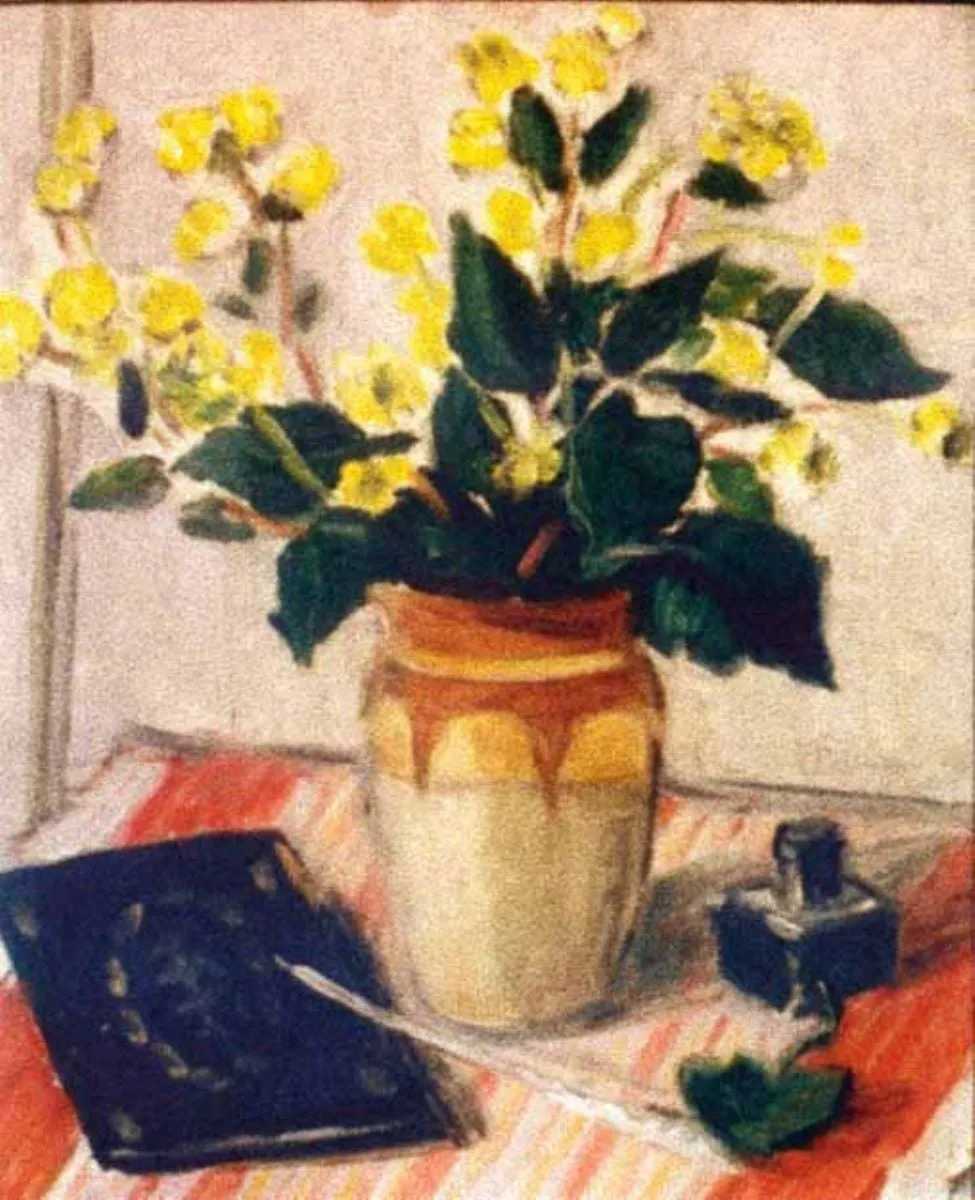
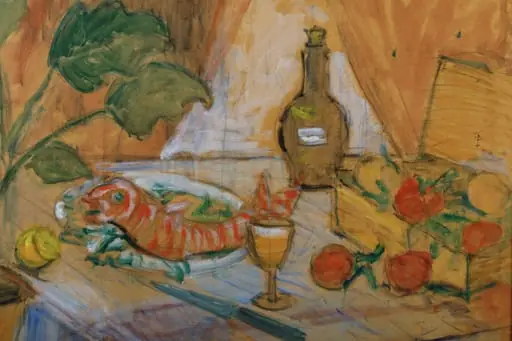
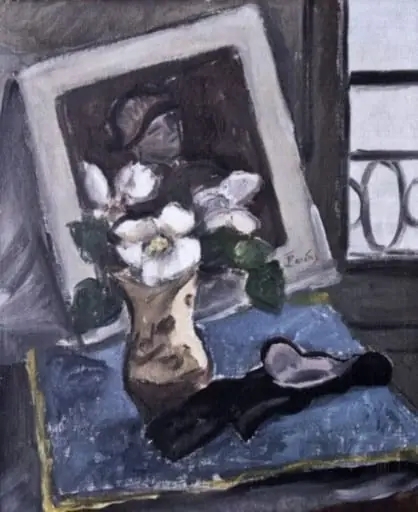
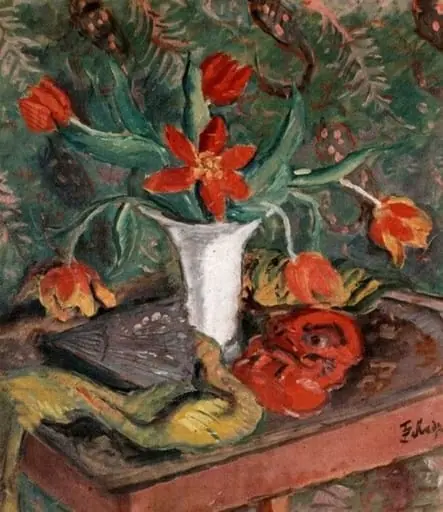
Flori gabene is an unspecified painting by Theodor Pallady. It dates from 1921 and is held in the collection of the Art Museum of Constanta.
About this work
Overview
Rendered with loose brushwork and minimal detail, the composition avoids ornamentation, emphasizing simplicity and presence over narrative.
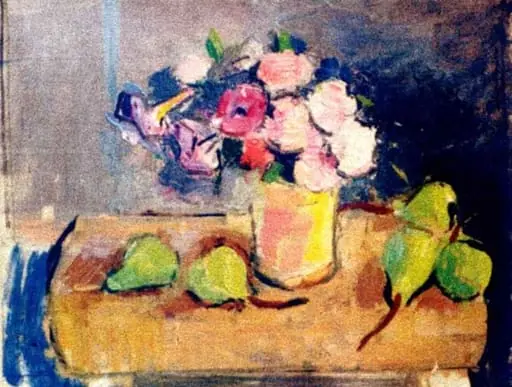
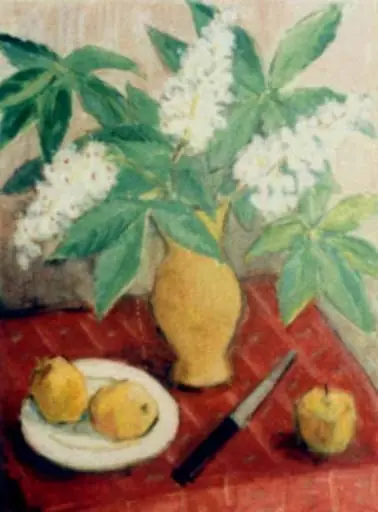
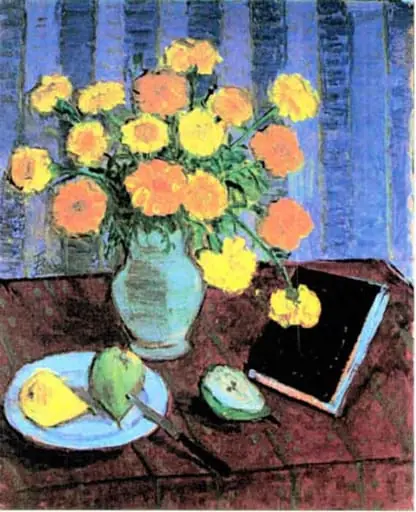
Flori gabene, painted around 1921 by Theodor Pallady, is a quiet still life depicting a modest domestic arrangement. The work resides in the Museum of Ethnography and captures a fleeting moment of ordinary life — a clay vessel holding yellow blooms, an open book, and a pen resting beside an inkwell. Rendered with loose brushwork and minimal detail, the composition avoids ornamentation, emphasizing simplicity and presence over narrative.
Subject & Meaning
The scene centers on a clay pot filled with bright yellow flowers, flanked by a dark-covered book and a small inkwell on a striped cloth. These objects suggest a quiet interlude — perhaps a pause in reading or writing. The flowers, vivid yet unadorned, contrast with the muted surroundings, hinting at transience and the dignity of everyday rituals. No symbolic allegory is overt; meaning arises from stillness and attention to the mundane.
Technique & Style
Pallady employs loose, fluid brushstrokes that avoid precise definition, lending the scene an informal, spontaneous quality. Paint is applied with subtle impasto, particularly in the flowers and cloth, adding texture without heaviness. The muted background allows the warm tones of the blooms and the dark book to emerge naturally. There is no dramatic lighting or perspective — the focus remains on the quiet interaction of objects within a shallow space.
History & Provenance
Created in 1921, Flori gabene entered the collection of the Museum of Ethnography shortly after its completion. Its acquisition reflects the institution’s interest in capturing everyday cultural expressions through art. Unlike Pallady’s more formal portraits or urban scenes, this work was likely kept privately before being donated, suggesting its personal resonance to the artist or early collectors.
Context
In early 20th-century Romania, artists like Pallady were increasingly turning from grand historical themes toward intimate, domestic subjects. Flori gabene aligns with this shift, echoing European modernist tendencies toward still life as a vehicle for emotional restraint. The painting’s simplicity reflects broader cultural movements valuing authenticity and quiet observation over theatricality.
Legacy
Flori gabene remains a quiet example of Pallady’s ability to elevate the ordinary through restrained technique. It is not widely reproduced or celebrated in major surveys, but within Romanian modernism, it stands as a thoughtful counterpoint to more overtly expressive works. Its endurance in the Museum of Ethnography underscores its value as a record of personal, unadorned life in interwar Romania.
Artist & collection