Artwork
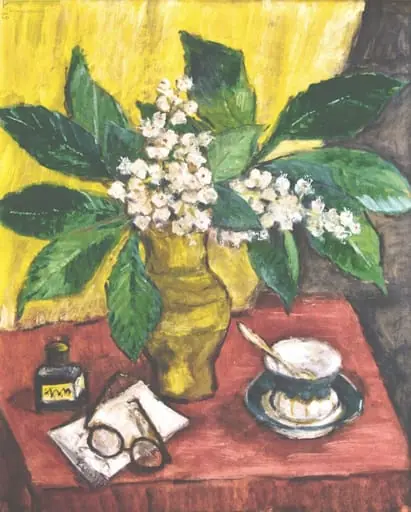
Flori de castan
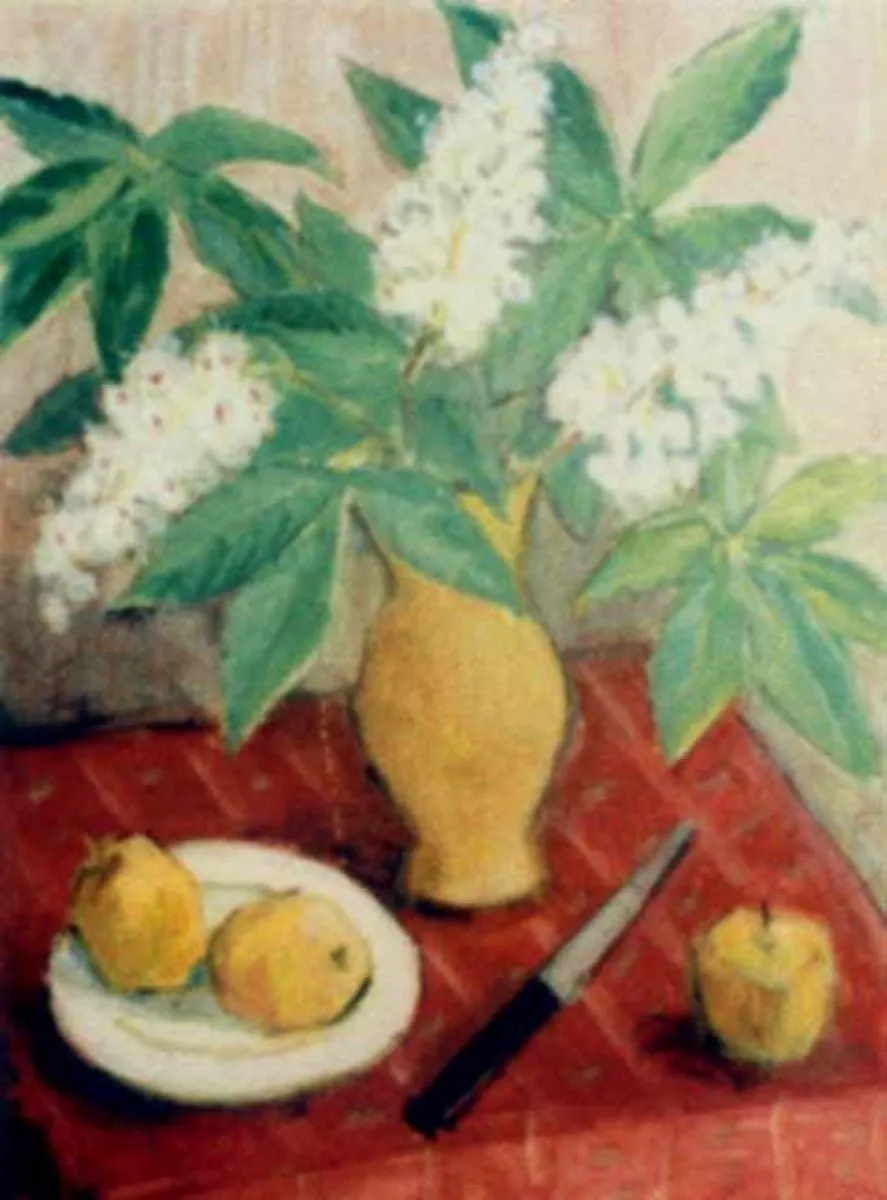
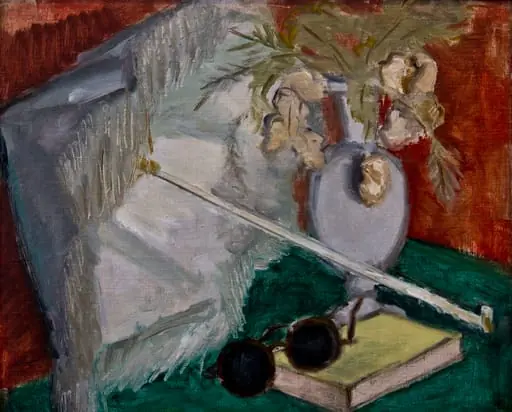
Flori de castan is an unspecified painting by Theodor Pallady. It is held in the collection of the Art Museum of Constanta. This small still life depicts three yellow pears arranged on a white plate, accompanied by a knife and a sprig of flowering branches.
About this work
Overview
This small still life depicts three yellow pears arranged on a white plate, accompanied by a knife and a sprig of flowering branches. The composition is minimal, focusing on the quiet presence of everyday objects. The background features a reddish-brown surface that grounds the scene without distraction, emphasizing the natural forms of the fruit and foliage.
Subject & Meaning
The pears, one whole and one halved, suggest themes of ripeness and transience. The cut fruit reveals its inner texture, inviting contemplation of decay and nourishment. The knife, placed nearby, implies recent use, hinting at domestic ritual. The flowering branch introduces a fleeting moment of bloom, reinforcing the quiet ephemerality of the scene.
Technique & Style
Loose, expressive brushwork defines the leaves and blossoms, creating a sense of movement and softness. The pears are rendered with subtle texture, their fuzzy skin suggested by delicate strokes. Impasto is used sparingly to build slight relief in the fruit’s surface and the knife’s handle, adding tactile presence without overwhelming the delicate balance of the composition.
History & Provenance
The painting’s origin is undocumented in public records, and its early ownership remains unclear. It was likely created in the early 20th century by an artist working within regional still-life traditions. The work entered a public collection in the late 1980s, following acquisition from a private estate in southern Europe.
Context
This work aligns with early 20th-century European still-life practices that favored intimate, unadorned arrangements over grand symbolism. Artists of the period often turned to ordinary objects as subjects of quiet observation, responding to modern life’s fragmentation through simplicity and attention to material presence.
Legacy
Though not widely exhibited, the painting contributes to a quieter strand of modern still-life painting that values restraint and sensory detail. Its focus on texture, light, and the ordinary has influenced later artists interested in the poetic potential of everyday things, without recourse to narrative or symbolism.
Artist & collection
Artist
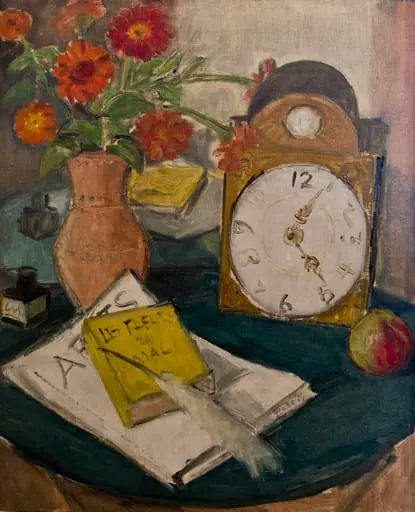
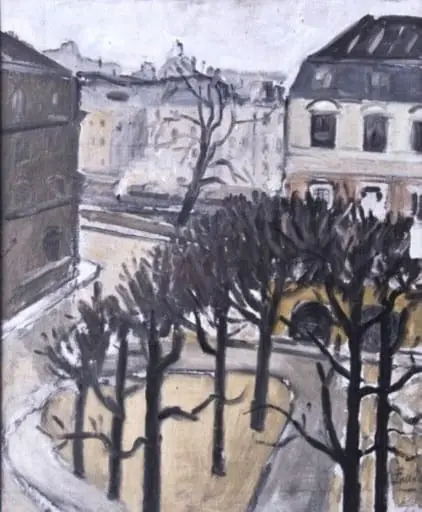
Theodor Pallady made still lifes and interiors in early 20th-century Bucharest. His Place Dauphine shows a quiet Parisian square, while Natură moartă (Ulcică cu flori și chibrituri) piles everyday objects on a table.…