Artwork
Flori în fața oglinzii
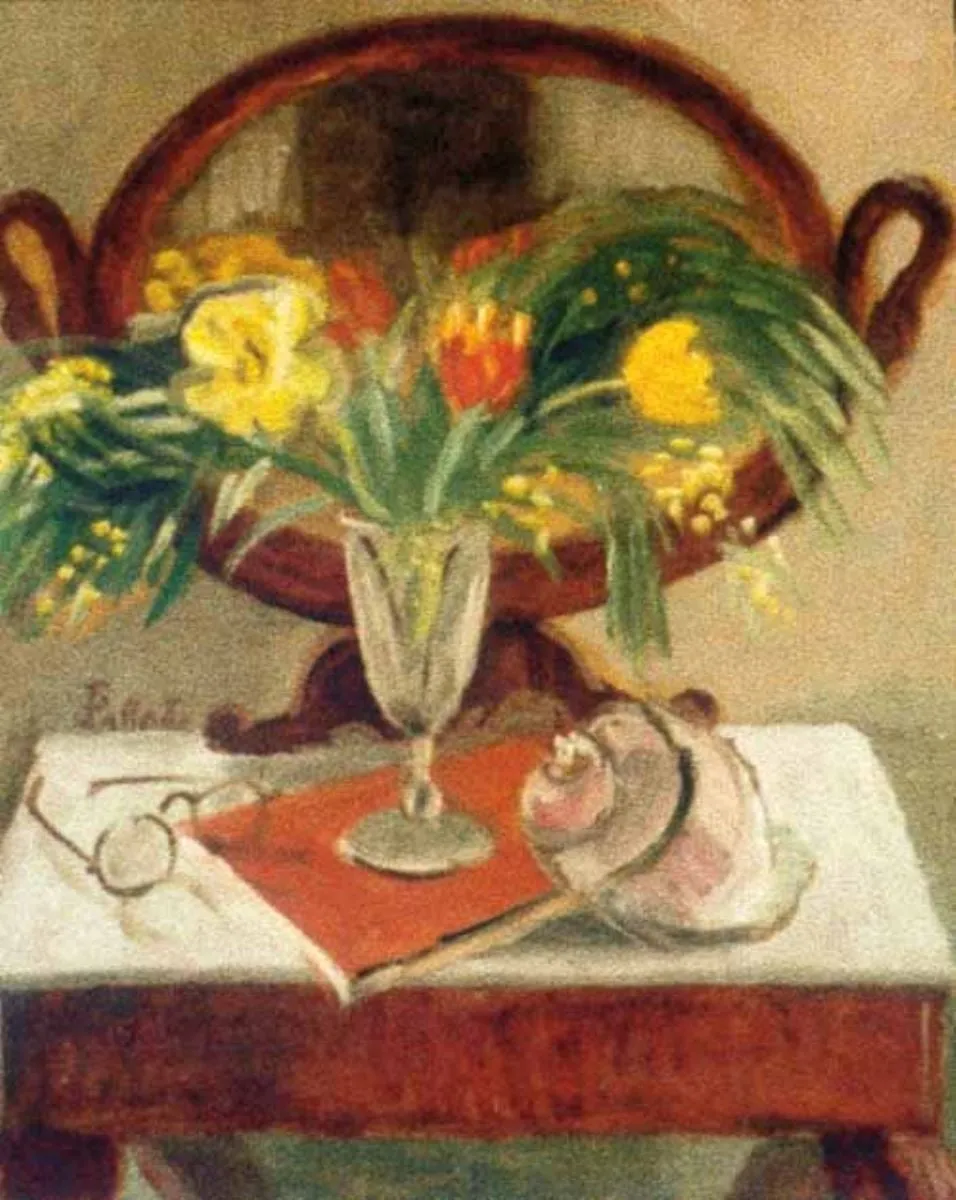
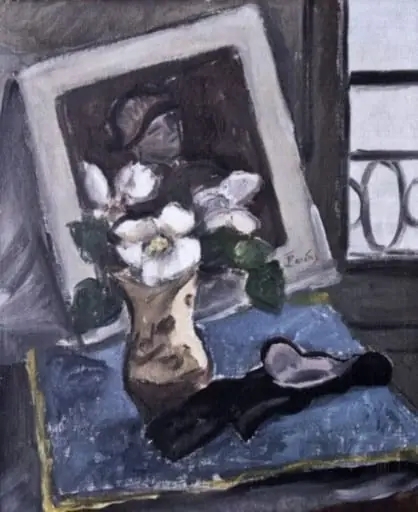
Flori în fața oglinzii is an unspecified painting by Theodor Pallady. It dates from 1921 and is held in the collection of the Art Museum of Constanta.
About this work
Overview
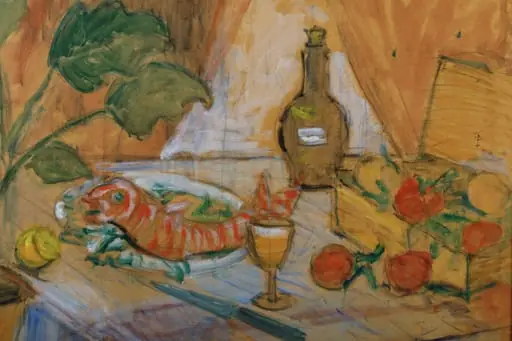
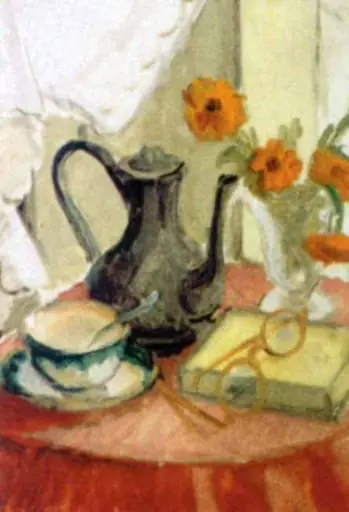
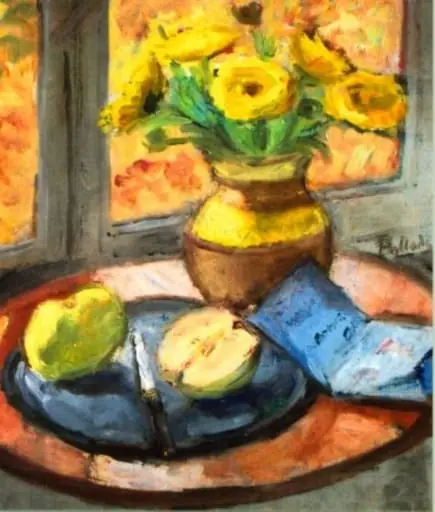
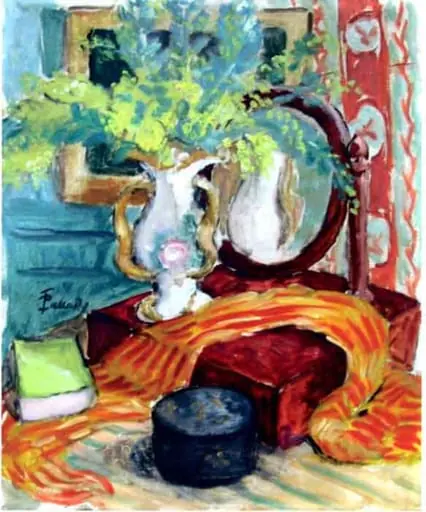
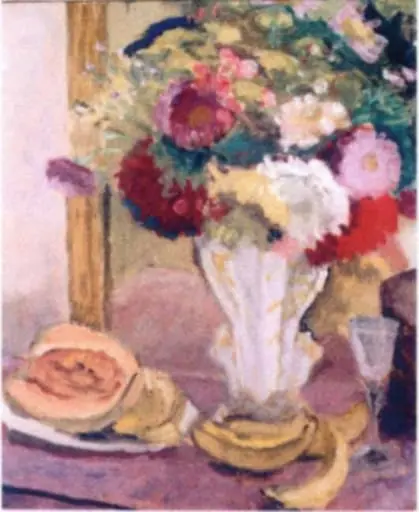
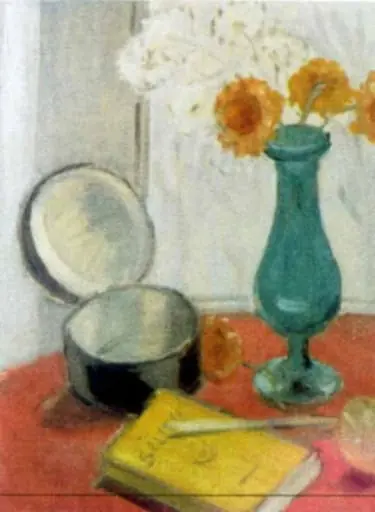
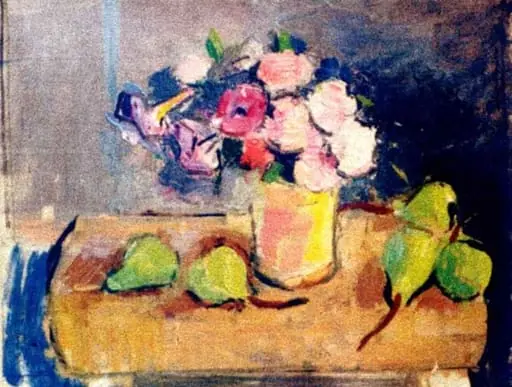
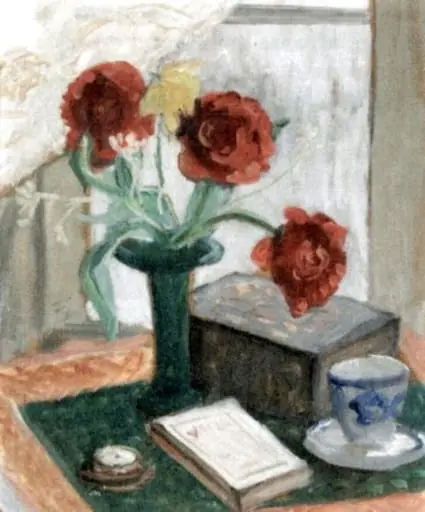
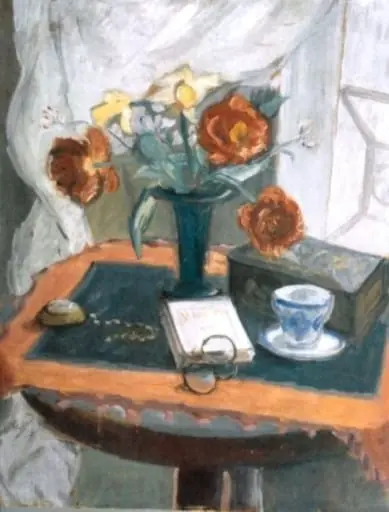
Flori în fața oglinzii, executed around 1921 by Romanian painter Theodor Pallady, presents a still‑life arrangement on a wooden table covered with a red cloth.
Flori în fața oglinzii, executed around 1921 by Romanian painter Theodor Pallady, presents a still‑life arrangement on a wooden table covered with a red cloth. Central to the composition is a tall vase overflowing with vivid yellow blossoms, accompanied by a silver teapot, a cup, and a pair of glasses. The dark, indistinct background isolates the tabletop, directing the viewer’s focus to the objects and their colors.
Subject & Meaning
The work juxtaposes everyday domestic items with a burst of floral vitality, suggesting a contemplation of transience and the fleeting beauty of nature within a household setting. The inclusion of the teapot and glasses hints at a moment of pause or a quiet gathering, while the exuberant flowers contrast with the muted surroundings, emphasizing the tension between the ordinary and the extraordinary.
Technique & Style
Pallady employs a robust impasto application, laying thick layers of paint that give the surface a tactile quality. Bold, saturated hues—particularly the bright yellows of the blossoms and the deep reds of the cloth—are rendered with confident brushwork, creating a sense of immediacy and three‑dimensionality. The softened, blurred backdrop further accentuates the sharpness of the foreground elements.
History & Provenance
Created in the early 1920s, the painting entered the collection of the Museum of Ethnography, where it remains on display. Its acquisition reflects the institution’s broader interest in works that document everyday Romanian life and artistic developments of the interwar period, situating Pallady’s piece within a national cultural narrative.
Artist & collection