Artwork
Natură moartă (Ulcică cu flori și chibrituri)
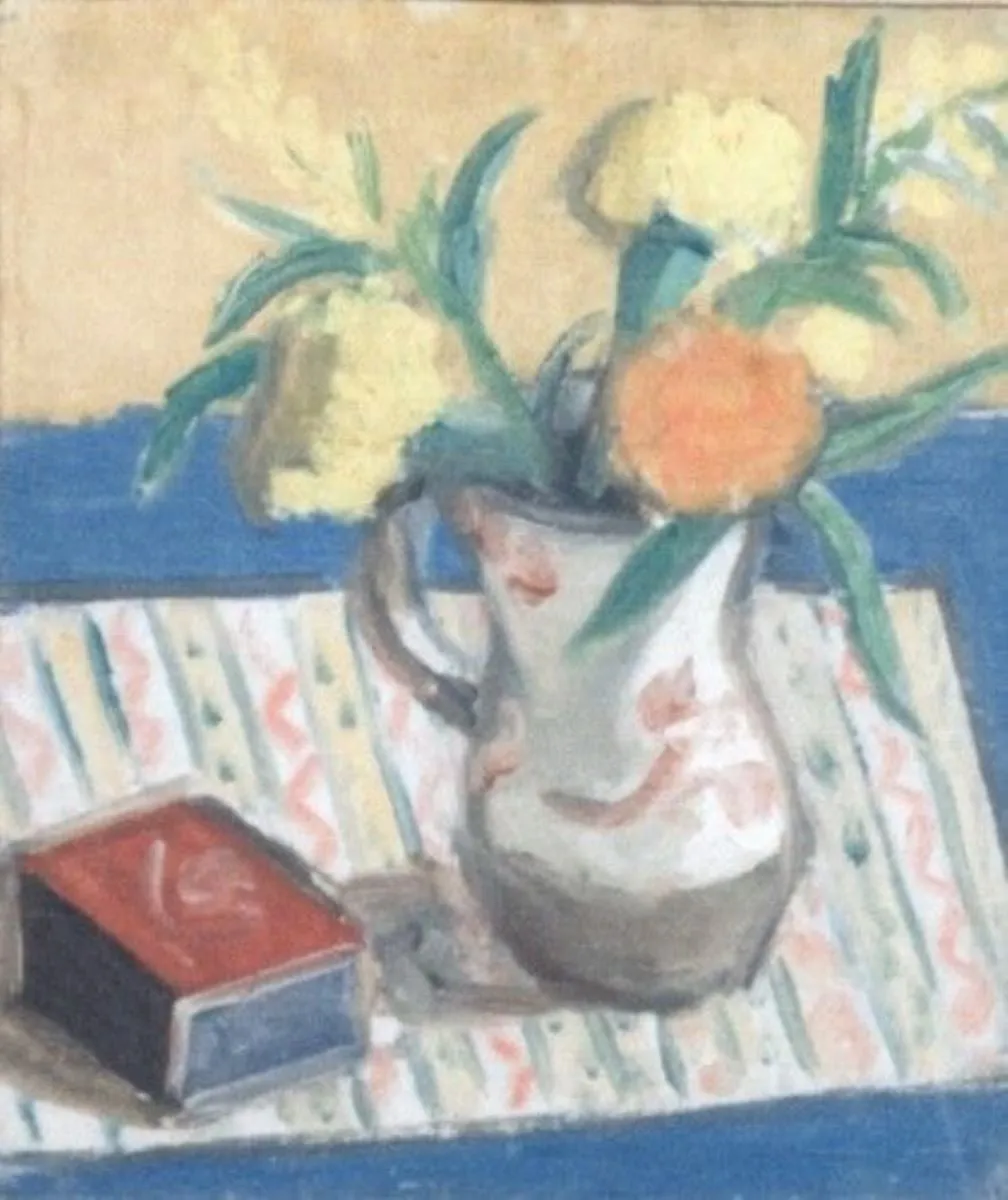
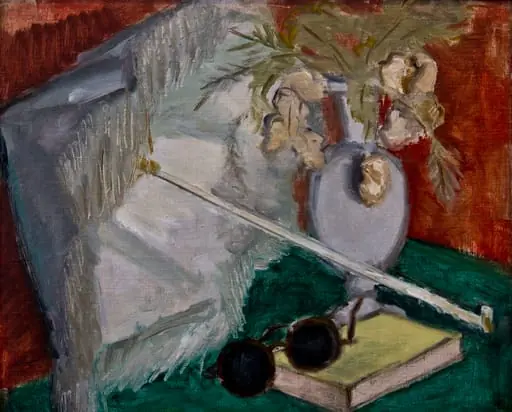
Natură moartă (Ulcică cu flori și chibrituri) is an unspecified painting by Theodor Pallady. It dates from 1940 and is held in the collection of the National Museum of Art of Romania.
About this work
Overview
The background is softly rendered in pale tones, allowing the objects to occupy the viewer’s attention without distraction.
Painted in 1940 by Theodor Pallady, this still life presents a modest arrangement of everyday objects: a blue-and-white ceramic vessel, a single vibrant flower, and a small red matchbox with a gold label. The composition is deliberately restrained, with no elaborate setting or dramatic lighting. The background is softly rendered in pale tones, allowing the objects to occupy the viewer’s attention without distraction.
Subject & Meaning
The arrangement—flower, vase, and matchbox—suggests quiet domesticity. The lone bloom, vivid against muted tones, may imply transience, while the matchbox hints at fleeting moments or ordinary rituals. There is no overt symbolism; the power lies in the simplicity and the quiet dignity of the items, elevated through careful placement rather than narrative.
Technique & Style
Pallady employs loose, fluid brushwork that borders on sketch-like, particularly in the cloth and background. Color is used expressively: the orange flower contrasts sharply with the cool blues and grays, creating visual tension. The edges of forms are softened, avoiding sharp definition, which lends the scene a sense of immediacy and informal observation rather than polished finish.
History & Provenance
Created during Pallady’s mature period in Romania, the work reflects his continued engagement with post-impressionist and modernist sensibilities. It remained within Romanian collections after its completion, documented in institutional holdings from the mid-20th century. No public record of earlier ownership or exhibition exists beyond its inclusion in retrospective surveys of the artist’s oeuvre.
Context
Painted during wartime Romania, the piece stands apart from the political turbulence of its time. Rather than engaging with national themes, Pallady turns inward, focusing on the quiet rhythms of private life. This retreat into stillness aligns with broader European trends among artists seeking solace in domestic subjects amid global upheaval.
Legacy
The work exemplifies Pallady’s distinctive synthesis of Romanian sensibility and French modernist technique. While not widely reproduced, it is recognized in scholarly circles as a refined example of his late style—characterized by emotional restraint, subtle color harmonies, and a focus on the poetic potential of ordinary things.
Artist & collection
Artist
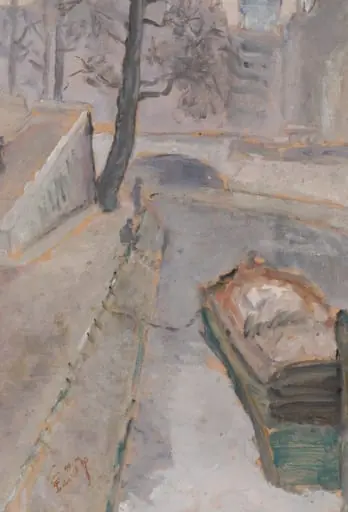
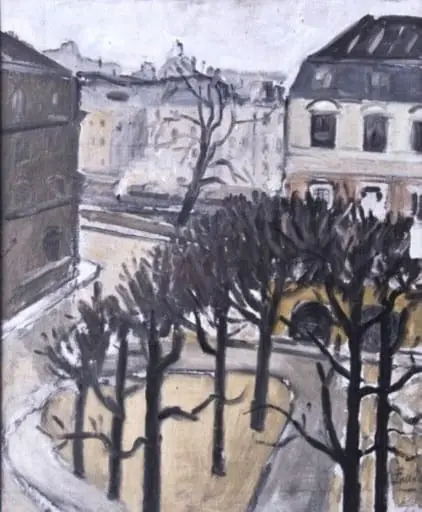
Theodor Pallady made still lifes and interiors in early 20th-century Bucharest. His Place Dauphine shows a quiet Parisian square, while Natură moartă (Ulcică cu flori și chibrituri) piles everyday objects on a table.…

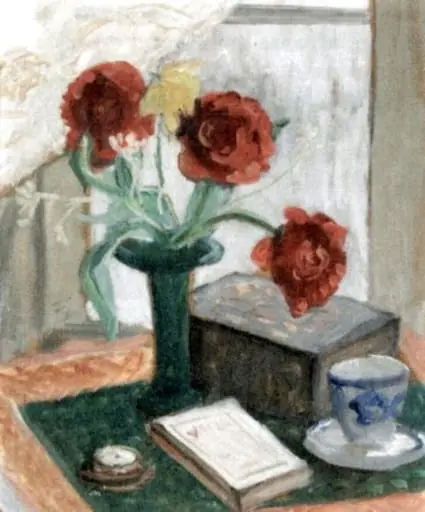 Natură statică
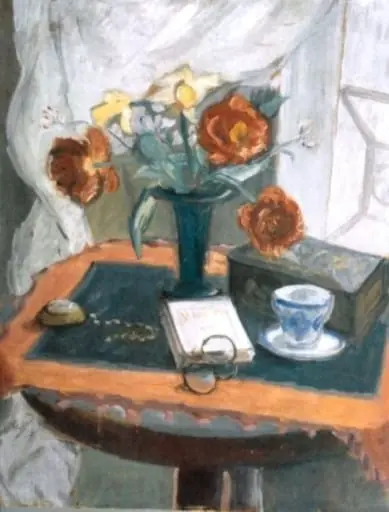 Natură statică cu bujori, ceas
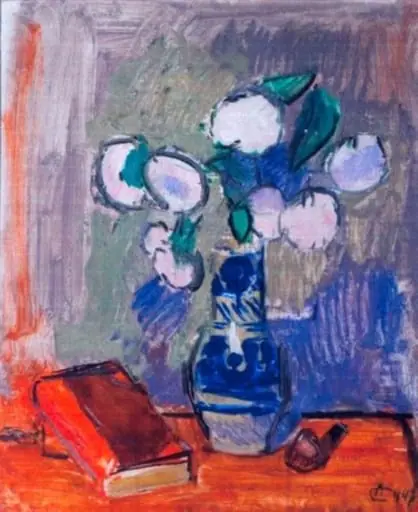 Natură statică cu ulcică
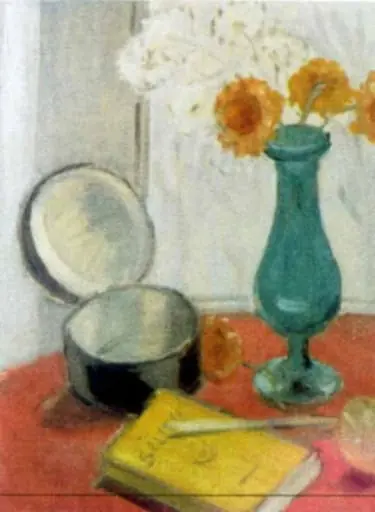 Natură moartă (Flori de soc și gălbenele)
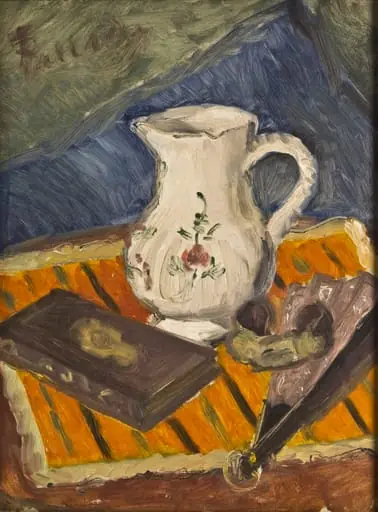 Natură statică cu cană și evantai
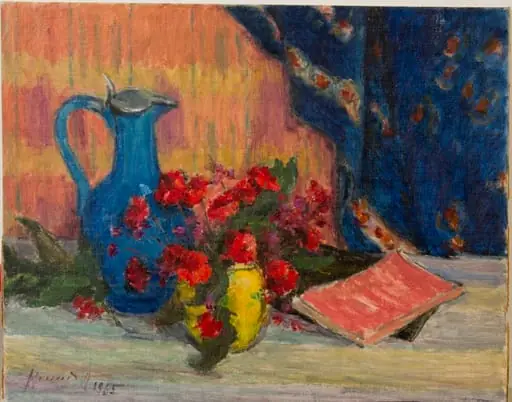 Flori în vas galben de pământ
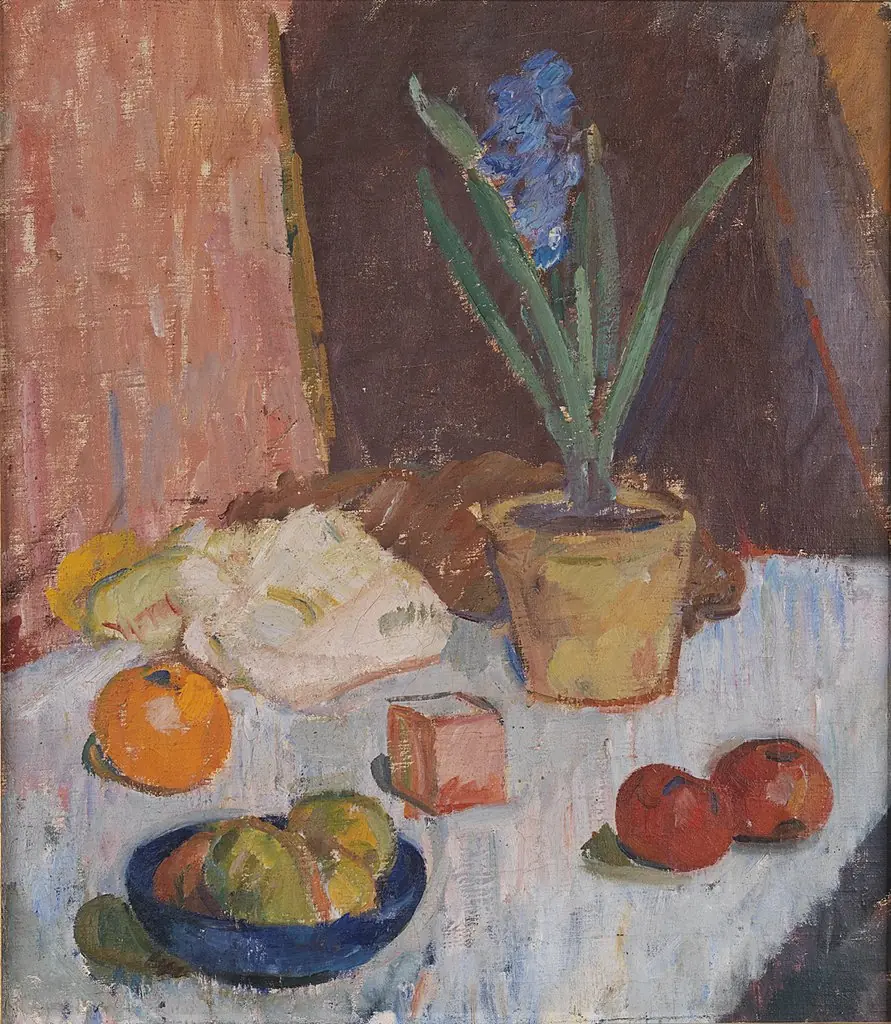 Composition with Hyacinth, Fruits and Blue Bowl
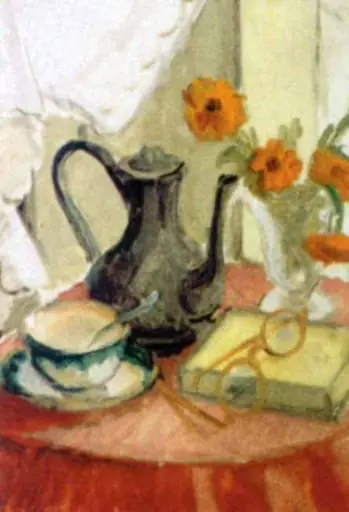 Natură statică (Ceainicul negru)
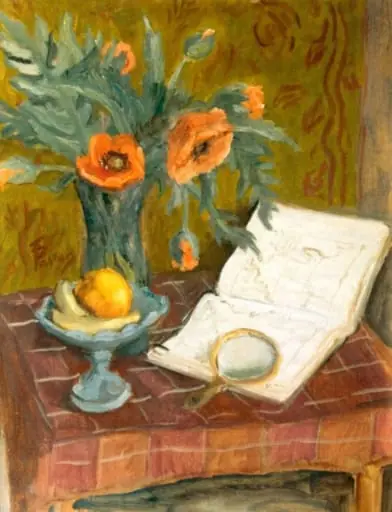 Flori de mac
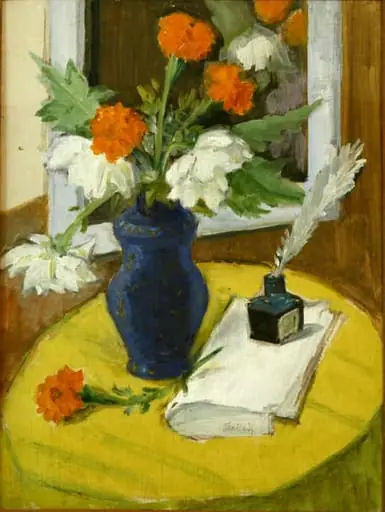 Vază cu flori
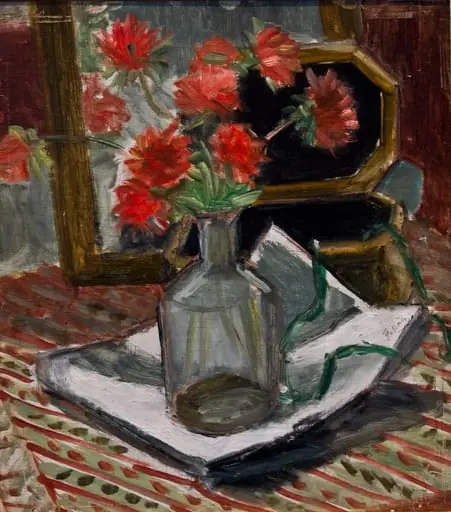 Natură statică cu flori roșii
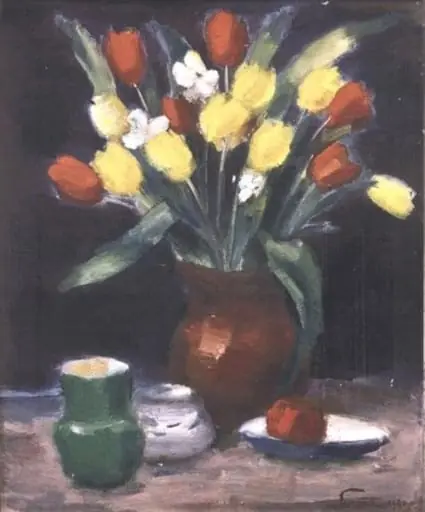 Natură moartă cu lalele