Artwork
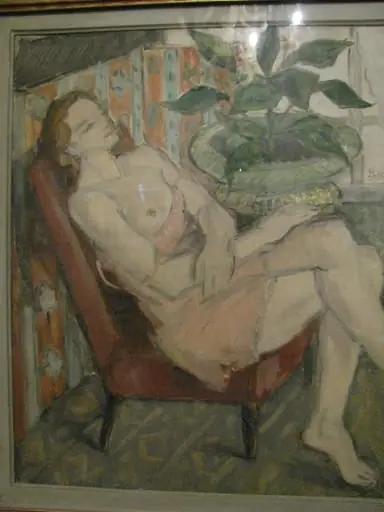
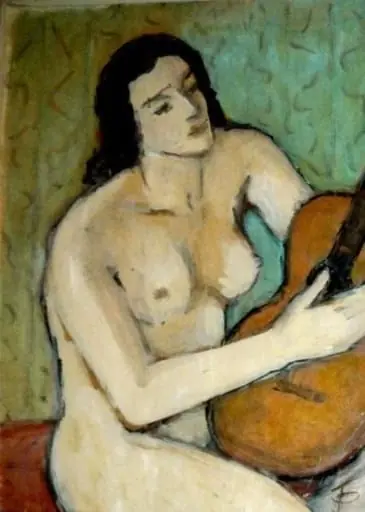
Nud cu chitară
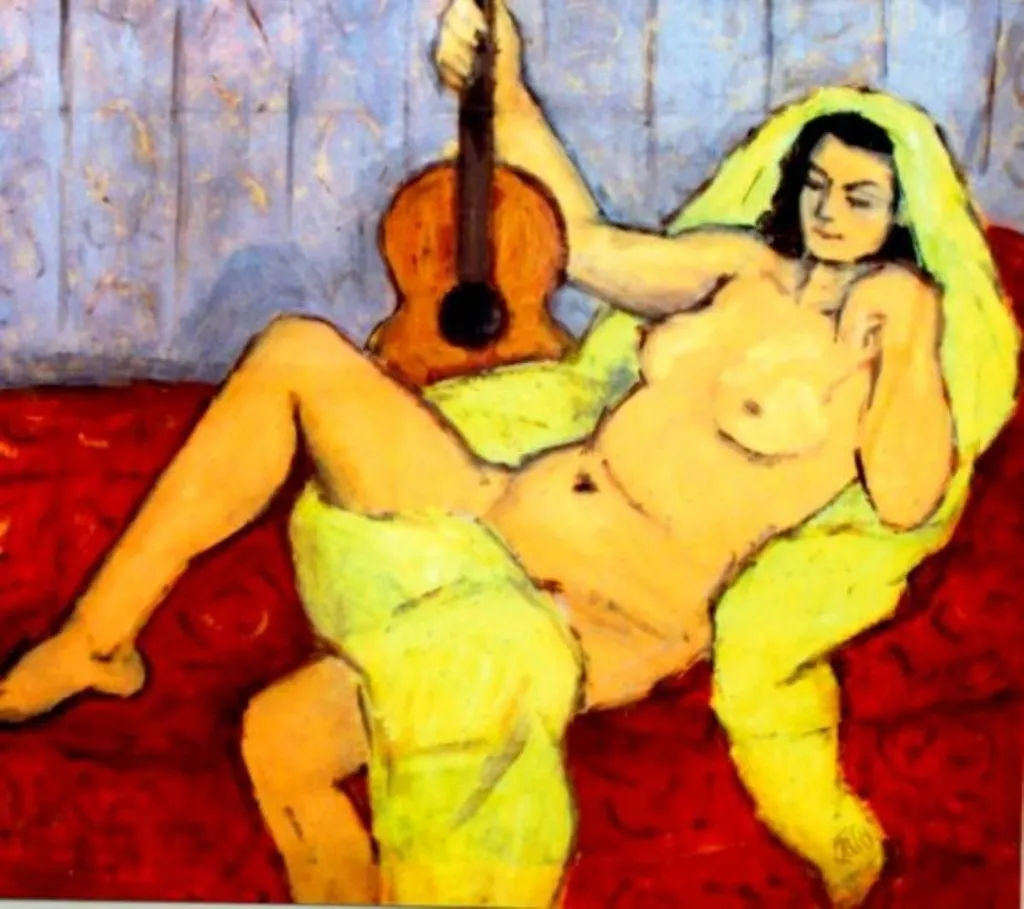
Nud cu chitară is an unspecified painting by Theodor Pallady. It dates from 1921 and is held in the collection of the Argeș County Museum.
About this work
Overview
The background features a muted, textured wall, and the entire scene is rendered with dense, tactile brushwork that emphasizes form over detail.
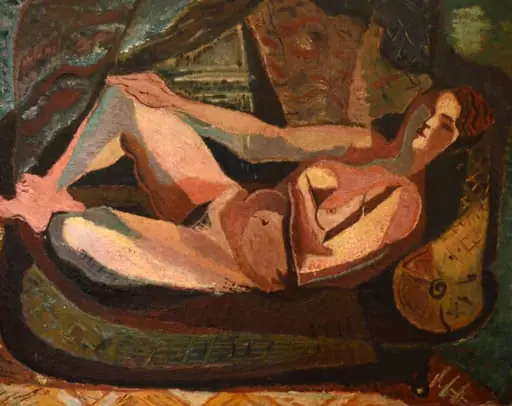
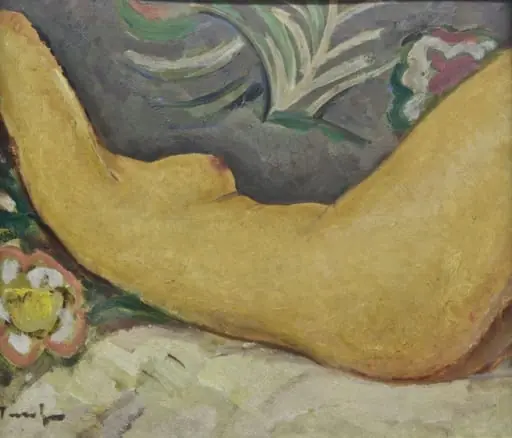
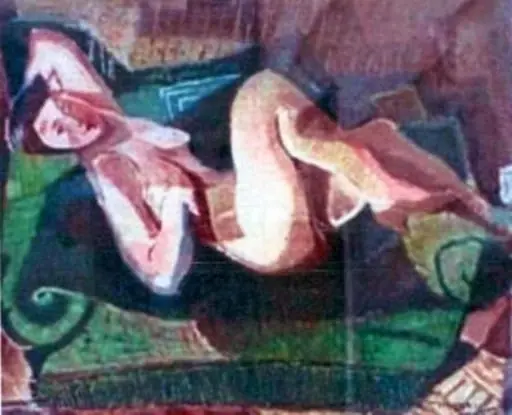
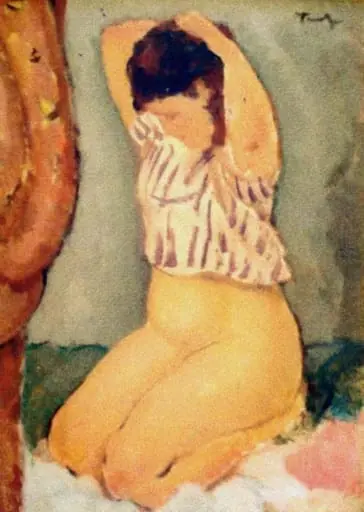
Painted around 1921 by Theodor Pallady, Nud cu chitară depicts two reclining figures in a quiet, intimate setting. The composition centers on a cello held by one figure, while the other is partially veiled by a yellow drape. The background features a muted, textured wall, and the entire scene is rendered with dense, tactile brushwork that emphasizes form over detail. The work reflects Pallady’s engagement with post-impressionist approaches to the human figure.
Subject & Meaning
The two figures, both nude, are engaged in a moment of stillness, suggesting contemplation or rest. The presence of the cello introduces a subtle musical undertone, though no performance is implied. The draped cloth over one figure adds a layer of ambiguity—concealing while also framing the body. The scene avoids narrative or symbolism, instead focusing on the quiet coexistence of form, texture, and silence.
Technique & Style
Pallady employed thick impasto strokes to model the figures, giving them a sculptural solidity. The paint is applied with deliberate weight, creating ridges and shadows that catch light unevenly. The red surface beneath them contrasts with the cool blue-gray wall, enhancing the figures’ volume. Brushwork is expressive but controlled, prioritizing tactile presence over fine detail, aligning with early 20th-century trends in modernist figuration.
History & Provenance
Created during Pallady’s mature period in Paris, the painting reflects his synthesis of Romanian sensibility with French modernism. It was likely produced after his studies at the Académie Julian and amid his engagement with artists like Bonnard and Vuillard. The work remained in private collections in Romania until the mid-20th century, later entering institutional holdings where it is now preserved as part of his oeuvre.
Context
In the early 1920s, European artists were redefining the nude beyond academic ideals, favoring psychological presence and materiality. Pallady’s work aligns with this shift, echoing the intimate interiors of the Nabis and the textured surfaces of post-impressionists. Unlike overtly avant-garde movements, his approach remained grounded in observation, blending classical composition with modernist brushwork.
Legacy
Nud cu chitară exemplifies Pallady’s unique position between tradition and modernity. It is frequently cited in Romanian art histories as a key example of his mature style, demonstrating how Eastern European artists adapted Western modernism without abandoning figurative clarity. The painting continues to be studied for its quiet intensity and the way it transforms the nude into a meditation on form and light.
Artist & collection