Artwork
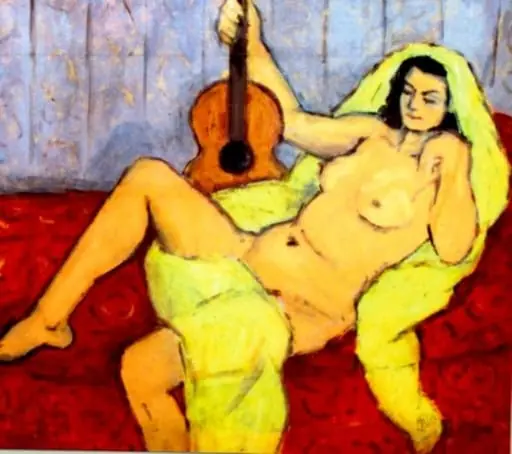
Nud cu chitară
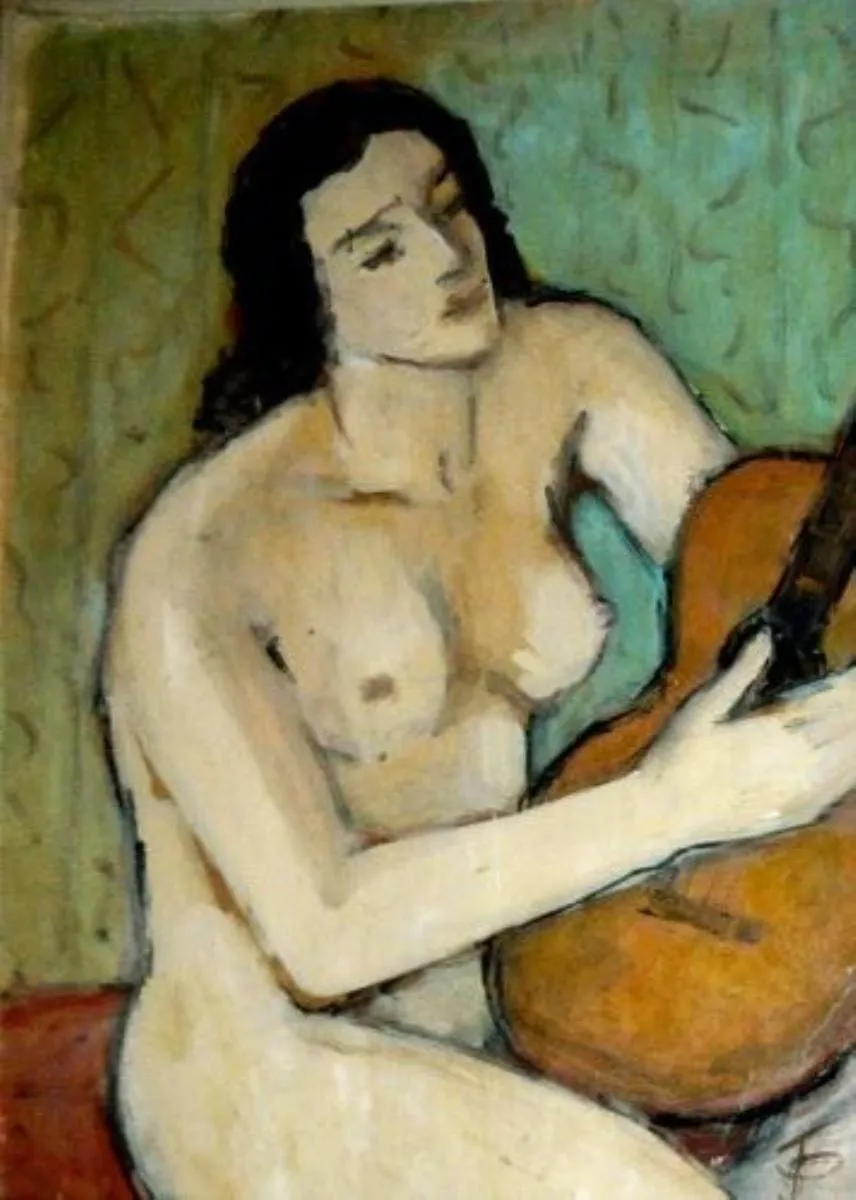
Nud cu chitară is an unspecified painting by Theodor Pallady. It dates from 1949 and is held in the collection of the Art museum of Craiova.
About this work
Overview
Rendered in subdued earth tones and soft brushwork, the painting conveys stillness and inward focus, avoiding dramatic gesture in favor of quiet presence.
Nud cu chitară, painted around 1949 by Theodor Pallady, portrays a solitary nude woman seated on the floor with a guitar. The work is part of the Museum of Ethnography’s collection. Rendered in subdued earth tones and soft brushwork, the painting conveys stillness and inward focus, avoiding dramatic gesture in favor of quiet presence. The composition centers on the figure’s calm posture and the intimate relationship between body and instrument.
Subject & Meaning
The figure, lost in thought with downward gaze, suggests a moment of private reflection rather than performance. The guitar, held gently in her arms, functions not as a prop of entertainment but as an extension of her inner state. Her nudity, unidealized and unposed, emphasizes vulnerability and authenticity. The scene evokes solitude, where music becomes a silent companion to introspection rather than an outward expression.
Technique & Style
Pallady employed a restrained palette of ochres, umbers, and muted greens, with delicate brushstrokes that blend form and background subtly. The woman’s skin tones merge with the earthy hues of the floor, while the guitar’s wood grain is suggested rather than detailed. The background’s faint pattern adds texture without distraction, reinforcing the painting’s hushed atmosphere through tonal harmony and soft edges.
History & Provenance
Created in the late 1940s, the painting entered the Museum of Ethnography’s holdings after Pallady’s death. Its acquisition reflects institutional interest in his later works, which diverged from earlier academic styles toward more personal, introspective themes. The work remained in private hands until its inclusion in the museum’s collection, where it is preserved as part of Romania’s modernist legacy.
Context
Painted during a period of political change in Romania, Nud cu chitară stands apart from state-sanctioned realism. Pallady, long influenced by French modernism, returned to intimate, non-narrative subjects in his later years. This work aligns with a broader trend among Romanian artists who sought personal expression amid ideological constraints, favoring quietude over propaganda.
Legacy
The painting is recognized for its emotional restraint and formal economy, marking a shift in Pallady’s oeuvre toward psychological depth over external spectacle. It remains a quiet example of mid-20th-century Romanian modernism, valued not for its novelty but for its sustained sensitivity to solitude and the human form in repose.
Artist & collection
Artist
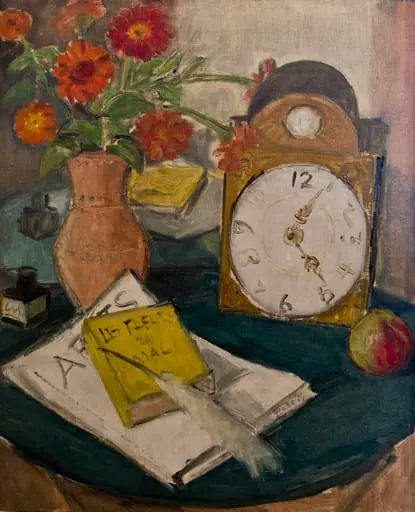
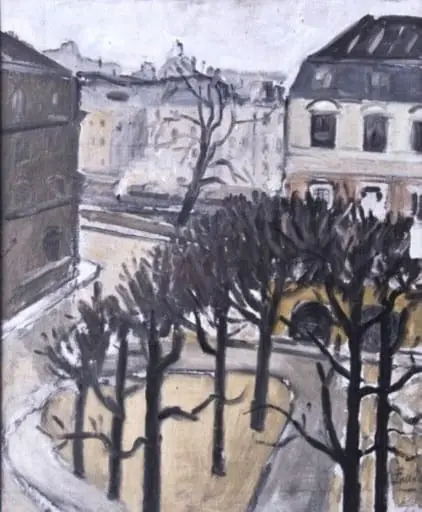
Theodor Pallady made still lifes and interiors in early 20th-century Bucharest. His Place Dauphine shows a quiet Parisian square, while Natură moartă (Ulcică cu flori și chibrituri) piles everyday objects on a table.…