Artwork
Plague Victims Pleading for Help from Christ, the Virgin, and Saint Roch
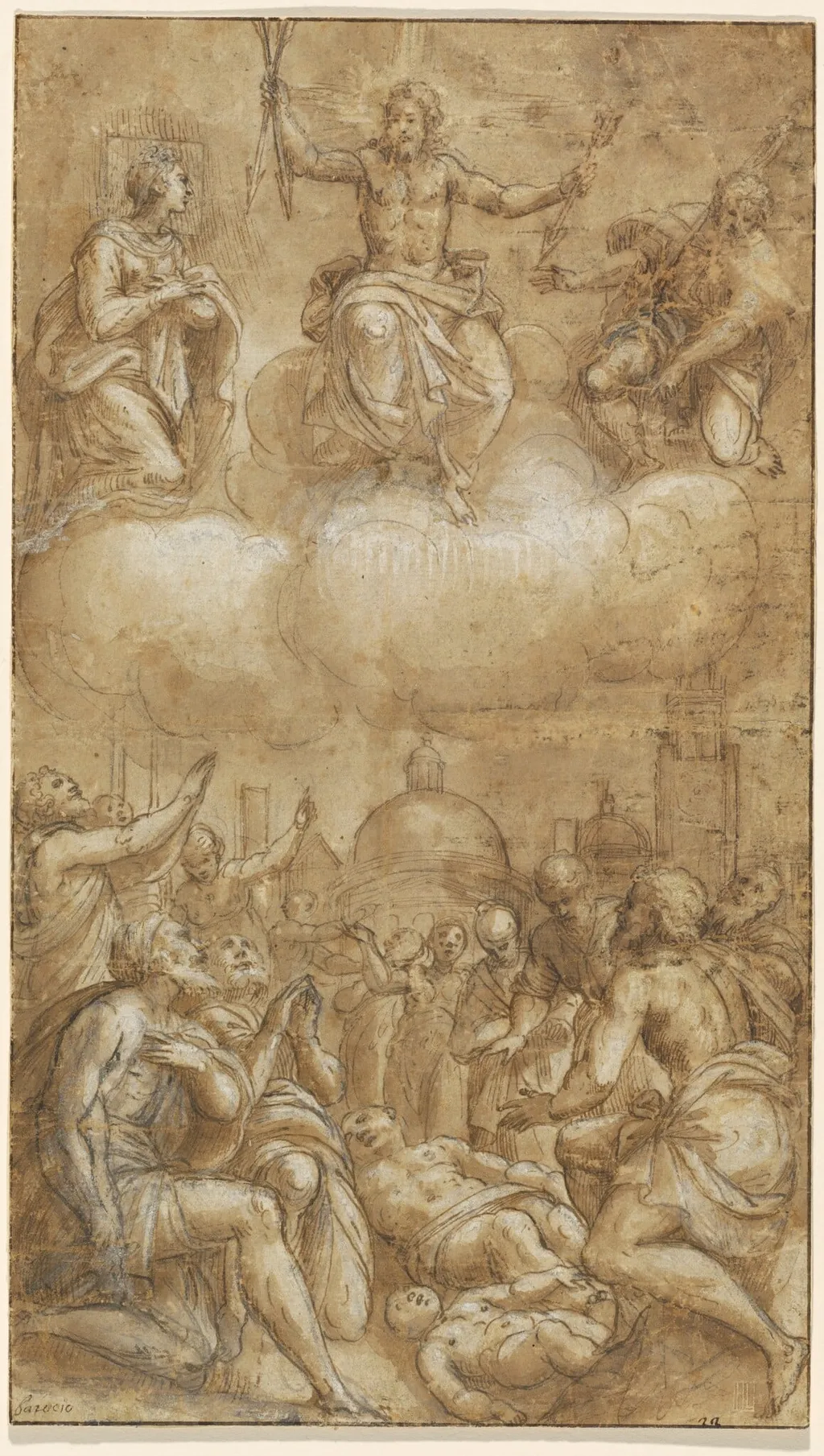
Plague Victims Pleading for Help from Christ, the Virgin, and Saint Roch is a chalk drawing by the Renaissance artist Lattanzio Gambara. It dates from 1570 and is held in the collection of the National Gallery of Art.
About this work
Overview
Lattanzio Gambara’s 1570 drawing, titled *Plague Victims Pleading for Help from Christ, the Virgin, and Saint Roch*, combines pen work, brown ink, a brown wash, and white gouache on a black‑chalk base. The composition depicts a group of afflicted figures imploring divine intercession, with Christ, the Virgin, and Saint Roch positioned as protectors.
Subject & Meaning
The work reflects the anxieties of a community struck by epidemic disease, portraying the desperate supplication of plague sufferers toward the holy trio traditionally invoked for protection against contagion. Saint Roch, a patron saint of plague victims, is included alongside Christ and the Virgin to underscore a theological appeal for mercy and healing.
Technique & Style
Gambara employed a layered approach: initial sketches in black chalk were reinforced with pen lines and brown ink, then unified with a brown wash that deepens tonal contrast. Highlights of white gouache draw attention to faces and garments, while a later patch—applied over the Virgin’s head and subsequently redrawn—reveals the artist’s corrective process.
History & Provenance
Created in the late Renaissance, the drawing entered the collection of the National Gallery of Art in Washington, D.C., where it remains accessible to scholars and the public. Its acquisition reflects the museum’s focus on Italian works that illustrate the intersection of religious devotion and artistic experimentation.
Context
During the 16th century, Europe endured recurrent plague outbreaks, prompting artists to produce visual petitions for divine aid. Gambara’s composition aligns with contemporary devotional imagery, integrating the intercessory roles of Christ, the Virgin, and Saint Roch, a motif common in plague‑related art of the period.
Artist & collection


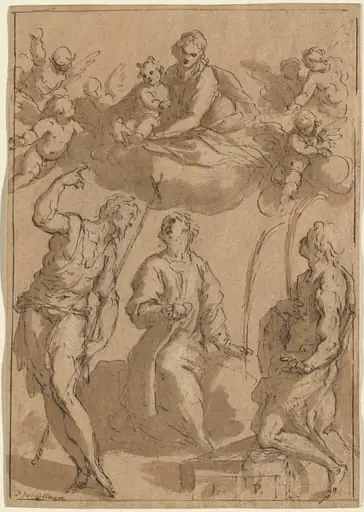 Madonna and Child in Glory with Saints John the Baptist, Stephen, and Lawrence
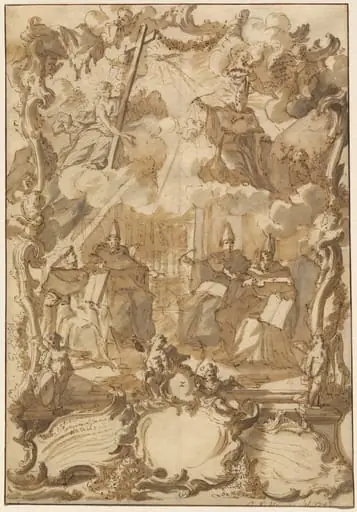 A Thesis Design with Doctors of the Church
 The Last Judgment
 The Madonna and Child in Glory with Saints Gregory the Great and Andrew
 The Trinity Surrounded by Angels
 Scenes from the Life of Saint Peter
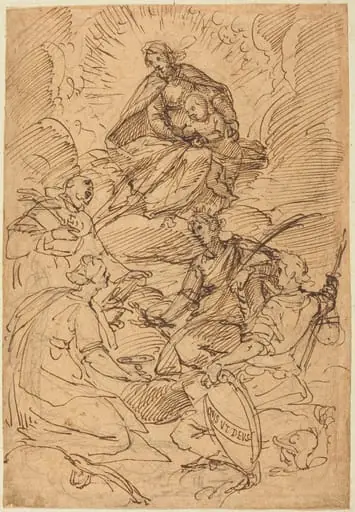 The Madonna and Child in Glory Adored by Saints
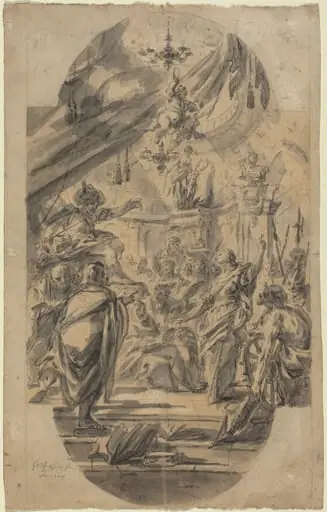 The Disputation of Saint Catherine of Alexandria