Artwork
Christ and the adulteress
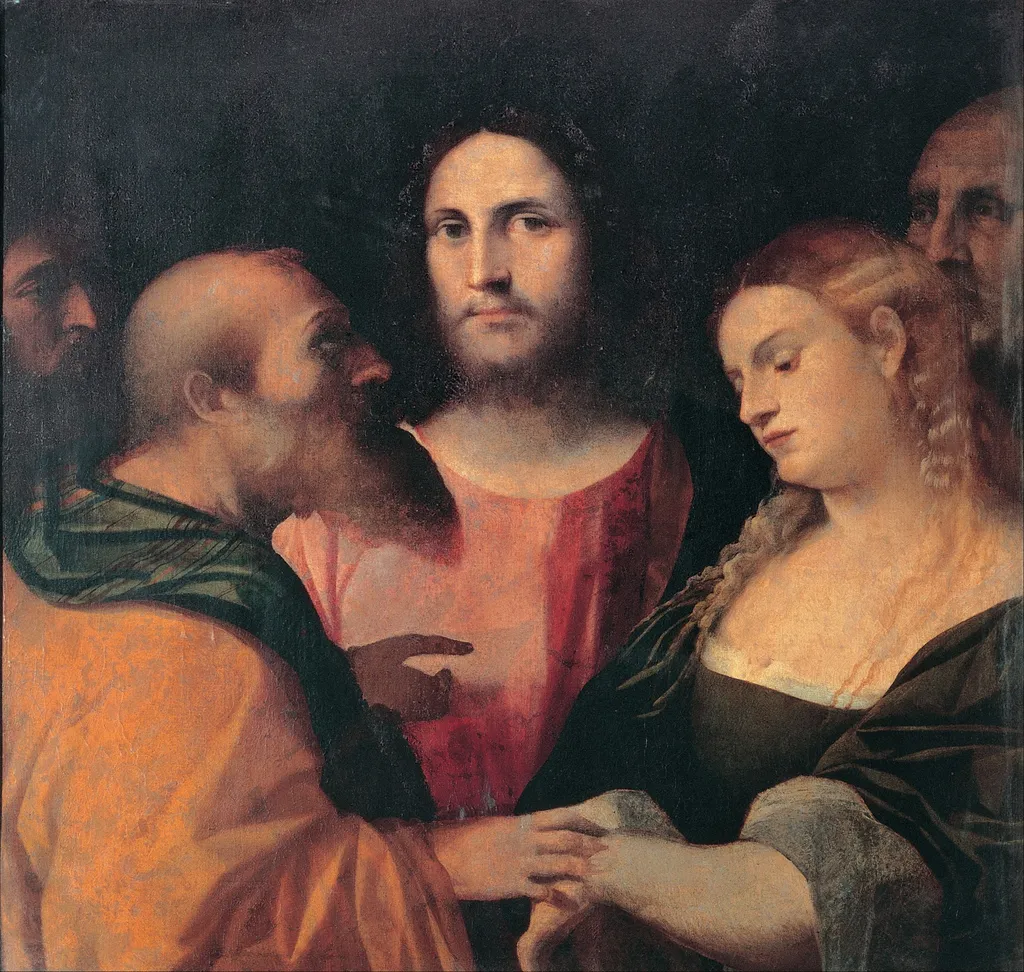
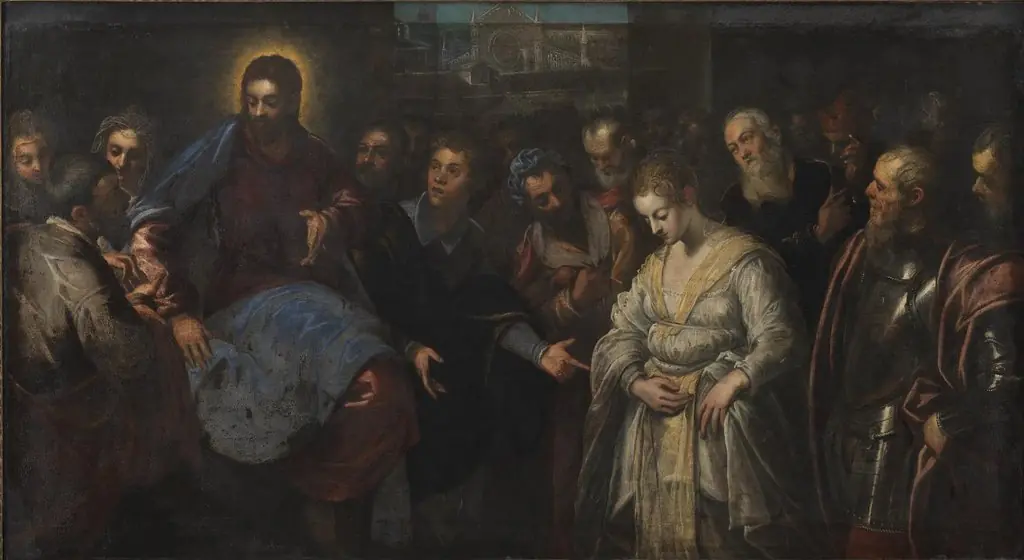
Christ and the adulteress is an oil painting by the High Renaissance artist Palma Vecchio. It dates from 1525 and is held in the collection of the Capitoline Museums.
About this work
Overview
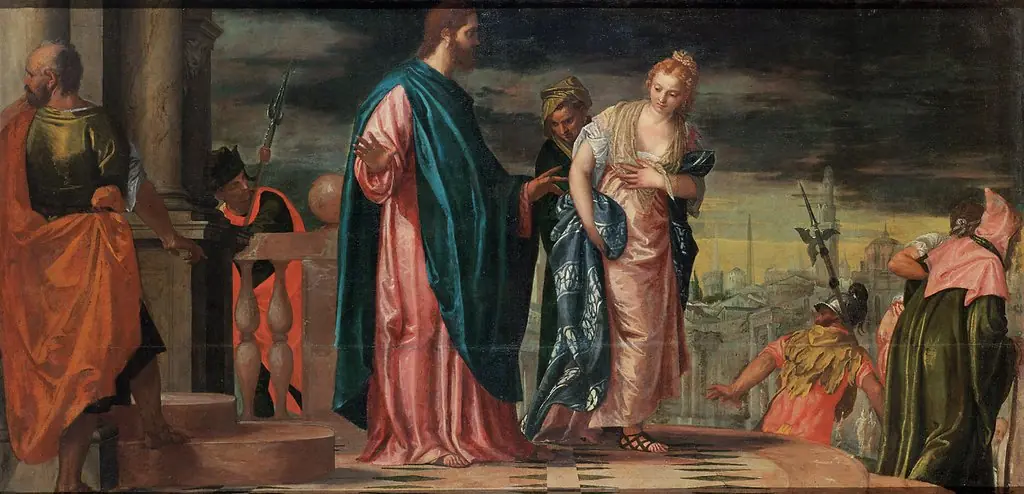
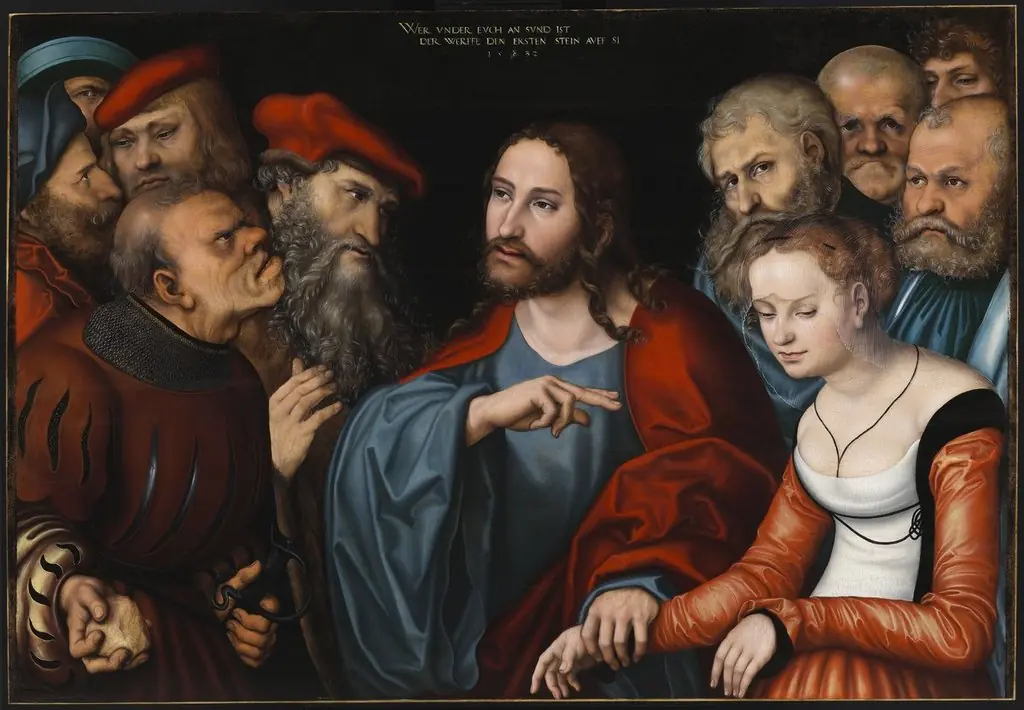
Christ and the Adulteress is a religious oil painting from the Italian High Renaissance, created by Palma Vecchio in 1525. The work is characterized by its dramatic and tense depiction of a biblical scene, set against a dark indoor backdrop.
Subject & Meaning
The painting illustrates a biblical narrative where Christ intervenes in the stoning of an adulteress, surrounded by a group of onlookers. A central figure in a distinctive red tunic (likely Christ) contrasts with a woman in dark attire (the adulteress) and other figures, such as one in a yellow robe, highlighting moral and emotional contrasts.
Technique & Style
Palma Vecchio employed oil paint to achieve depth and contrast. The vibrant red of the central figure’s tunic serves as a focal point, set against the somber tones of the surrounding figures and the dark interior setting, exemplifying High Renaissance compositional principles.
History & Provenance
Created in 1525 by Palma Vecchio (Jacopo Palma, c. 1480–1528), the painting is now part of the Capitoline Museums’ collection in Rome.
Context
As a product of the Italian High Renaissance, the painting reflects the era’s artistic values, including the use of color, composition, and emotional depth to convey religious themes.
Legacy
While specific lasting impacts of *Christ and the Adulteress* on subsequent art are not widely documented, it remains a representative work of Palma Vecchio’s contribution to Venetian High Renaissance religious art.
Own this work as a print
Artist & collection

Artist
Palma Vecchio (c. 1480 – 30 July 1528), born Jacopo Palma, also known as Jacopo Negretti, was a Venetian painter of the Italian High Renaissance. He is called Palma Vecchio in English and Palma il Vecchio in Italian…