Artwork
Alpine Landscape
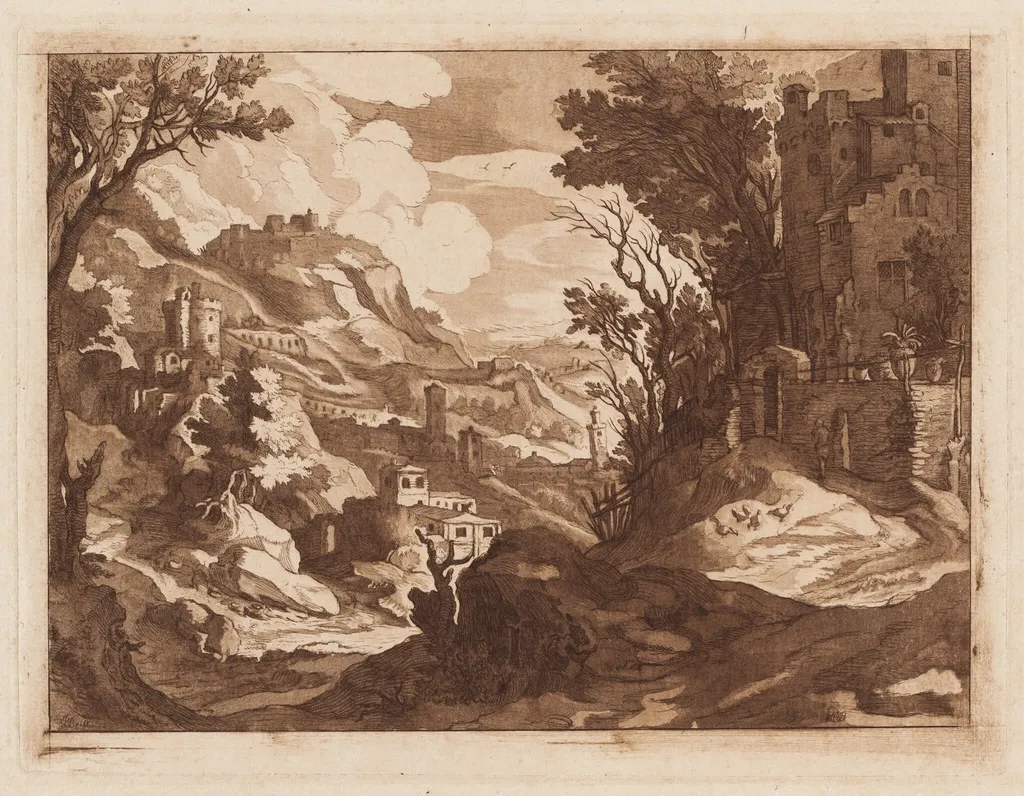
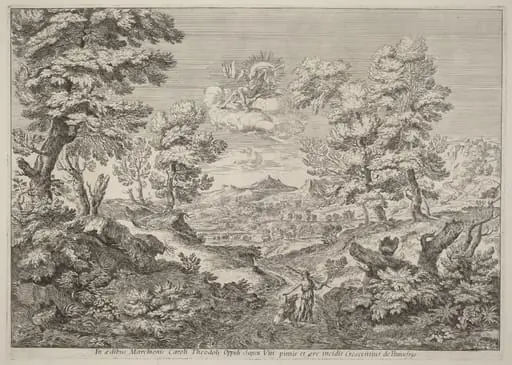
Alpine Landscape is an ink print by the Romanticist artist François-Philippe Charpentier. It dates from 1764 and is held in the collection of the National Gallery of Art.
About this work
Overview
Created in 1764 by French engraver François-Philippe Charpentier, *Alpine Landscape* is a brown-toned print executed in aquatint and etching on laid paper.
Created in 1764 by French engraver François-Philippe Charpentier, *Alpine Landscape* is a brown-toned print executed in aquatint and etching on laid paper. Charpentier, trained in Paris after leaving Jesuit education due to financial hardship, was among the early experimenters in aquatint. The work belongs to the National Gallery of Art’s collection in Washington, D.C., and exemplifies his technical innovation in achieving tonal gradations without color.
Subject & Meaning
The scene depicts a quiet alpine valley under a hazy sky, with a modest village nestled below steep slopes. A winding path ascends toward a distant castle, while a solitary figure walks beside a cow near a stream. Trees are scattered sparsely across the terrain. The composition evokes solitude and contemplation, emphasizing the relationship between human presence and the vastness of nature, rendered with restrained emotional tone.
Technique & Style
Charpentier employed aquatint to produce soft, atmospheric tones reminiscent of watercolor washes. By dusting resin particles onto the plate and bathing it in acid, he achieved subtle gradations of brown, mimicking the effect of faded ink sketches. Etching provided fine linear detail for roads, trees, and architecture. The result is a muted, almost ethereal landscape, where light and shadow blend gently, avoiding sharp contrasts.
History & Provenance
Charpentier, born in Blois in 1734, developed his printmaking methods during the 1760s, a period of technical experimentation in French print circles. *Alpine Landscape* was produced in 1764, shortly after he began refining aquatint techniques. The print entered the National Gallery of Art’s collection through established acquisition channels, likely as part of a broader effort to document the evolution of printmaking in the 18th century.
Context
In mid-18th-century Europe, landscape prints gained popularity as interest in natural scenery and travel grew. Charpentier’s work aligns with this trend, though his focus on tonal subtlety rather than dramatic effect set him apart from contemporaries. His innovations in aquatint contributed to a shift toward more painterly prints, influencing later artists seeking to emulate the softness of drawings and watercolors in printed form.
Legacy
Charpentier’s use of aquatint in *Alpine Landscape* helped establish the technique as a viable method for achieving tonal nuance in printmaking. Though not widely celebrated in his time, his technical contributions laid groundwork for 19th-century printmakers who expanded on his methods. The work remains a quiet but significant example of early experimental printmaking in France.
Artist & collection

Artist
François-Philippe Charpentier (b. Blois, 1734; d. there 22 July 1817) was a French engraver and inventor. His father was a bookbinder, a poor man who reportedly made many sacrifices so that his son might attend the…

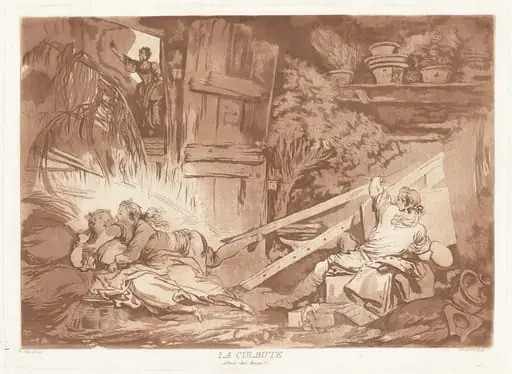 La Culbute (The Tumble)
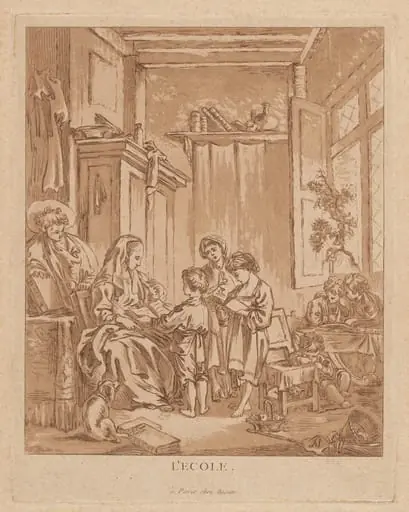 L’École (The School)
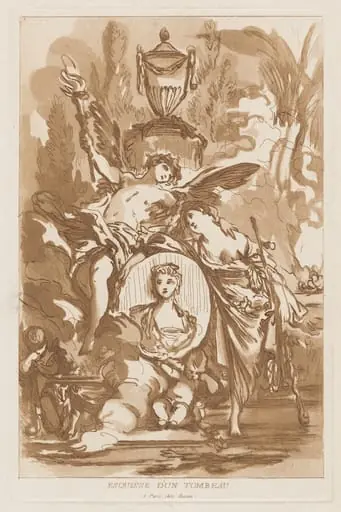 Esquisse d’un tombeau (Sketch for a Tomb)
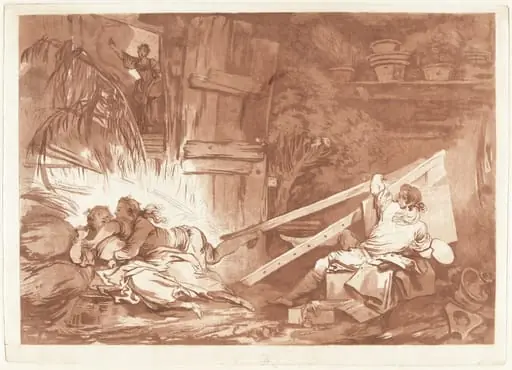 The Tumble
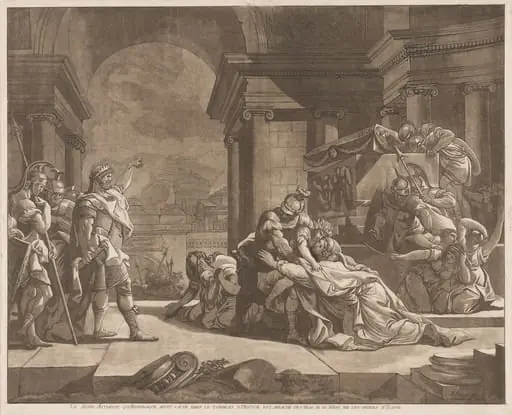 Le Jeune Astianax qu’Andromaque avoit caché dans le tombeau d’Hector est arraché des bras de sa Mere par les ordres d'Ulisse (Young Astianax, who Andromache Hid in Hector's Tomb, is Seized from his Mother's Arms by Ulysses' Orders)
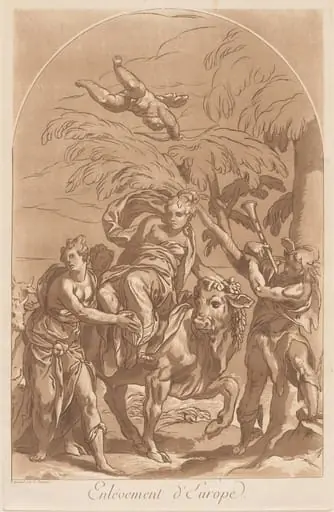 Rape of Europa
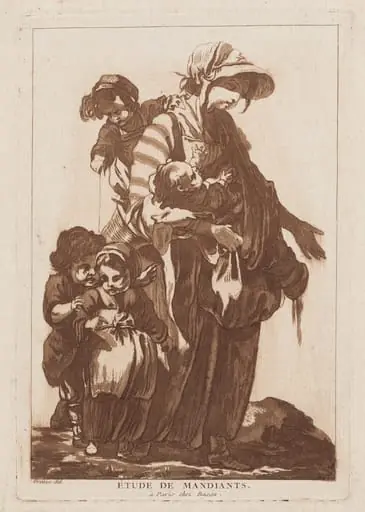 Étude de Mandiants (Study of Beggars)
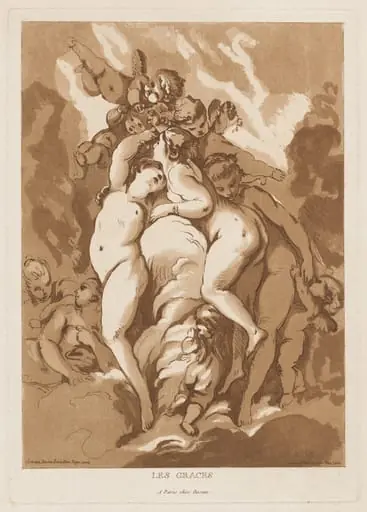 Les Graces (The Graces)
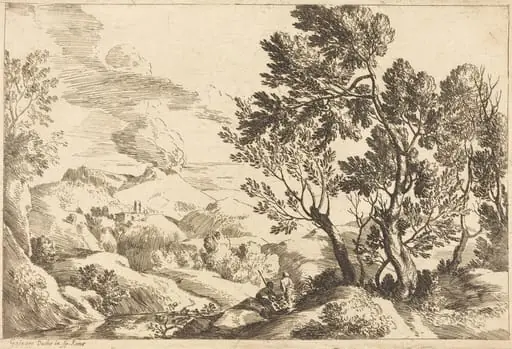 Roman Landscape
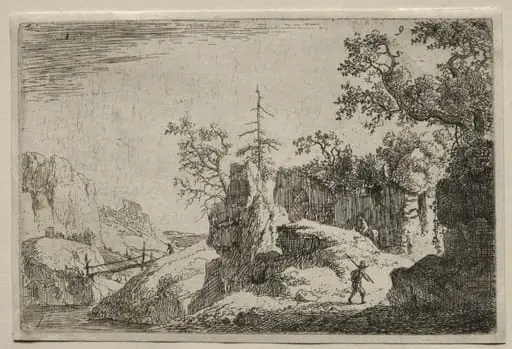 A Mountain Landscape
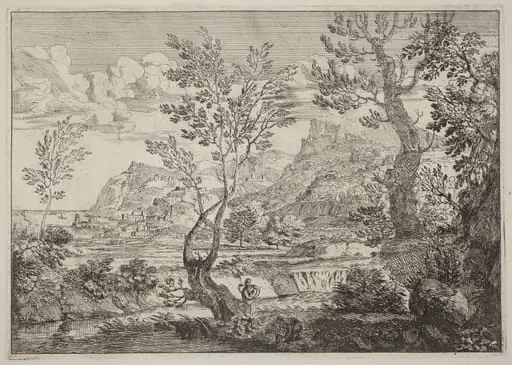 A Waterfall
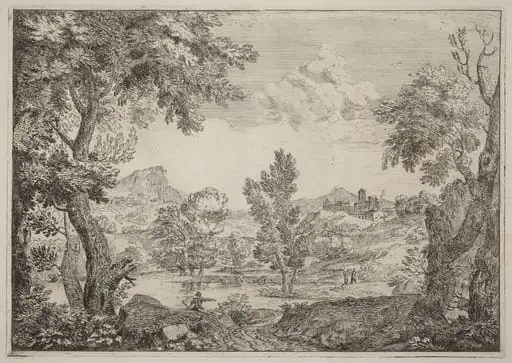 The Stream
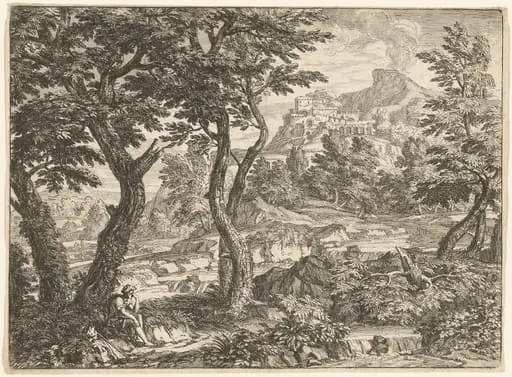 Landscape with a Traveler Resting
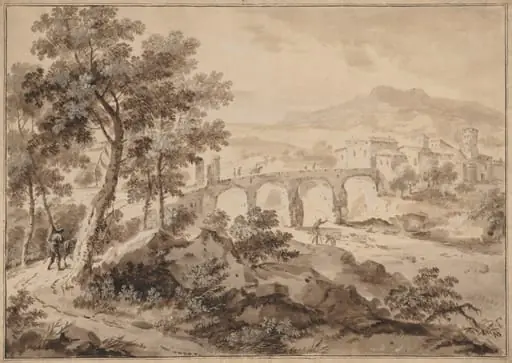 Landscape with Bridge
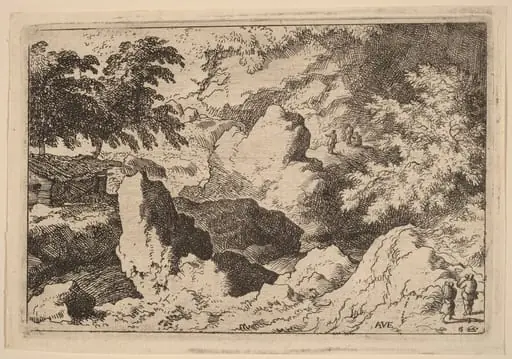 Three Men on a Rock
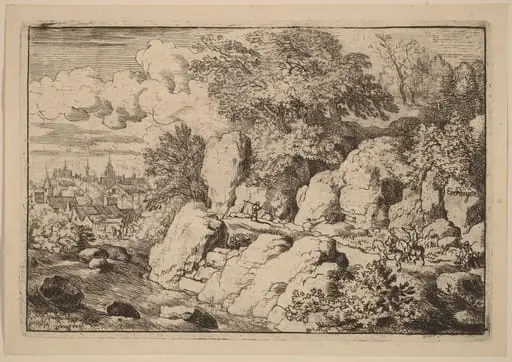 Two Horsemen on a Rocky Path
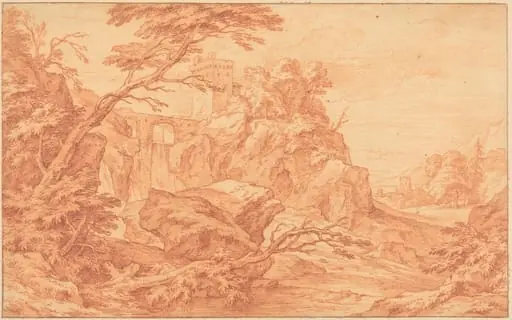 A Rocky Landscape with a Stone Tower and a Waterfall
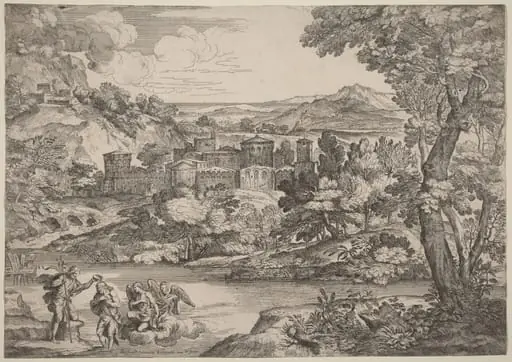 The Baptism of Christ, Set in a Mountainous Landscape
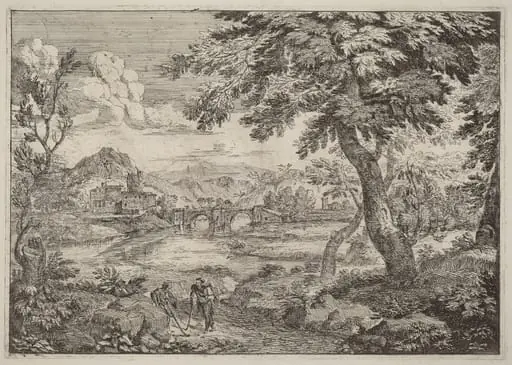 Double Arched Bridge
 Apollo and a Nymph Leading a Lion