Artwork
London Street
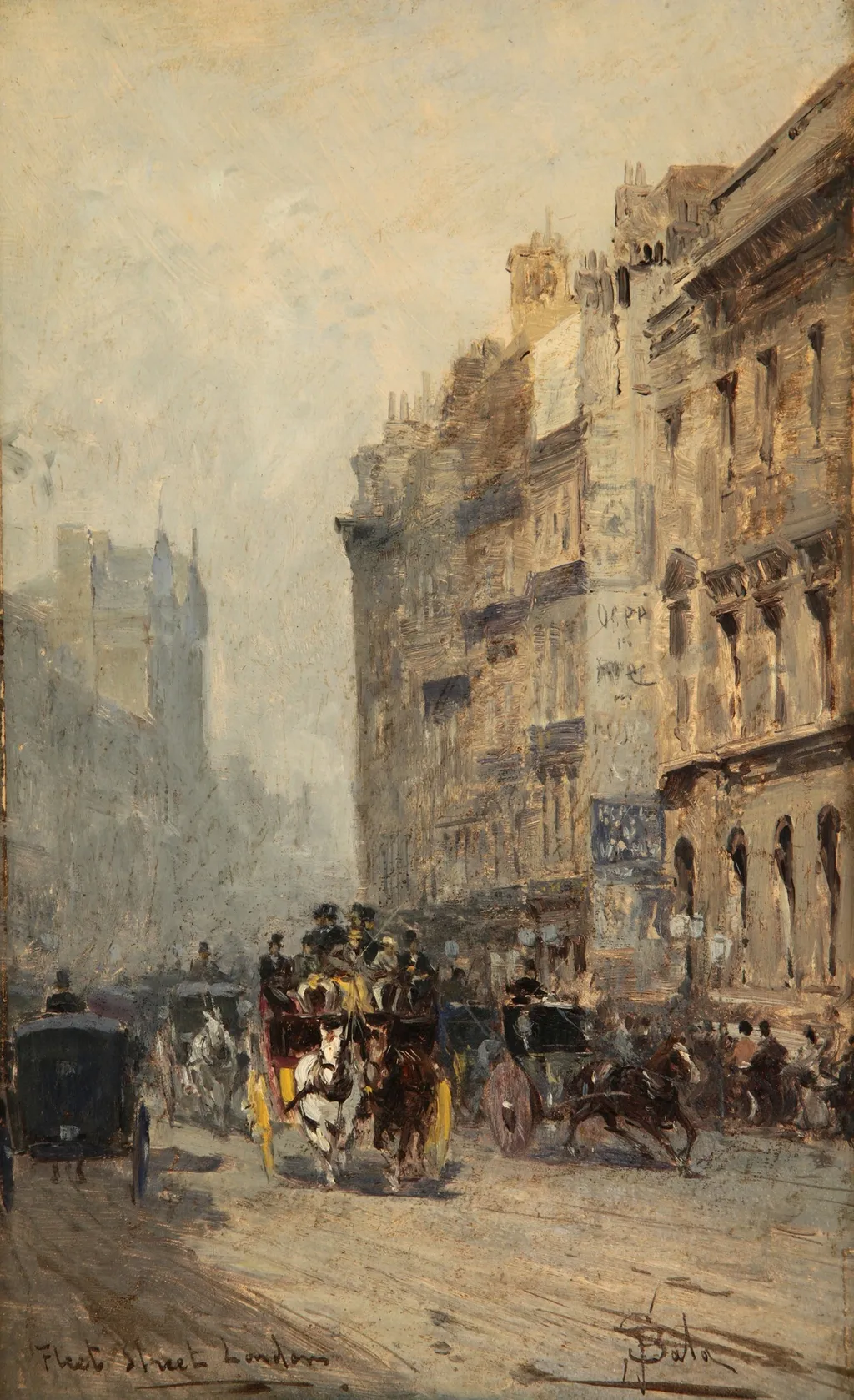
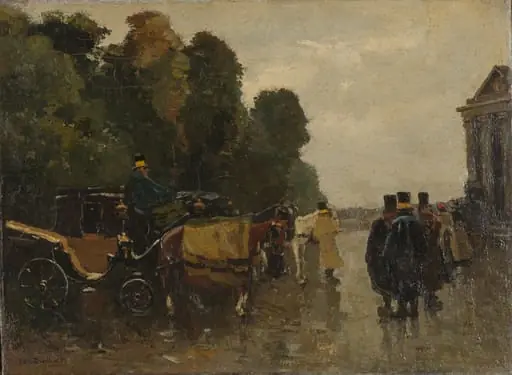
London Street is an unspecified painting by the Realist artist Paolo Sala. It dates from 1850 and is held in the collection of the National Museum of Fine Arts, Argentina.
About this work
Overview
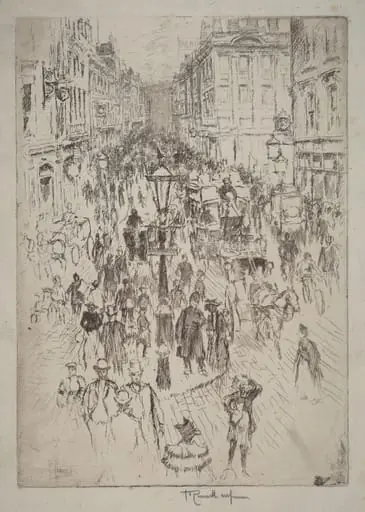
Painted around 1850 by Italian artist Paolo Sala, this work captures a bustling London street in a quiet, observational tone.
Painted around 1850 by Italian artist Paolo Sala, this work captures a bustling London street in a quiet, observational tone. Though Sala is better known for his later Italian scenes, this piece reflects his early engagement with urban life abroad. Executed in oil, it aligns with the realist tradition of depicting everyday environments without idealization. The painting resides today in the National Museum of Fine Arts in Buenos Aires, part of a broader collection of 19th-century European works acquired in the early 20th century.
Subject & Meaning
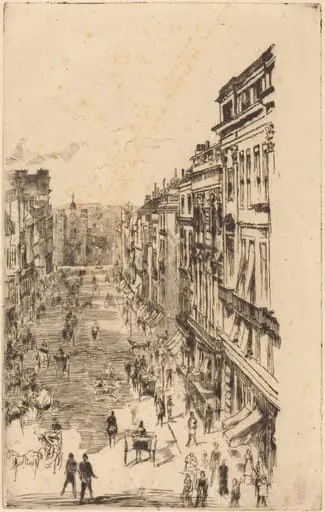
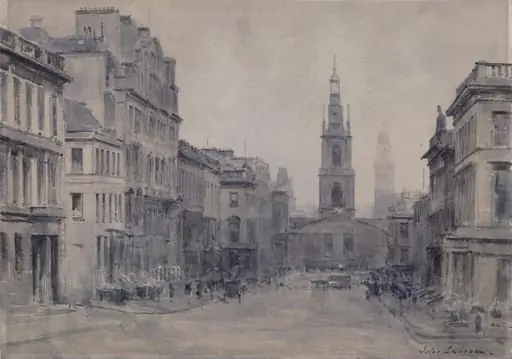
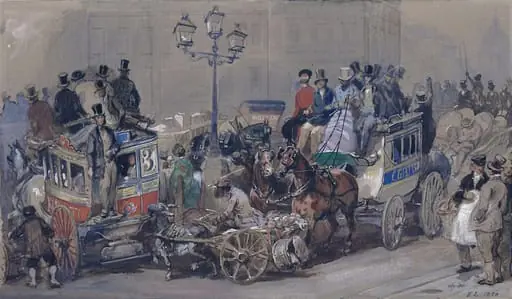
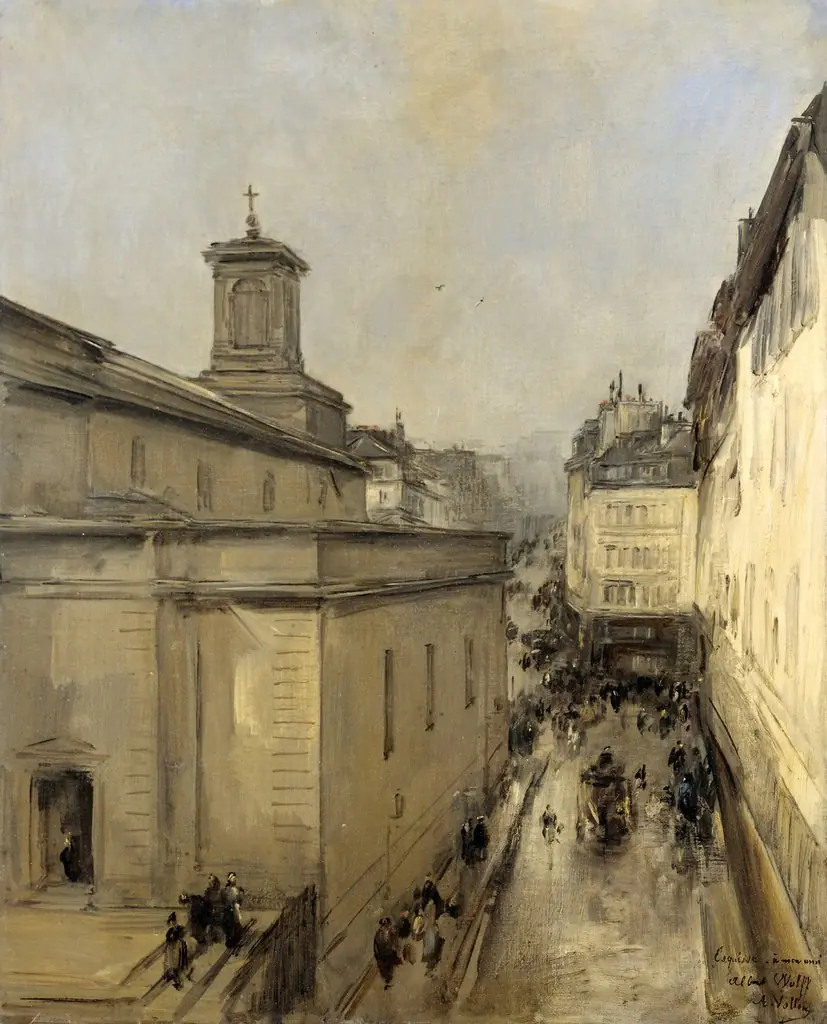
The scene portrays ordinary urban activity: pedestrians, horse-drawn vehicles, and a small crowd gathered near the curb, observing the flow of city life. No single figure dominates; instead, the composition emphasizes collective movement and the rhythm of public space. The hazy sky and muted tones suggest a damp, overcast day, reinforcing the painting’s unembellished view of London’s working streets. It offers no narrative climax, only the quiet persistence of daily routine.
Technique & Style
Sala employed a restrained palette of browns, grays, and muted ochres to convey the soot-laden atmosphere of mid-19th-century London. Brushwork is precise yet unshowy, favoring tonal gradations over bold contrasts. Light filters diffusely through the haze, casting soft shadows that define architectural forms and figures without dramatic chiaroscuro. The perspective is slightly elevated, allowing the viewer to take in the street’s depth while maintaining intimacy with its inhabitants.
History & Provenance
The painting entered the National Museum of Fine Arts in Buenos Aires in the early 1900s, likely through a private acquisition or diplomatic exchange. Its presence in Argentina reflects the period’s interest in European realist works among Latin American collectors. Little documentation exists regarding its journey from London to South America, but its condition suggests it was carefully preserved. Sala’s Italian origins and the painting’s foreign subject matter make its provenance a subtle marker of transnational artistic exchange.
Context
During the 1850s, London was rapidly expanding, its streets transformed by industrialization and population growth. Artists across Europe began turning from idealized landscapes to the realities of urban life. Sala, though Italian, participated in this trend, possibly influenced by British and French realists. His choice to depict London—rather than his native cities—suggests an interest in documenting modernity as it emerged beyond national borders, aligning with broader European trends in genre painting.
Legacy
While Sala is not widely recognized as a major figure in art history, this painting stands as a quiet testament to the growing interest in urban realism among non-British artists. It contributes to a lesser-known strand of 19th-century European painting that recorded city life with restraint and attention to atmosphere. Its preservation in Buenos Aires underscores how global collections came to reflect international artistic currents, even when the artists themselves remained outside the mainstream canon.
Own this work as a print
Artist & collection
Artist
Paolo Sala (January 24, 1859 – 1924) was an Italian painter, mainly of vedute and genre scenes.

Museum
National Museum of Fine Arts, Argentina
Continue through works from the same source collection.