Artwork
The Virgin of Humility
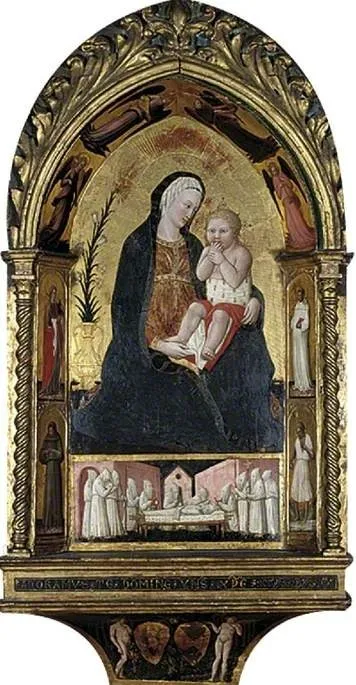
The Virgin of Humility is an unspecified painting by the Early Renaissance artist Paolo Schiavo. It dates from 1440 and is held in the collection of the Fitzwilliam Museum.
About this work
Overview
Created around 1440 by the Florentine artist Paolo Schiavo, this panel painting belongs to the early Renaissance period. It is currently conserved in the Fitzwilliam Museum. The composition presents the Virgin Mary seated on the ground with the infant Christ, framed by a gold background and a dark architectural arch.
Subject & Meaning
The work illustrates the Virgin of Humility, a motif in which Mary is shown seated directly on the earth, emphasizing her modesty and accessibility. She holds the child, who is depicted nude except for a red cloth, offering a blessing with his right hand while clutching a book in his left, symbols of his divine authority and wisdom.
Technique & Style
Executed in tempera on panel, the painting combines a luminous gold ground with delicate modeling of drapery. Schiavo renders Mary's black cloak over a gold robe and a white veil with careful attention to folds, while the infant’s flesh is rendered with subtle chiaroscuro. The surrounding figures are rendered in a flatter, decorative manner typical of early 15th‑century Florentine panel work.
Context
Paolo Schiavo was active in Florence during the first half of the 1400s, linked to the workshop of Masolino and admitted to the Guild of Doctors and Apothecaries in 1428. His oeuvre includes both frescoes and panel paintings, and this work reflects the transitional language between Gothic conventions and the emerging naturalism of the Renaissance.
Artist & collection
Artist
Paolo Schiavo, the pseudonym of Paolo di Stefano Badaloni (1397–1478) was a Florentine painter.

 Virgin of the Angels
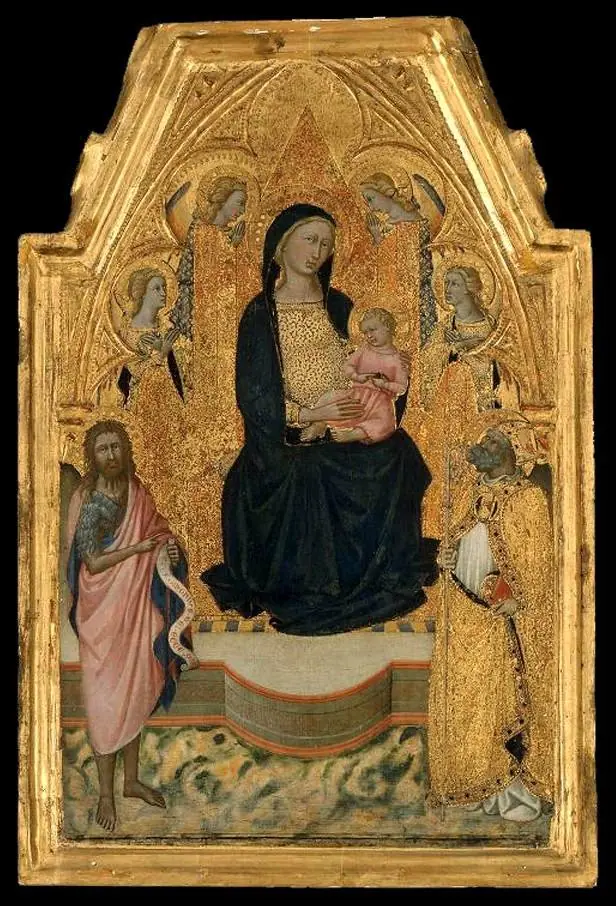 Virgin and Child Enthroned with a Bishop Saint, Saint John the Baptist, and Four Angels
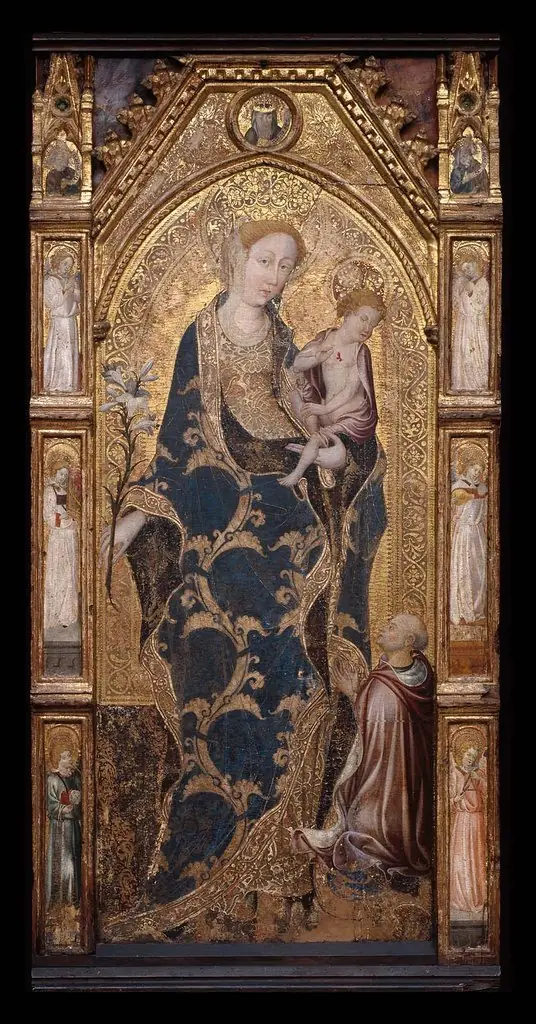 Virgin and Child Enthroned with Cardinal Alonso Borja (Borgia)
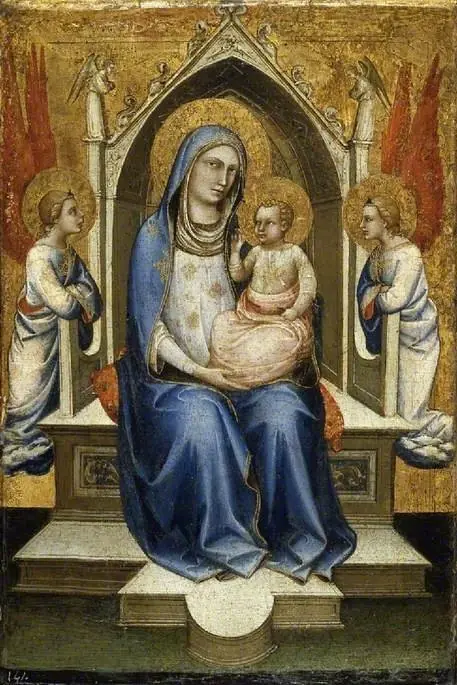 Virgin and Child enthroned
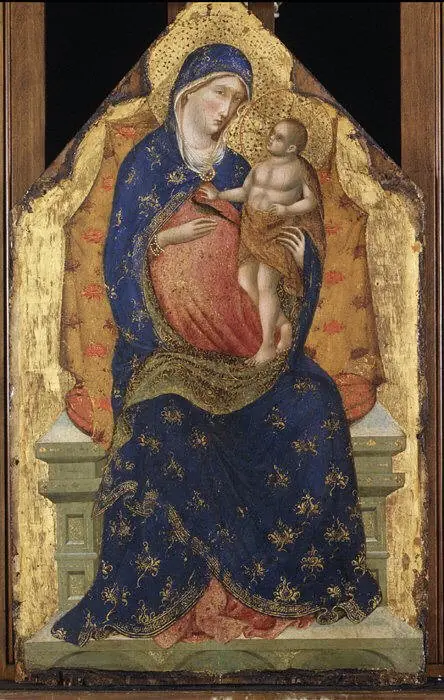 Madonna and Child Enthroned
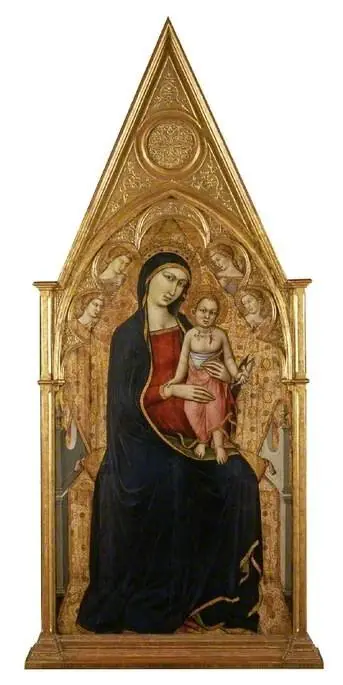 Virgin and Child enthroned
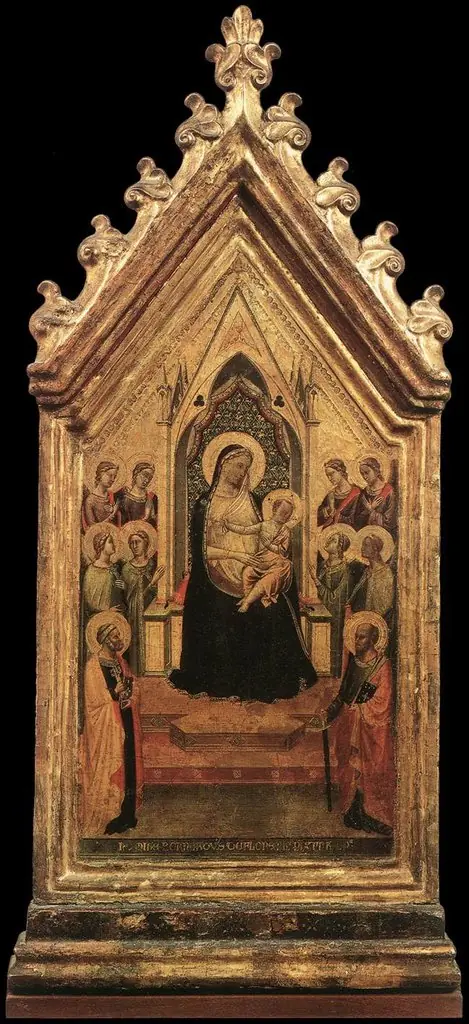 Madonna and Child Enthroned with Angels and Saints
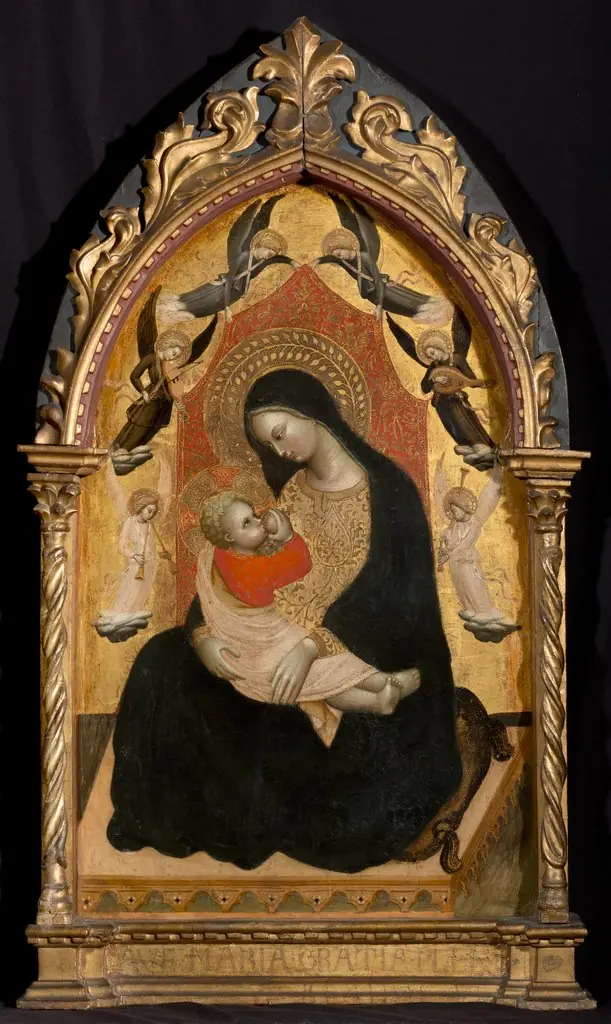 Virgin and Child with Music-Making Angels