Artwork
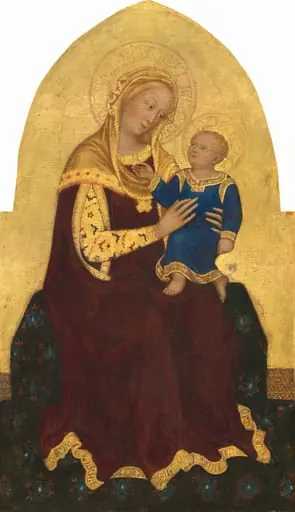
Madonna and Child Enthroned
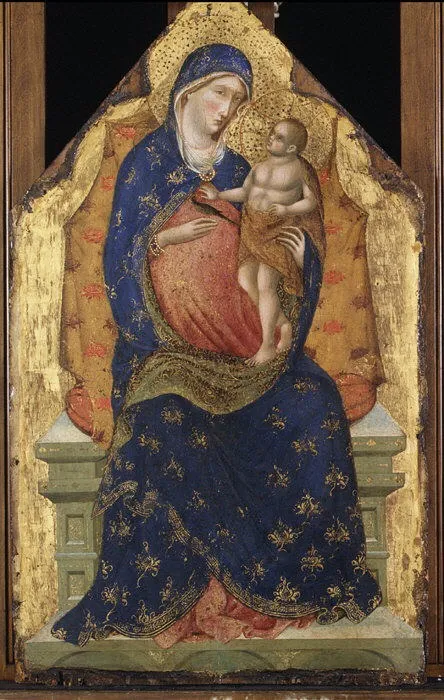
Madonna and Child Enthroned is a tempera painting by the Byzantine icon painting artist Unknown. It dates from 1350 and is held in the collection of the Metropolitan Museum of Art.
About this work
Overview
Madonna and Child Enthroned is a wood panel painting depicting a serene scene of the Virgin Mary seated on a throne, cradling the infant Jesus. Characterized by the use of real gold leaf, the work showcases a blend of religious iconography and opulent decoration.
Subject & Meaning
The painting represents a traditional Christian motif, focusing on the intimate relationship between the Madonna and the Christ child. The child's gesture towards Mary's face conveys a sense of tender interaction, emphasizing the human aspect of the divine subject.
Technique & Style
Notable for its incorporation of real gold leaf (rather than painted gold), the work highlights the artist's use of material luxury to signify divine and royal presence. The gold adorns Mary's cloak and the throne's frame, contrasting with the faded, patterned background that suggests a draped curtain.
History & Provenance
Limited information is provided about the painting's historical context or ownership history. However, the technique and subject matter suggest it aligns with medieval or early Renaissance European artistic practices, particularly in the use of gold leaf, a common feature in religious art of the time.
Context
Works like Madonna and Child Enthroned were often created for religious veneration or to adorn chapels and churches. The use of gold leaf indicates the piece was likely commissioned by or for a wealthy patron, given the expense of such materials.
Artist & collection

 Domestic Scene
 Giacomo and Cardinal Marco, investing Andrea, Abbot of San Zeno, with his Benefice
 The Nymph of Fontainebleau
 Portrait of a Woman
 Madonna and Child with Saints in the Enclosed Garden
 Venus and Minerva
 Family Group of Four on Sofa
 Wall painting from Room H of the Villa of P. Fannius Synistor at Boscoreale
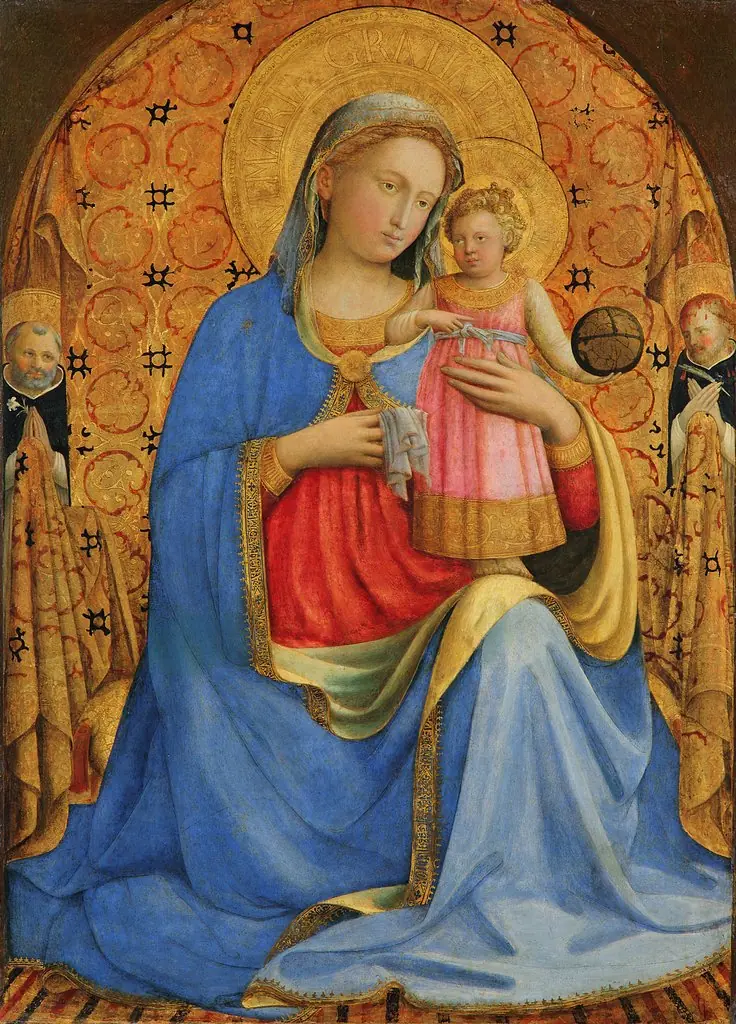 Madonna and Child
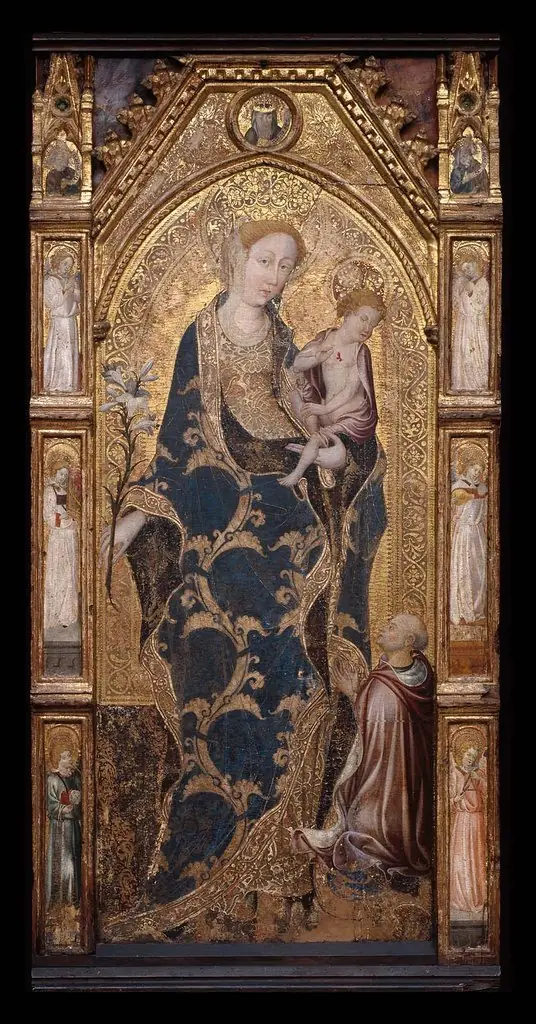 Virgin and Child Enthroned with Cardinal Alonso Borja (Borgia)
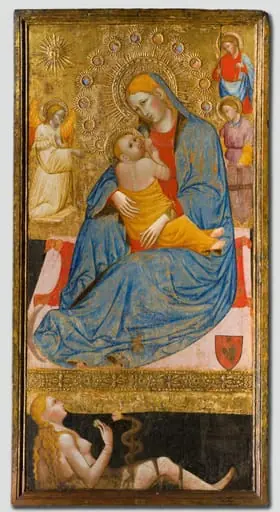 The Madonna of Humility with the Temptation of Eve
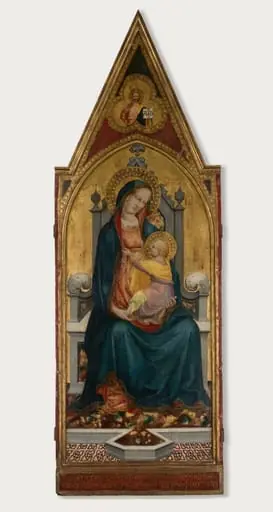 Virgin and Child Enthroned
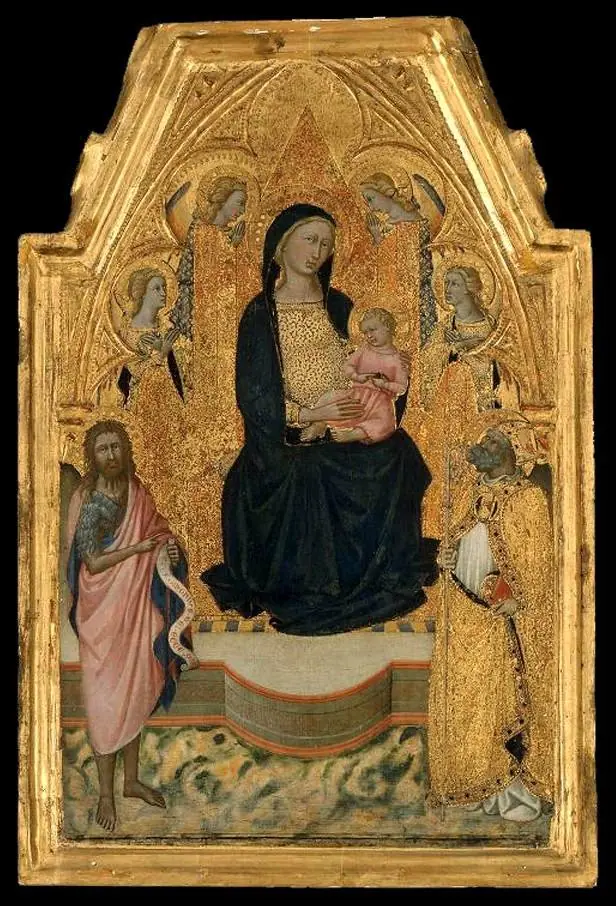 Virgin and Child Enthroned with a Bishop Saint, Saint John the Baptist, and Four Angels
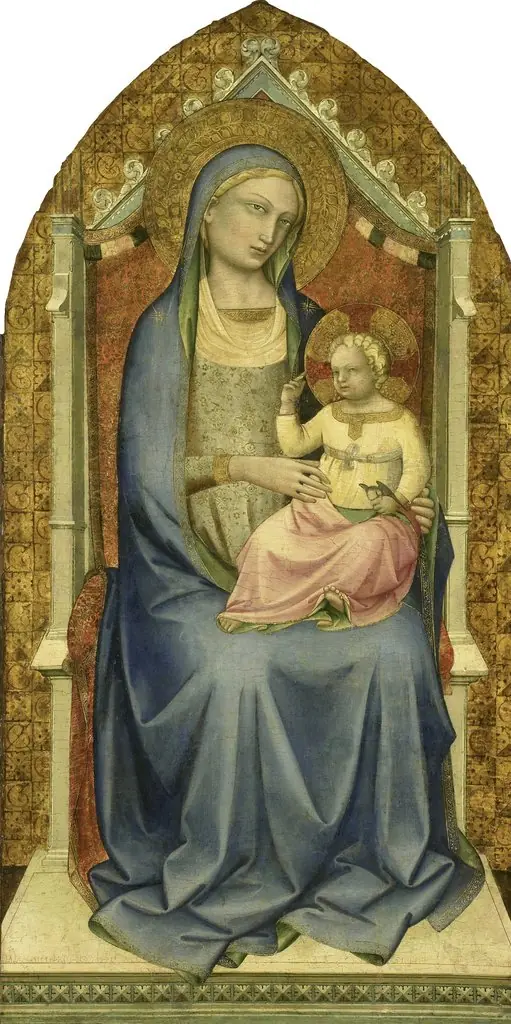 Virgin and Child
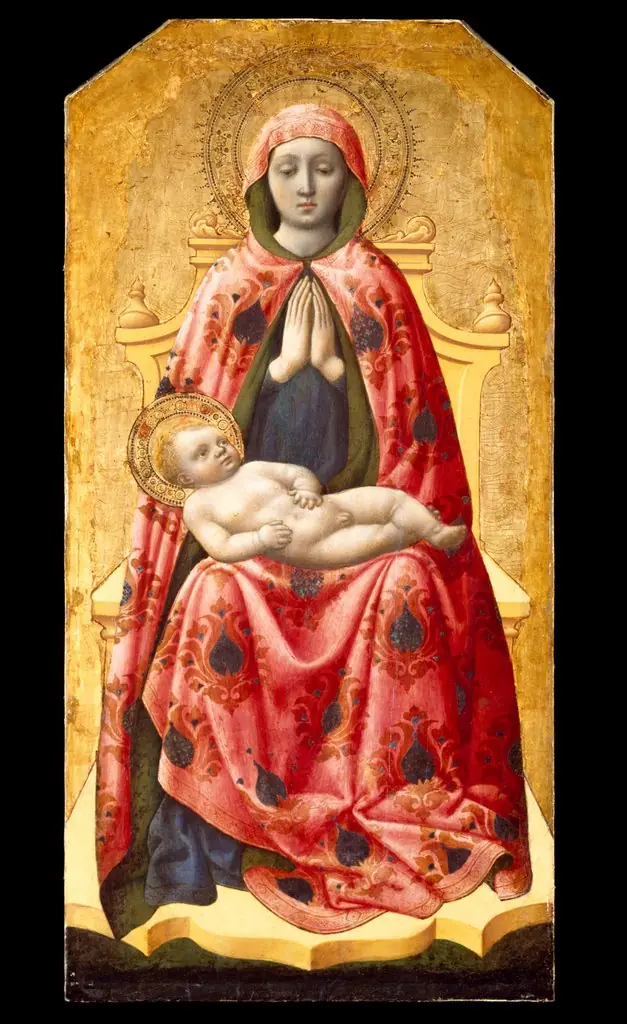 Virgin and Child
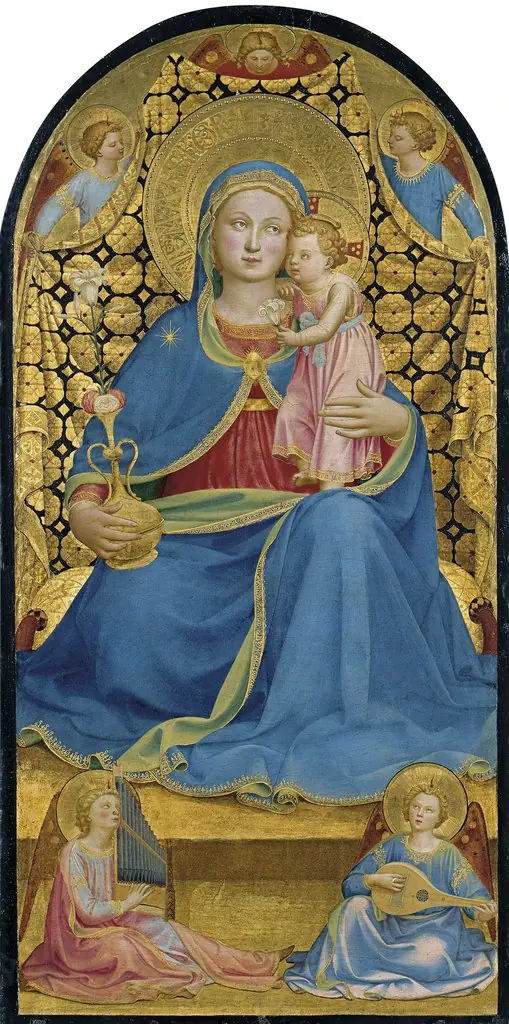 Madonna of Humility
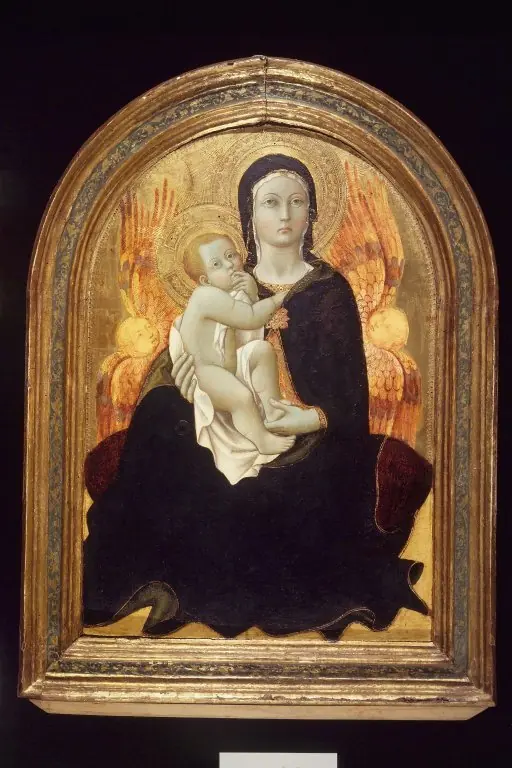 Madonna of humility
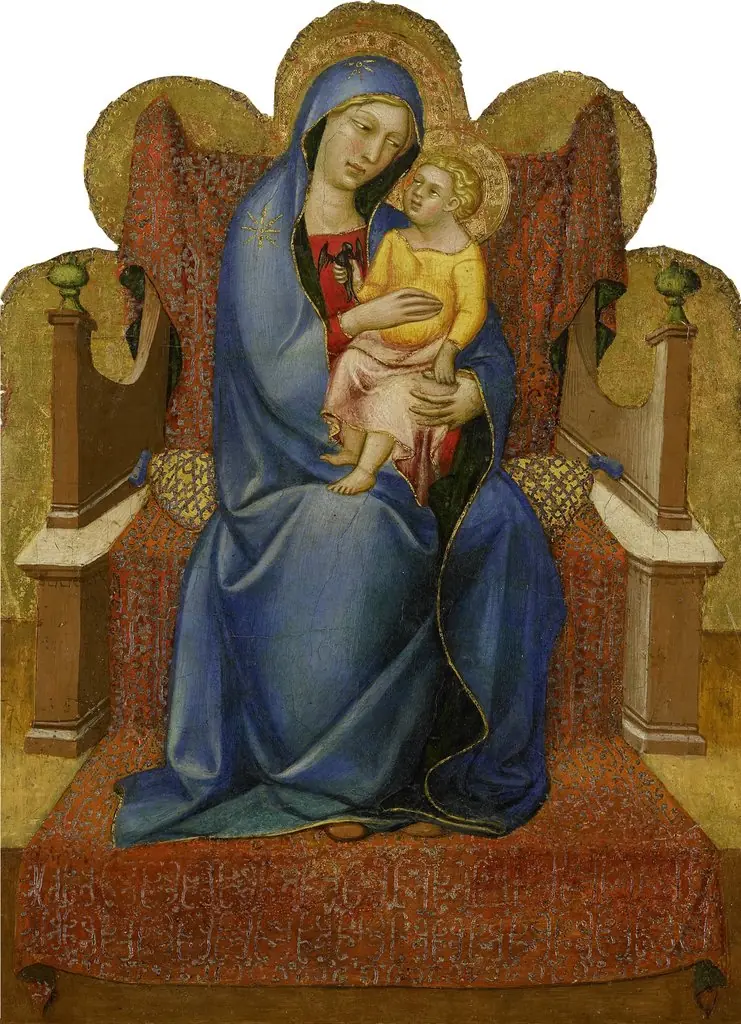 Virgin and Child
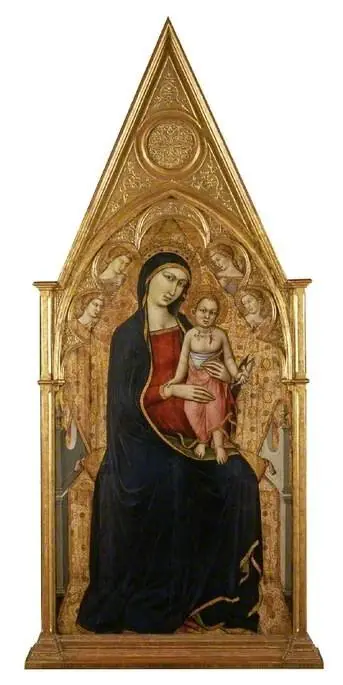 Virgin and Child enthroned
 Madonna and Child Enthroned