Artwork
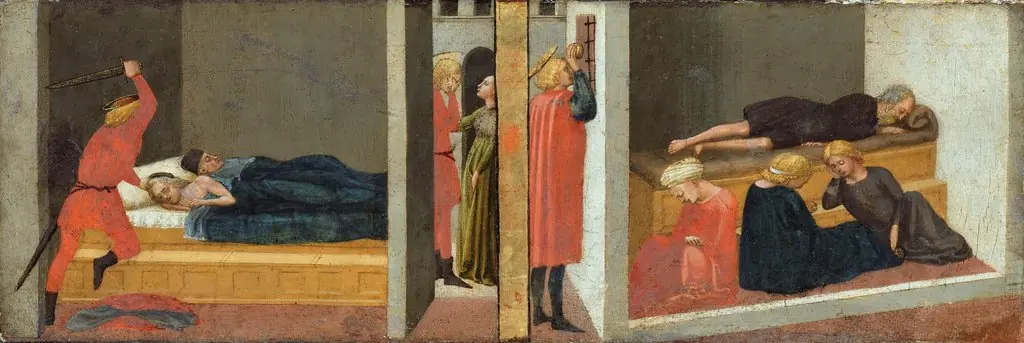
Due storie di san Nicola di Bari
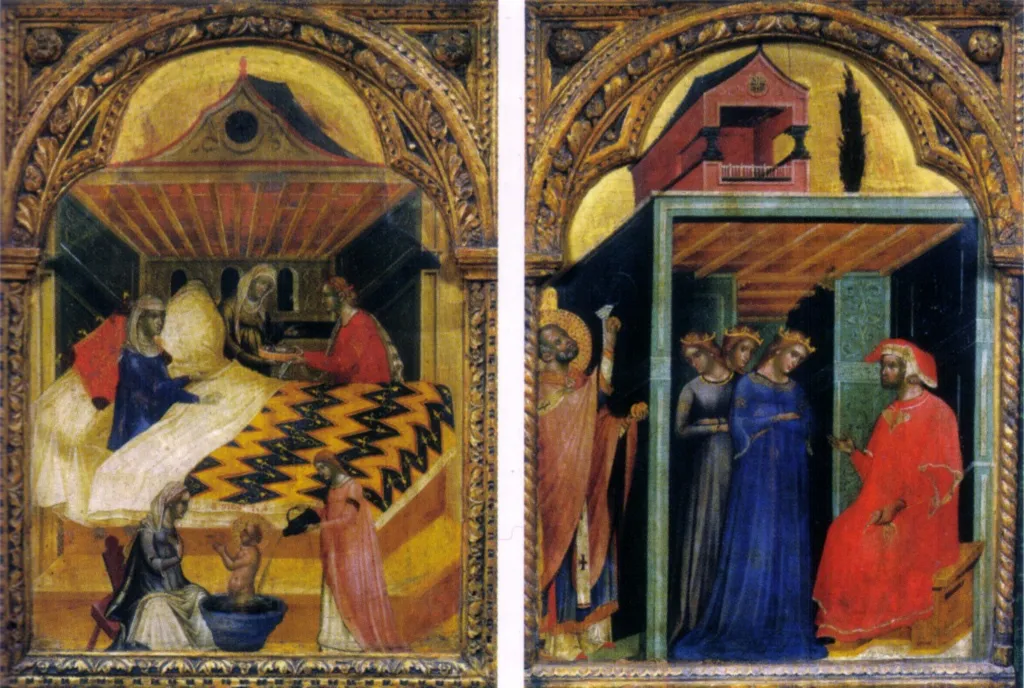
Due storie di san Nicola di Bari is an unspecified painting by the Byzantine icon painting artist Paolo Veneziano. It dates from 1346 and is held in the collection of the Contini Bonacossi collection.
About this work
Overview
Painted in 1346 by Paolo Veneziano, this work consists of two connected panels illustrating episodes from the life of Saint Nicholas of Bari.
Painted in 1346 by Paolo Veneziano, this work consists of two connected panels illustrating episodes from the life of Saint Nicholas of Bari. Executed in tempera and gold on wood, it reflects the devotional painting traditions of 14th-century Venice. The piece was likely intended for private or chapel use, combining narrative clarity with rich visual detail. It now resides in the Uffizi Gallery in Florence.
Subject & Meaning
The left panel portrays Saint Nicholas secretly providing dowries to three impoverished sisters, a miracle ensuring their marriage and moral protection. The right panel depicts his intervention to rescue three innocent men condemned to death. Both scenes emphasize Nicholas’s role as a protector of the vulnerable, reinforcing his veneration in medieval Christian communities through acts of quiet charity and justice.
Technique & Style
Veneziano employs bold outlines and saturated pigments to define figures and drapery, characteristic of the Byzantine-influenced Venetian style. Gold leaf highlights halos and fabric edges, enhancing spiritual radiance without overwhelming the narrative. The compositions prioritize clarity over depth, with figures arranged in shallow space to direct attention to their gestures and interactions, typical of pre-Renaissance sacred art.
History & Provenance
Commissioned for a religious context in Venice, the painting entered the Medici collection by the 16th century and was later transferred to the Uffizi. Its survival in near-original condition is rare for works of this period. Documentation from the Renaissance confirms its attribution to Paolo Veneziano, whose workshop was central to Venetian panel painting before the rise of oil techniques.
Context
In mid-14th-century Venice, devotional panels like this one served both spiritual and social functions, reinforcing communal values through familiar saints' legends. The emphasis on charity and justice mirrored civic ideals amid economic shifts and plague-related instability. Veneziano’s synthesis of Byzantine formality with emerging Italian naturalism positioned him as a bridge between Eastern and Western traditions.
Legacy
This work exemplifies the transition in Venetian painting toward greater narrative expressiveness while retaining liturgical function. Though overshadowed later by Renaissance innovations, Veneziano’s influence endured in regional workshops. The painting remains a key reference for understanding the evolution of sacred imagery in Italy before the advent of linear perspective and anatomical realism.
Artist & collection

Artist
Paolo Veneziano, also Veneziano Paolo or Paolo da Venezia was a 14th-century painter from Venice, the "founder of the Venetian School" of painting, probably active between about 1321 and 1362.

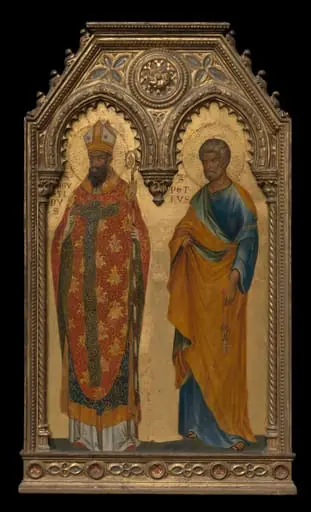
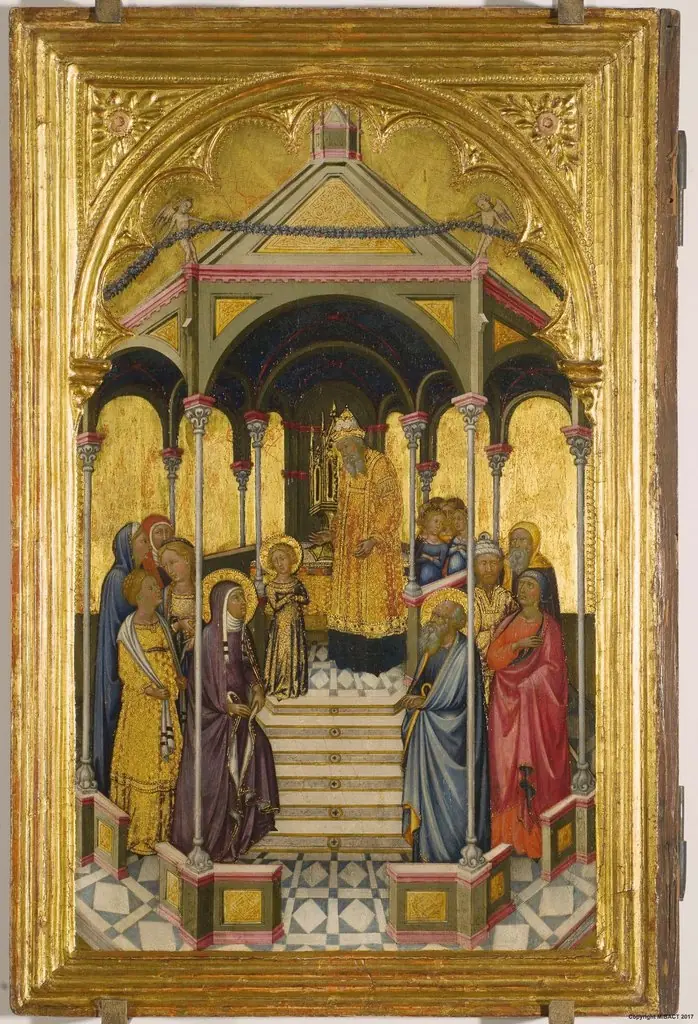 The Presentation of the Virgin at the Temple
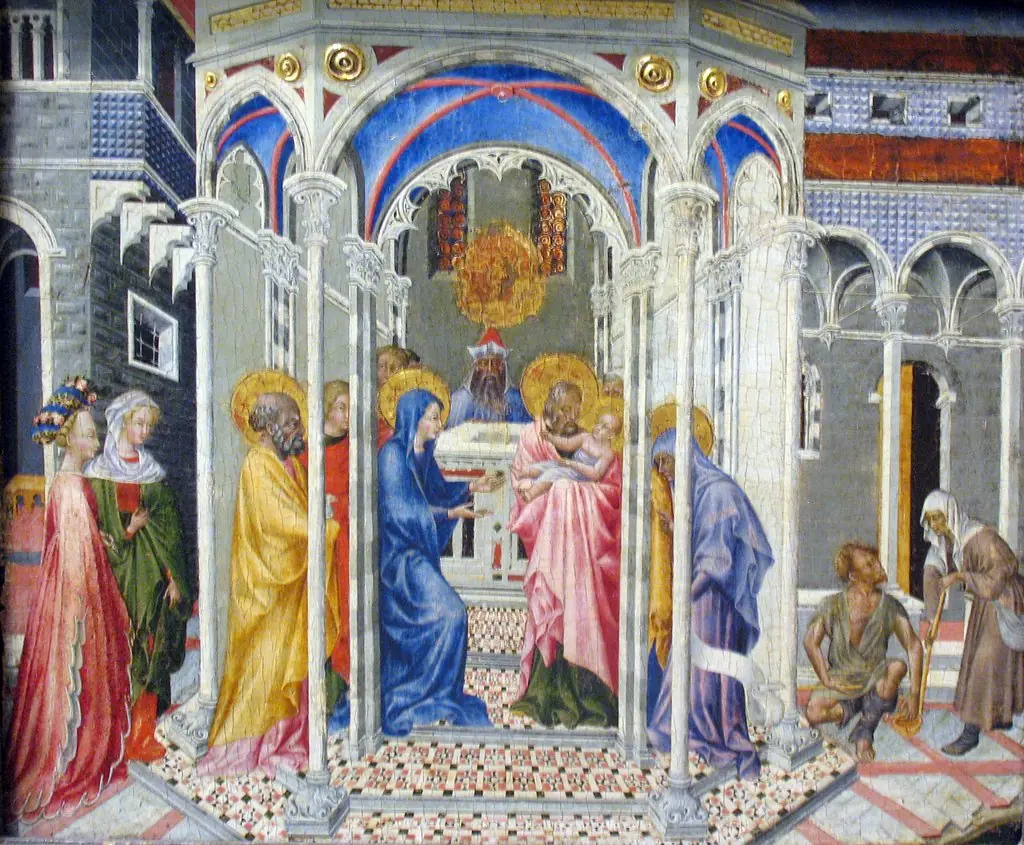 The Presentation of Christ in the Temple
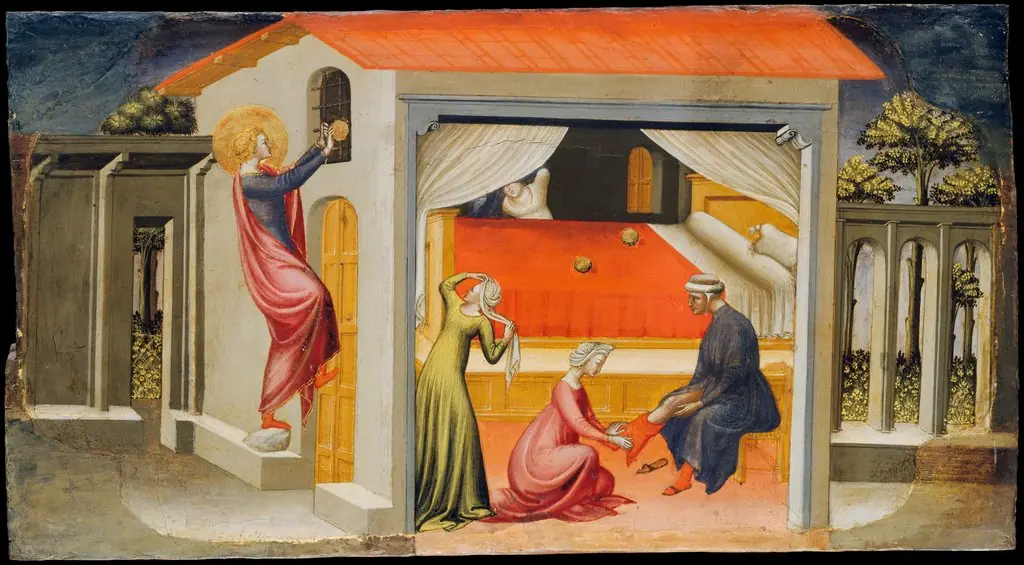 Saint Nicholas Providing Dowries
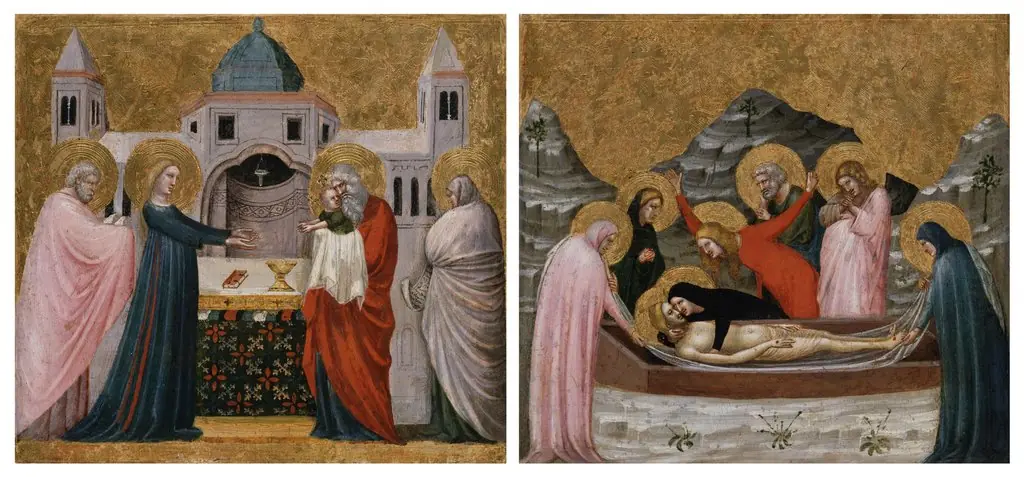 Two Scenes from the Life of Christ
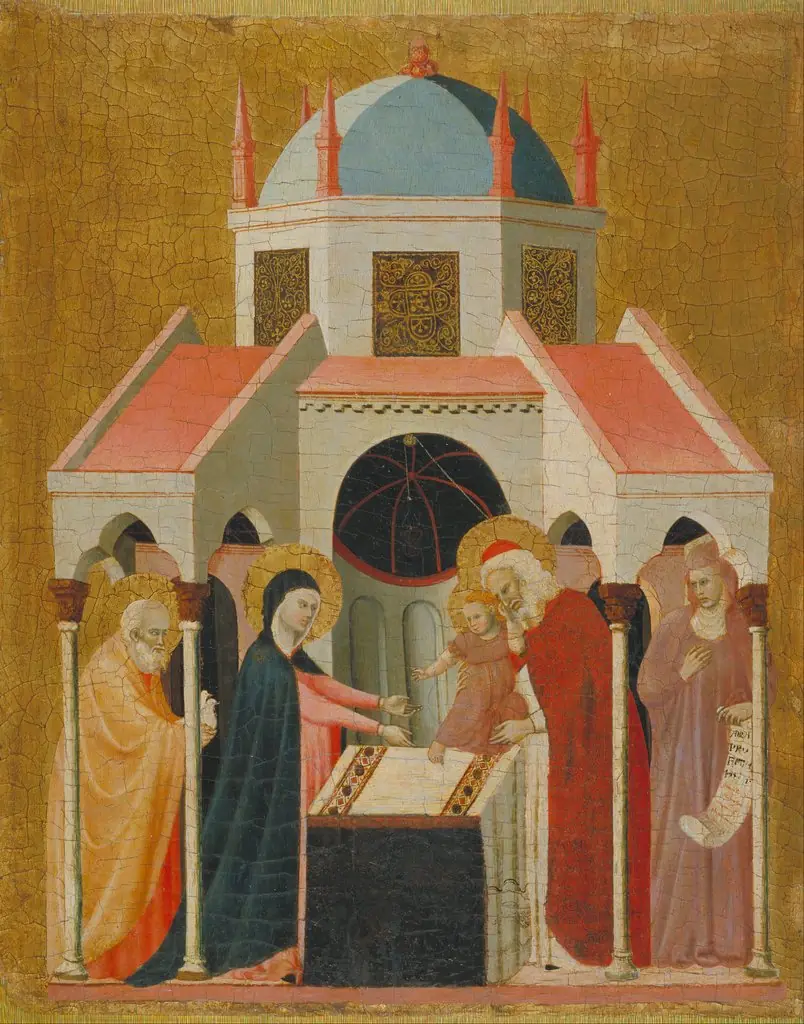 Presentation of Jesus at the Temple
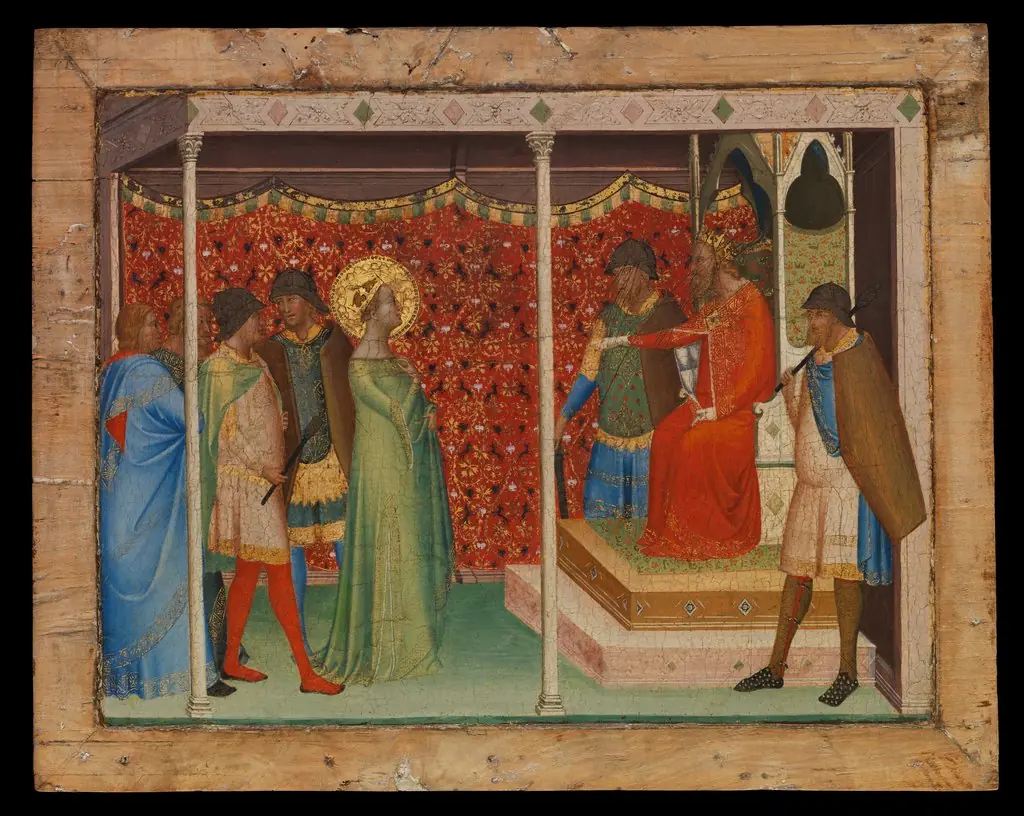 Saint Reparata before the Emperor Decius
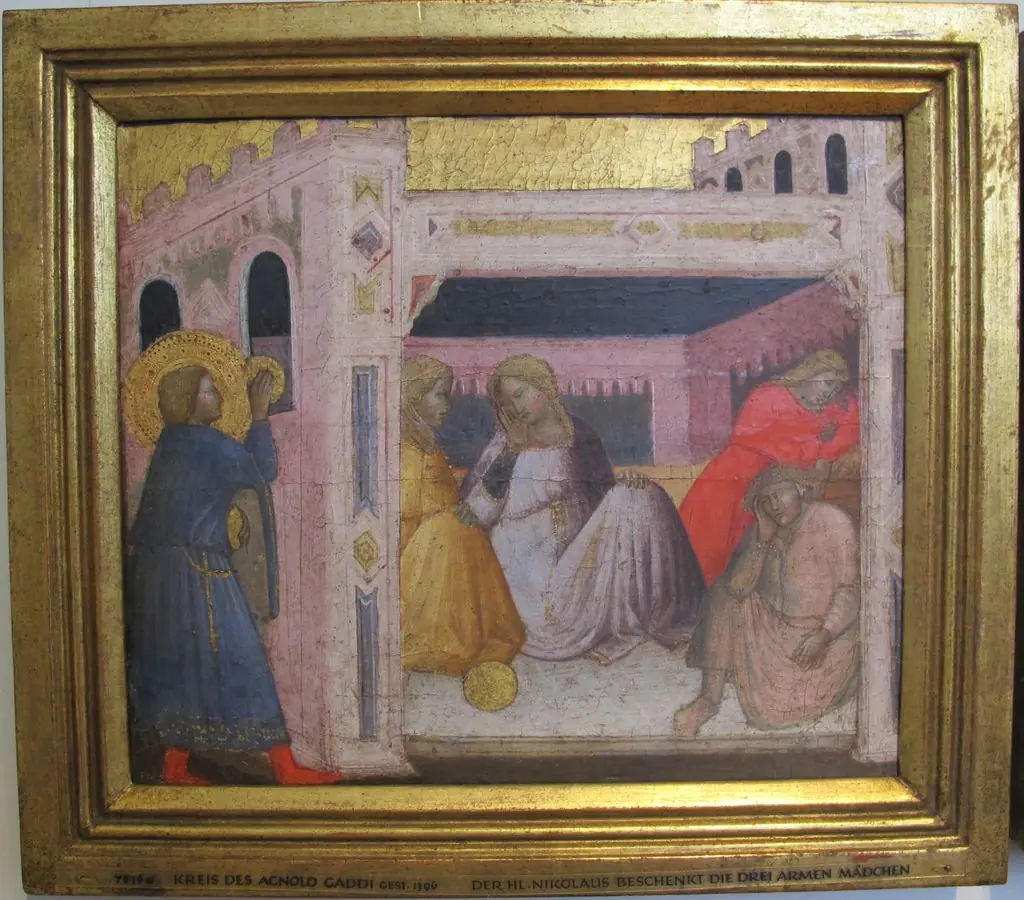 Stories of St. Nicholas. Saint Nicholas presenting Gifts to Three Pool girls
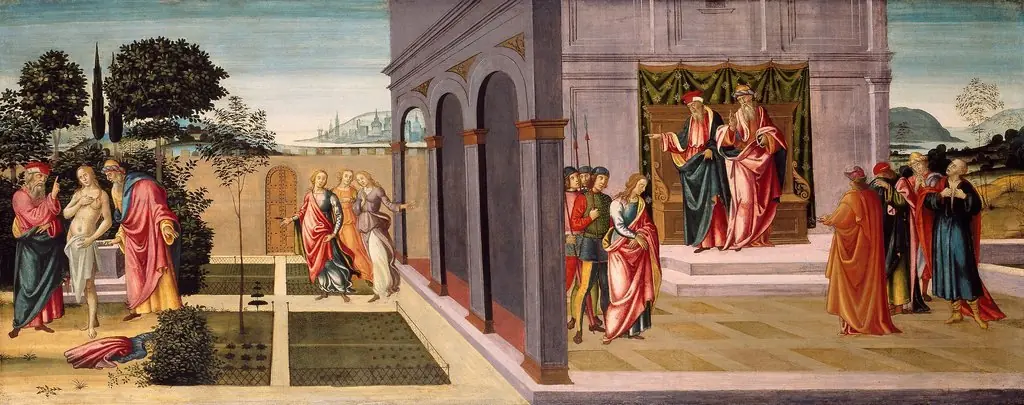 Susanna and the Elders in the Garden, and the Trial of Susanna before the Elders
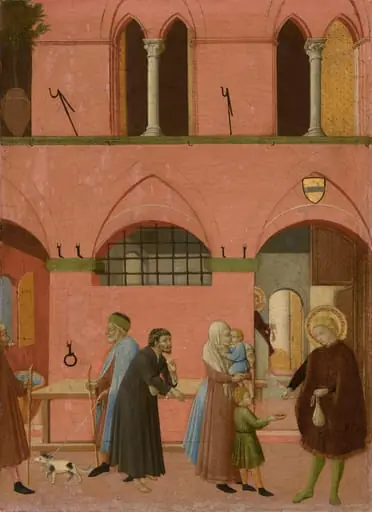 Saint Anthony Distributing His Wealth to the Poor
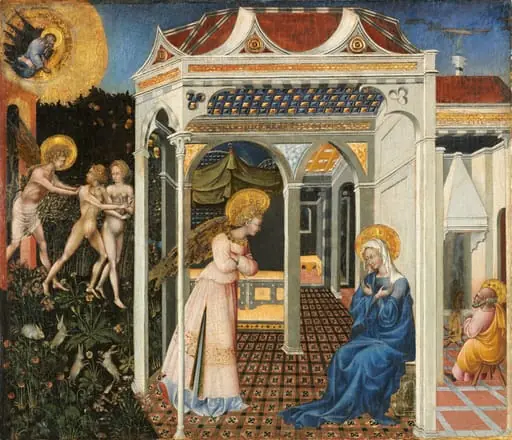 The Annunciation and Expulsion from Paradise
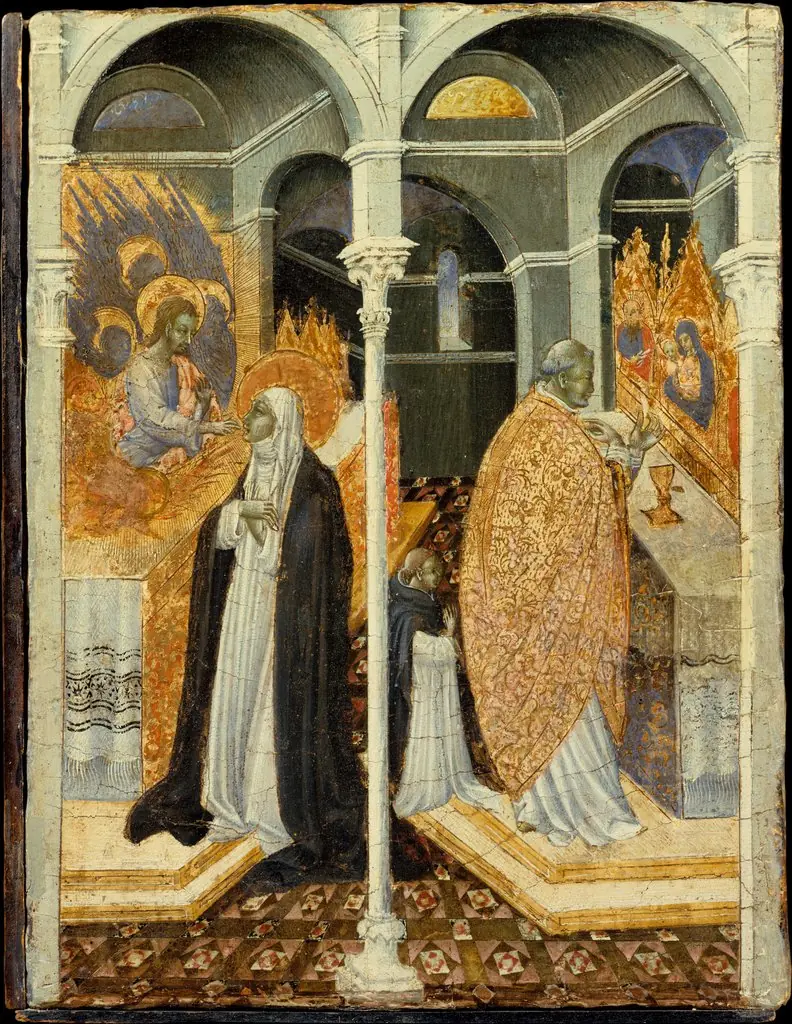 The Miraculous Communion of Saint Catherine of Siena
 Altar predella; Right panel: The parricide of St. Julian - The miracle of St. Nicholas of Bari