Artwork
St. John the Baptist (fragment)
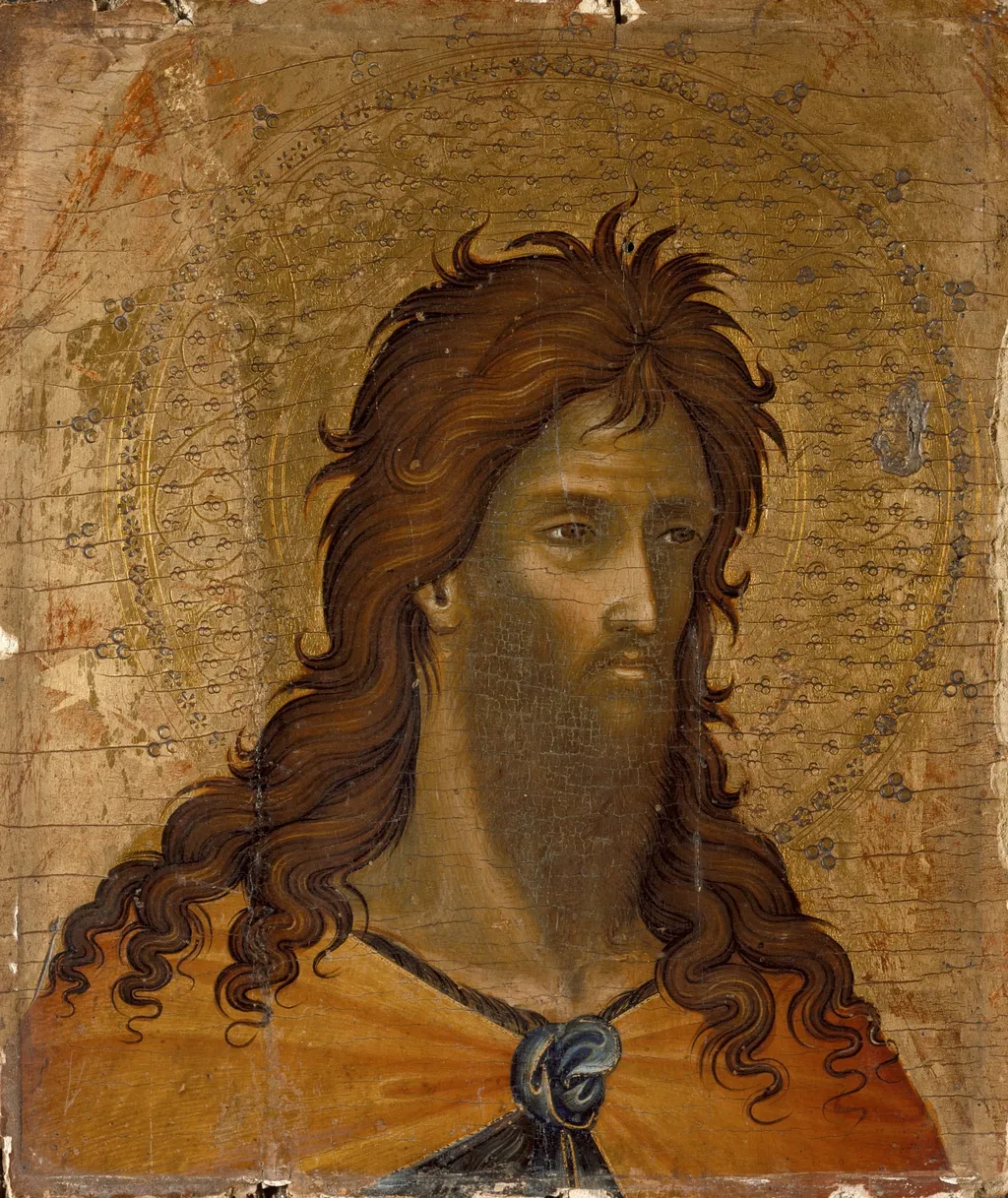
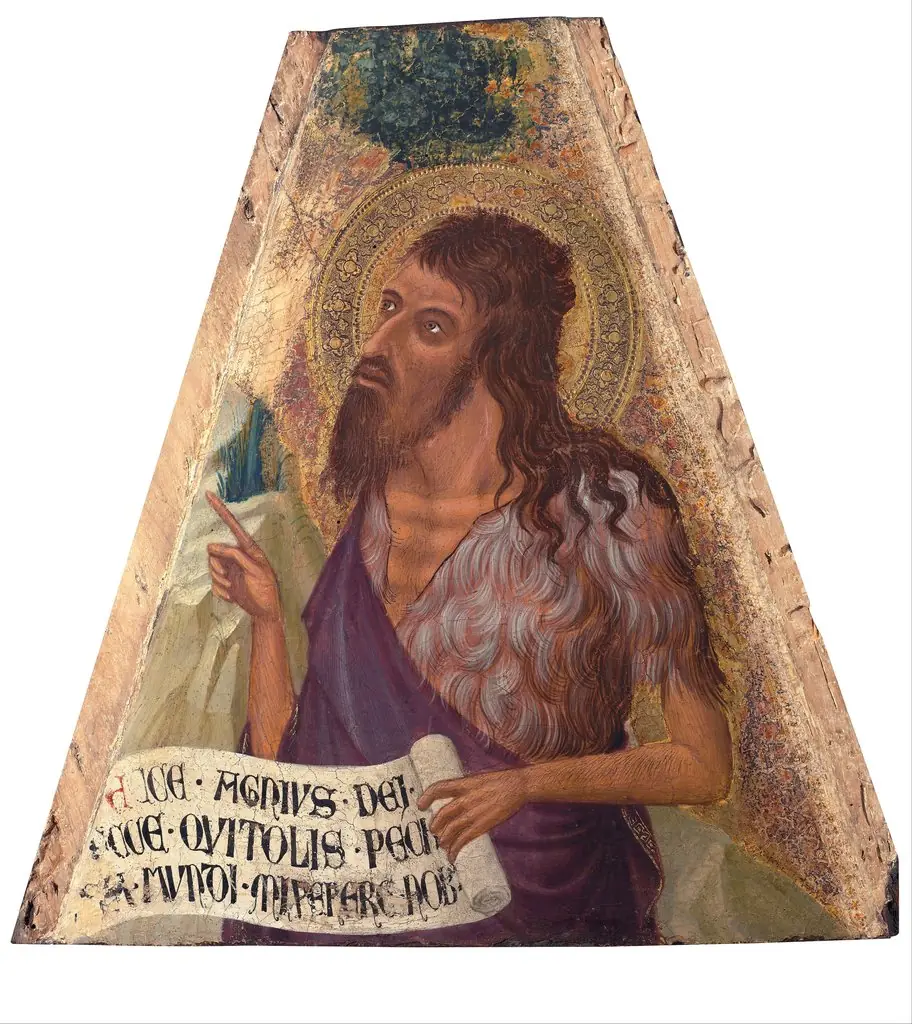
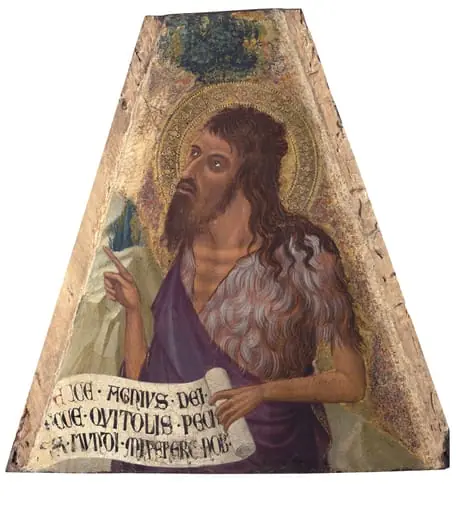
St. John the Baptist (fragment) is an unspecified painting by the Byzantine icon painting artist Paolo Veneziano. It dates from 1350 and is held in the collection of the Los Angeles County Museum of Art.
About this work
Overview
The work depicts the saint in half-length, characterized by long, wavy brown hair and a full beard, rendered with meticulous attention to individual strands.
Paolo Veneziano's 'St. John the Baptist (fragment)' is a mid-14th-century panel painting created circa 1350, representing a significant example of Venetian Gothic religious art. The work depicts the saint in half-length, characterized by long, wavy brown hair and a full beard, rendered with meticulous attention to individual strands. He is clothed in a red robe secured by a blue knot at the chest, a traditional iconographic element identifying the Baptist. The figure is set against a gold background decorated with a circular pattern of incised lines and dots, a technique known as punchwork, which was commonly used to simulate halos or divine light in Byzantine-influenced Italian painting. As a fragment, the piece likely originated from a larger polyptych, a format for which Paolo Veneziano and his workshop were renowned. The painting exemplifies the artist's synthesis of Byzantine stylistic conventions with emerging naturalistic tendencies in the Trecento, showcasing the refined craftsmanship and devotional intensity typical of his mature period in Venice.
Subject & Meaning
The figure is identified as John the Baptist by his ascetic appearance and traditional attire. He is shown with long, wavy hair and a full beard, symbols of his prophetic role. The red garment, tied with a blue knot, alludes to his renunciation of worldly comforts while hinting at his future martyrdom.
Technique & Style
Veneziano employs tempera on panel, a common medium in the mid‑fourteenth century. The gold ground is incised with concentric lines and dots, creating a luminous backdrop. Fine brushwork renders individual hair strands, while the drapery is rendered with simplified folds, reflecting the decorative yet narrative style of early Italian Gothic painting.
History & Provenance
The panel survived as a fragment, suggesting it was once part of a larger altarpiece. It entered the Los Angeles County Museum of Art through acquisition in the twentieth century, though earlier ownership records are sparse. Its preservation offers insight into the devotional art produced in Venice during the Trecento.
Artist & collection

Artist
Paolo Veneziano, also Veneziano Paolo or Paolo da Venezia was a 14th-century painter from Venice, the "founder of the Venetian School" of painting, probably active between about 1321 and 1362.


![Saint James Major [right panel], by Grifo di Tancredi](https://artifactworldgallery.com/img/grifo-di-tancredi--saint-james-major-right-panel--dc190378c0cddc8f-w320.webp)