Artwork
Crucifixion – Fragment of a Croce Dipinta
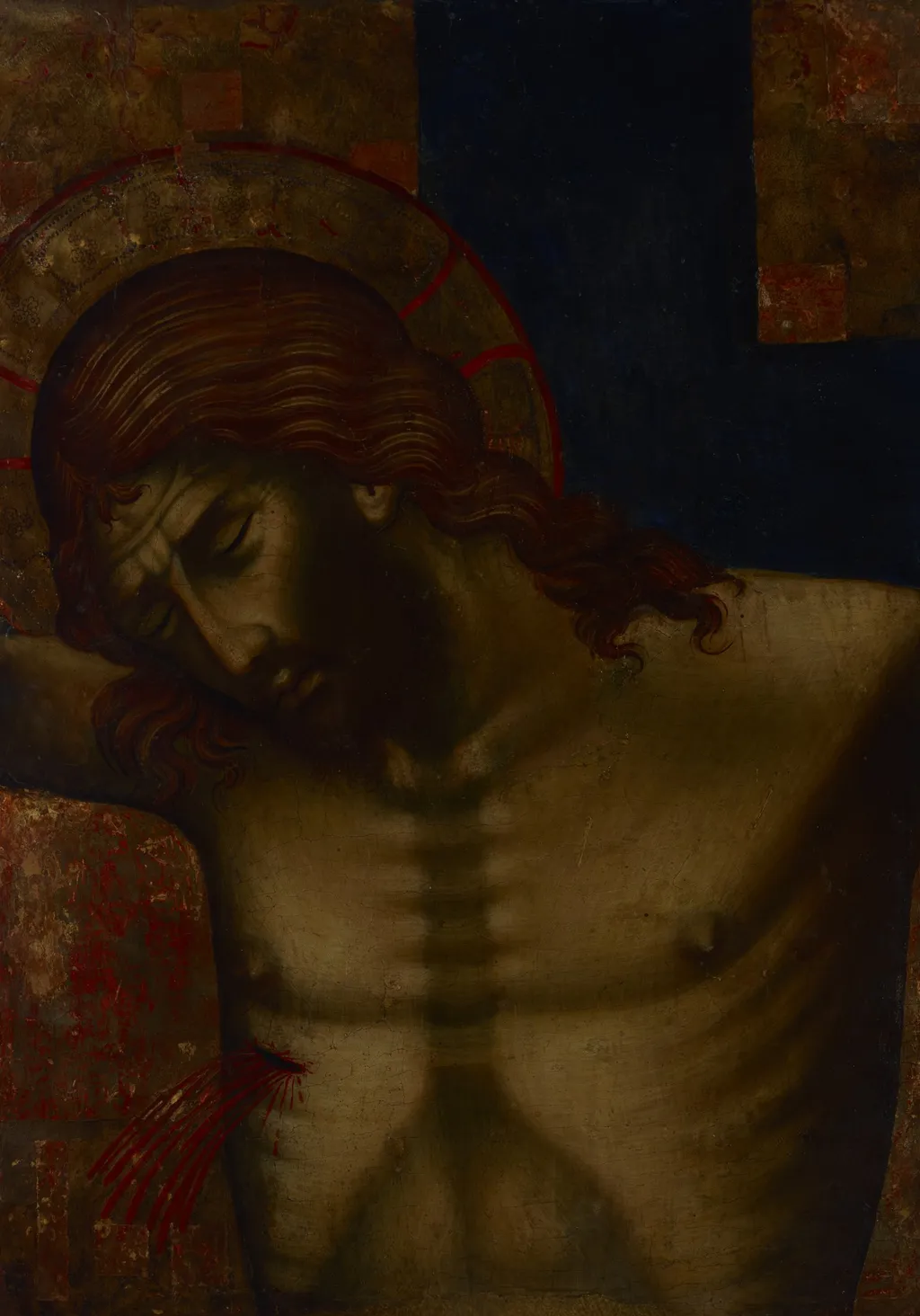
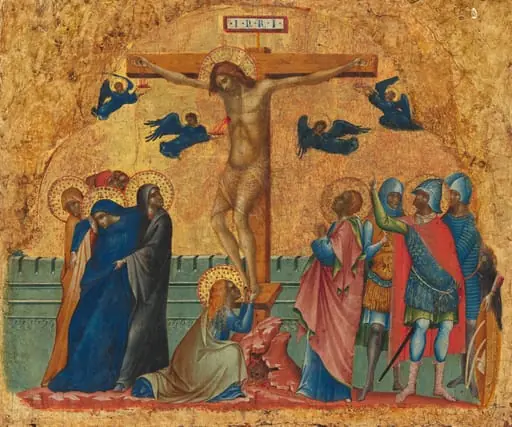
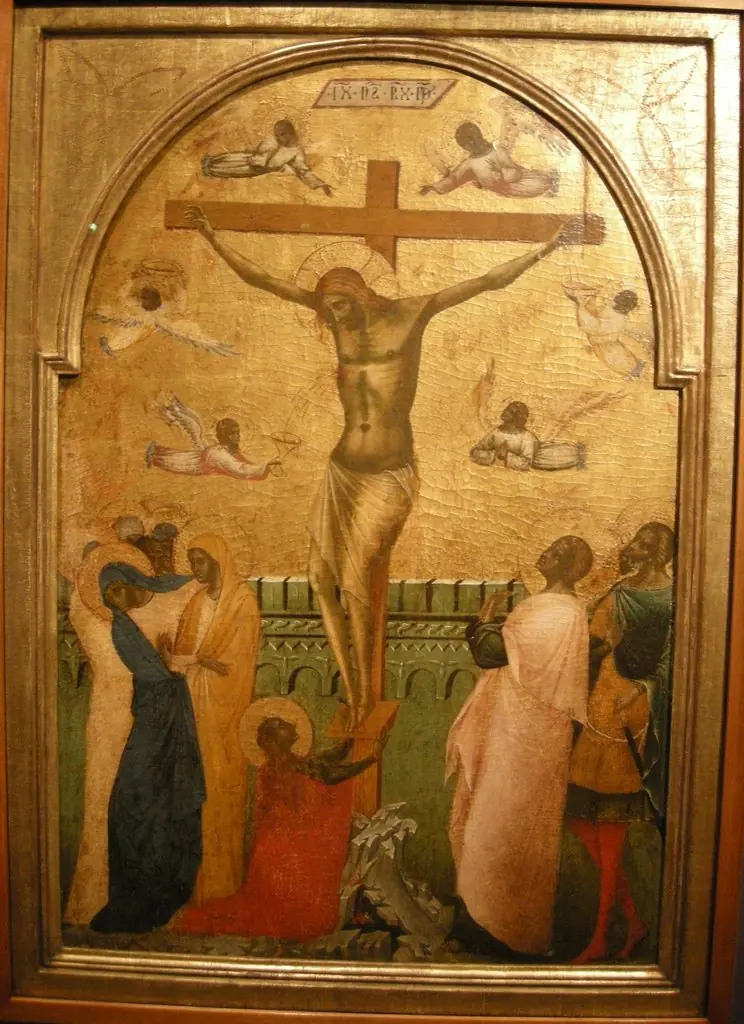
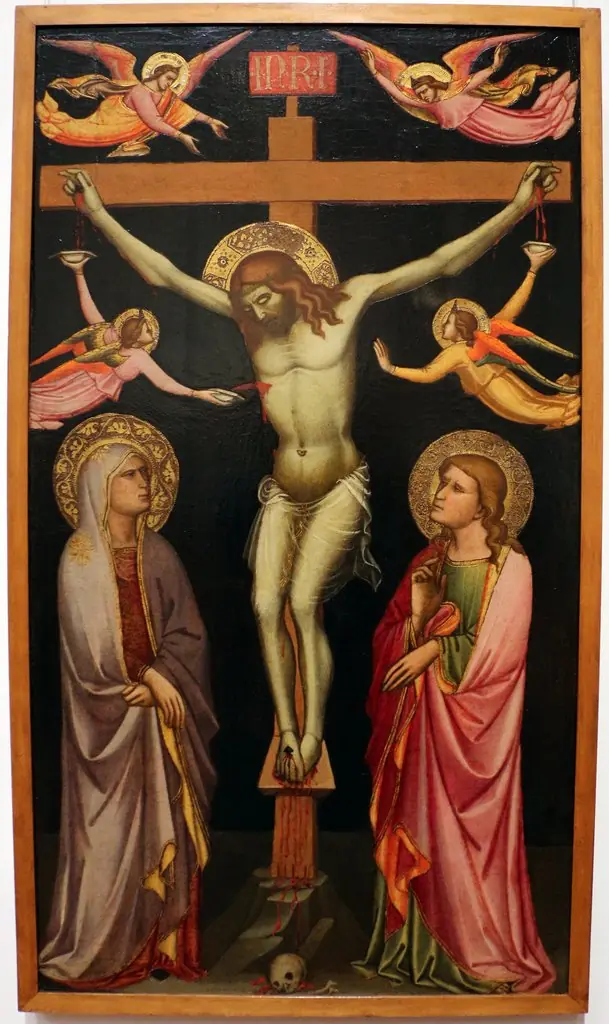
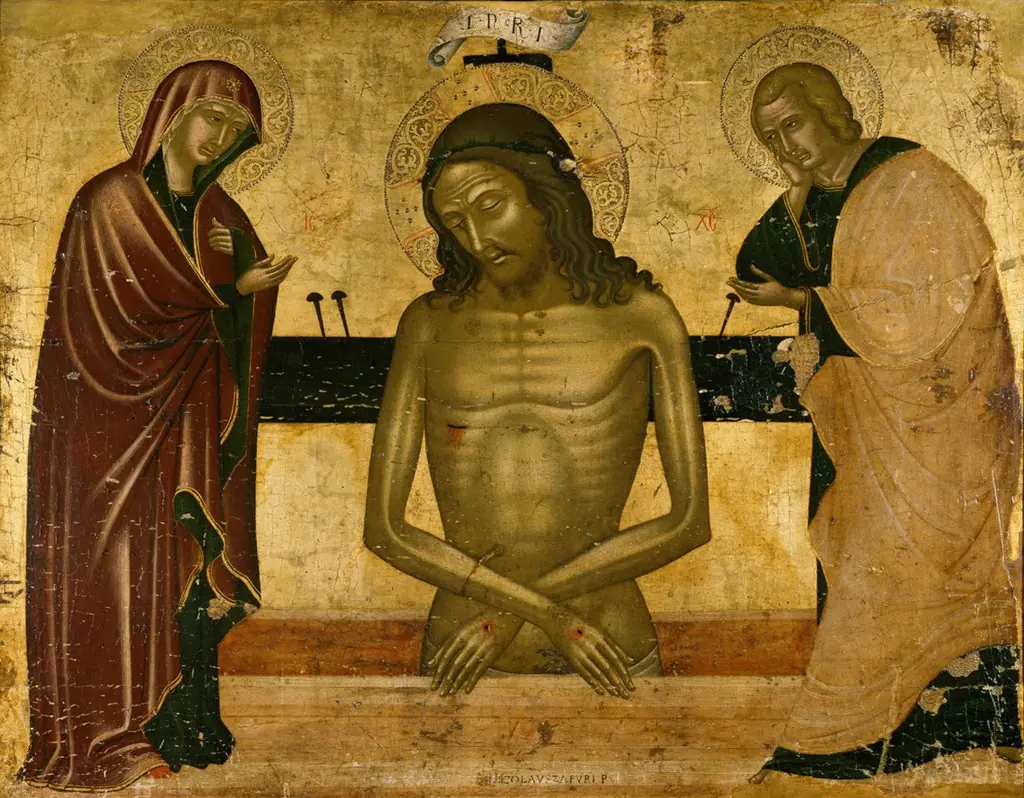
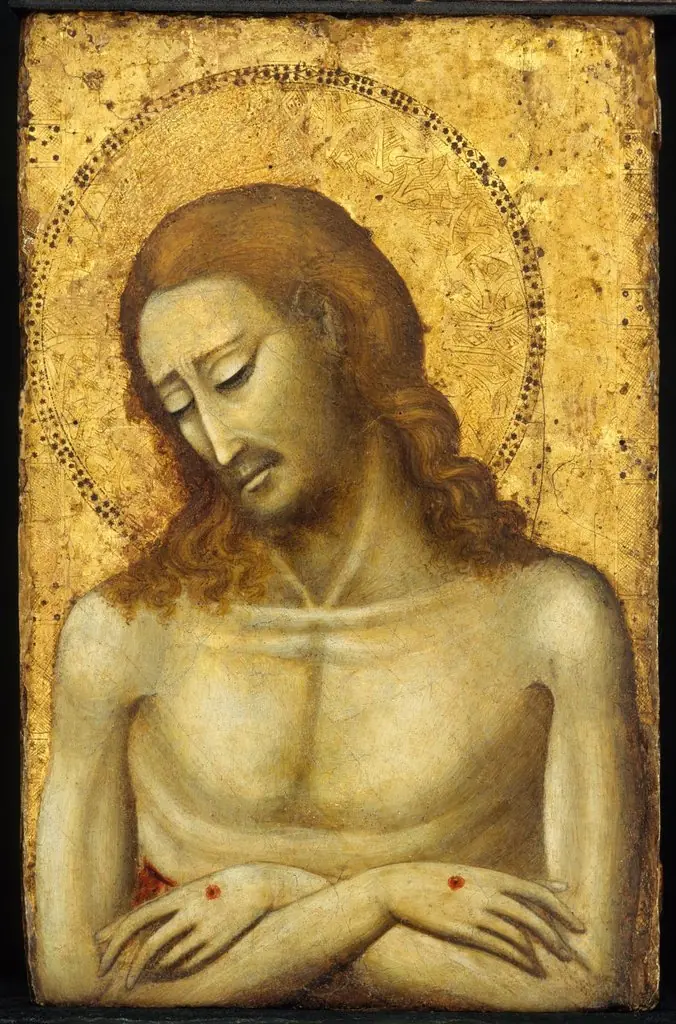
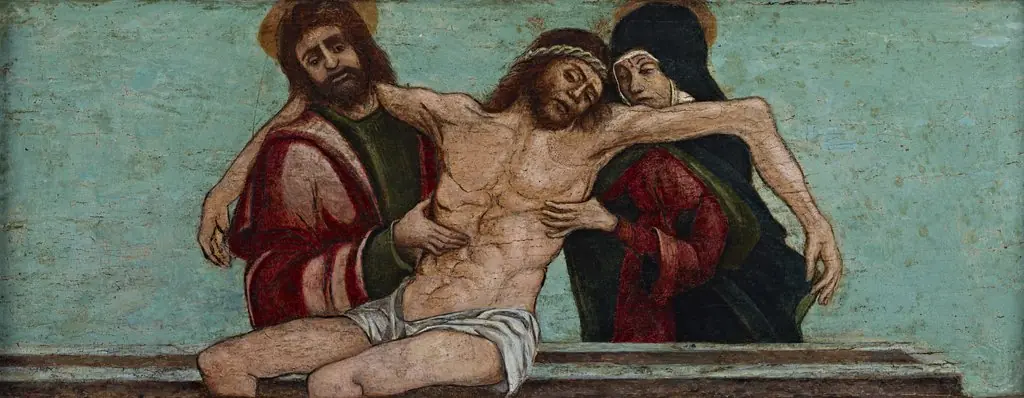
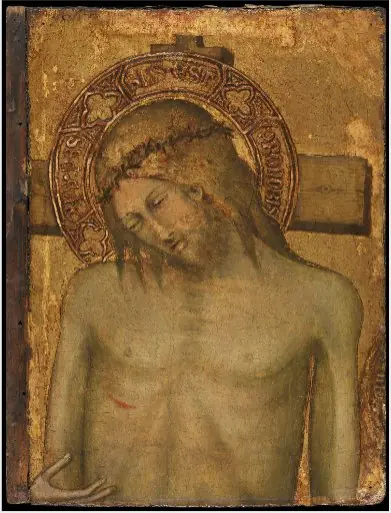
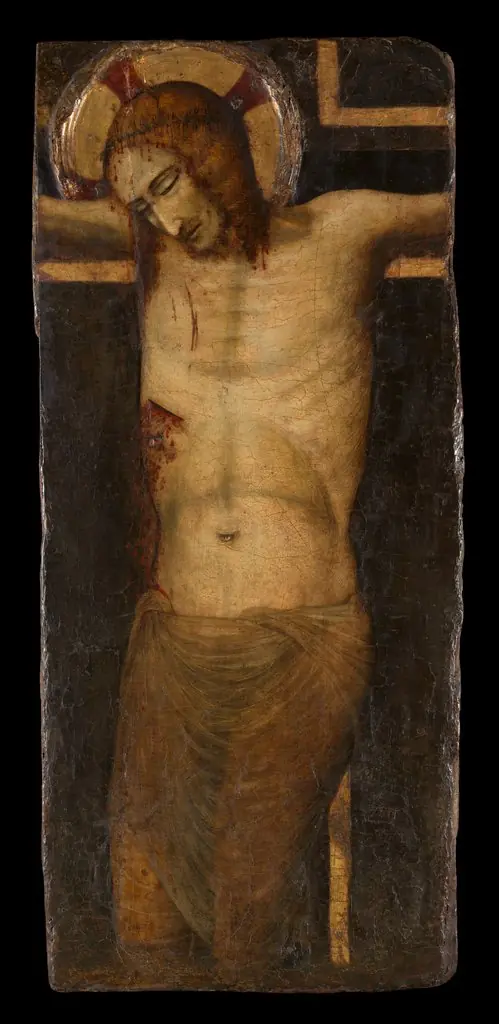
Crucifixion – Fragment of a Croce Dipinta is an unspecified painting by Paolo Veneziano. It dates from 1333 and is held in the collection of the National Museum in Kraków.
About this work
Overview
Created in 1333, this fragment of a painted cross belongs to the oeuvre of the early Italian painter Paolo Veneziano. The panel, now part of the collection of the National Museum in Kraków, presents a solitary figure on the cross, rendered with a calm, introspective demeanor.
Subject & Meaning
The central figure, identified as Christ, is shown with closed eyes, a serene expression, and a halo that denotes sanctity. A narrow red slash on the torso alludes to the wound of the crucifixion, while the overall composition invites contemplation of suffering and redemption.
Technique & Style
Veneziano employs a restrained palette of dark background tones punctuated by touches of red and gold, creating a subtle contrast that highlights the luminous halo and the figure’s features. The handling of light and shadow suggests an early use of chiaroscuro, giving the scene a modest sense of depth.
History & Provenance
The work originated in the early Trecento period of Italian art and has survived as a fragment of a larger devotional object. It entered the National Museum in Kraków’s holdings in the twentieth century, where it remains on display as part of the museum’s medieval collection.
Context
During the 14th century, painted crucifixes were common in liturgical settings, serving both as focal points for worship and as visual narratives of the Passion. Paolo Veneziano, active in Venice, contributed to this tradition, blending Byzantine influences with emerging Gothic sensibilities.
Artist & collection

Artist
Paolo Veneziano, also Veneziano Paolo or Paolo da Venezia was a 14th-century painter from Venice, the "founder of the Venetian School" of painting, probably active between about 1321 and 1362.