Artwork
Hermes, Herse and Aglauros
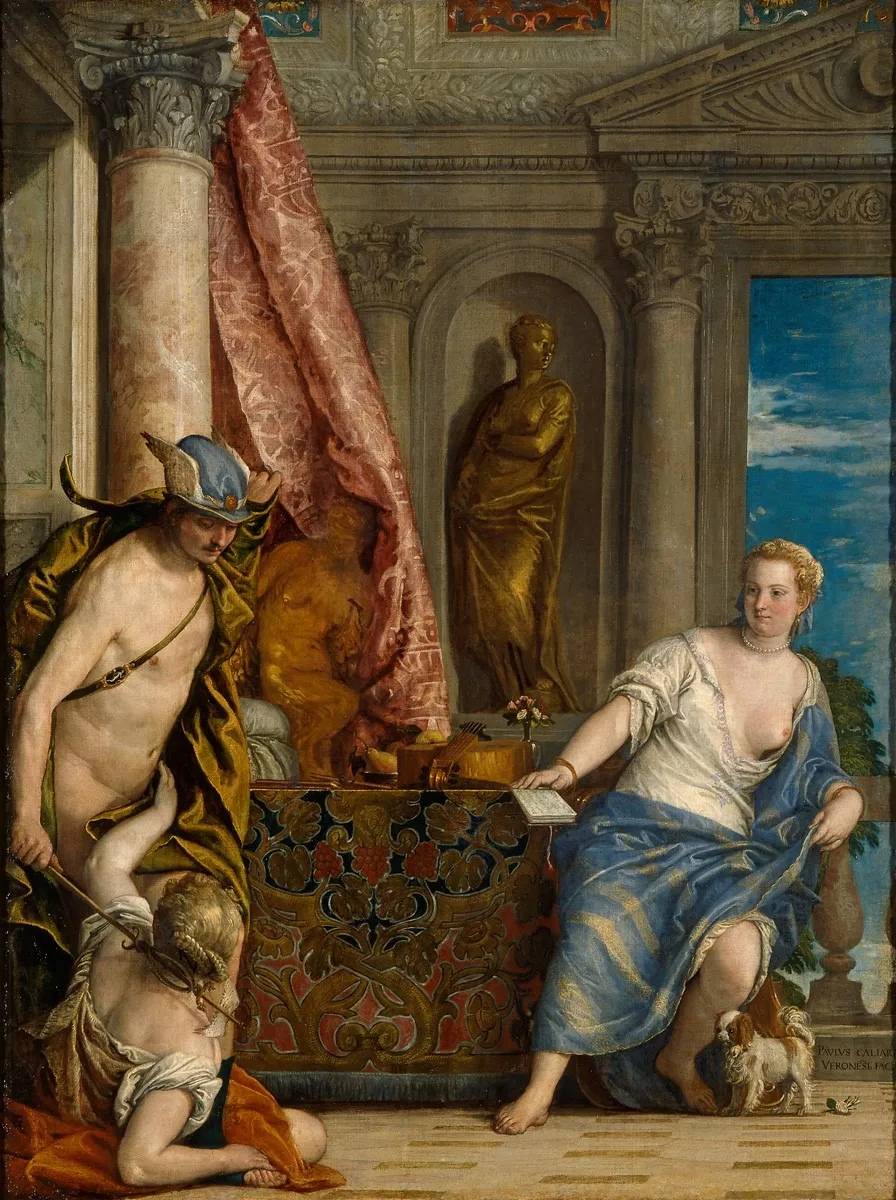
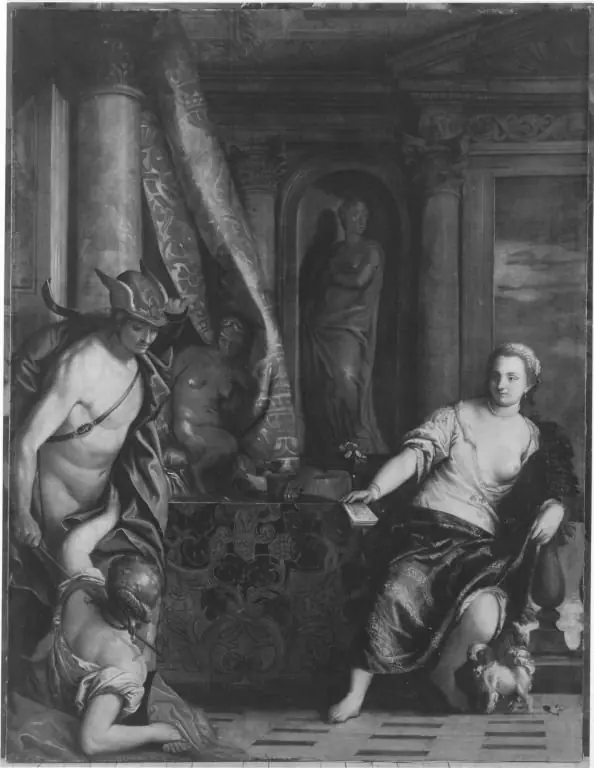
Hermes, Herse and Aglauros is an oil painting by the Mannerist artist Paolo Veronese. It is held in the collection of the Fitzwilliam Museum.
About this work
Overview
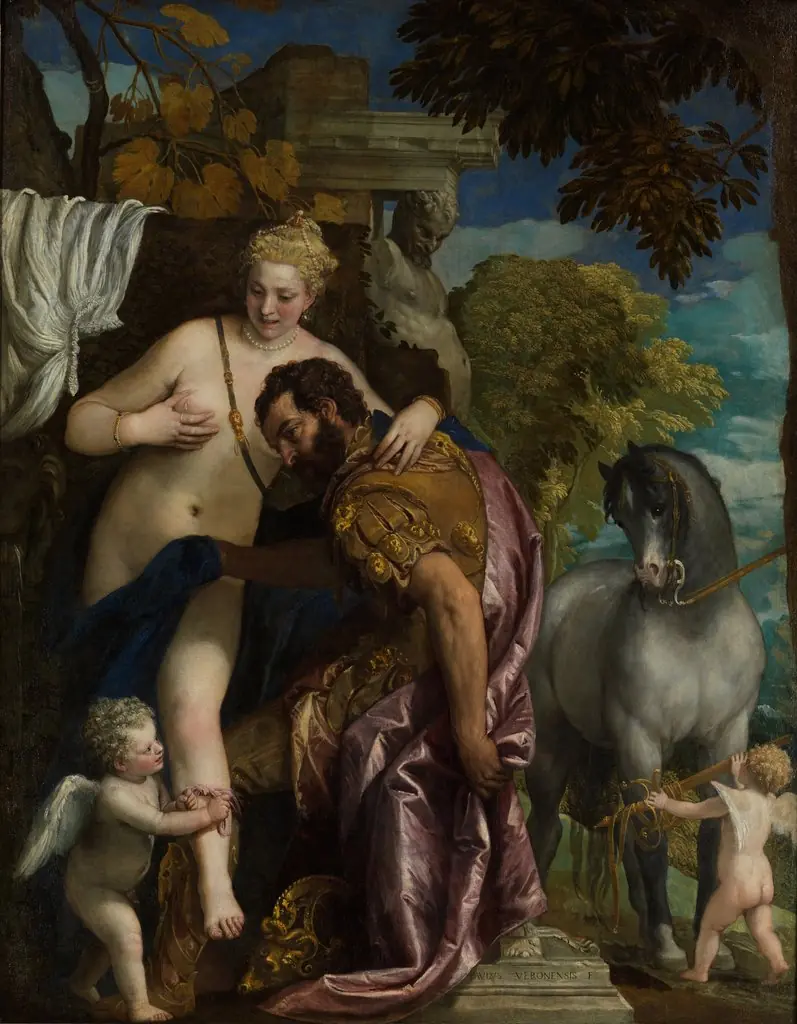
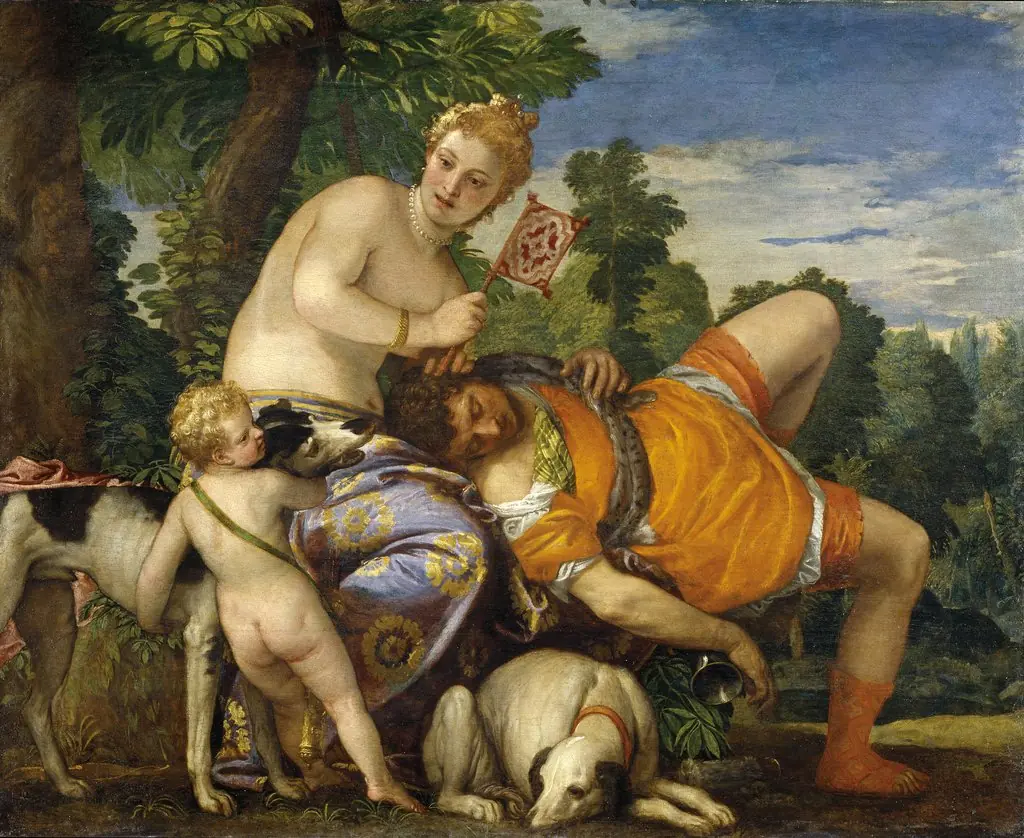
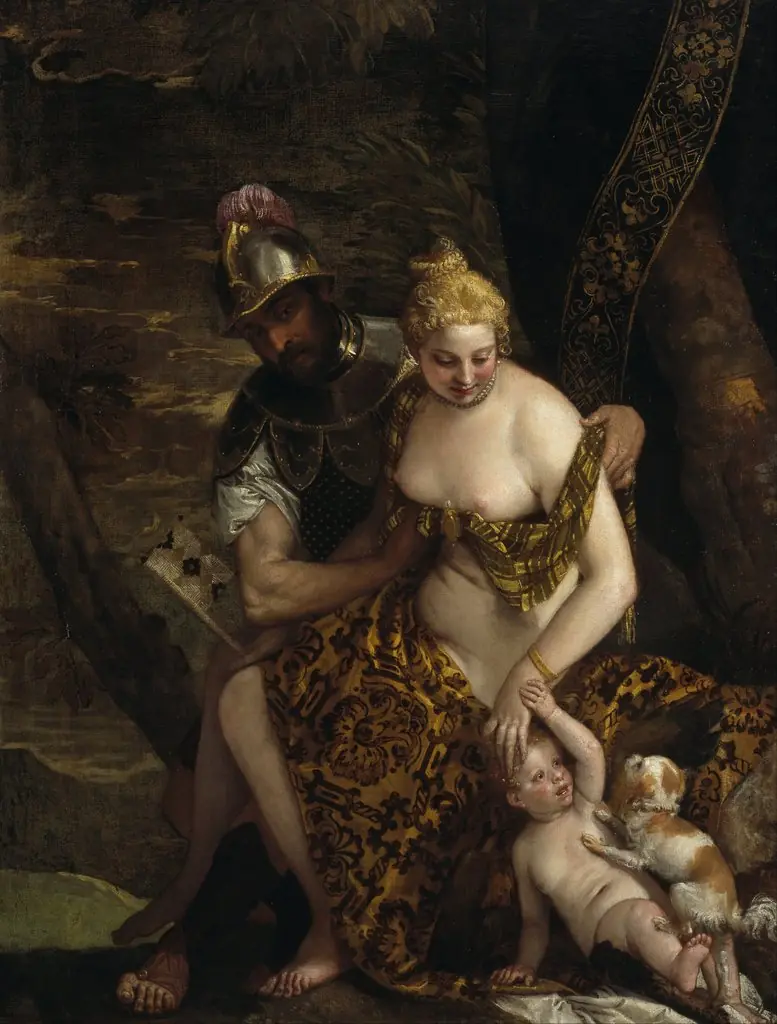
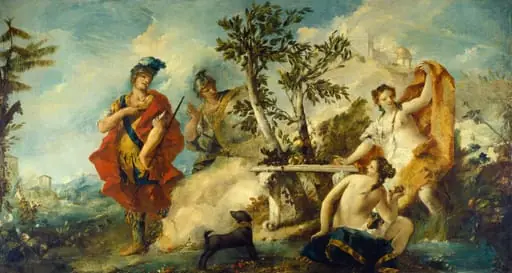
Paolo Veronese’s 1590 oil painting *Hermes, Herse and Aglauros* presents a mythological tableau set within a classical interior.
Paolo Veronese’s 1590 oil painting *Hermes, Herse and Aglauros* presents a mythological tableau set within a classical interior. The composition centers on three figures: a helmeted, spear‑bearing male, a seated woman gazing upward, and another woman on a chair holding a book and looking outward. Architectural elements such as columns and a sky dotted with clouds frame the scene, while Veronese’s handling of color and spatial arrangement guides the eye across the canvas.
Subject & Meaning
The work draws on a narrative from Greek mythology involving the messenger god Hermes and the sisters Herse and Aglauros. The interaction suggests a moment of revelation or instruction, with Hermes positioned as a divine interlocutor. The seated women’s differing gazes—one directed toward Hermes, the other toward the viewer—create a dialogue between the mythic episode and the audience, inviting contemplation of the sisters’ divergent fates.
Technique & Style
Executed in oil, the painting reflects Veronese’s Mannerist sensibility, characterized by elegant elongation of forms and a sophisticated palette. Layers of translucent glaze build luminous skin tones and rich drapery hues, enhancing depth and atmospheric perspective. The careful modulation of light across the figures and architectural backdrop produces a sense of three‑dimensional space, while the rhythmic placement of lines and colors contributes to a dynamic visual flow.
Context
Created during the height of the Venetian Renaissance, this piece situates Veronese among the city’s leading painters, alongside Titian and Tintoretto. While renowned for grand historical canvases, Veronese also explored mythological subjects, employing the same opulent color schemes and compositional grandeur. The painting exemplifies the period’s interest in classical antiquity and the integration of narrative content within lavish, architecturally inspired settings.
Artist & collection
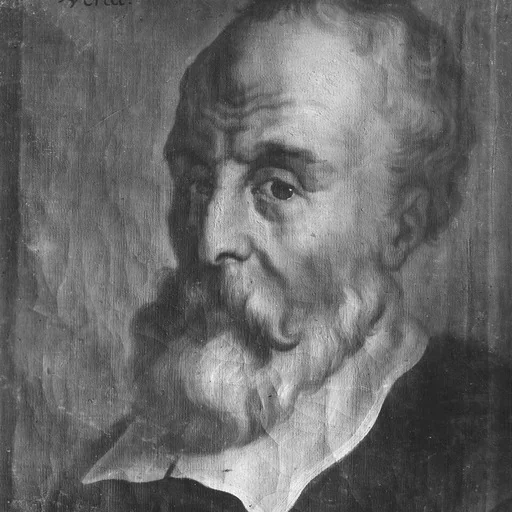
Artist
Paolo Caliari (1528 – 19 April 1588), known as Paolo Veronese ( VERR-ə-NAY-zay, -zee, US also -see; Italian: ), was an Italian Renaissance painter based in Venice, known for extremely large history paintings of…