Artwork
The Creation of Eve
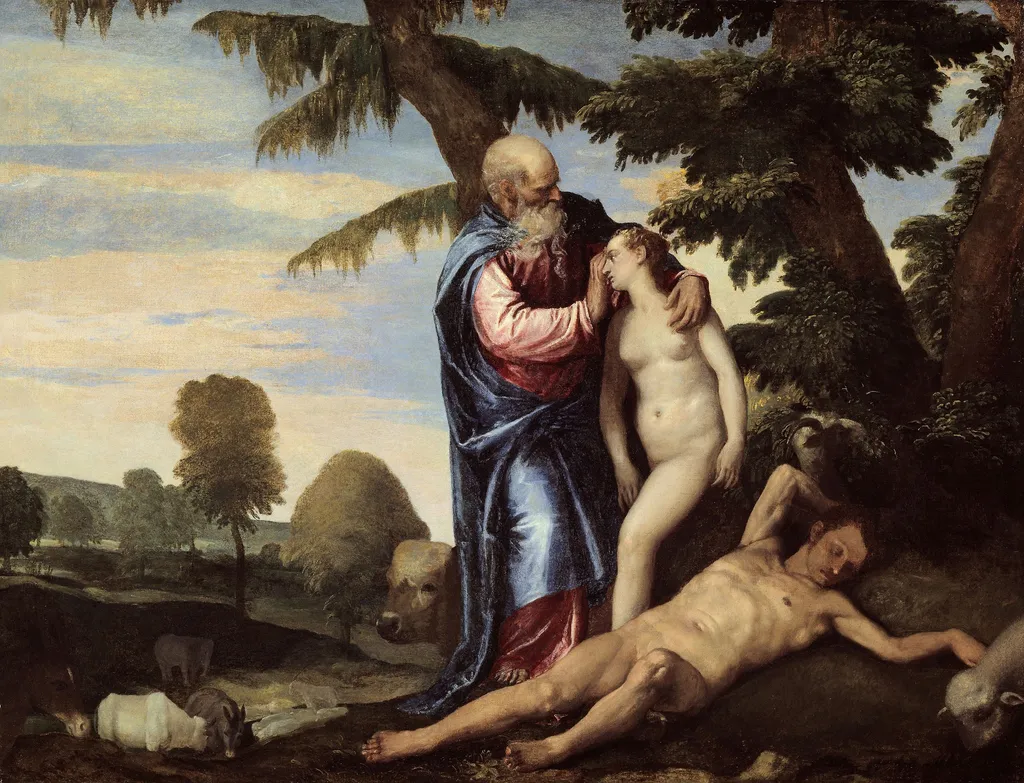
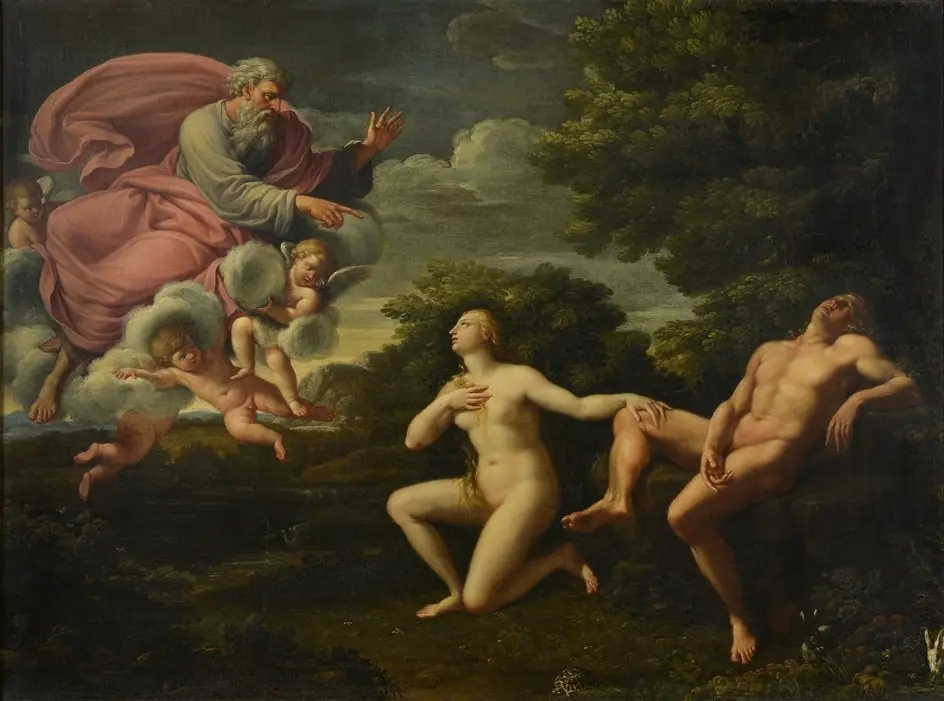
The Creation of Eve is an oil painting by the Mannerist artist Paolo Veronese. It dates from 1570 and is held in the collection of the Art Institute of Chicago.
About this work
Overview
It illustrates a biblical episode from the Book of Genesis, rendered with the refined elegance characteristic of late Renaissance Venice.
Painted in 1570, *The Creation of Eve* is an oil-on-canvas work by the Venetian artist Paolo Veronese. It illustrates a biblical episode from the Book of Genesis, rendered with the refined elegance characteristic of late Renaissance Venice. The painting is part of the permanent collection at the Art Institute of Chicago, where it remains a notable example of Veronese’s narrative scale and atmospheric composition.
Subject & Meaning
The scene depicts God the Father forming Eve from Adam’s rib, as described in Genesis. God, draped in blue, cradles Eve, who leans into him with quiet submission. Behind them, Adam lies asleep, his body relaxed on the earth, while a small dog rests nearby—a symbol of loyalty or earthly companionship. The composition emphasizes divine intimacy and the moment of human origin, framed within a serene, golden landscape that suggests sacred harmony.
Technique & Style
Veronese employs chiaroscuro to model the figures with soft, naturalistic volume, enhancing their three-dimensionality against the hazy background. His brushwork is fluid, particularly in the drapery of God’s robe, which flows with a sense of weight and movement. The palette is restrained yet luminous, with warm golds and pale skies creating a tranquil, stage-like setting. The figures are idealized, their forms elongated in a manner aligned with Mannerist sensibilities, balancing grace with emotional restraint.
History & Provenance
Commissioned during Veronese’s mature period, the painting likely originated as part of a private devotional collection in Venice. It entered the Art Institute of Chicago’s holdings in the early 20th century, following a trajectory common to many Italian Renaissance works that migrated to American institutions. Its documented history is limited, but its stylistic coherence with Veronese’s other works from the 1560s–70s supports its attribution and dating.
Context
In 16th-century Venice, religious subjects were often rendered with theatrical grandeur and sensual beauty, reflecting the city’s cultural confidence. Veronese, alongside Titian and Tintoretto, helped define a Venetian style that prioritized color, light, and spatial depth over rigid linearity. *The Creation of Eve* reflects this tradition, blending theological narrative with a poetic landscape that prioritizes mood over doctrinal precision, aligning with broader Renaissance humanist interests.
Legacy
Though less widely known than Veronese’s grand banquet scenes, *The Creation of Eve* exemplifies his ability to infuse sacred themes with quiet intimacy. Its influence is seen in later Baroque treatments of biblical moments, particularly in the use of light to guide emotional focus. The painting remains a quiet testament to Venetian painting’s enduring capacity to merge spiritual narrative with aesthetic refinement.
Own this work as a print
Artist & collection
Artist
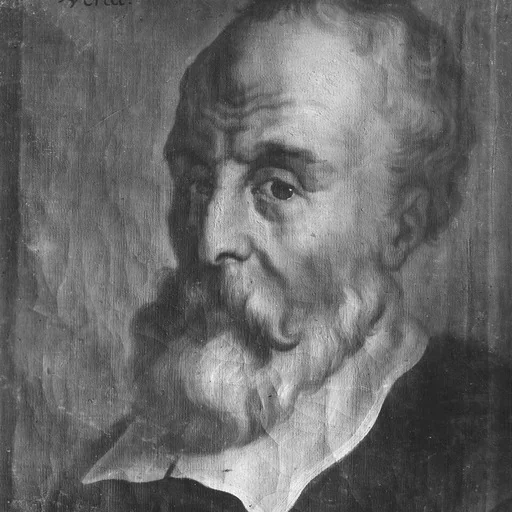
Paolo Caliari (1528 – 19 April 1588), known as Paolo Veronese ( VERR-ə-NAY-zay, -zee, US also -see; Italian: ), was an Italian Renaissance painter based in Venice, known for extremely large history paintings of…