Artwork
Young Woman Holding a Mirror with Her Servant
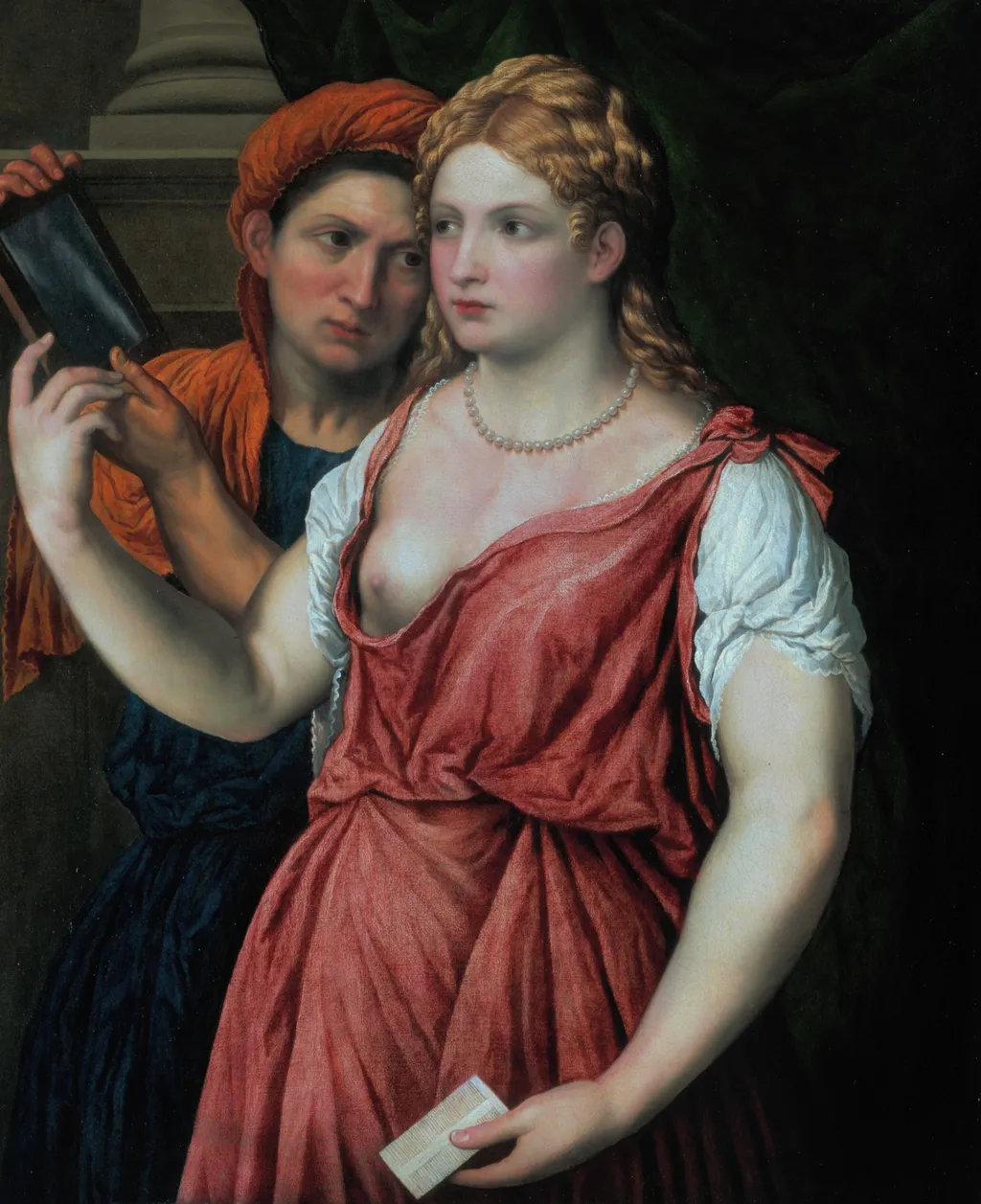
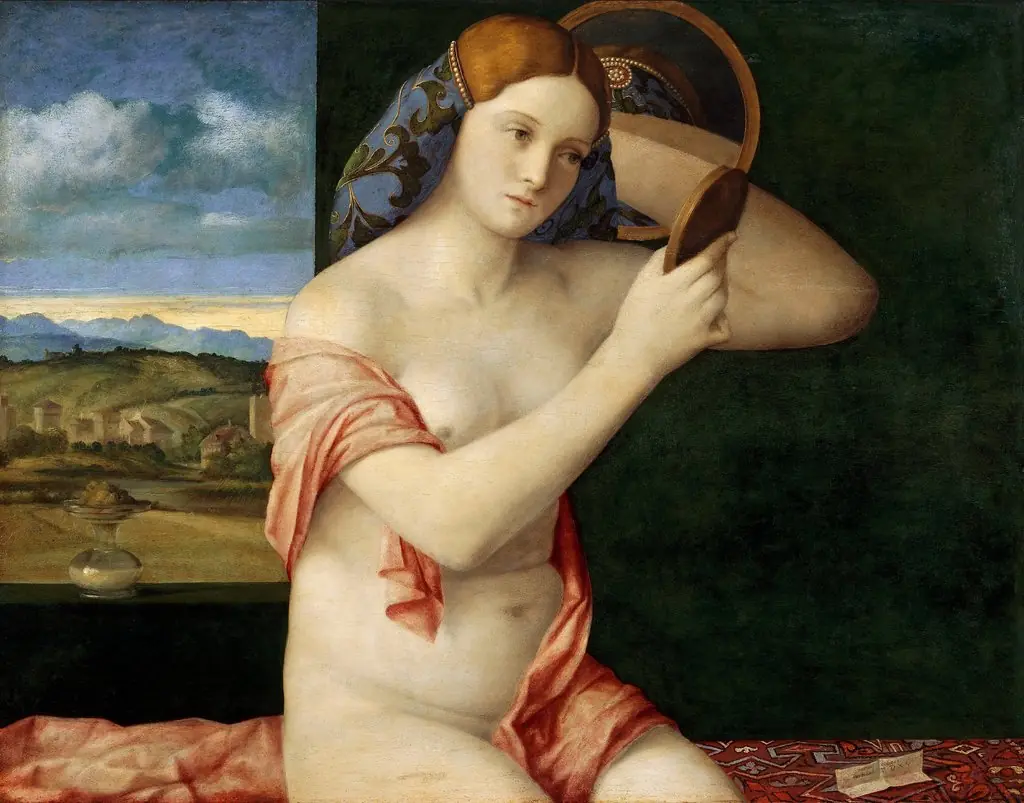
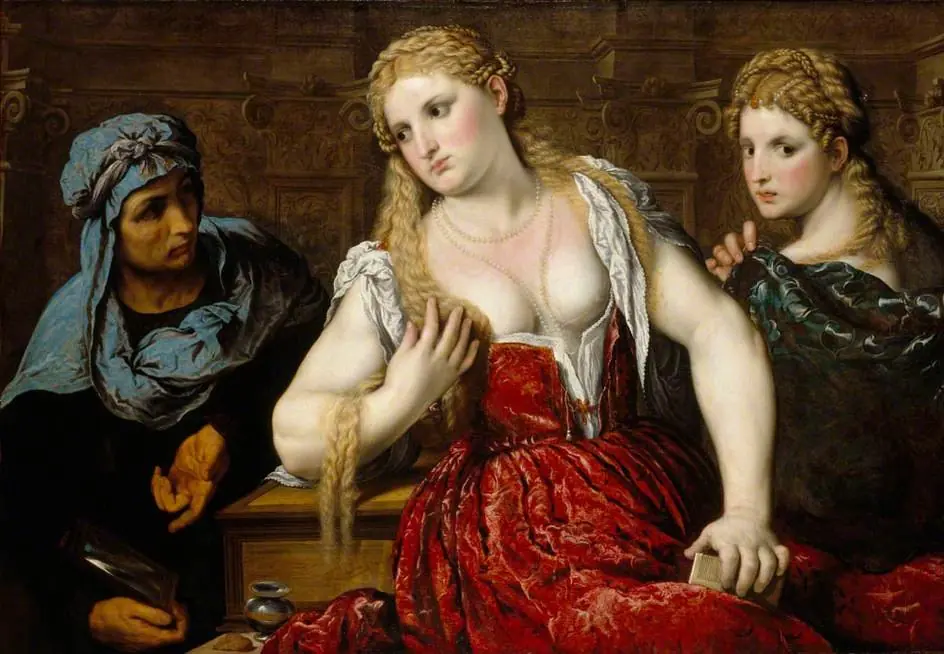
Young Woman Holding a Mirror with Her Servant is an oil painting by the Mannerist artist Paris Bordone. It dates from 1530 and is held in the collection of the Hamburger Kunsthalle.
About this work
Overview
The composition isolates the figures against a dark background, drawing focus to their interaction and the reflective object between them.
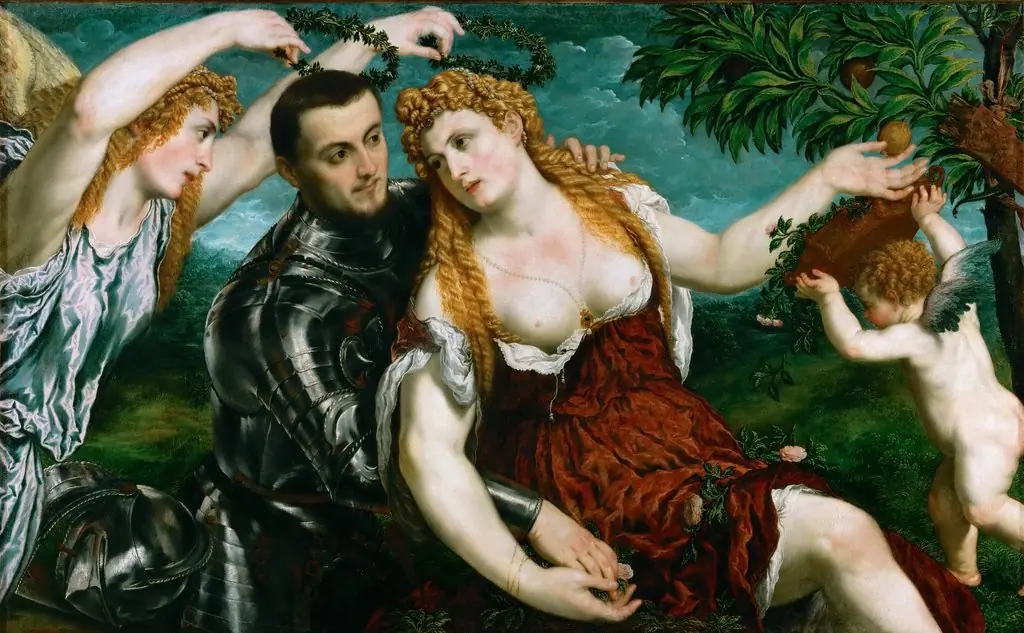
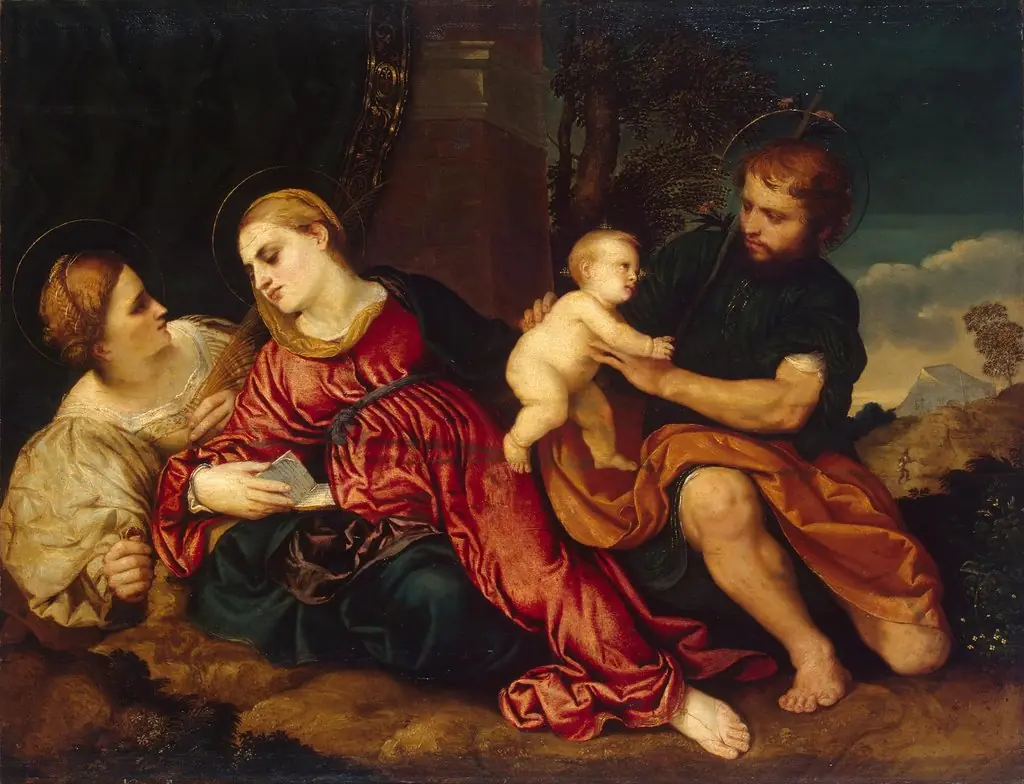
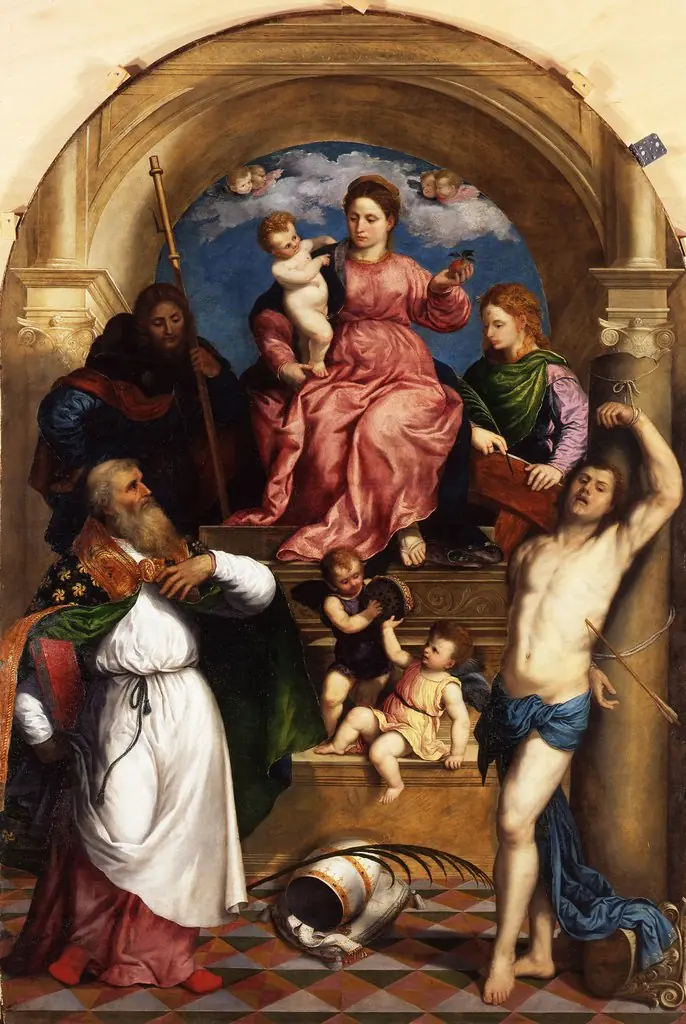
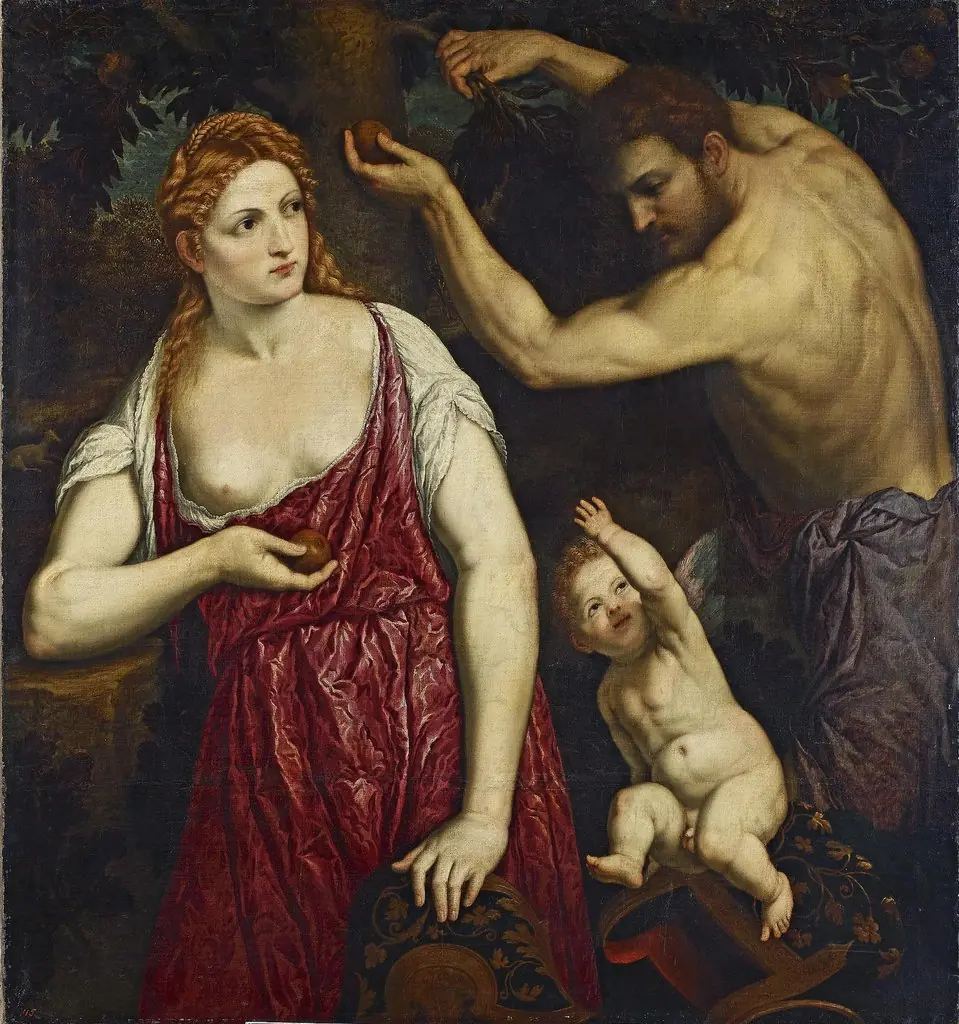
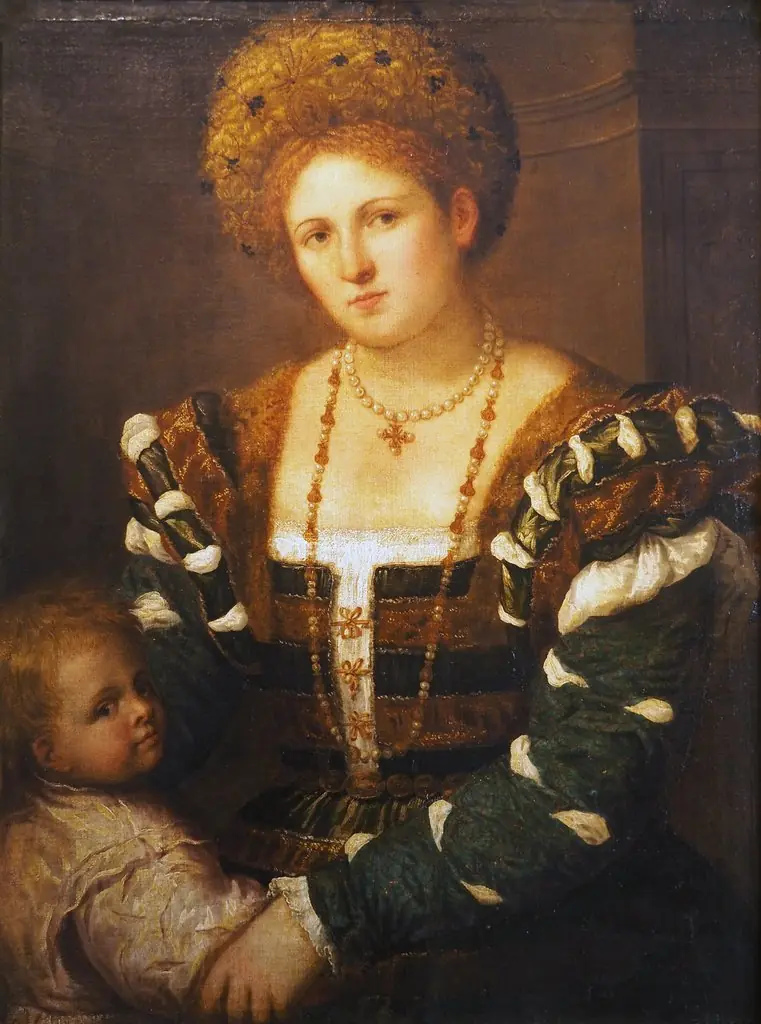
Painted around 1530 by Paris Bordone, this oil-on-canvas work presents a quiet domestic scene centered on a young woman and her servant. Bordone, trained in Titian’s Venetian workshop, employs a refined Mannerist approach, balancing elegance with subtle tension. The composition isolates the figures against a dark background, drawing focus to their interaction and the reflective object between them.
Subject & Meaning
The woman, absorbed in her reflection, engages in a private moment of self-regard, while the servant, attentive but averted, facilitates the act without participating in it. The mirror serves not merely as a tool but as a symbol of introspection and social ritual. The dynamic between the two figures suggests hierarchy and quiet intimacy, typical of Mannerist interest in psychological nuance within everyday settings.
Technique & Style
Bordone uses chiaroscuro to model forms with soft transitions between light and shadow, enhancing the three-dimensionality of the figures and fabrics. The rich textures of the woman’s red gown and pearl necklace contrast with the servant’s muted blue and orange attire, reinforcing social distinction. Elongated proportions and deliberate poses reflect Mannerist tendencies, prioritizing grace and stylization over naturalism.
History & Provenance
Created during Bordone’s mature period in Venice, the painting reflects the influence of his time in Titian’s studio, particularly in its color harmony and attention to material detail. While its early ownership is undocumented, it entered a major European collection by the late 18th century and has since been recognized as a representative example of mid-16th-century Venetian Mannerism.
Context
In 1530s Venice, depictions of women in private moments were increasingly common among elite patrons, reflecting broader cultural interest in personal identity and domestic life. Bordone’s work aligns with contemporaneous trends that favored refined, emotionally restrained scenes over overt narrative, distinguishing Venetian Mannerism from the more dramatic expressions emerging elsewhere in Italy.
Legacy
The painting remains a key example of how Venetian artists adapted Mannerist ideals to intimate subjects, blending technical precision with psychological subtlety. It influenced later depictions of female introspection in Northern and Italian art, particularly in the treatment of mirrors as conduits of self-awareness and social performance.
Own this work as a print
Artist & collection
Artist
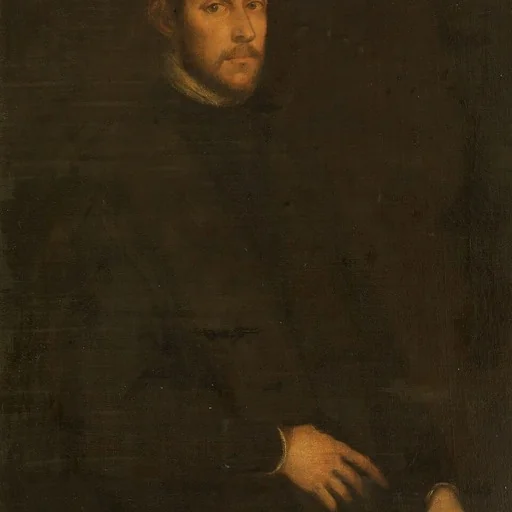
Paris Bordone (Paris Paschalinus Bordone; 5 July 1500 – 19 January 1571) was an Italian painter of the Venetian Renaissance who, despite training with Titian, maintained a strand of Mannerist complexity and provincial vigor.