Artwork
Portrait of a woman with a green cloak
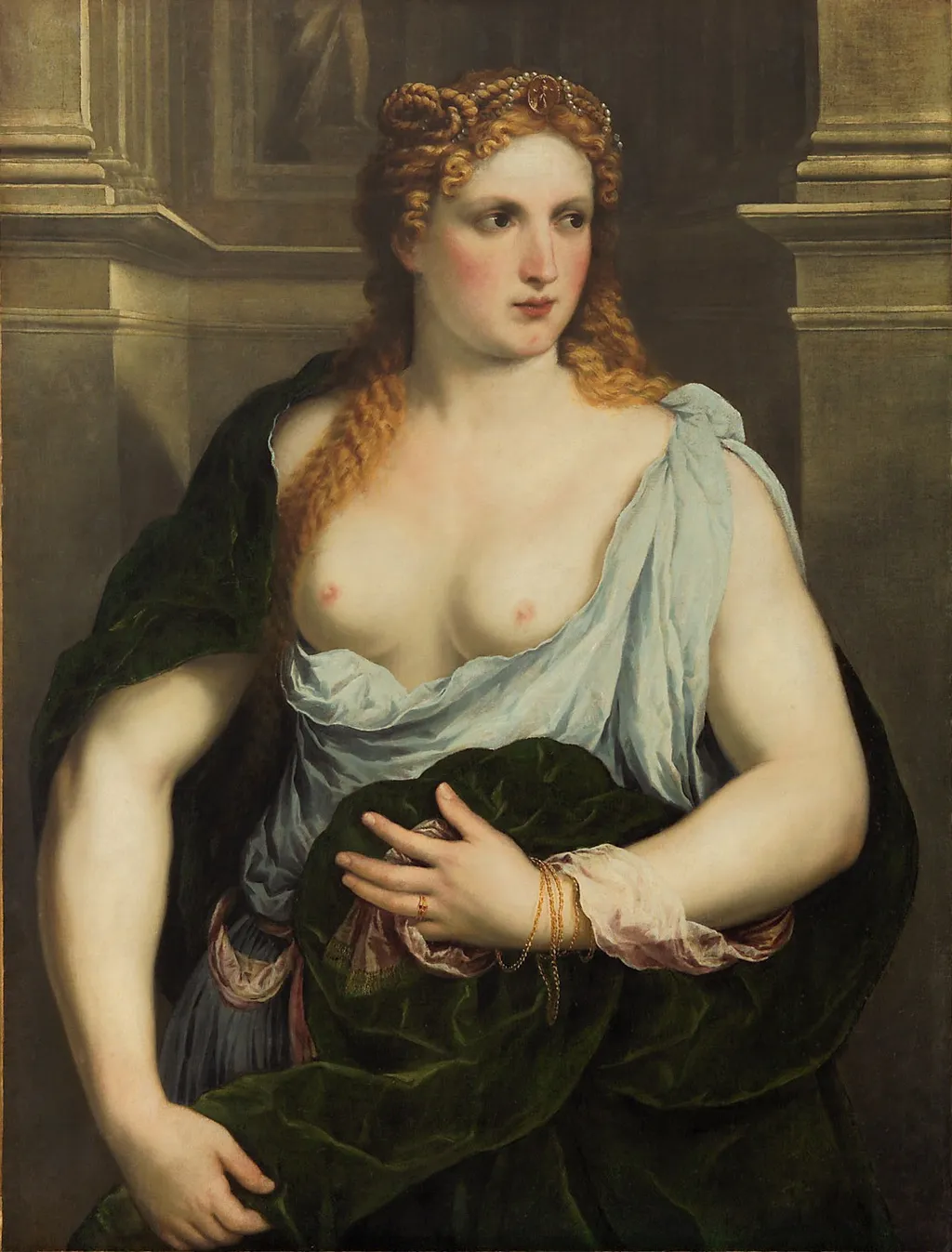
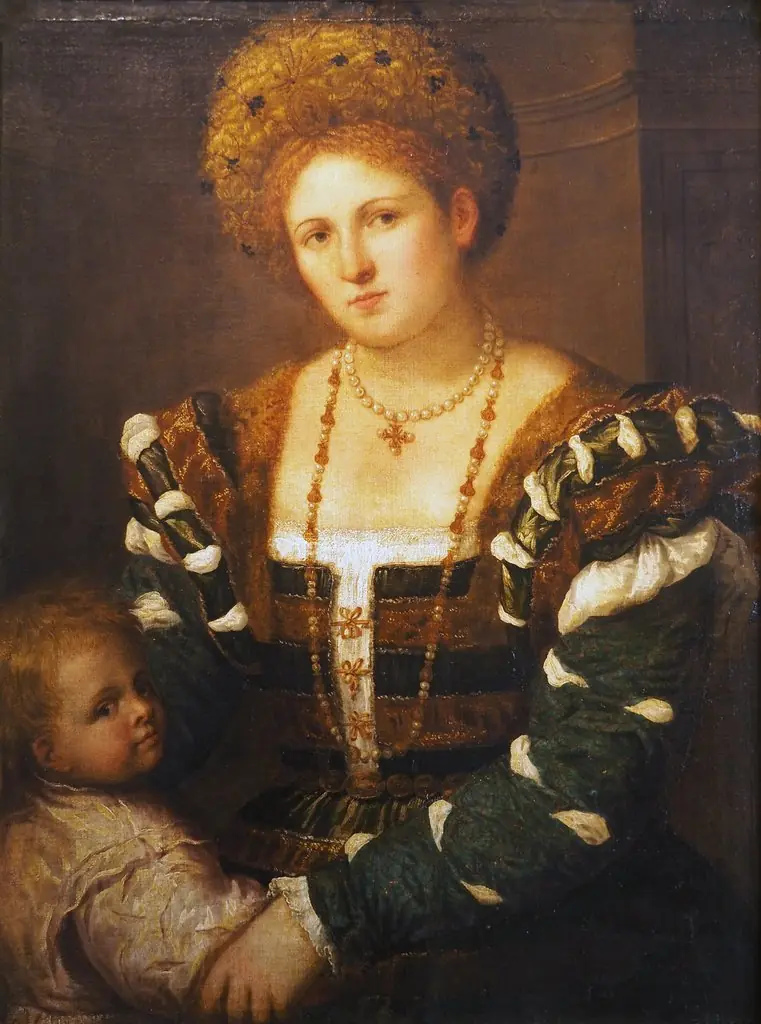
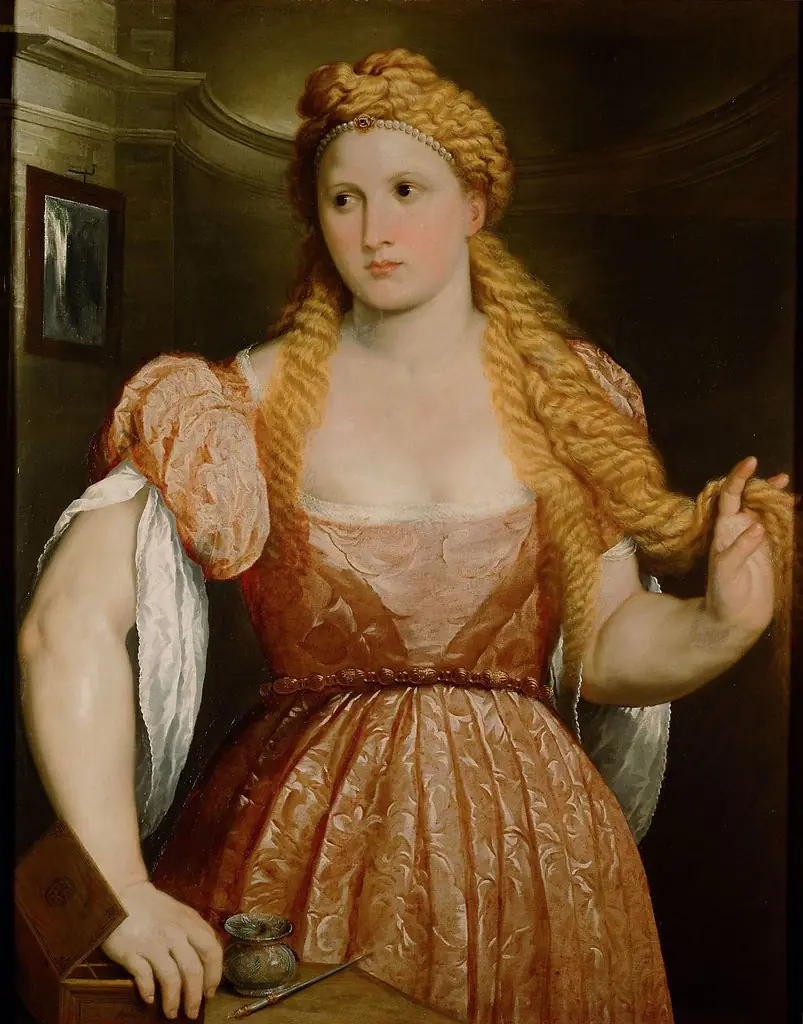
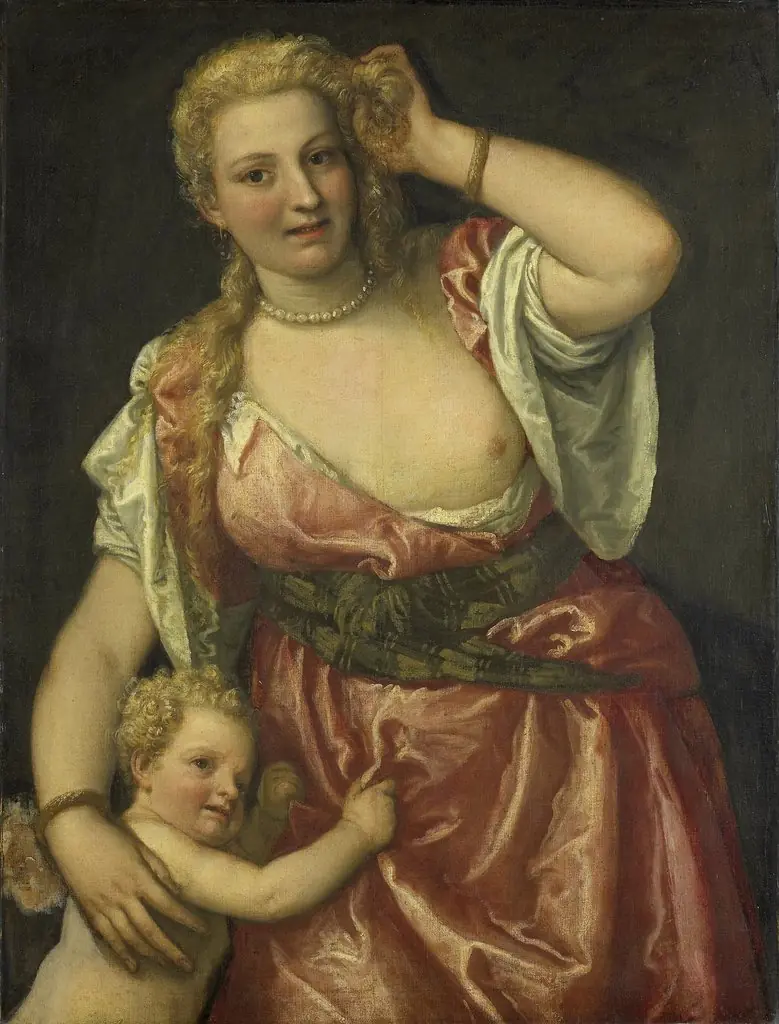
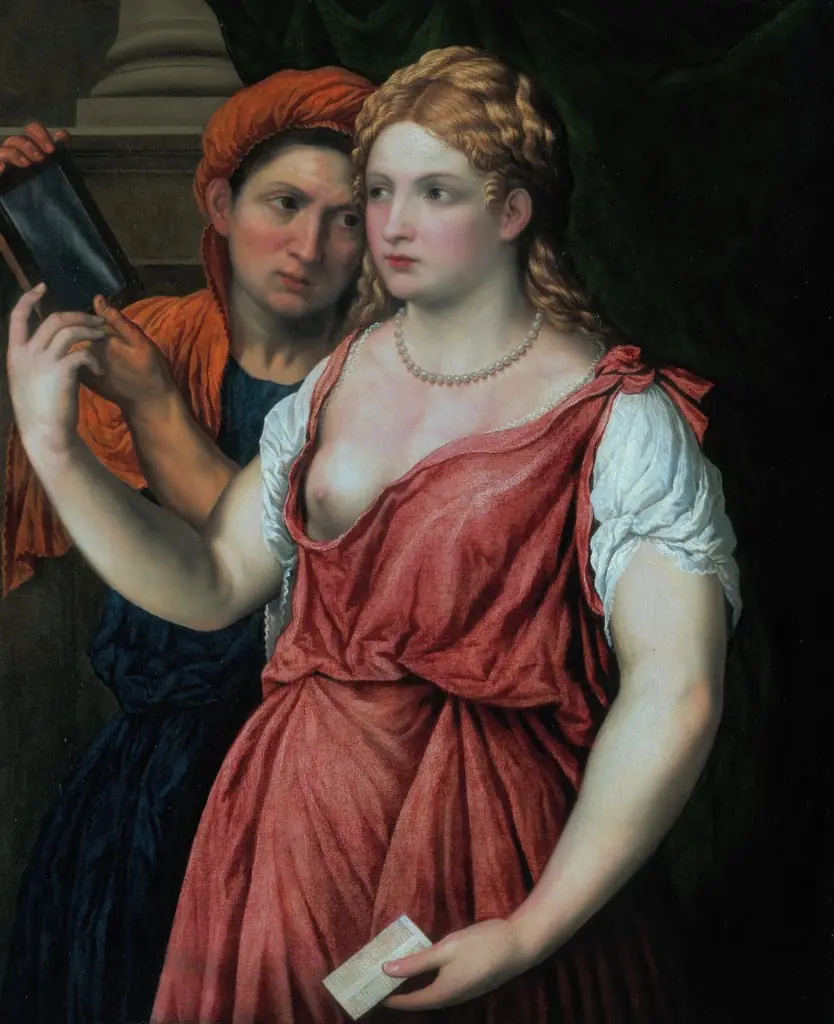
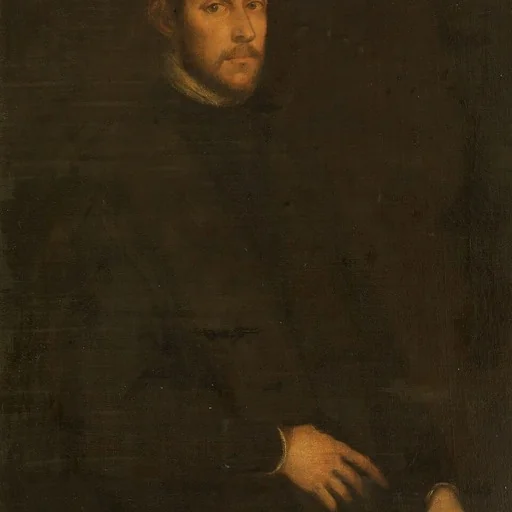
Portrait of a woman with a green cloak is an unspecified painting by the Mannerist artist Paris Bordone. It dates from 1550 and is held in the collection of the Kunsthistorisches Museum.
About this work
Overview
Created around 1550, this oil painting portrays a seated woman in a green cloak, rendered by Paris Bordone, a Venetian artist who studied under Titian. The work exemplifies the Mannerist taste for elegant elongation while retaining the rich coloration typical of the Venetian school. It is part of the collection of the Kunsthistorisches Museum in Vienna.
Subject & Meaning
The sitter is shown with long, curly red hair, a gold ornamental headpiece, and a low‑cut white dress beneath a green mantle that falls across her left shoulder. Her right hand rests lightly on the cloak, while her left arm hangs relaxed at her side. She gazes to the right with a neutral expression, conveying a calm, contemplative demeanor.
Technique & Style
Bordone combines the luminous Venetian palette—particularly the vivid green of the cloak—with the elongated proportions and refined compositional balance favored by Mannerist painters. The brushwork conveys the texture of fabric and the subtle modeling of the face, while the background architecture is rendered with restrained detail, enhancing the figure’s presence.
Context
The interior setting, suggested by a stone wall and classical columns, reflects the Renaissance interest in classical architecture as a backdrop for portraiture. The work illustrates how Venetian artists of the mid‑16th century integrated courtly elegance with emerging stylistic trends toward artificiality and sophistication.
History & Provenance
Since its creation, the painting has remained in European collections and is now housed in the Kunsthistorisches Museum, where it is displayed among other works of the Venetian Renaissance and Mannerist periods.
Artist & collection
Artist
Paris Bordone (Paris Paschalinus Bordone; 5 July 1500 – 19 January 1571) was an Italian painter of the Venetian Renaissance who, despite training with Titian, maintained a strand of Mannerist complexity and provincial vigor.