Artwork
Sculpture - Colossal Foot, now in the Courtyard of the Palazzo de' Conservatori on the Capitol
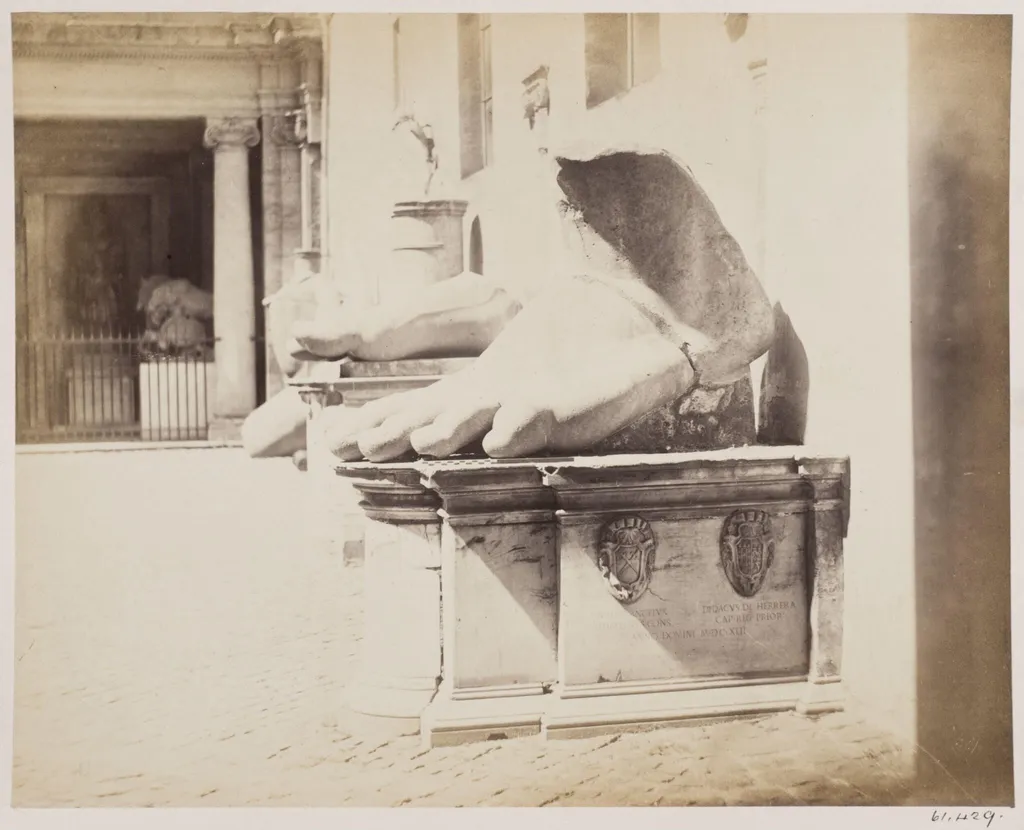
Sculpture - Colossal Foot, now in the Courtyard of the Palazzo de' Conservatori on the Capitol is a photographic photography by the Impressionist artist John Henry Parker. It dates from 1867 and is held in the collection of the Victoria and Albert Museum.
About this work
Overview
The photograph captures a massive stone foot positioned on a carved stone box within the courtyard of Rome’s Palazzo de' Conservatori on the Capitoline Hill. The image, rendered in monochrome, records the weathered texture of the foot and surrounding architecture, including a doorway and barred windows behind it.
Subject & Meaning
The foot, a fragment of an ancient monumental sculpture, illustrates the scale of Roman public art and the practice of reusing architectural elements as decorative or functional objects in later periods. Its placement on a carved pedestal suggests a historical layering of artistic and utilitarian purposes.
Technique & Style
Taken between 1864 and 1879, the photograph reflects the early documentary style of Victorian-era archaeological photography. The image is characterized by high contrast and a focus on detail, emphasizing the foot’s cracks, surface wear, and the inscriptions on the underlying box.
History & Provenance
The picture is part of a comprehensive series of over 3,300 photographs commissioned by John Henry Parker for his multi‑volume work *Archaeology of Rome* (1874–1879). Local photographers, including Charles Smeaton, contributed to the project, and many of the original prints are now held by the Victoria and Albert Museum.
Context
The Palazzo de' Conservatori, part of the Capitoline Museums, houses a collection of ancient Roman artifacts. The foot’s presence in the courtyard reflects 19th‑century efforts to document and preserve Rome’s classical heritage amid urban development and archaeological excavation.
Artist & collection
Artist
John Henry Parker liked to explore old churches in Rome. He'd photograph the sculptures and carvings he found. One thing that stands out is his attention to detail - he'd capture tiny parts of bigger pieces, like the…

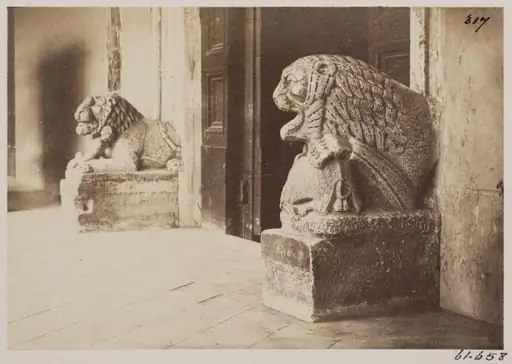 Sculptures - Lions at the Door of the Church of S. Lorenzo
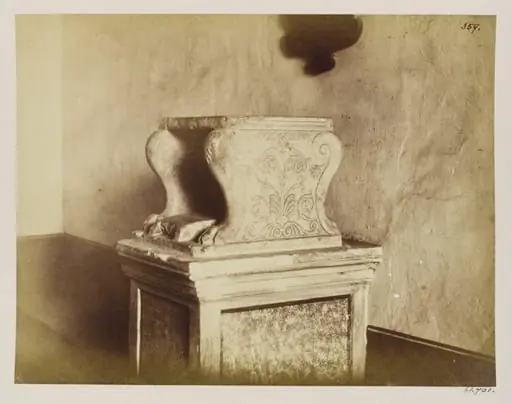 Sculptures - Marble Seat of S. Gregory in the Church of S. Stefano Rotondo, with Shallow Carving, c. A.D. 590.
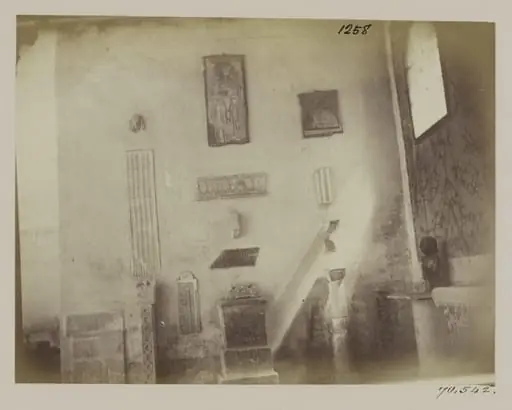 Church of S. Giorgio in Velabro - Fragments of marble sculpture, Tombs, &c., from the old Church, built into the wall.
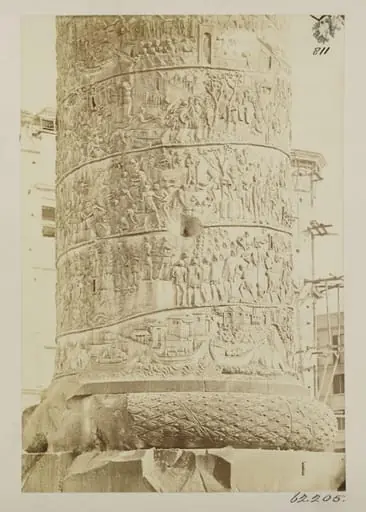 Sculptures - Details of Sculpture from Trajan's Column.
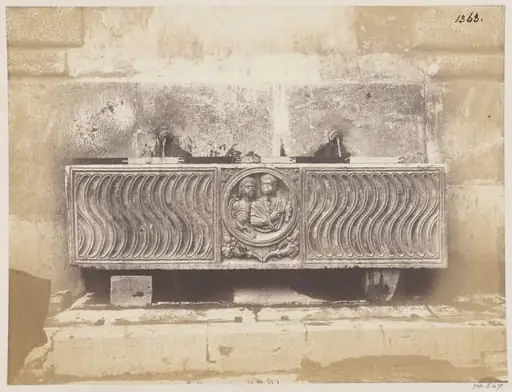 Sculpture - Sarcophagus of the fourth century made into a fountain, near the Church of S. Maria, in the Piazza del Popolo
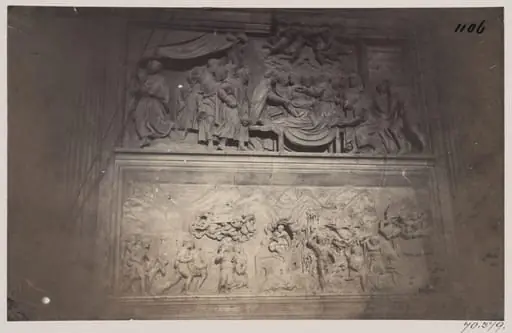 Out of Rome - House of the Blessed Virgin at Loreto. Sculpture of the Santissima Casa carried by Angels, A.D. 1520
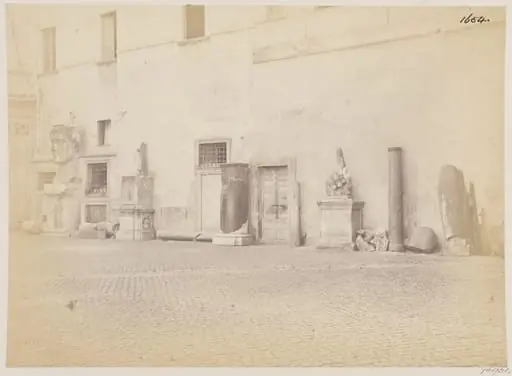 Sculpture - View on the left side of the Court-yard of the Palazzo de' Conservatori on the Capitol, shewing fragments of colossal Statues
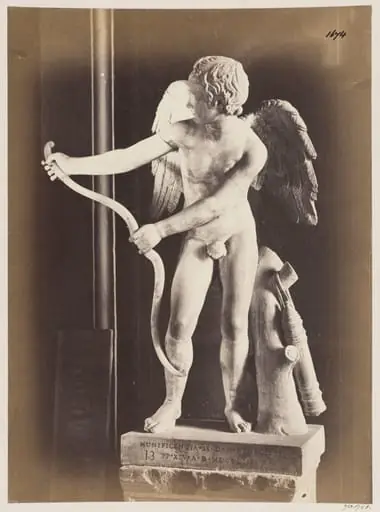 Sculpture - Statue of Cupid with his bow, in the Capitoline Museum.
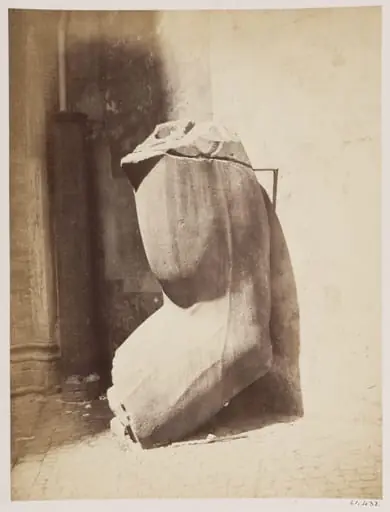 Sculpture - Colossal Arm, now in the Courtyard of the Palazzo de' Conservatori on the Capitol
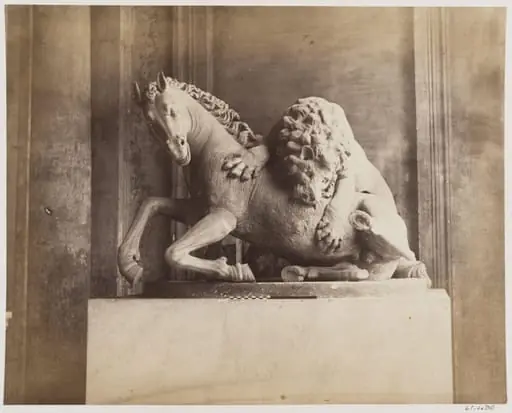 Sculpture - Of a Lion upon a Horse, now in the Palazzo de' Conservatori on the Capitol
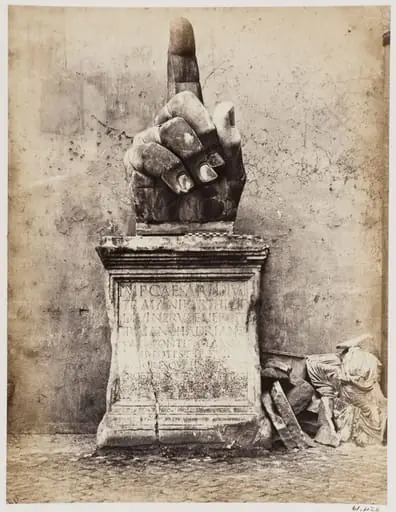 Sculpture - Colossal Hand in the Courtyard of the Palazzo de' Conservatori on the Capitol
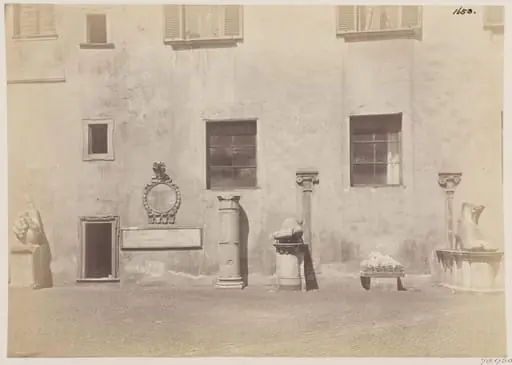 Sculpture - View on the right side of the Court-yard of the Palazzo de' Conservatori on the Capitol, shewing fragments of colossal Statues
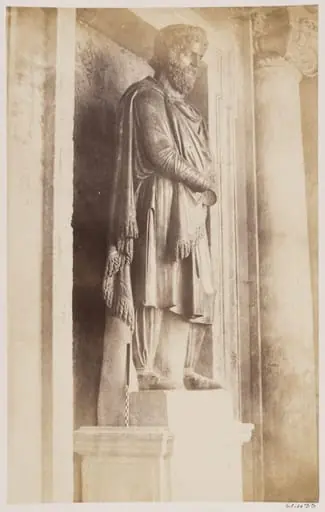 Sculpture - Statue of a barbarian King a prisoner, now in the Palazzo de' Conservatori on the Capitol
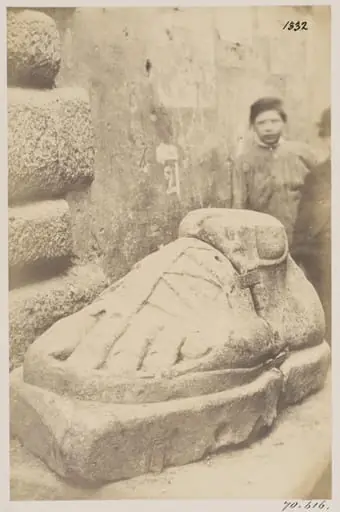 Sculpture - Foot of a colossal Statue, called Piè di Marmo