Artwork
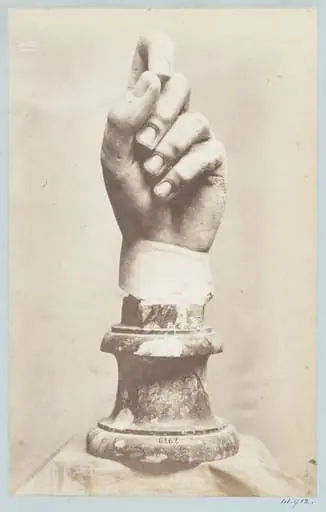
Sculpture - Colossal Hand in the Courtyard of the Palazzo de' Conservatori on the Capitol
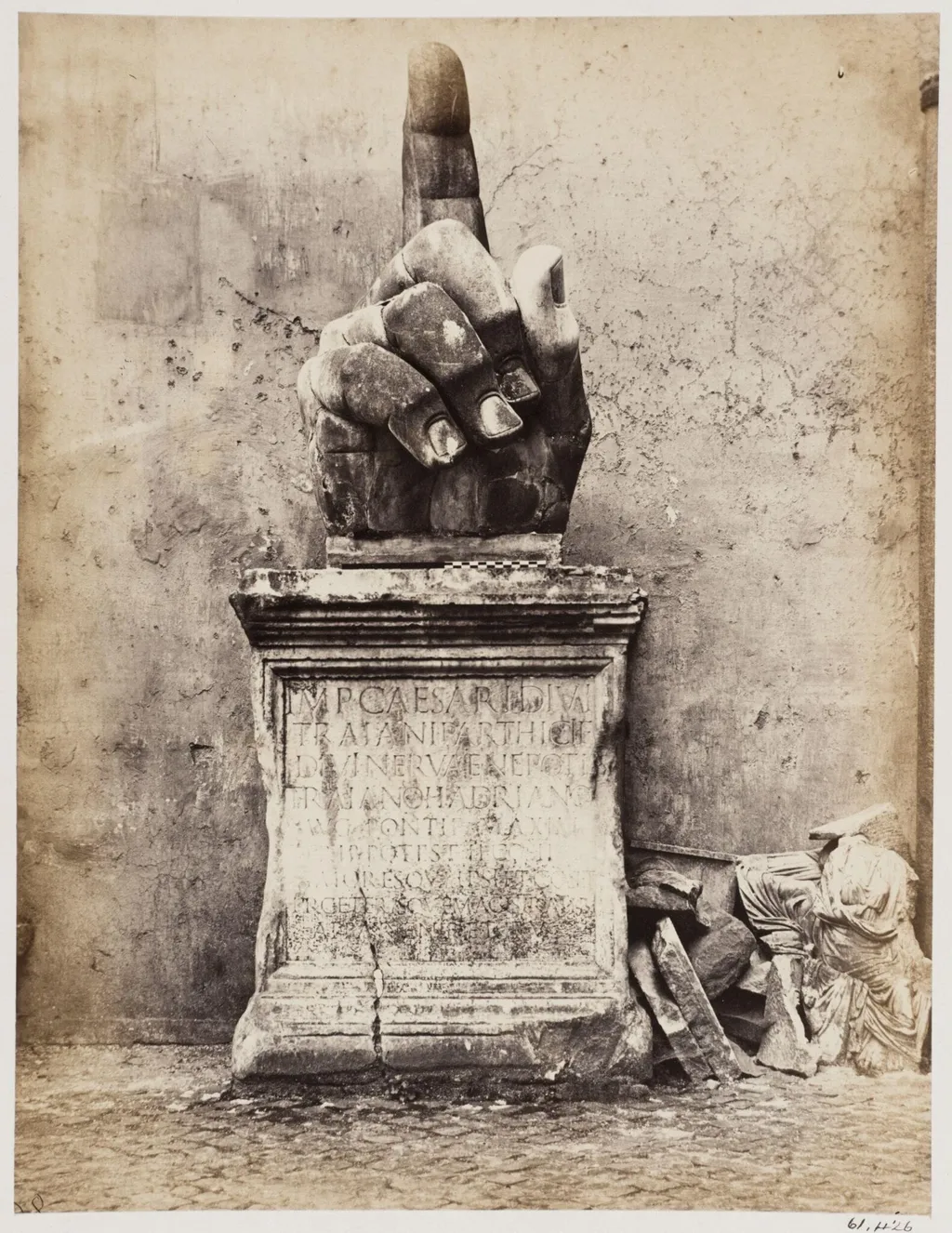
Sculpture - Colossal Hand in the Courtyard of the Palazzo de' Conservatori on the Capitol is a photographic photography by the Impressionist artist John Henry Parker. It dates from 1867 and is held in the collection of the Victoria and Albert Museum.
About this work
Overview
The image, taken in 1867, records a massive stone hand set upon a pedestal within the courtyard of Rome’s Palazzo de’ Conservatori on the Capitoline Hill. The hand, fractured and missing several fingers, appears to support a tall, inscribed stone column, while a fragment of draped fabric lies nearby on the ground.
Subject & Meaning
The broken hand is a surviving fragment of a once‑larger statuary composition, likely intended to convey strength or divine assistance by grasping the column. Its current ruined state illustrates the fragmentary nature of many ancient monuments that have been repurposed or left exposed over centuries.
Technique & Style
Carved from a single block of stone, the hand exhibits a realistic treatment of anatomy, with detailed rendering of knuckles and musculature despite its damage. The column it supports bears an inscription rendered in a style typical of Roman monumental lettering, though the text is now difficult to decipher.
History & Provenance
The photograph forms part of a comprehensive visual survey of over 3,300 Roman monuments compiled between 1864 and 1879 under the direction of John Henry Parker. Contributions from various photographers were assembled for Parker’s publication *Archaeology of Rome*, and a portion of the collection resides in the Victoria and Albert Museum.
Artist & collection
Artist
John Henry Parker liked to explore old churches in Rome. He'd photograph the sculptures and carvings he found. One thing that stands out is his attention to detail - he'd capture tiny parts of bigger pieces, like the…

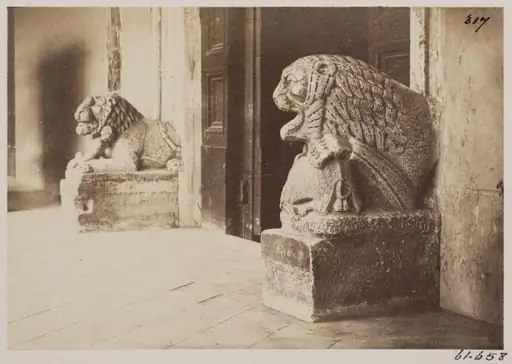 Sculptures - Lions at the Door of the Church of S. Lorenzo
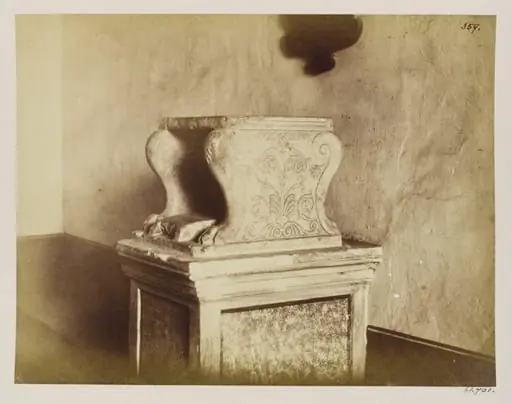 Sculptures - Marble Seat of S. Gregory in the Church of S. Stefano Rotondo, with Shallow Carving, c. A.D. 590.
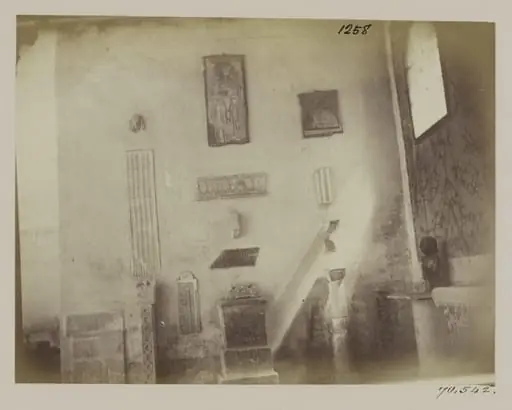 Church of S. Giorgio in Velabro - Fragments of marble sculpture, Tombs, &c., from the old Church, built into the wall.
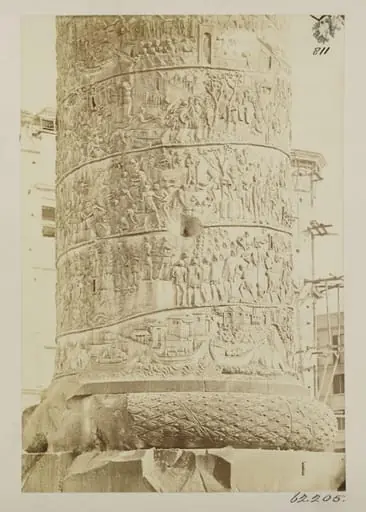 Sculptures - Details of Sculpture from Trajan's Column.
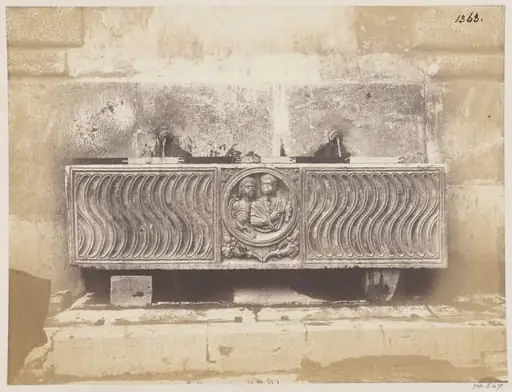 Sculpture - Sarcophagus of the fourth century made into a fountain, near the Church of S. Maria, in the Piazza del Popolo
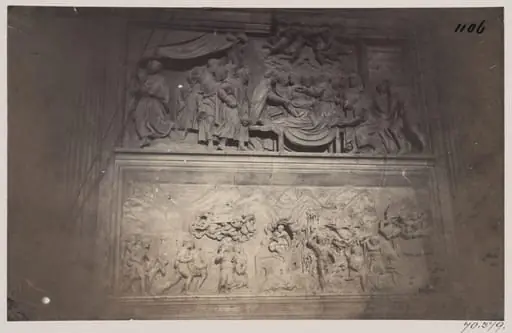 Out of Rome - House of the Blessed Virgin at Loreto. Sculpture of the Santissima Casa carried by Angels, A.D. 1520
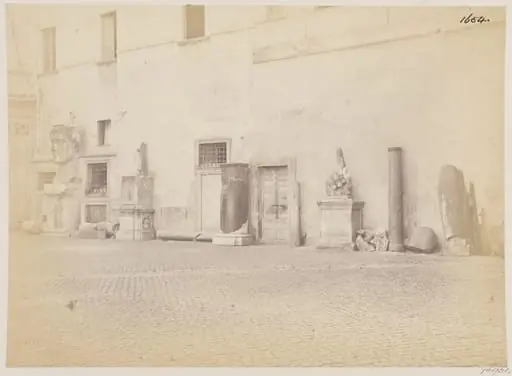 Sculpture - View on the left side of the Court-yard of the Palazzo de' Conservatori on the Capitol, shewing fragments of colossal Statues
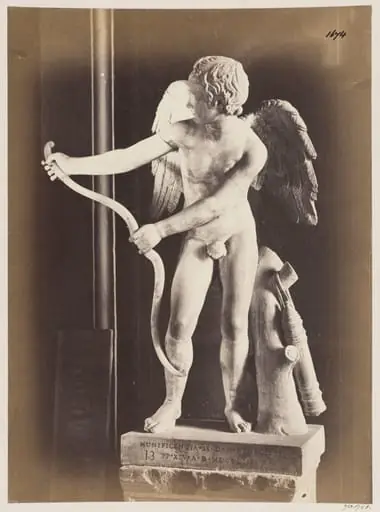 Sculpture - Statue of Cupid with his bow, in the Capitoline Museum.