Artwork
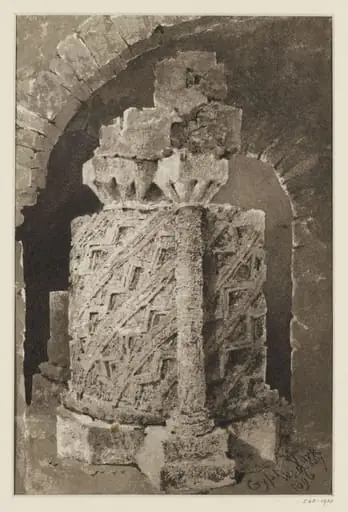
Sculptures - Cornice and Tiles of the third century, found with the fragments of the Marble Plan in 1867, at SS. Cosmas and Damian.
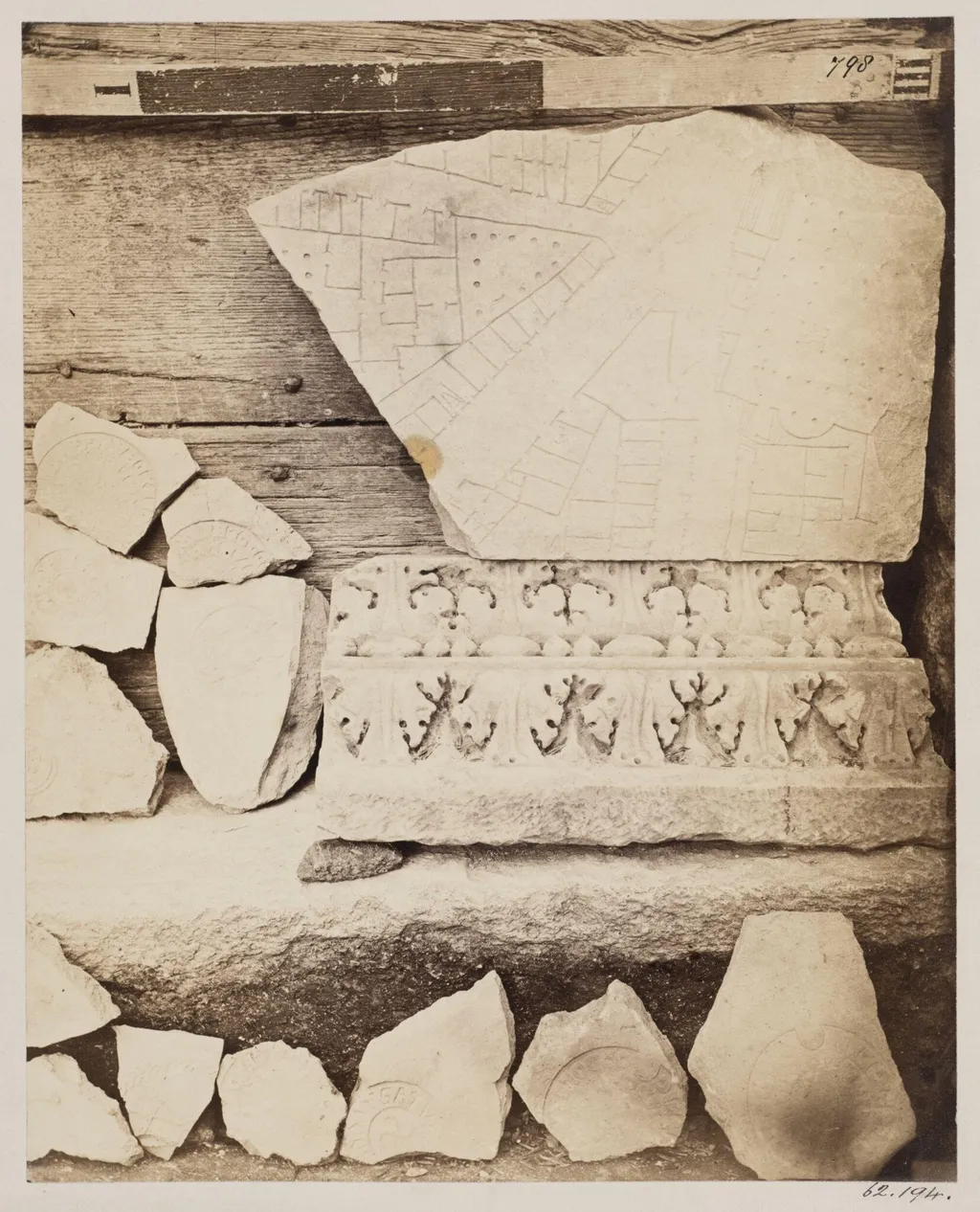
Sculptures - Cornice and Tiles of the third century, found with the fragments of the Marble Plan in 1867, at SS. Cosmas and Damian. is a photographic photography by the Impressionist artist John Henry Parker. It dates from 1867 and is held in the collection of the Victoria and Albert Museum. The 1867 photograph records fragments of a third‑century Roman cornice and tiled elements uncovered near the church of SS.
About this work
The photo was taken in 1867 after they were dug up, so it’s a record of what survived.
This photo shows broken bits of carved stone on a wooden shelf. Some pieces have faint drawings or shapes, like a rough sketch of a building. Others have rows of small carvings—faces or patterns—lined up neatly.
These fragments were part of a larger structure, likely from an old building. The photo was taken in 1867 after they were dug up, so it’s a record of what survived.
Check out the Victoria and Albert Museum to see more pieces like these.
Overview
The 1867 photograph records fragments of a third‑century Roman cornice and tiled elements uncovered near the church of SS. Cosmas and Damian, alongside pieces of the Severan Marble Plan. The image captures the broken stone pieces arranged on a wooden shelf, some bearing faint architectural sketches and rows of small carved motifs.
Subject & Meaning
The surviving fragments suggest they belonged to a larger architectural composition, likely a decorative cornice and tiled surface of a public or private building. The incised sketches hint at design plans, while the repetitive small carvings—faces or patterned motifs—reflect typical Roman ornamental practices.
Technique & Style
Carved from stone, the cornice fragments display relief work characteristic of Roman architectural ornamentation in the third century, with stylised figures and geometric patterns. The tiles exhibit the regularity of Roman roofing or flooring units, indicating standardized production methods of the period.
History & Provenance
Excavated in 1867, the fragments were photographed as part of a comprehensive visual survey of Rome’s classical monuments conducted between 1864 and 1879 under the direction of John Henry Parker. Local photographers Adriano De Bonis and Filippo Spina contributed to the series, later supplemented by Charles Smeaton. Many of these early photographs are now held by the Victoria and Albert Museum.
Context
The find location near SS. Cosmas and Damian situates the fragments within the archaeological landscape of ancient Rome, where the Severan Marble Plan—a detailed map of the city—was also discovered. The cornice and tiles likely formed part of the built environment documented by that plan.
Artist & collection
Artist
John Henry Parker liked to explore old churches in Rome. He'd photograph the sculptures and carvings he found. One thing that stands out is his attention to detail - he'd capture tiny parts of bigger pieces, like the…

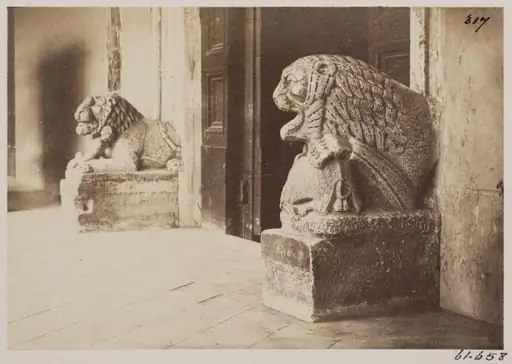 Sculptures - Lions at the Door of the Church of S. Lorenzo
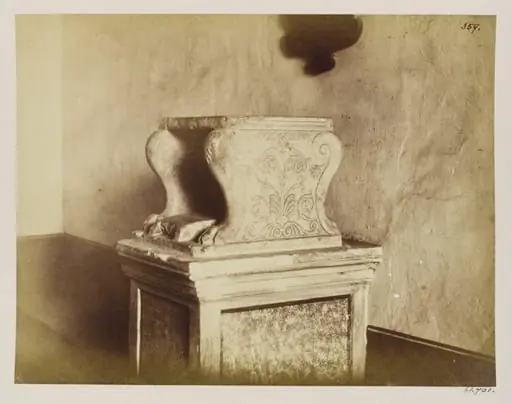 Sculptures - Marble Seat of S. Gregory in the Church of S. Stefano Rotondo, with Shallow Carving, c. A.D. 590.
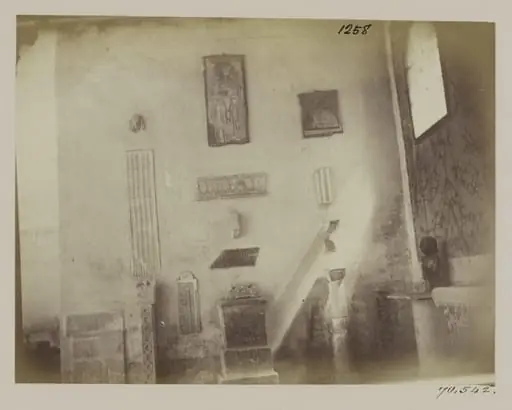 Church of S. Giorgio in Velabro - Fragments of marble sculpture, Tombs, &c., from the old Church, built into the wall.
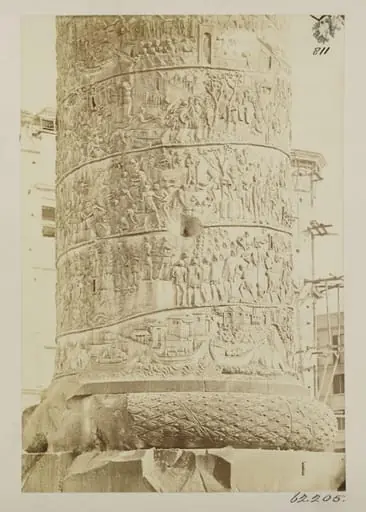 Sculptures - Details of Sculpture from Trajan's Column.
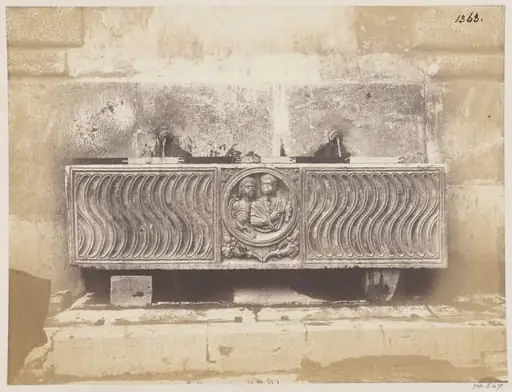 Sculpture - Sarcophagus of the fourth century made into a fountain, near the Church of S. Maria, in the Piazza del Popolo
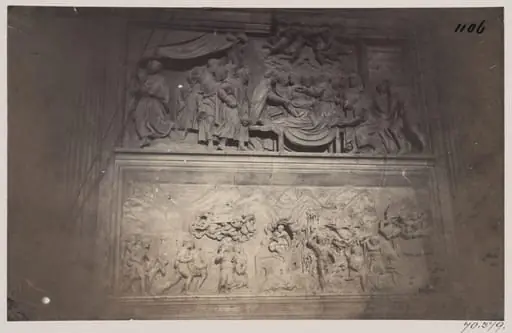 Out of Rome - House of the Blessed Virgin at Loreto. Sculpture of the Santissima Casa carried by Angels, A.D. 1520
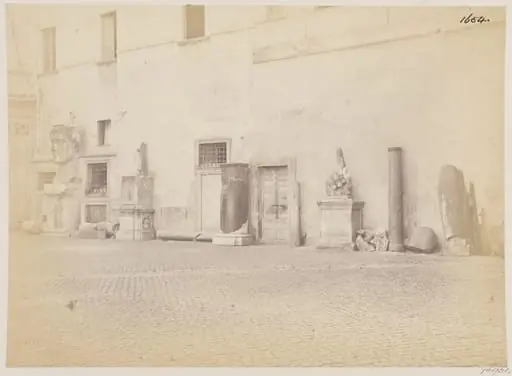 Sculpture - View on the left side of the Court-yard of the Palazzo de' Conservatori on the Capitol, shewing fragments of colossal Statues
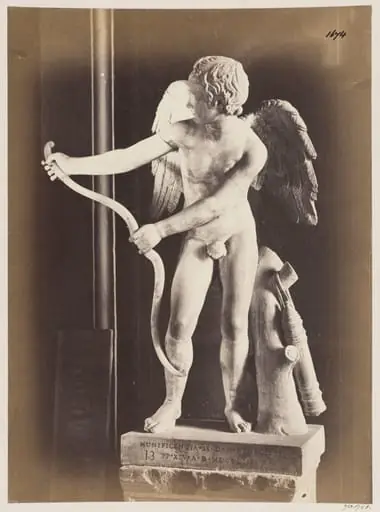 Sculpture - Statue of Cupid with his bow, in the Capitoline Museum.
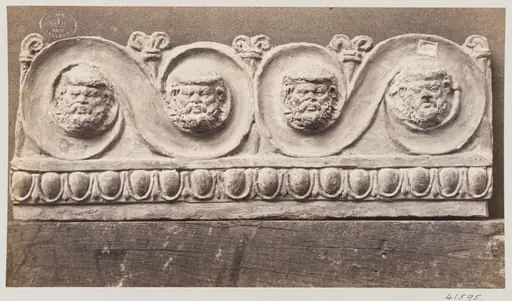 Bas-relief scroll with four masques in terra cotta
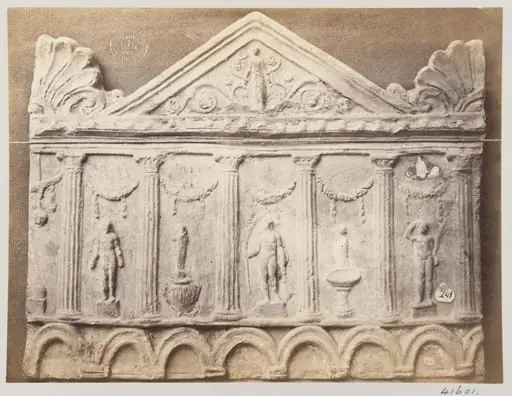 Bas-relief of the Temple of Hercules in terra cotta
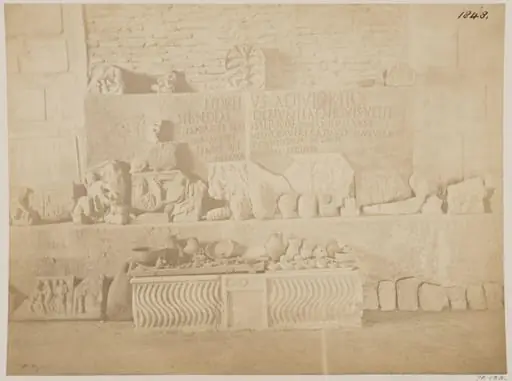 Ostia - View in the Museum
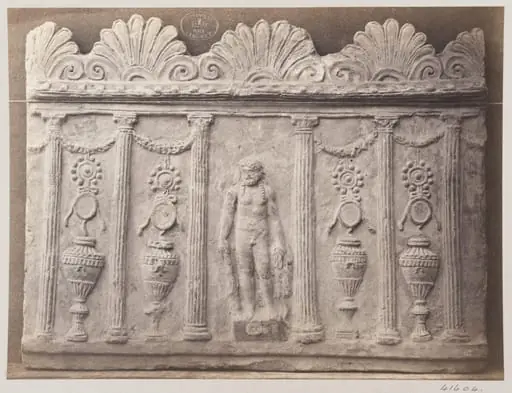 Bas-relief of Temple of Hercules in terra cotta
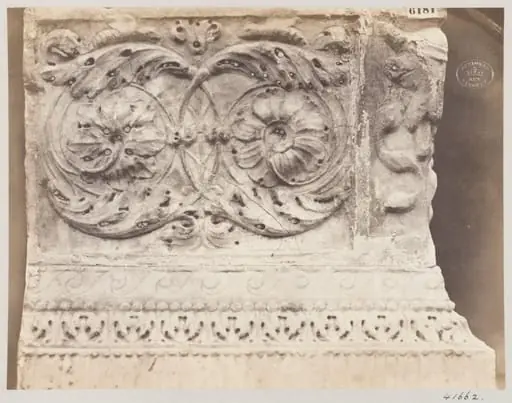 Marble portion of a sacophagus ornamented with bas-relief foliage
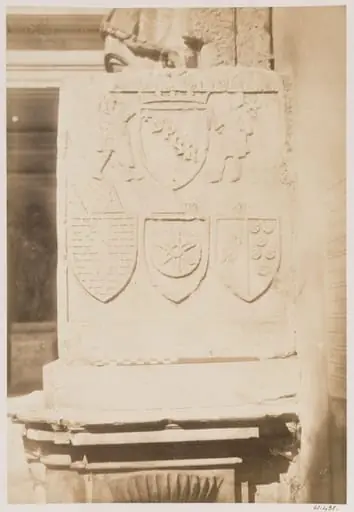 Sculpture - Arms of the Roman Senate from the Tomb of Agrippina, now in the Palazzo de' Conservatori on the Capitol
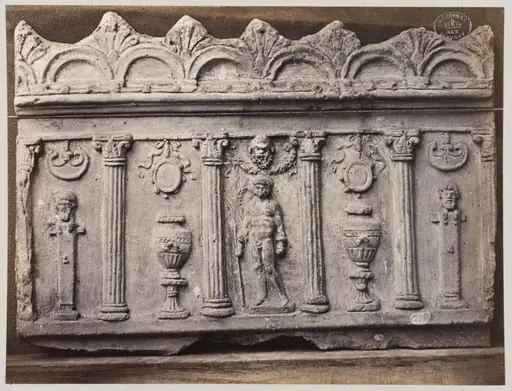 Bas-relief of a figure with bust, vessels and columns in terra cotta
 Untitled