Artwork
Sculptures - Fragment of a Cornice of the Temple of Mars (?), outside the Porta S. Sebastiano or Appia, said to belong to this Temple when rebuilt in the third century
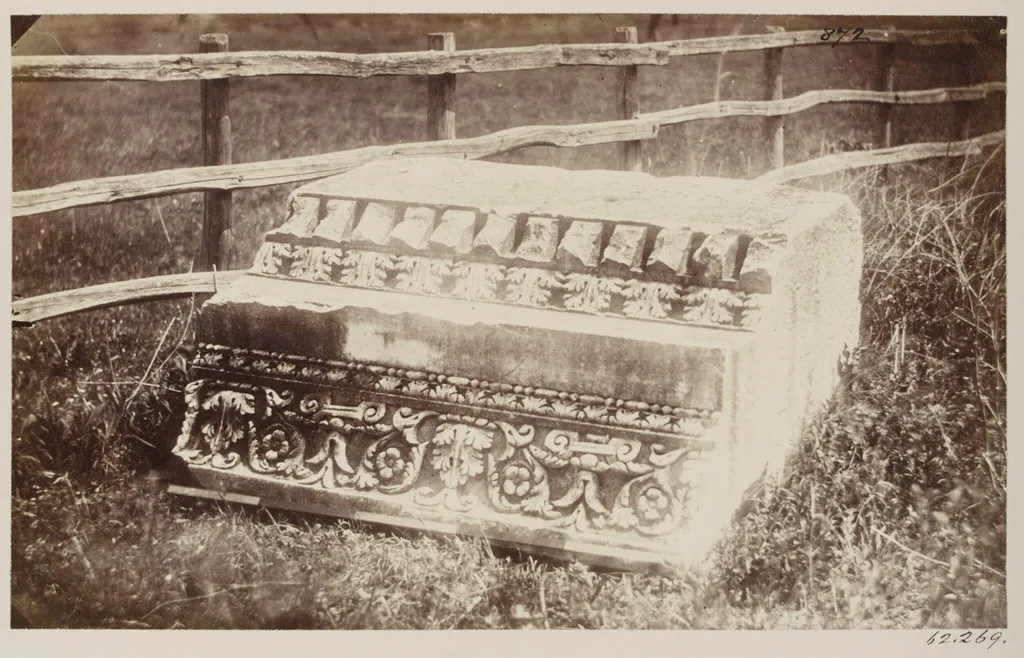
Sculptures - Fragment of a Cornice of the Temple of Mars (?), outside the Porta S. Sebastiano or Appia, said to belong to this Temple when rebuilt in the third century is a photographic photography by the Impressionist artist John Henry Parker. It dates from 1868 and is held in the collection of the Victoria and Albert Museum.
About this work
Overview
Taken between 1867 and 1870, the image is part of a systematic visual survey of Rome’s ancient monuments directed by John Henry Parker.
This photograph captures fragments of a stone cornice, likely from a temple outside Rome’s Porta San Sebastiano, believed to have been reconstructed in the third century CE. Taken between 1867 and 1870, the image is part of a systematic visual survey of Rome’s ancient monuments directed by John Henry Parker. The scene shows weathered stone pieces scattered on uneven ground, surrounded by vegetation and propped against wooden supports, documenting their condition at the time of recording.
Subject & Meaning
The carved elements—scrolls, foliage, and traces of inscriptions—suggest the cornice once adorned a public religious structure, possibly dedicated to Mars. Though the temple’s exact function remains uncertain, the ornamentation reflects standard Roman architectural conventions for sacred buildings, emphasizing civic and religious identity. The fragments, though broken, retain evidence of deliberate craftsmanship meant to convey grandeur and permanence.
Technique & Style
The stone carvings exhibit a late Roman interpretation of classical motifs, with stylized leaves and swirling patterns typical of third-century decorative programs. The precision of the incised lines indicates skilled stonework, though erosion has softened details. The photograph’s monochrome tone emphasizes texture and form, preserving the contrast between carved relief and weathered surfaces without embellishment.
History & Provenance
The fragments were documented during a comprehensive photographic campaign led by John Henry Parker, who sought to record Rome’s antiquities before further decay or removal. The photograph entered the collection of the Victoria and Albert Museum, which holds a curated selection from Parker’s archive of over 3,300 images. These records remain key references for scholars studying the state of Roman ruins in the mid-nineteenth century.
Context
The temple’s location near the Appian Way placed it along a major route used for processions and military movement, reinforcing its potential connection to Mars, god of war. By the third century, many older temples were renovated under imperial patronage, blending traditional forms with contemporary tastes. The cornice fragments reflect this era’s architectural pragmatism, repurposing older styles within renewed civic structures.
Legacy
Parker’s photographic archive preserved visual evidence of artifacts now partially lost or relocated. These images serve as baseline documentation for archaeological study, offering insight into the condition of Roman ruins before modern excavation and conservation. The fragments themselves, though no longer in situ, continue to inform interpretations of late antique temple architecture in the Roman countryside.
Artist & collection
Artist
John Henry Parker liked to explore old churches in Rome. He'd photograph the sculptures and carvings he found. One thing that stands out is his attention to detail - he'd capture tiny parts of bigger pieces, like the…

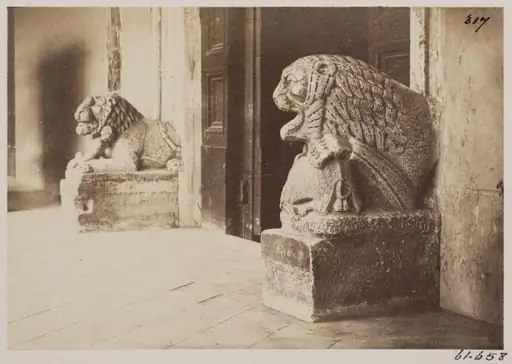 Sculptures - Lions at the Door of the Church of S. Lorenzo
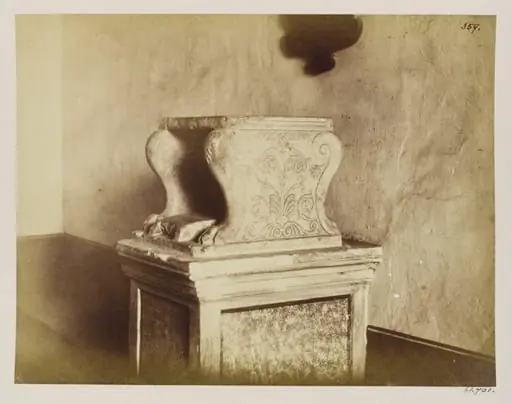 Sculptures - Marble Seat of S. Gregory in the Church of S. Stefano Rotondo, with Shallow Carving, c. A.D. 590.
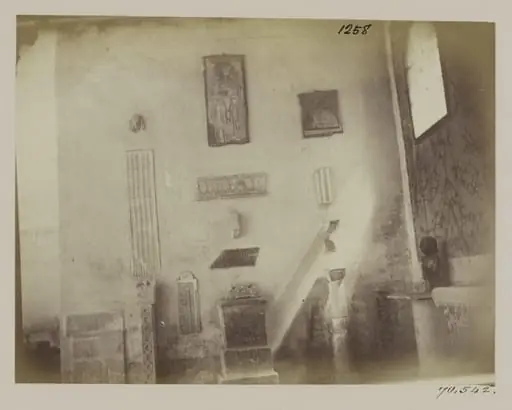 Church of S. Giorgio in Velabro - Fragments of marble sculpture, Tombs, &c., from the old Church, built into the wall.
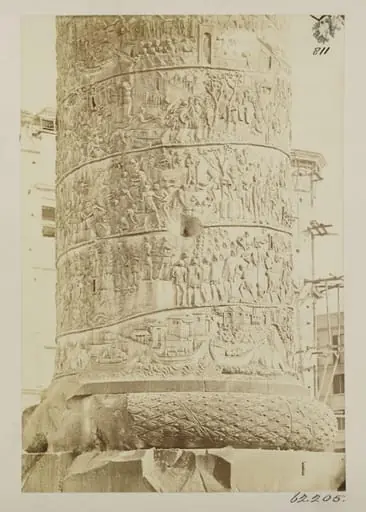 Sculptures - Details of Sculpture from Trajan's Column.
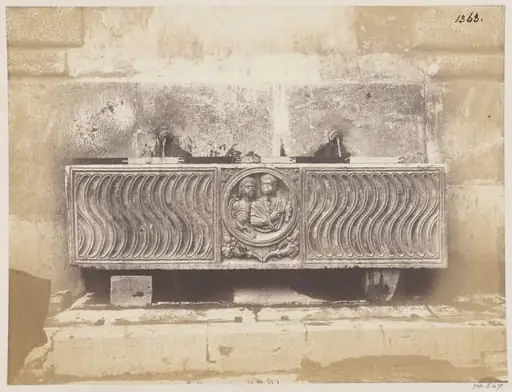 Sculpture - Sarcophagus of the fourth century made into a fountain, near the Church of S. Maria, in the Piazza del Popolo
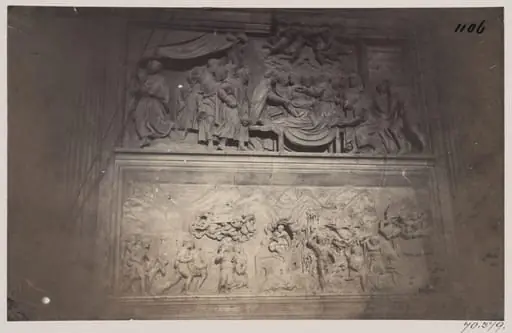 Out of Rome - House of the Blessed Virgin at Loreto. Sculpture of the Santissima Casa carried by Angels, A.D. 1520
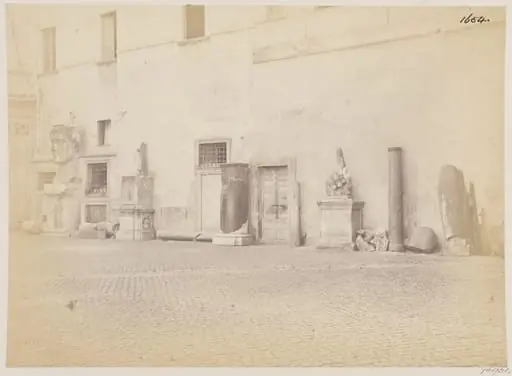 Sculpture - View on the left side of the Court-yard of the Palazzo de' Conservatori on the Capitol, shewing fragments of colossal Statues
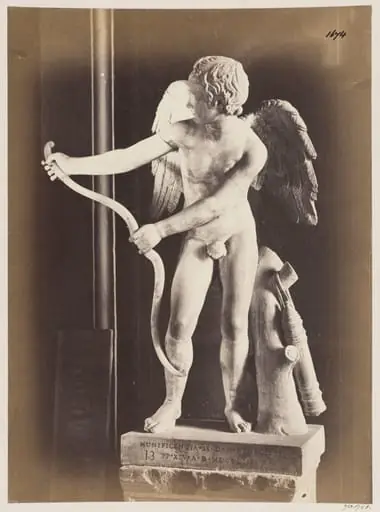 Sculpture - Statue of Cupid with his bow, in the Capitoline Museum.
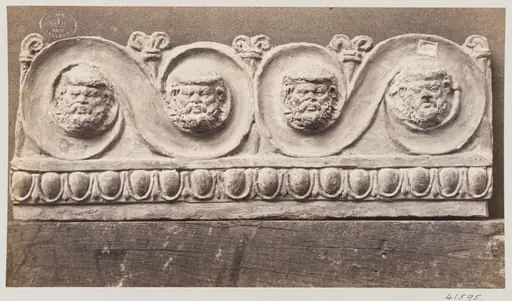 Bas-relief scroll with four masques in terra cotta
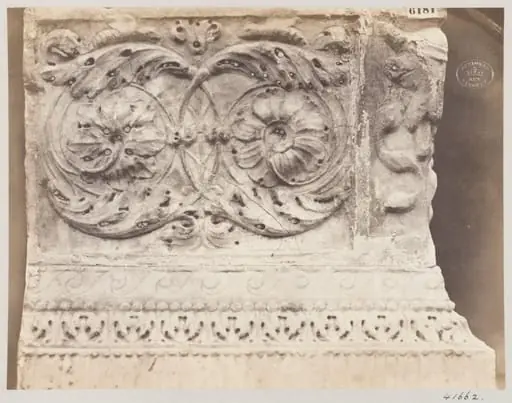 Marble portion of a sacophagus ornamented with bas-relief foliage
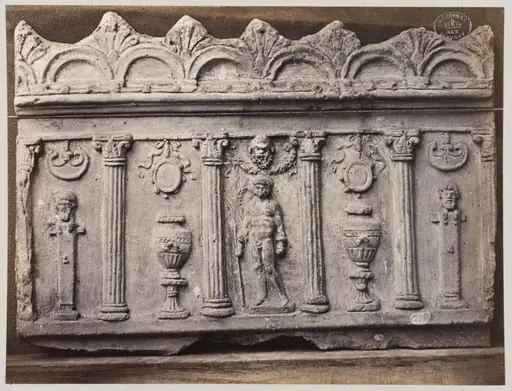 Bas-relief of a figure with bust, vessels and columns in terra cotta
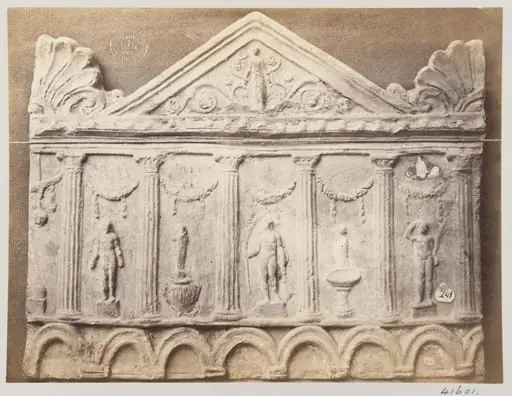 Bas-relief of the Temple of Hercules in terra cotta
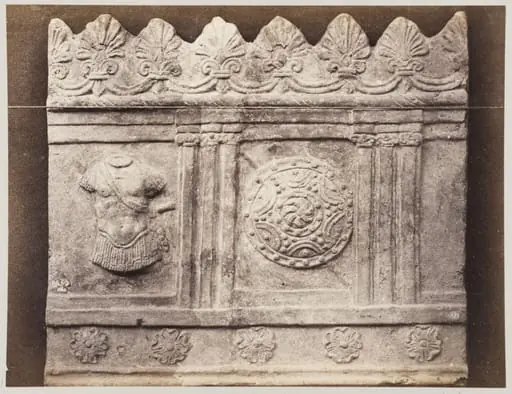 Bas-relief portion of a frieze of with trophies in terra cotta
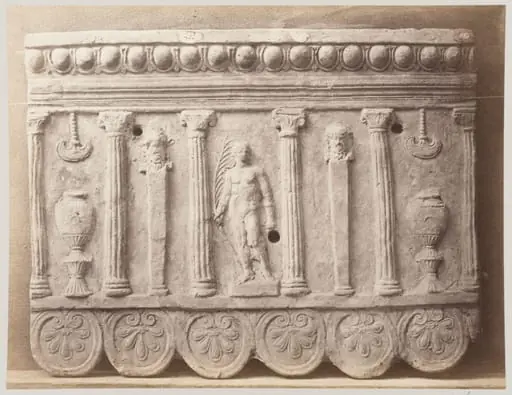 Bas-relief portion of a frieze of Cestiphore conqueror in terra cotta
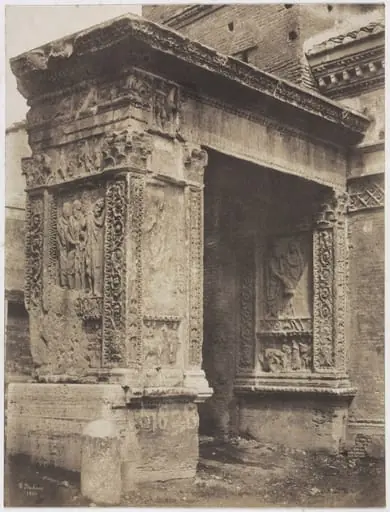 Goldsmith's Arch, Rome
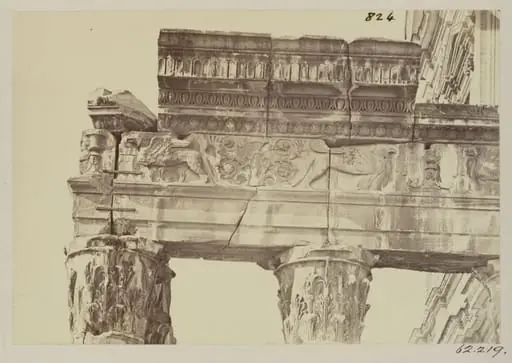 Sculptures - Frieze of the Temple of Antonius and Faustina, A.D. 138.
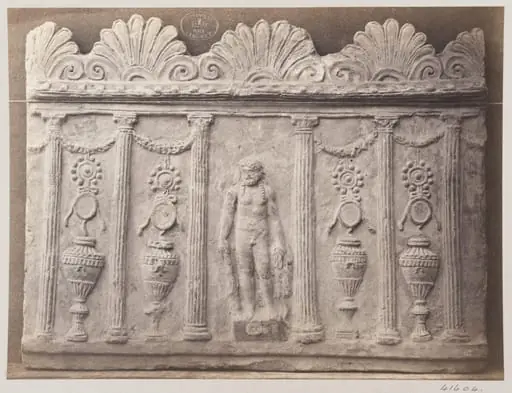 Bas-relief of Temple of Hercules in terra cotta
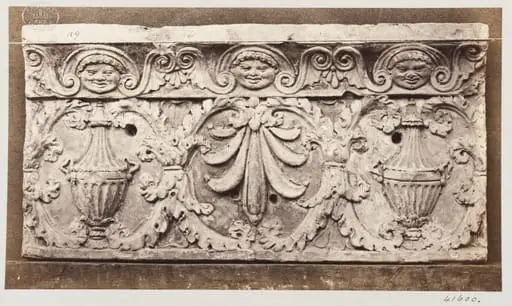 Bas-relief of portion of frieze with acanthus ornament enclosing vases and honesuckle in terra cotta