Artwork
Sculptures - Frieze of the Temple of Antonius and Faustina, A.D. 138.
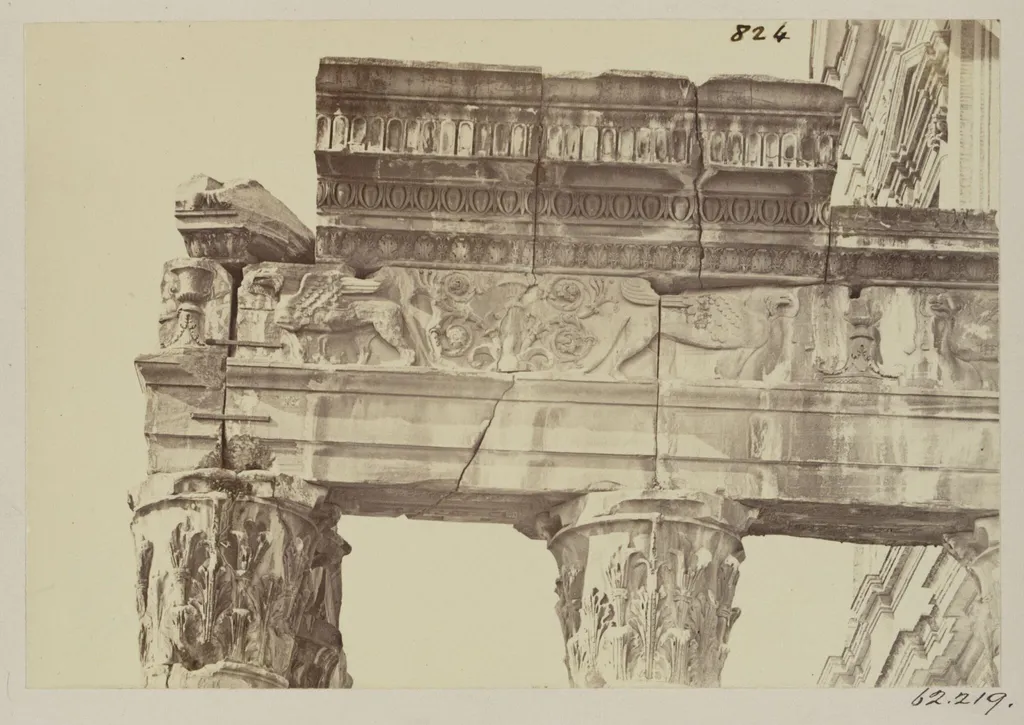
Sculptures - Frieze of the Temple of Antonius and Faustina, A.D. 138. is a photographic photography by the Impressionist artist John Henry Parker. It dates from 1868 and is held in the collection of the Victoria and Albert Museum.
About this work
Overview
A photograph, taken between 1867 and 1870, documents a surviving section of the frieze from the Temple of Antonius and Faustina in Rome, originally constructed in A.D. 138. The image captures the weathered state of the ancient stone carvings.
Subject & Meaning
The depicted frieze features a combination of motifs, including a row of small arches adorned with scroll and leaf patterns, and a lower section with figures that appear to be a mix of animals and robed individuals holding objects, though interpretations may vary due to the fragmented state.
Technique & Style
The original frieze's technique and style are evident in the intricate details of the arches and the rendering of figures, characteristic of Roman sculptural practices during the 2nd century A.D. The photograph itself is a product of early documentary photography techniques.
History & Provenance
The photograph is part of a larger collection of over 3,300 images compiled by John Henry Parker as part of a Rome monuments survey. A subset, including this photograph, is housed at the Victoria and Albert Museum.
Context
The Temple of Antonius and Faustina, from which the frieze originates, was a significant Roman architectural piece from A.D. 138. The photograph's creation in the late 19th century reflects the period's interest in documenting classical antiquities.
Artist & collection
Artist
John Henry Parker liked to explore old churches in Rome. He'd photograph the sculptures and carvings he found. One thing that stands out is his attention to detail - he'd capture tiny parts of bigger pieces, like the…

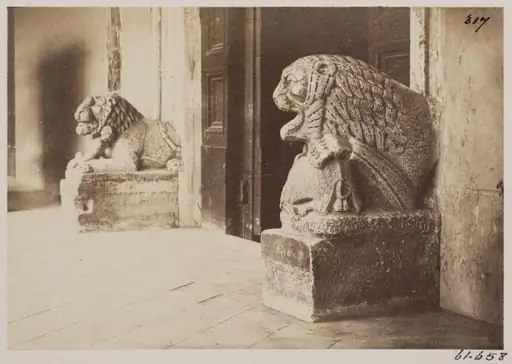 Sculptures - Lions at the Door of the Church of S. Lorenzo
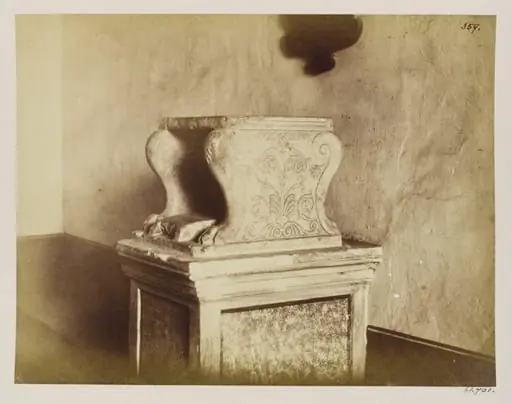 Sculptures - Marble Seat of S. Gregory in the Church of S. Stefano Rotondo, with Shallow Carving, c. A.D. 590.
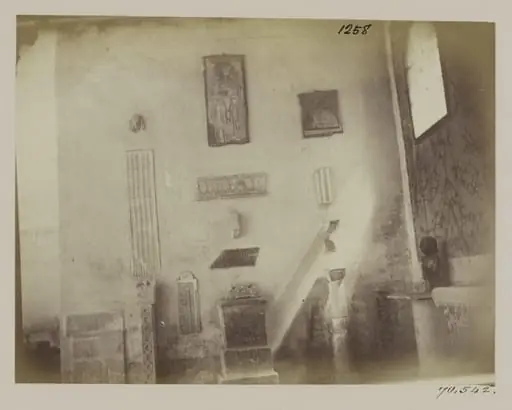 Church of S. Giorgio in Velabro - Fragments of marble sculpture, Tombs, &c., from the old Church, built into the wall.
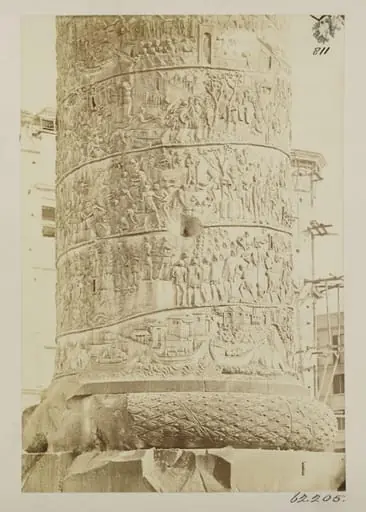 Sculptures - Details of Sculpture from Trajan's Column.
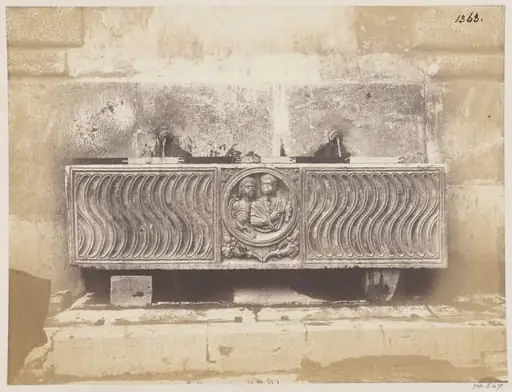 Sculpture - Sarcophagus of the fourth century made into a fountain, near the Church of S. Maria, in the Piazza del Popolo
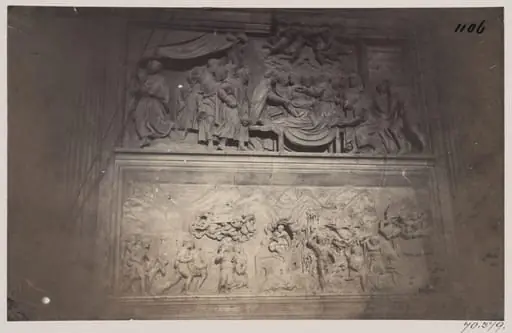 Out of Rome - House of the Blessed Virgin at Loreto. Sculpture of the Santissima Casa carried by Angels, A.D. 1520
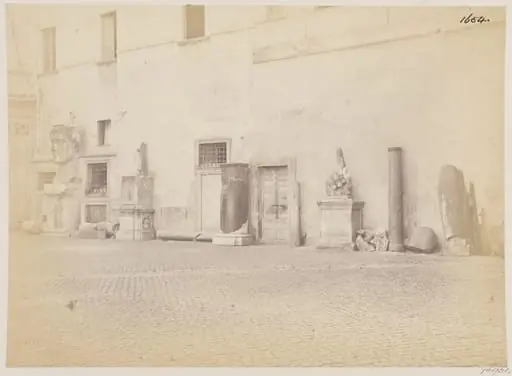 Sculpture - View on the left side of the Court-yard of the Palazzo de' Conservatori on the Capitol, shewing fragments of colossal Statues
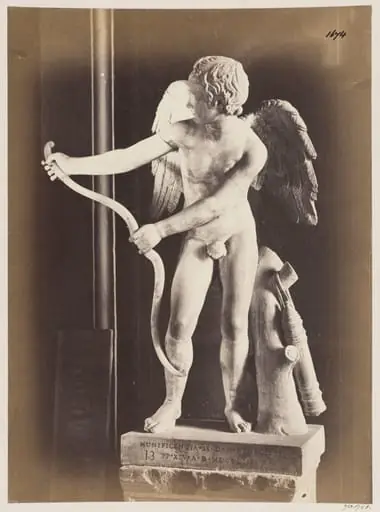 Sculpture - Statue of Cupid with his bow, in the Capitoline Museum.
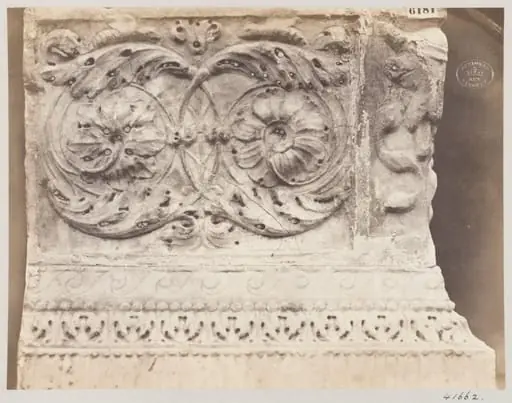 Marble portion of a sacophagus ornamented with bas-relief foliage
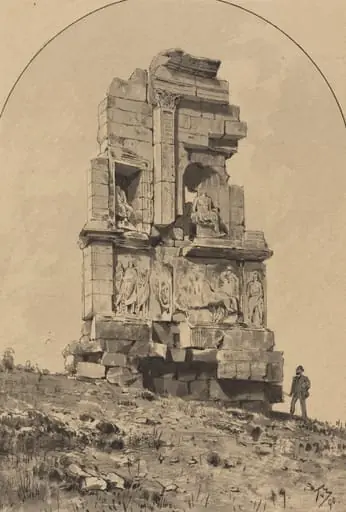 Monument of Philopappos
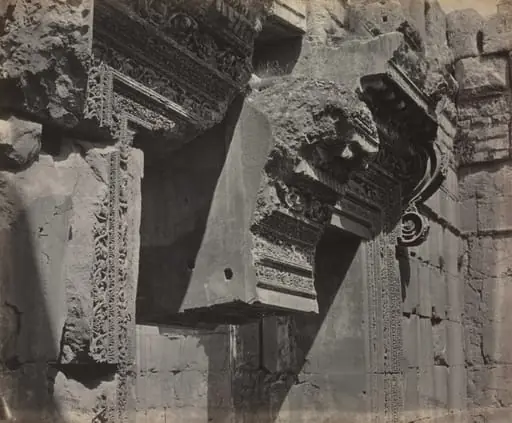 Balbec
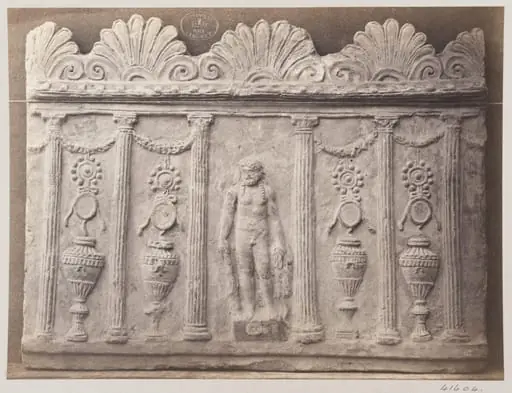 Bas-relief of Temple of Hercules in terra cotta
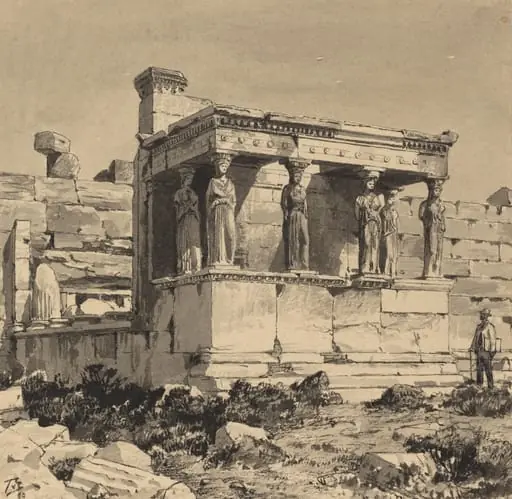 Erechtheion
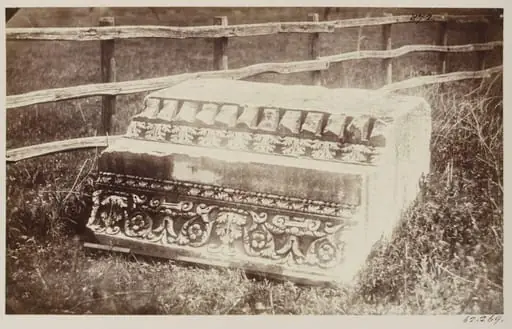 Sculptures - Fragment of a Cornice of the Temple of Mars (?), outside the Porta S. Sebastiano or Appia, said to belong to this Temple when rebuilt in the third century
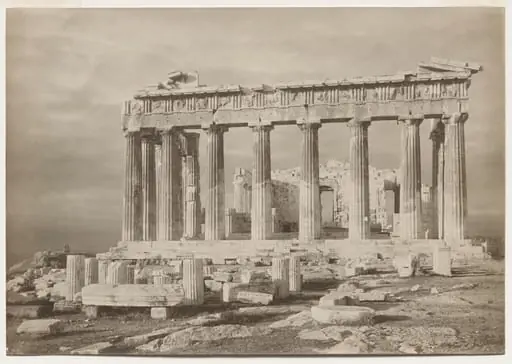 The Parthenon
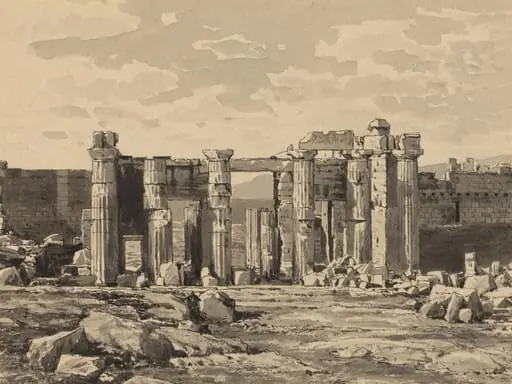 The Propylaeum from the East
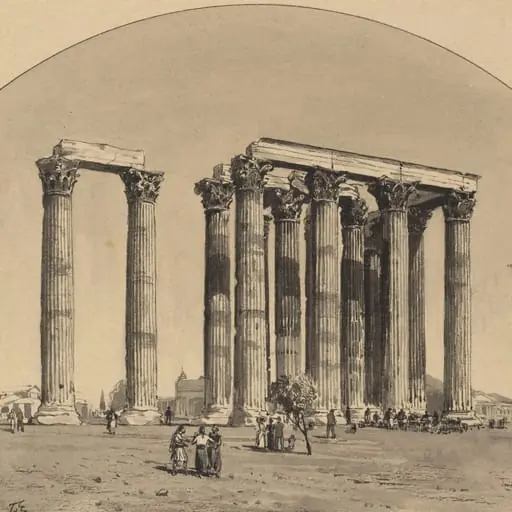 Temple of Olympian Zeus
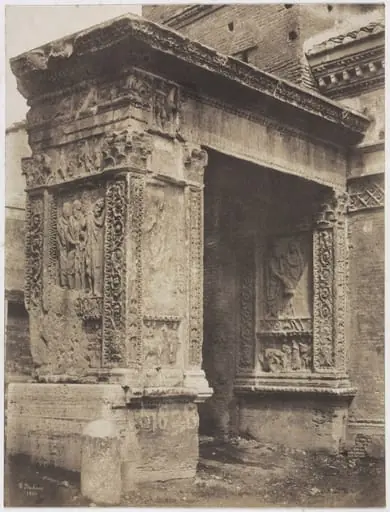 Goldsmith's Arch, Rome
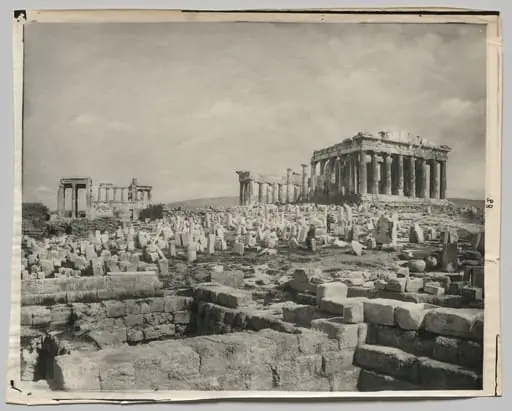 View of the Parthenon
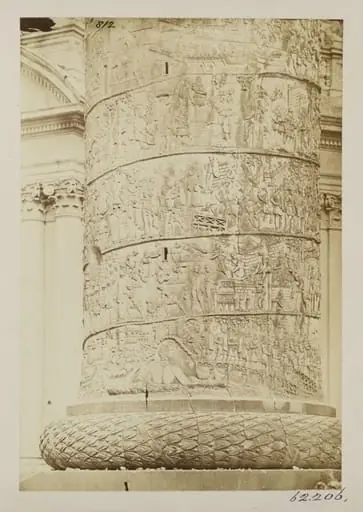 Sculptures - Details of Sculpture from the Column of Trajan