Artwork
St Paul Shipwrecked on the Island of Malta
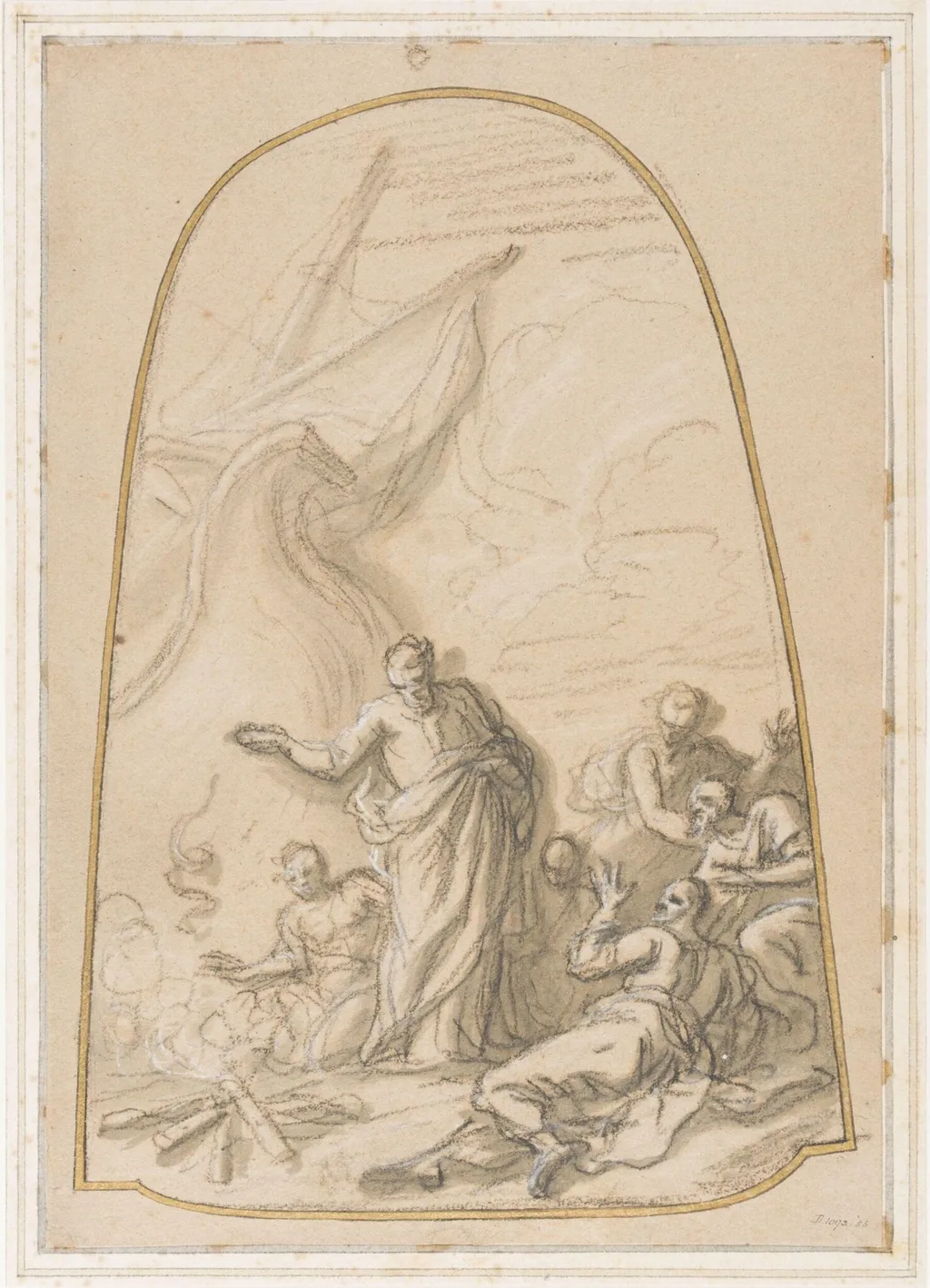
St Paul Shipwrecked on the Island of Malta is a drawing by the Baroque artist James Thornhill. It dates from 1715 and is held in the collection of the Victoria and Albert Museum.
About this work
Overview
This drawing by Sir James Thornhill serves as a preparatory study for one of eight narrative lunettes adorning the interior of St Paul’s Cathedral’s dome.
This drawing by Sir James Thornhill serves as a preparatory study for one of eight narrative lunettes adorning the interior of St Paul’s Cathedral’s dome. Executed around 1715–1717, it was part of a major decorative commission awarded to Thornhill following the cathedral’s completion. The work belongs to a series illustrating episodes from the life of St Paul, designed to harmonize with the architectural grandeur of the space.
Subject & Meaning
The scene depicts the Conversion of St Paul, a pivotal moment in Christian tradition when Saul, on the road to Damascus, is struck by divine light and transformed into the apostle Paul. Thornhill’s composition emphasizes the dramatic rupture of this spiritual awakening, aligning with the theological intent of the dome’s program: to convey divine intervention and the foundation of the Church through the saint’s life.
Technique & Style
Thornhill employed brown chalk for the initial contours, layering wash to model volume and shadow, while white chalk heightened areas of illumination. This mixed-media approach allowed for nuanced gradations of light and form, characteristic of Baroque draftsmanship. The technique prioritizes dynamic movement and emotional intensity, guiding the viewer’s eye through the narrative action with controlled contrast.
History & Provenance
Commissioned in 1715, Thornhill’s dome decorations were completed by 1717, marking one of the largest British decorative projects of the early 18th century. This drawing, like others in the series, was likely retained by the artist or his workshop. Its survival offers insight into the iterative process behind the cathedral’s interior, reflecting the practical realities of large-scale mural planning before execution in paint.
Context
Thornhill’s work emerged in the wake of Wren’s architectural triumph, seeking to establish a native British tradition in monumental painting. The dome’s program, centered on St Paul’s life, reinforced the Anglican Church’s identity. Unlike Italian fresco cycles, Thornhill’s approach adapted illusionistic techniques to a British aesthetic, blending classical composition with theatrical clarity suited to Protestant sensibilities.
Legacy
The drawing exemplifies the transition from preparatory sketch to monumental decoration in early Georgian Britain. It preserves the artist’s working method and reveals how large-scale religious narratives were conceived before being translated into painted surfaces. As one of the few surviving studies from the dome’s cycle, it remains a key document in understanding the execution of public art in post-Restoration England.
Artist & collection
Artist
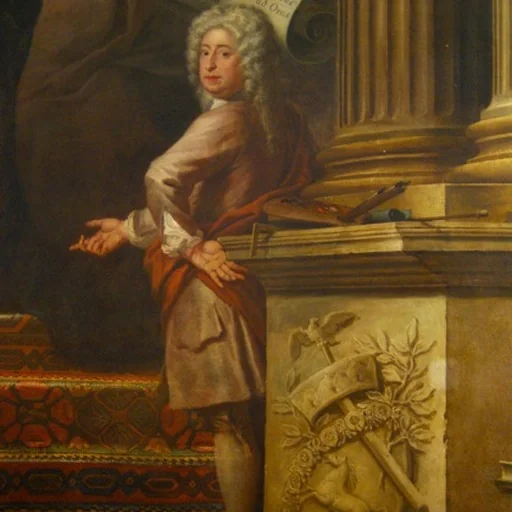
Sir James Thornhill was an English painter of historical subjects working in the Italian baroque tradition.

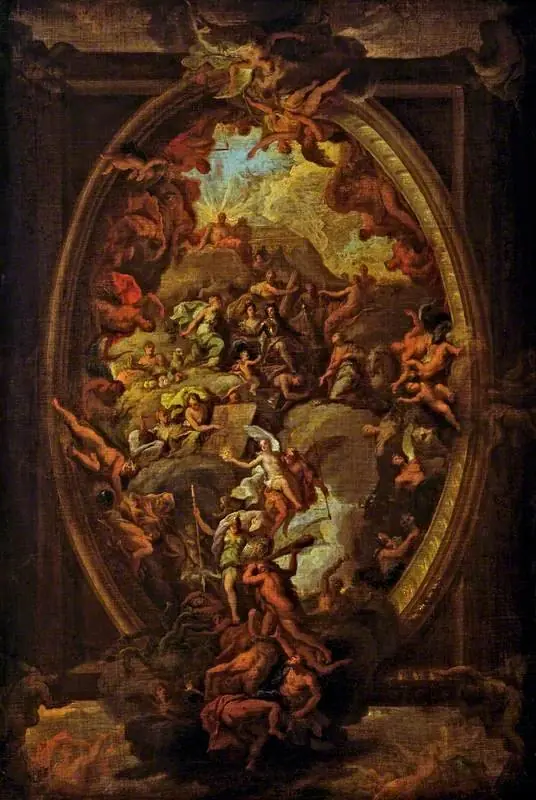 William and Mary Presenting the Cap of Liberty to Europe (sketch for the painted ceiling of the Great Hall, Greenwich Hospital)
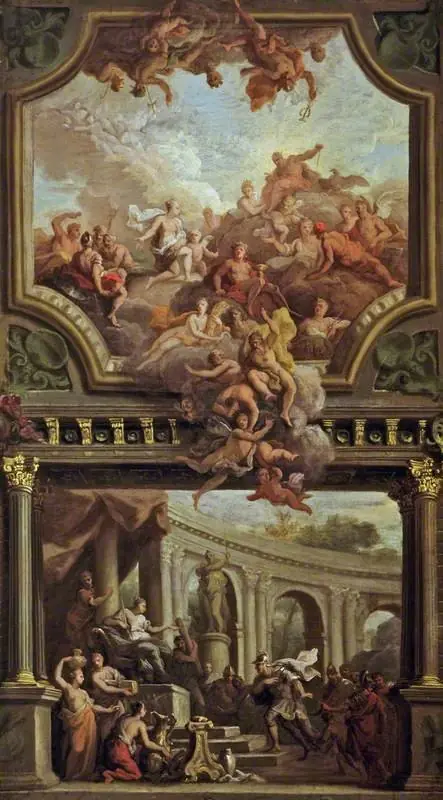 Aeneas before Dido, and Venus Supplicating Jupiter (sketch for a wall and ceiling decoration)
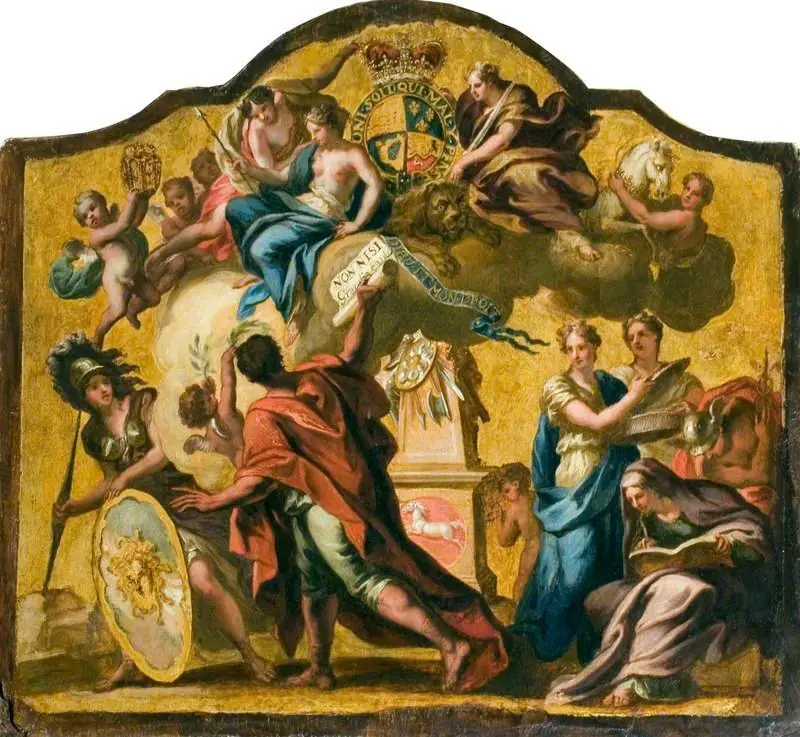 Allegorical Figures: Clemency, Prudence and Justice with Pallas, Heroic Poetry, Liberty, Discretion, History and Mercury (from the Royal State Coach for George I)
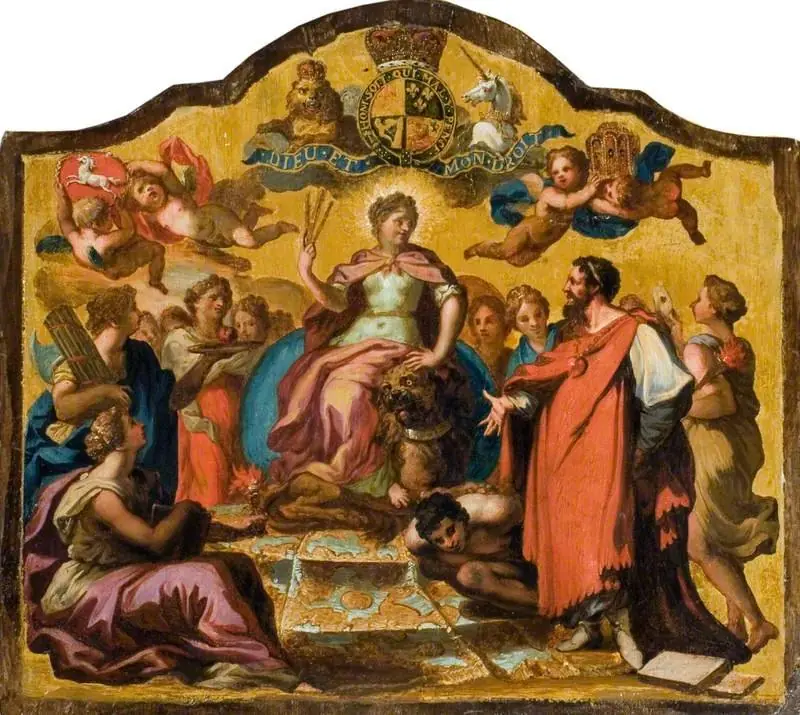 Allegorical Figures: Britannia Enthroned, Surrounded by Concord, Learning and Religion Overcoming Vice (from the Royal State Coach for George I)
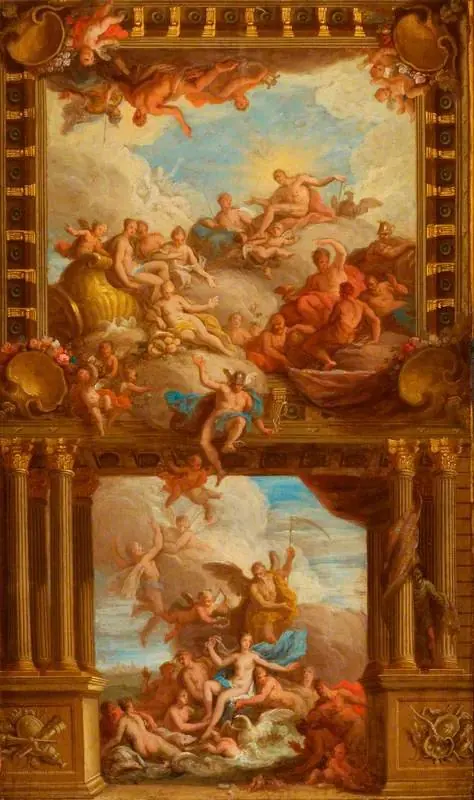 The Birth of Venus, and the Gods of Olympus (sketch for a wall and ceiling decoration)
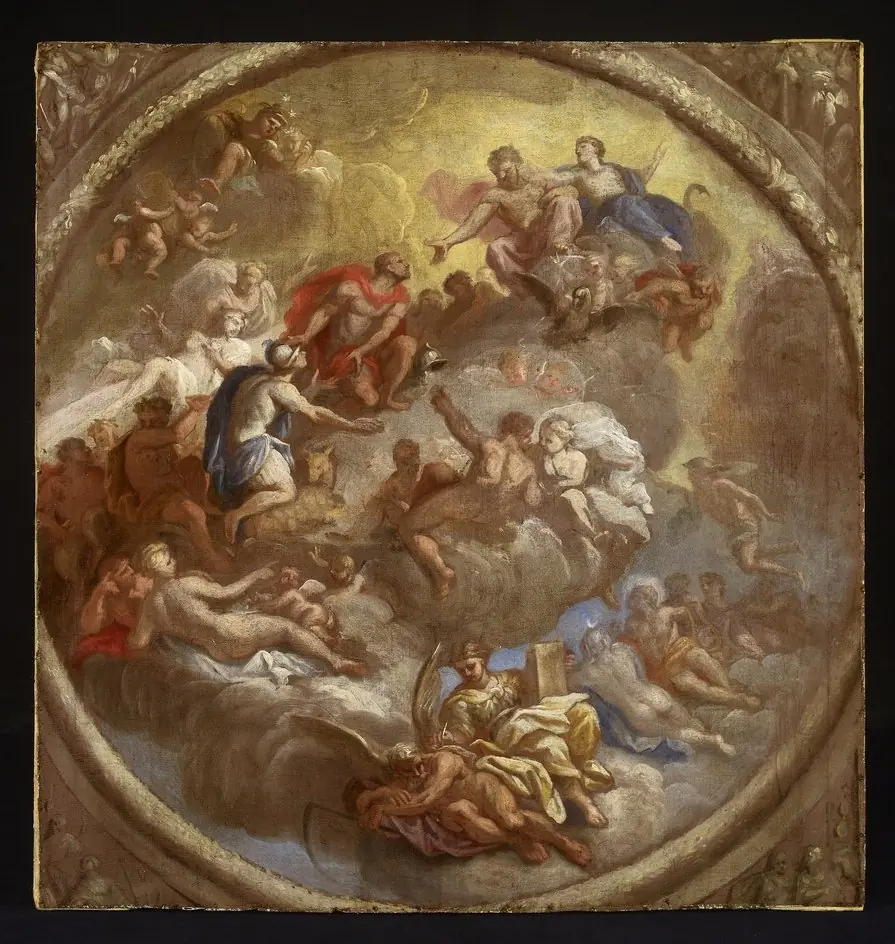 Sketch for a Ceiling Design
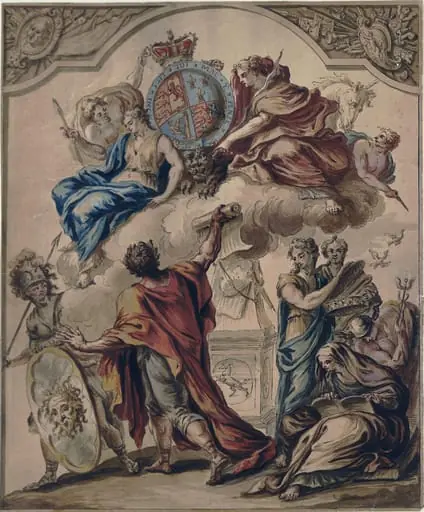 Allegorical design with figures: Clemency, Prudence and Justice with Pallas, Heroic Poetry, Liberty, Discretion, History and Mercury (preliminary design for a panel from Royal State Coach for George I)
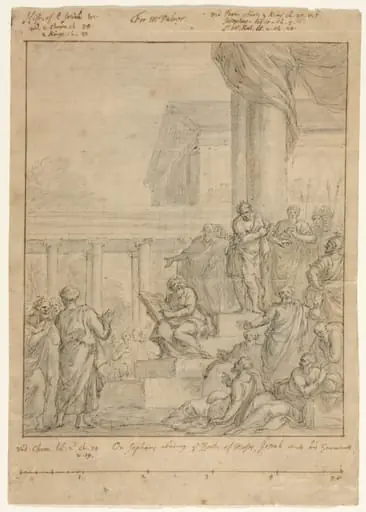 Study for King Josiah Rending his Garments
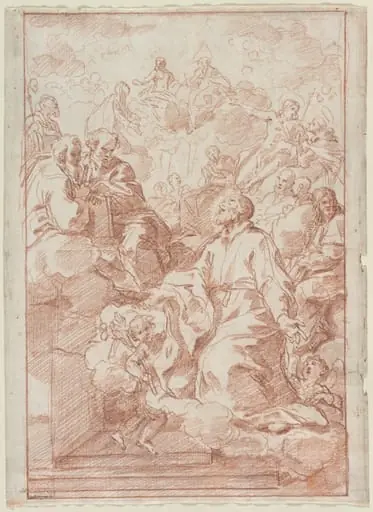 Vision of St. Philip Neri
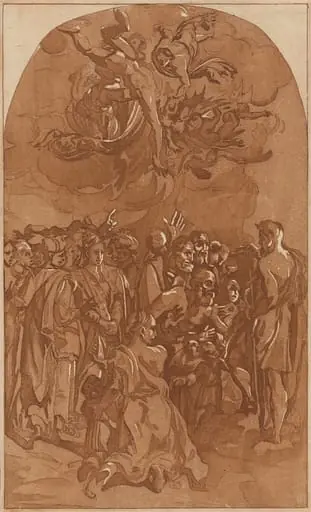 Saint John Preaching
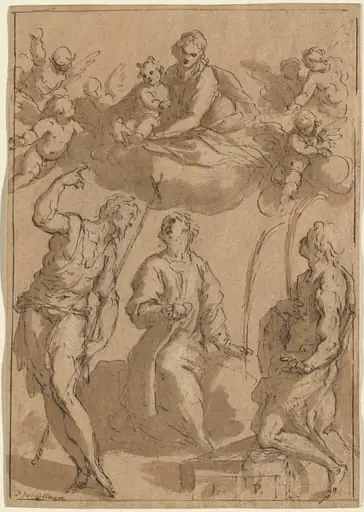 Madonna and Child in Glory with Saints John the Baptist, Stephen, and Lawrence
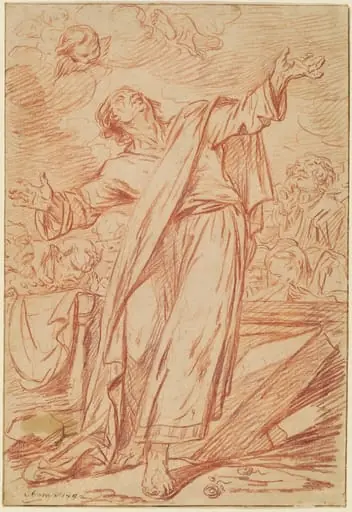 The Assumption of the Virgin
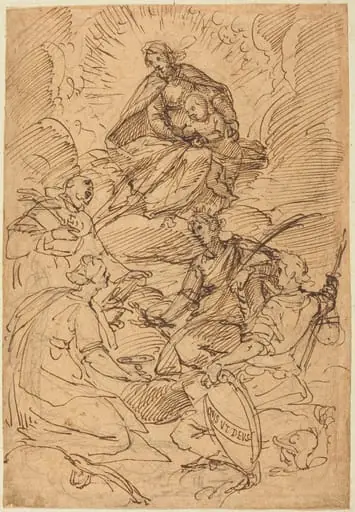 The Madonna and Child in Glory Adored by Saints
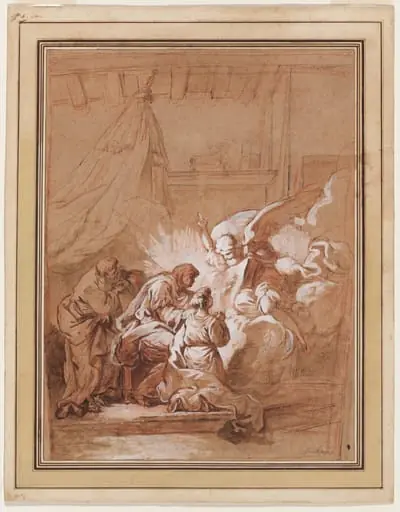 The Education of the Virgin
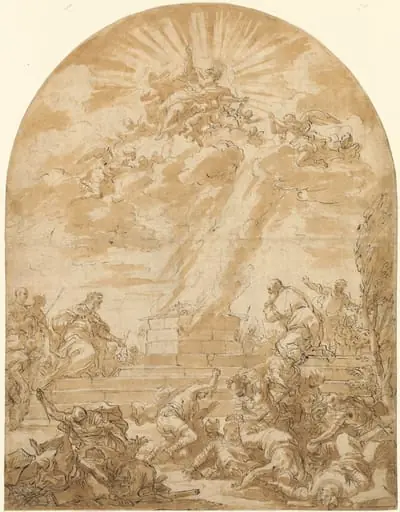 The Sacrifice of Elijah before King Ahab
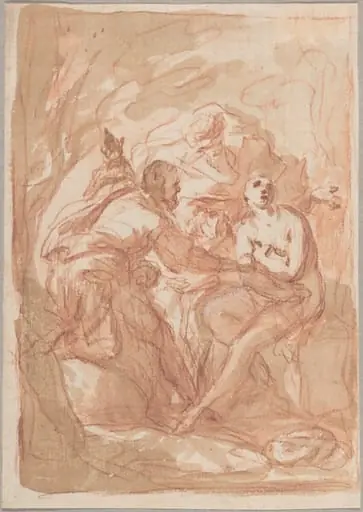 Susanna and the Elders
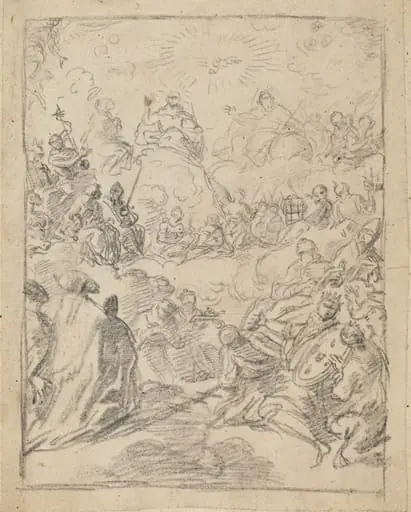 The Triumph of the Trinity (The Gloria)
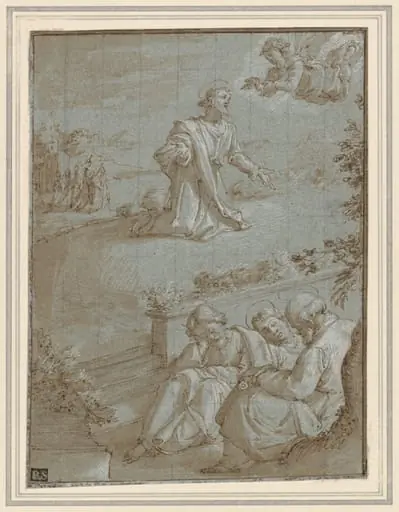 The Agony in the Garden
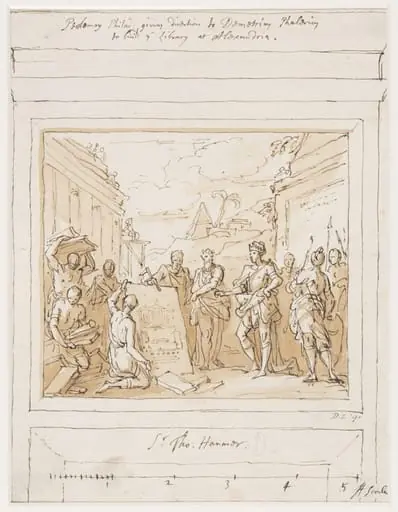 Design for a painting within an architectural setting depicting Ptolemy I commissioning the Library at Alexandria
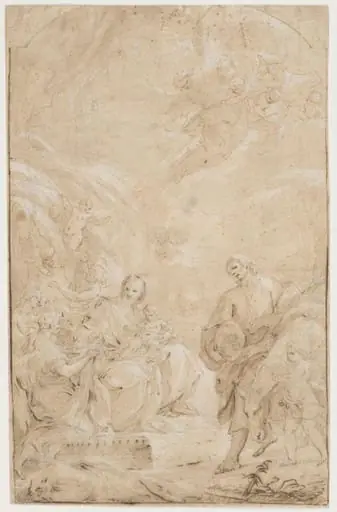 Untitled