Artwork
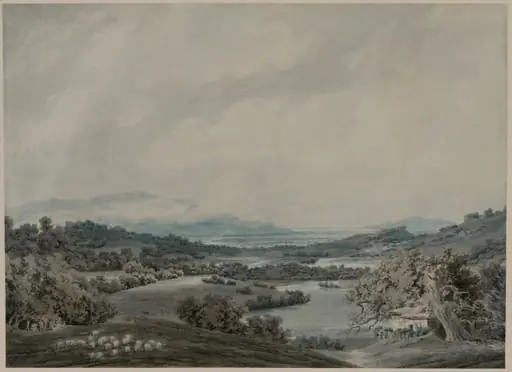
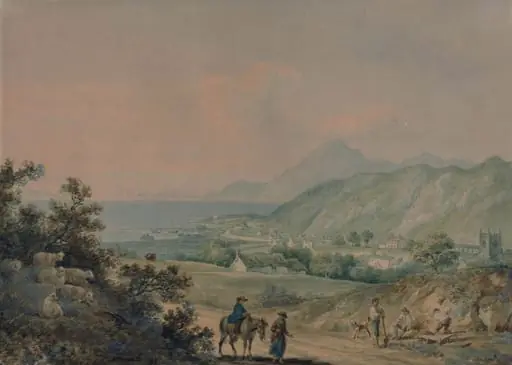
Killarney from the Hills above Muckross
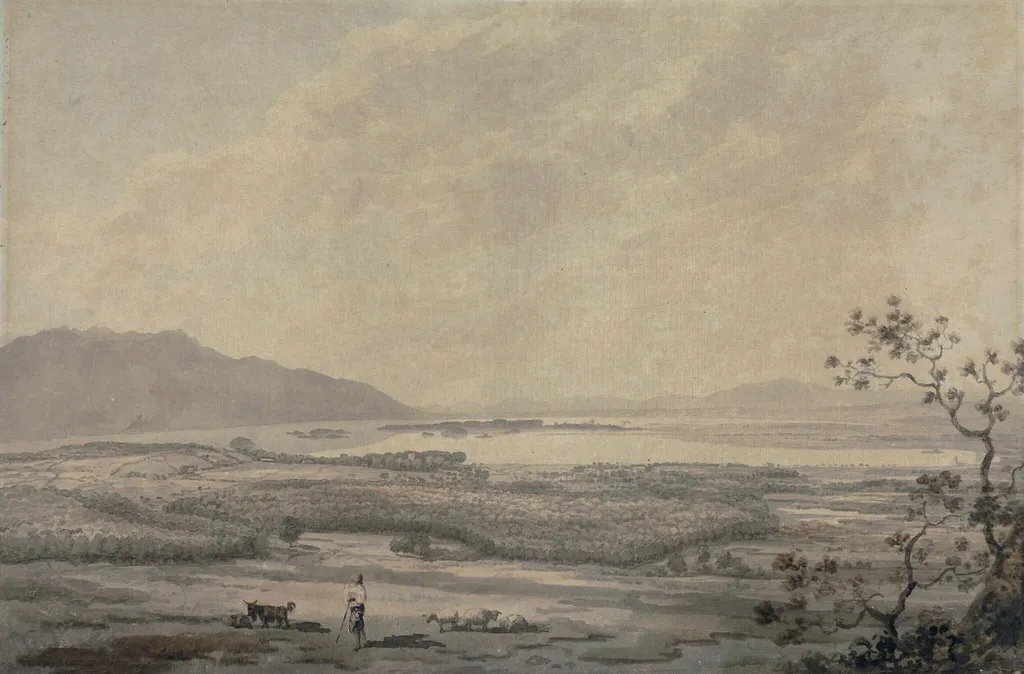
Killarney from the Hills above Muckross is a watercolor work on paper by the Rococo painting artist William Pars. It dates from 1771 and is held in the collection of the Victoria and Albert Museum.
About this work
Overview
Painted in 1771, this watercolour by William Pars captures a view of Killarney from the elevated terrain near Muckross in County Kerry. Rendered in delicate washes, the composition presents a tranquil rural expanse under a pale sky. The subdued palette of earth tones and soft grays conveys a quiet atmosphere, emphasizing the natural topography over human activity.
Subject & Meaning
A solitary walker guides a small flock of sheep along a winding path, their presence subtly anchoring the scene in human life without disrupting its stillness. A single bare tree on the right edge introduces a note of seasonal change. The composition avoids drama, instead inviting contemplation of the land’s quiet endurance, reflecting an early sensitivity to nature’s quiet dignity.
Technique & Style
Pars employed transparent watercolour washes to build layered tones, allowing the paper’s white to suggest light and distance. Soft edges and minimal detail in the distant mountains and lake enhance atmospheric perspective. The brushwork is restrained, favoring gentle gradations over sharp definition, aligning with emerging 18th-century practices that valued subtlety over theatricality.
History & Provenance
Created during Pars’s travels in Ireland, the work belongs to a series of topographical watercolours commissioned to document the Irish landscape. It was likely made for private patrons interested in natural scenery rather than political or historical narratives. The piece remained within British collections until entering public institutional holdings in the 20th century.
Context
Though predating the full emergence of Romanticism, the painting anticipates its values: reverence for unspoiled nature, quiet solitude, and emotional resonance in landscape. Pars’s approach contrasts with the grandeur of later Romantic works, instead offering a restrained, observational tone characteristic of early topographical art in Britain and Ireland.
Legacy
This watercolour contributes to a growing body of 18th-century Irish landscape studies that shifted focus from cartographic precision to sensory experience. It influenced later artists who sought to convey mood through natural elements, helping lay groundwork for Ireland’s tradition of lyrical landscape painting.
Own this work as a print
Artist & collection
Artist
William Pars (28 February 1742 – 1782) was an English watercolour portrait and landscape painter, draughtsman, and illustrator.

 Italian Landscape
 Loch Lomond
 Derwentwater
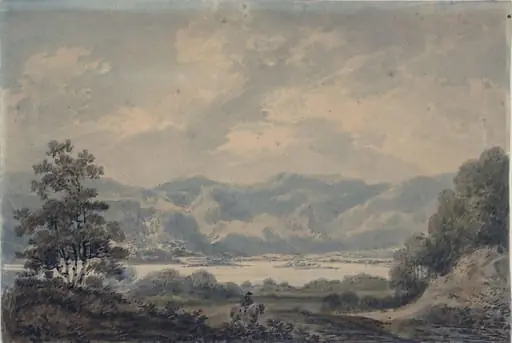 Windermere
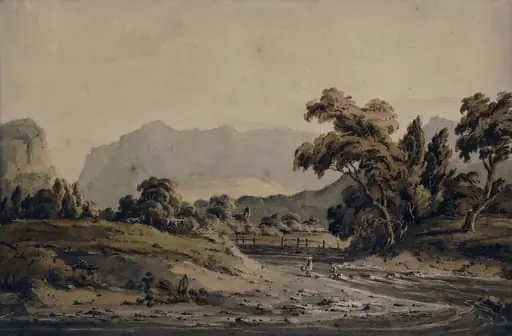 Rydal Head, Ambleside, Westmorland
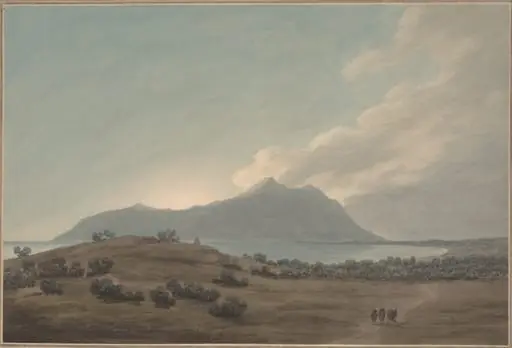 Monte Circeo at Sunset
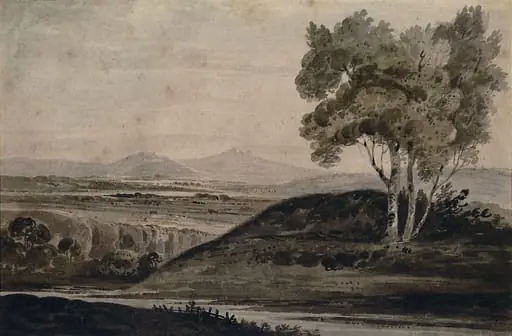 Landscape, evening effect
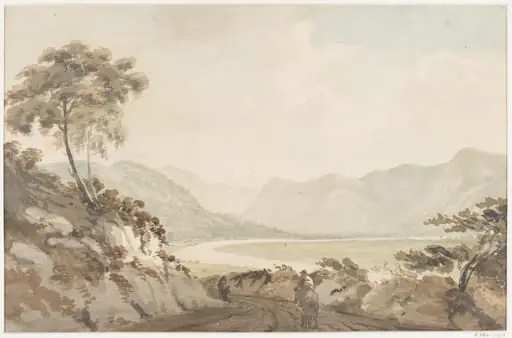 The Vale of Conway, near Llanrwst, North Wales.
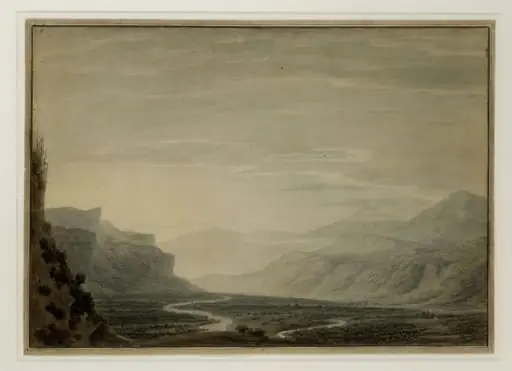 Valley with winding streams, a range of mountains in the background, and a village on the left
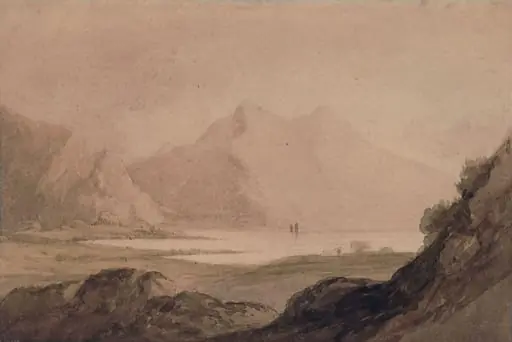 Snowdon with Llanberis Lake
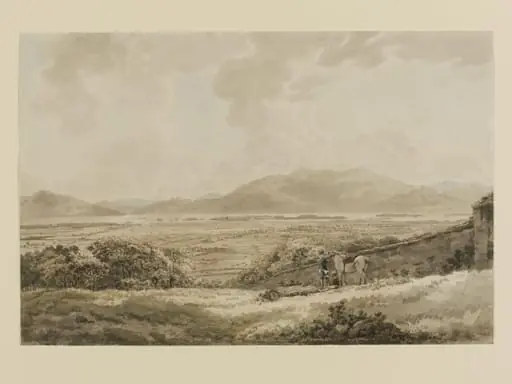 Killarney and Lake
 Bangor, with Penmaenmawr in the distance