Artwork
H Beard Print Collection
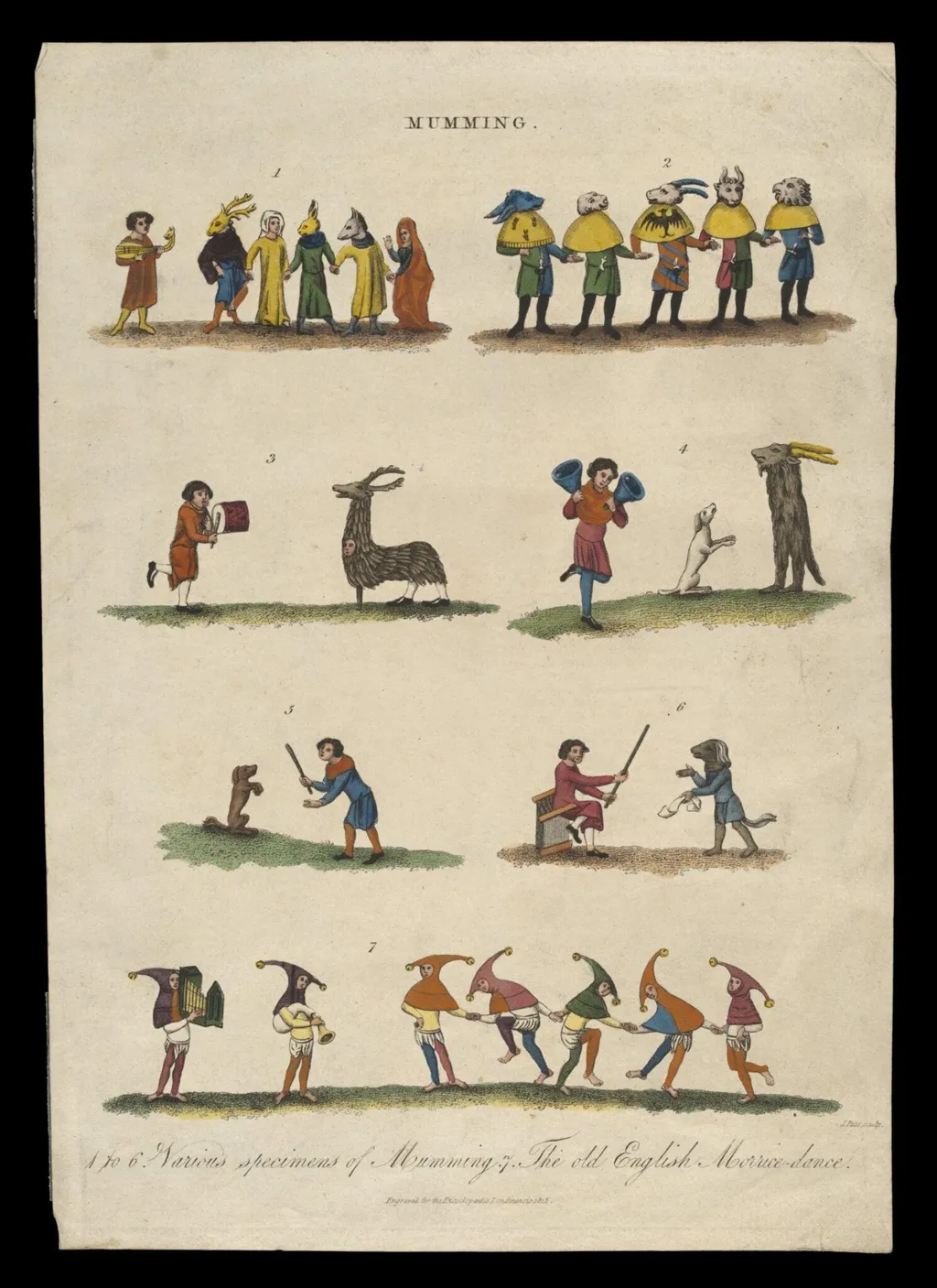
H Beard Print Collection is a print by the Romanticist artist J. Pass. It dates from 1818 and is held in the collection of the Victoria and Albert Museum.
About this work
The print is a copy from Strutt's English Sports and Pastimes, which suggests it's part of a larger collection of illustrations about old English customs.
The print is titled H Beard Print Collection, created by J. Pass in 1818.
It depicts scenes from Mumming or Mummers' Plays and a Morrice-dance. The print is a copy from Strutt's English Sports and Pastimes, which suggests it's part of a larger collection of illustrations about old English customs.
Check out the movement Romanticism to learn more about the style and themes that influenced this work.
Overview
This 1818 print, part of the H Beard Print Collection, reproduces seven scenes originally published in John Strutt's 'English Sports and Pastimes.' Created by J. Pass, it was engraved for the 'Encyclopædia Londinensis' as a visual supplement to descriptions of traditional English folk customs. The composition includes six episodes from Mummers' Plays and one depiction of a Morris dance, presenting these practices as cultural artifacts rather than living traditions.
Subject & Meaning
The print documents seasonal folk performances common in rural England, particularly the Mummers' Plays—ritualized dramas performed around Christmas—and the Morris dance, a rhythmic, bell-adorned folk dance. These scenes reflect an interest in preserving local customs perceived as vanishing. The inclusion of numbered episodes suggests an ethnographic intent, framing the imagery as representative specimens of national heritage rather than theatrical entertainment.
Technique & Style
Executed as a line engraving, the print employs fine, controlled strokes to delineate figures and costumes with clarity rather than emotional intensity. The composition is orderly and static, with figures arranged in horizontal bands to accommodate the six scenes plus the Morris dance. The style aligns with late 18th-century antiquarian illustration: precise, unembellished, and focused on documentary accuracy over artistic flourish.
History & Provenance
The print originates from J. Pass’s engravings for the 'Encyclopædia Londinensis,' a multi-volume reference work published between 1795 and 1820. It reproduces plates from John Strutt’s 1801 book 'Sports and Pastimes,' which cataloged traditional English amusements. The H Beard Collection, assembled in the 19th century, preserved such prints as records of cultural history, reflecting contemporary efforts to archive vanishing rural customs.
Context
Produced during the Romantic era, the print aligns with a broader cultural movement that idealized rural life and sought to preserve folk traditions amid industrialization. While Romantic artists often infused such subjects with sentiment, this engraving remains detached and systematic, consistent with encyclopedic publishing practices. Its purpose was not to evoke nostalgia but to classify and preserve knowledge for an educated readership.
Legacy
As a reproduction within a reference work, this print contributed to the standardization of visual representations of English folk customs in the 19th century. It influenced later antiquarian publications and museum displays that treated Mummers’ Plays and Morris dancing as historical relics. Today, it serves as a primary source for scholars studying the documentation and perception of traditional performance in early modern Britain.
Artist & collection

 H Beard Print Collection
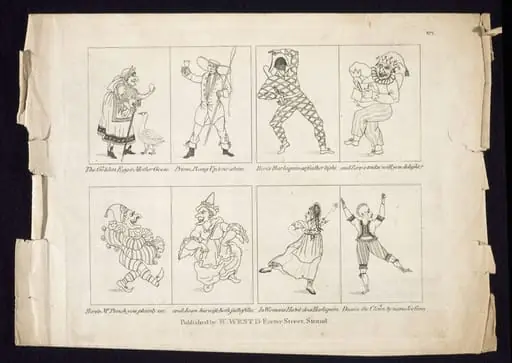 <i>Harlequin Mother Goose</i>
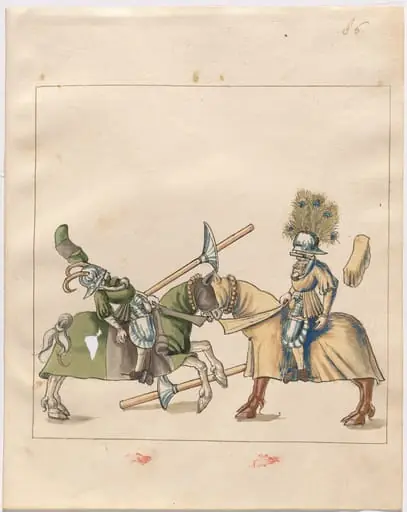 Mock Joust of War with Flying Shields and Without Bevors
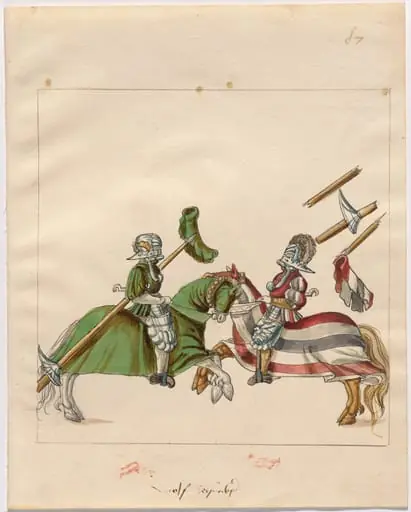 Mock Joust of War with Flying Shields and Without Bevors
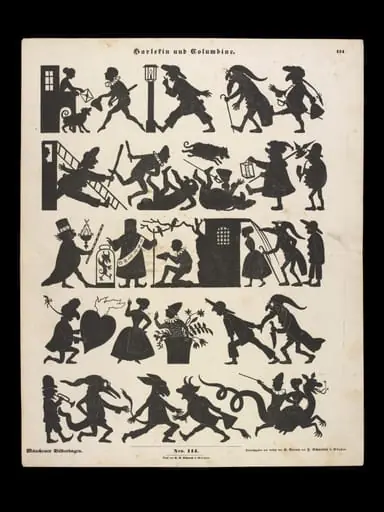 H Beard Print Collection
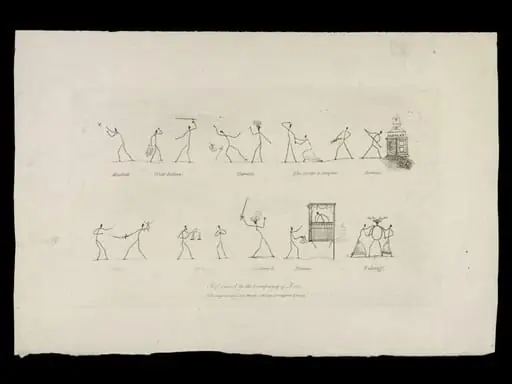 H Beard Print Collection
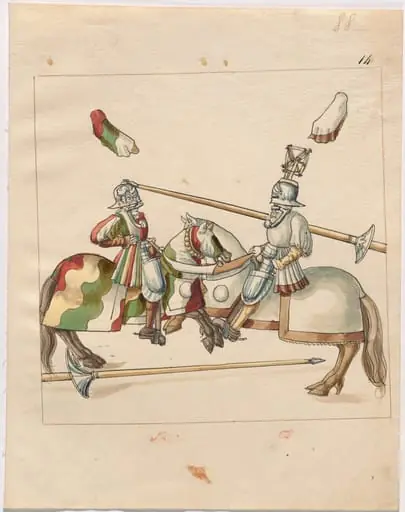 Mock Joust of War with Flying Shields and Without Bevors
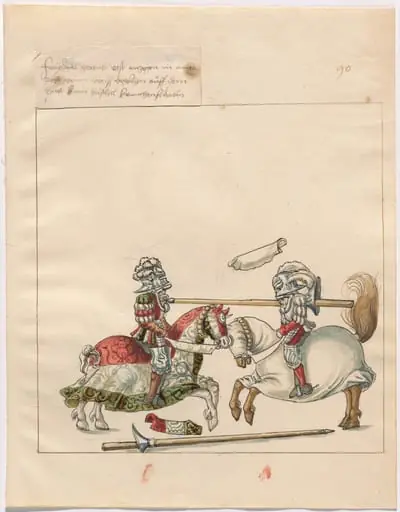 Mock Joust of War with Flying Shields and Without Bevors
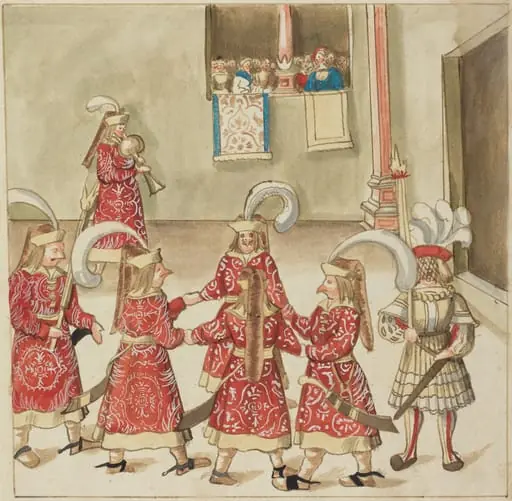 Masquerade
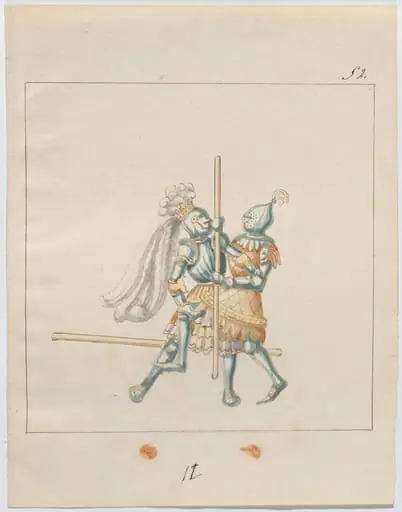 Foot Combat with Poles