Artwork
Persepolis. Ruins and Sculptures at Persepolis
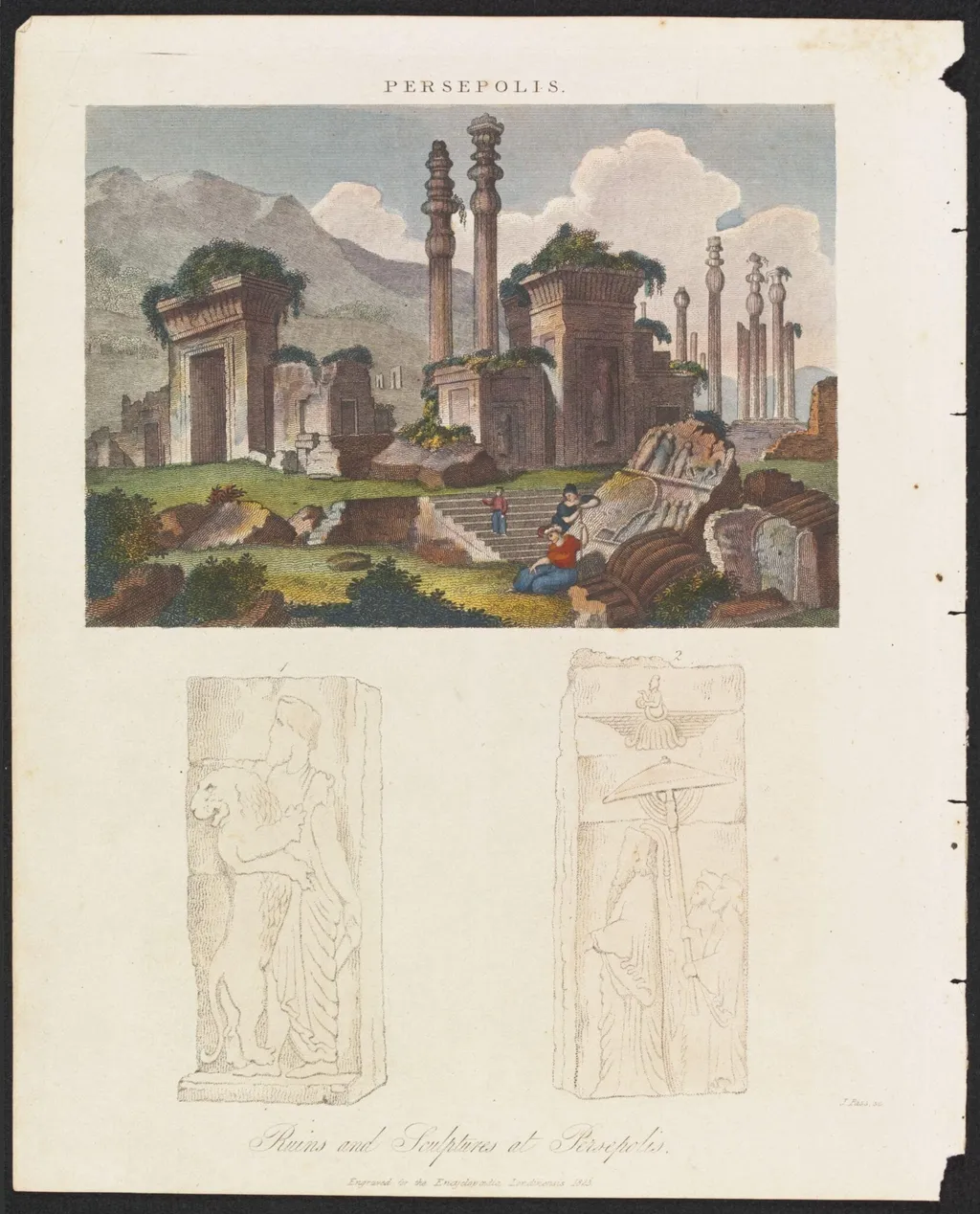
Persepolis. Ruins and Sculptures at Persepolis is an ink print by the Romanticist artist J. Pass. It dates from 1823 and is held in the collection of the Victoria and Albert Museum. This hand‑coloured engraving, produced in 1823, presents a view of the ancient Persian site of Persepolis.
About this work
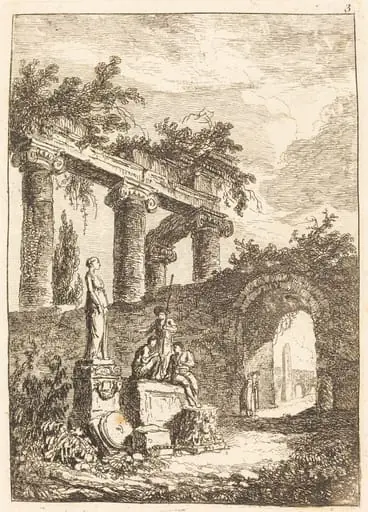
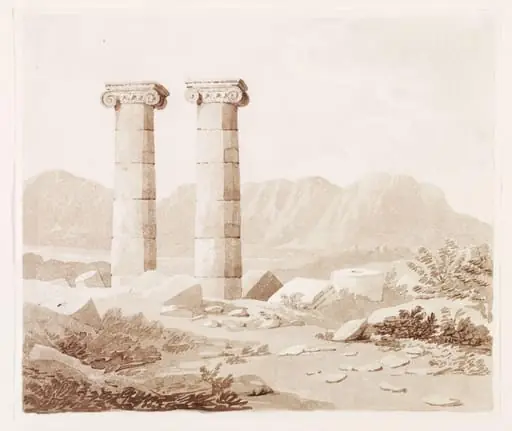
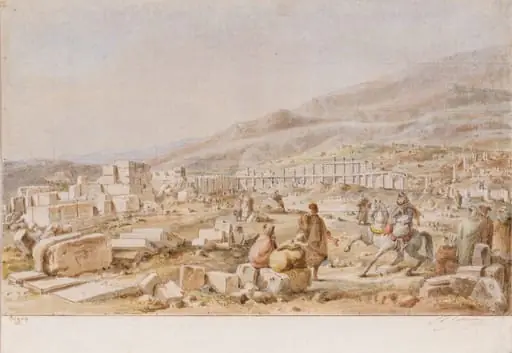
This engraving shows the ruins of Persepolis, an ancient site with broken columns, crumbling walls, and scattered stone blocks.
This engraving shows the ruins of Persepolis, an ancient site with broken columns, crumbling walls, and scattered stone blocks. A few people wander among the ruins—some sitting, others walking—while a lion lies on a rock. The sky is bright with soft clouds, and the ground has patches of green.
The artist included two smaller sketches of carved stone slabs at the bottom, showing detailed figures and symbols. This was made in 1823 to document the ruins, which were already old by then.
Next, look up engraving to see how artists like this one used lines to create depth.
Overview
This hand‑coloured engraving, produced in 1823, presents a view of the ancient Persian site of Persepolis. Executed as an etching combined with stipple techniques, the image records the dilapidated columns, fragmented walls and scattered stone blocks that characterize the ruin. The composition includes several figures moving among the debris, a lion reclining on a rock, and a bright sky with soft clouds, all rendered in muted colour.
Subject & Meaning
The print serves as a visual documentation of Persepolis’s archaeological remains, highlighting both the monumental architecture and the human presence that explores it. By placing travelers and a lion within the scene, the artist juxtaposes the enduring grandeur of the ancient empire with contemporary curiosity and the passage of time.
Technique & Style
The work merges traditional etching lines with stipple engraving, allowing delicate tonal variations that suggest depth and texture. Hand‑colouring by J. Pass adds subtle hues to differentiate stone, foliage and sky, while numbered sections guide the viewer through the complex layout of the site.
History & Provenance
Created for the *Encyclopaedia Londinensis*, the engraving bears the artist’s monogram and includes two inset sketches of carved stone slabs, depicting intricate figures and symbols. These ancillary drawings provide close‑up study of Persepolis’s relief work, reflecting early 19th‑century scholarly interest in Near Eastern antiquities.
Context
In the early 1800s, European scholars and travelers increasingly turned to Persia’s ancient monuments for study, and prints like this circulated to disseminate knowledge of sites that were otherwise inaccessible. The engraving thus functions as both an artistic record and an educational tool within the broader movement of antiquarian research.
Artist & collection