Artwork
Masquerade
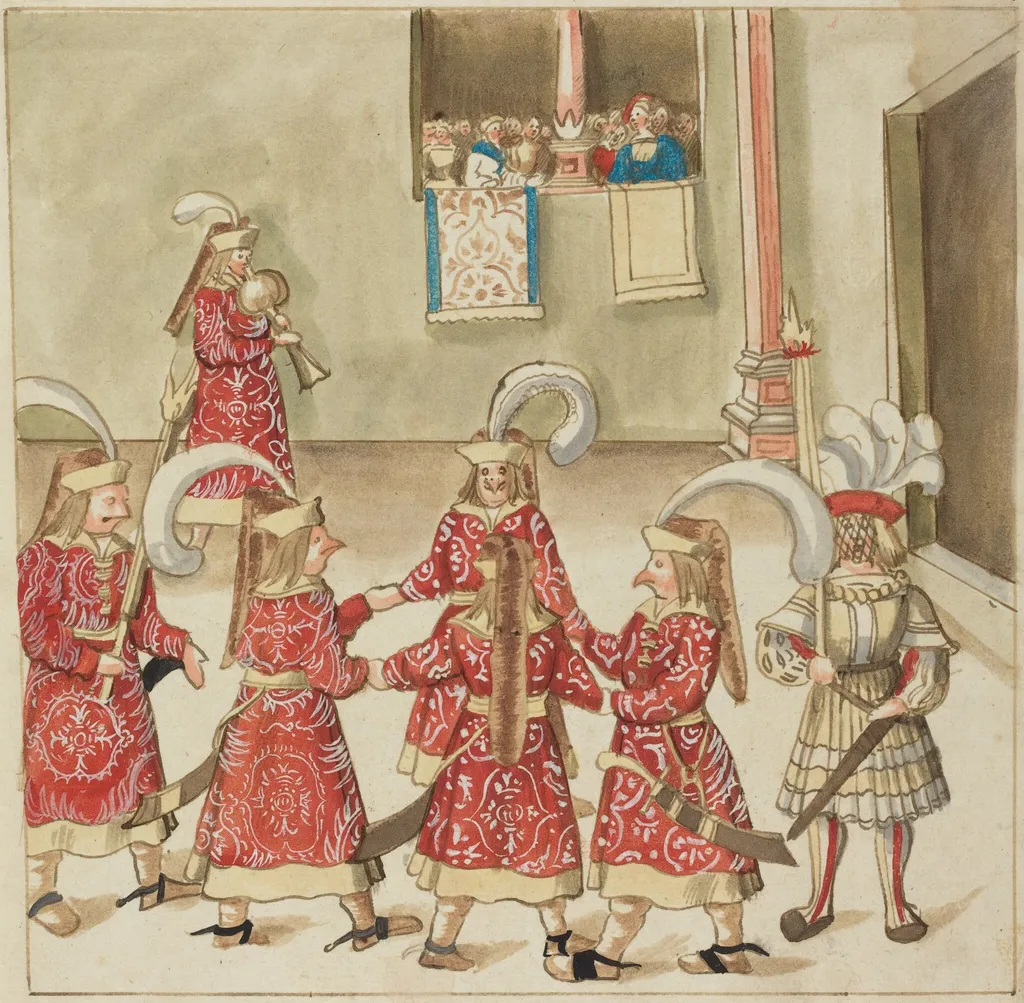
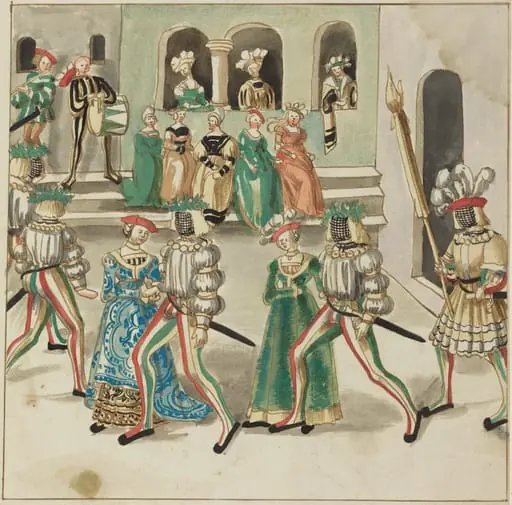
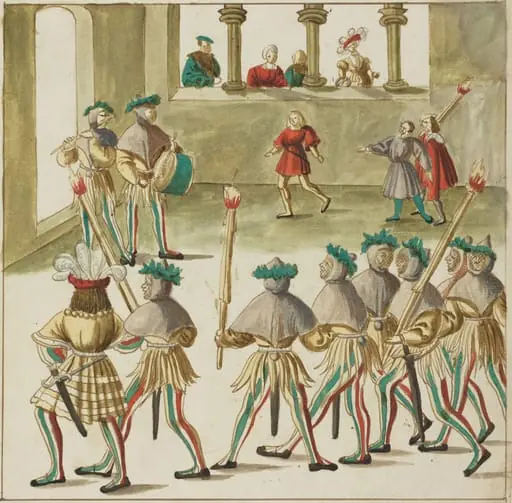
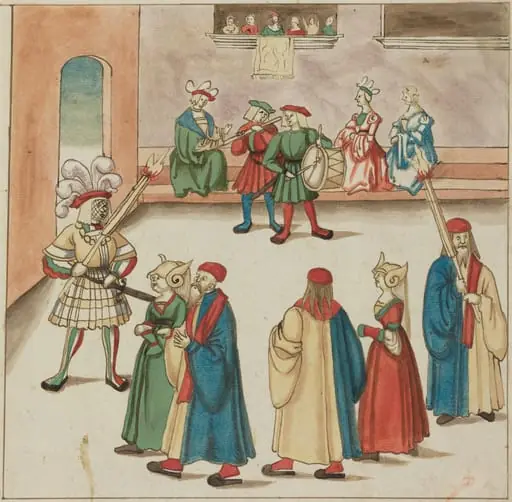
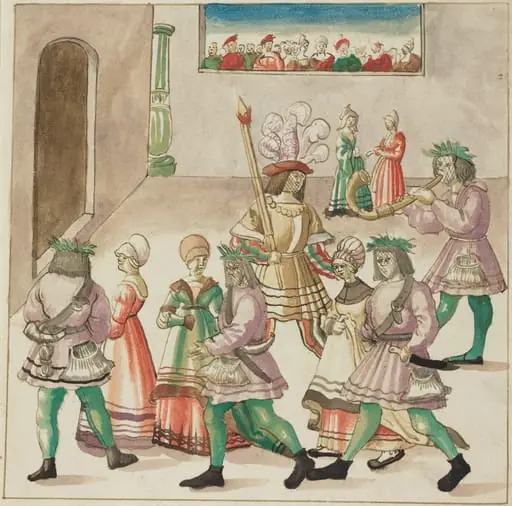
Masquerade is an ink drawing by the Renaissance artist German 16th Century. It dates from 1514 and is held in the collection of the National Gallery of Art.
About this work
Overview
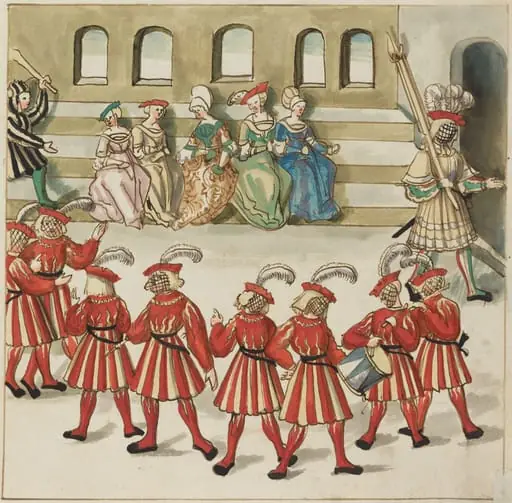
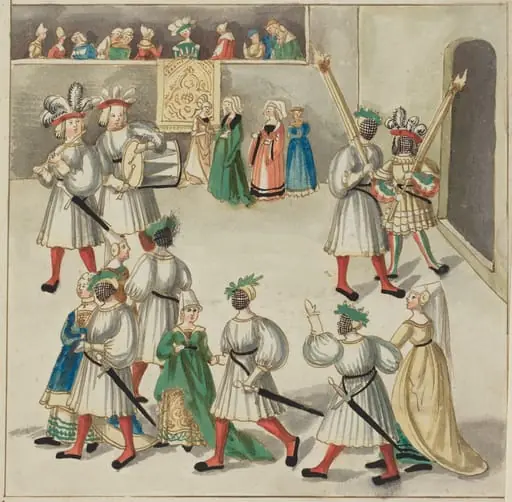
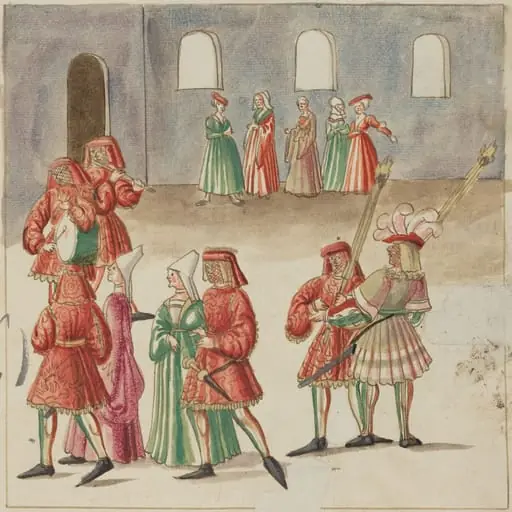
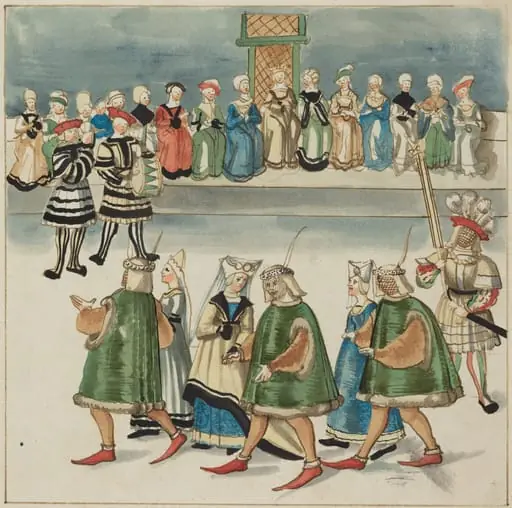
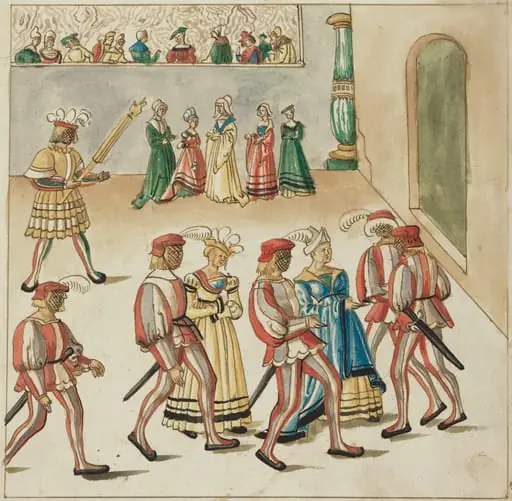
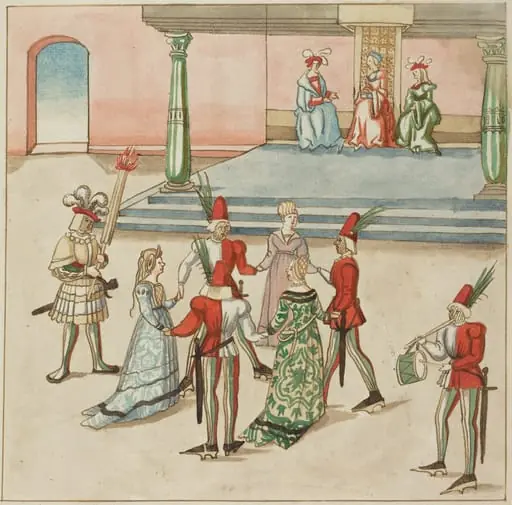
The work, titled Masquerade, is a drawing executed with pen and brown ink complemented by watercolor on laid paper. It depicts a lively procession of figures dressed in vivid red garments and tall headpieces, linked hand‑in‑hand as they move in a circular formation. A balcony in the background holds onlookers, adding depth to the scene.
Subject & Meaning
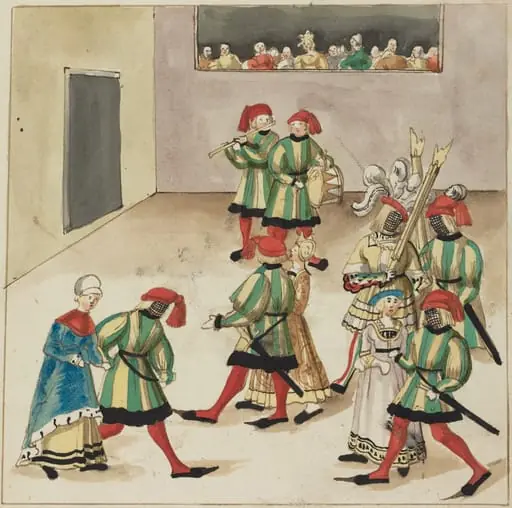
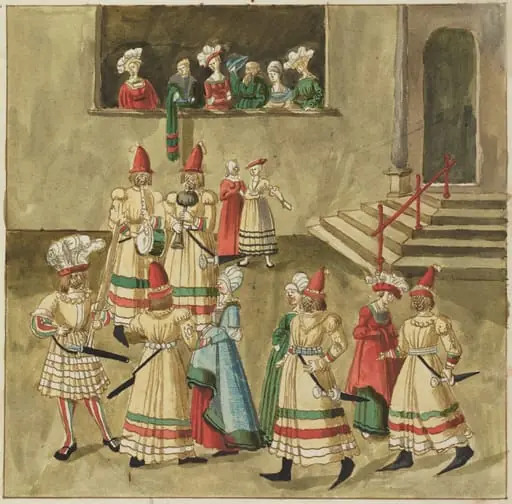
The figures appear to be participants in a festive masquerade, their exaggerated masks and stylised faces suggesting a theatrical or carnival atmosphere. The circular arrangement and communal gesture convey a sense of collective celebration or ritual, while the spectators on the balcony may hint at the public nature of such performances within a social setting.
Technique & Style
The artist combines fine pen work with brown ink to outline forms, then applies flat washes of watercolor in a limited palette of red, blue and beige. The use of laid paper provides a textured surface that softens the line work, creating a sketch‑like quality. The overall visual language is simple and graphic, emphasizing pattern over realistic detail.
Context
Masquerade belongs to a tradition of drawing that explores costume and performance, a theme common in Renaissance and post‑Renaissance art. While the medium of ink and watercolor on paper aligns with preparatory studies, the finished appearance suggests the piece was intended as a standalone illustration of a festive scene rather than a mere sketch.
Artist & collection

Artist
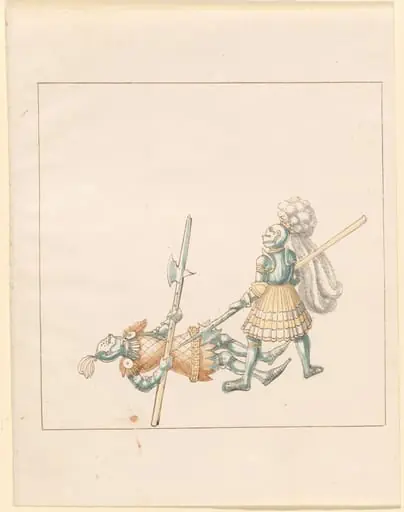
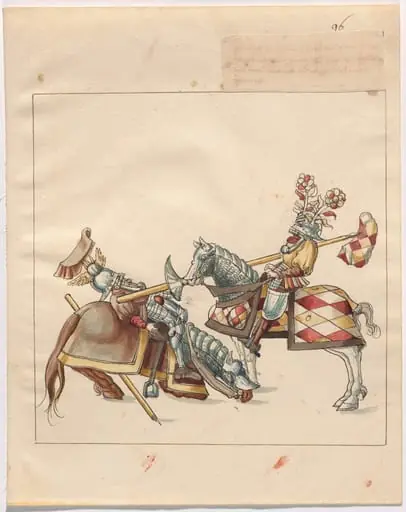
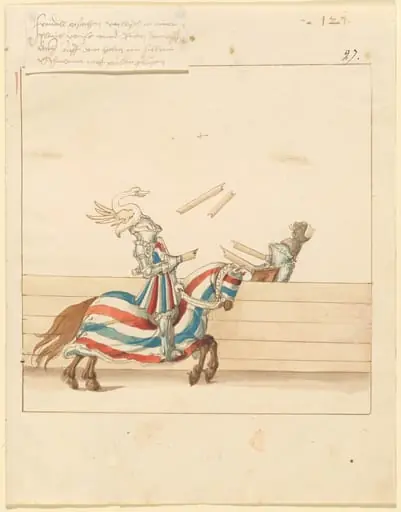
A German artist from the late 1500s drew lively scenes of knights clashing in parades and mock battles.

![Abraham Entertaining the Angels [verso], by German 16th Century](https://artifactworldgallery.com/img/german-16th-century--abraham-entertaining-the-angels-verso--69d1b25f4eba0a53-w320.webp)