Artwork
Exempel und Lehr Jetziger Welt Lauf
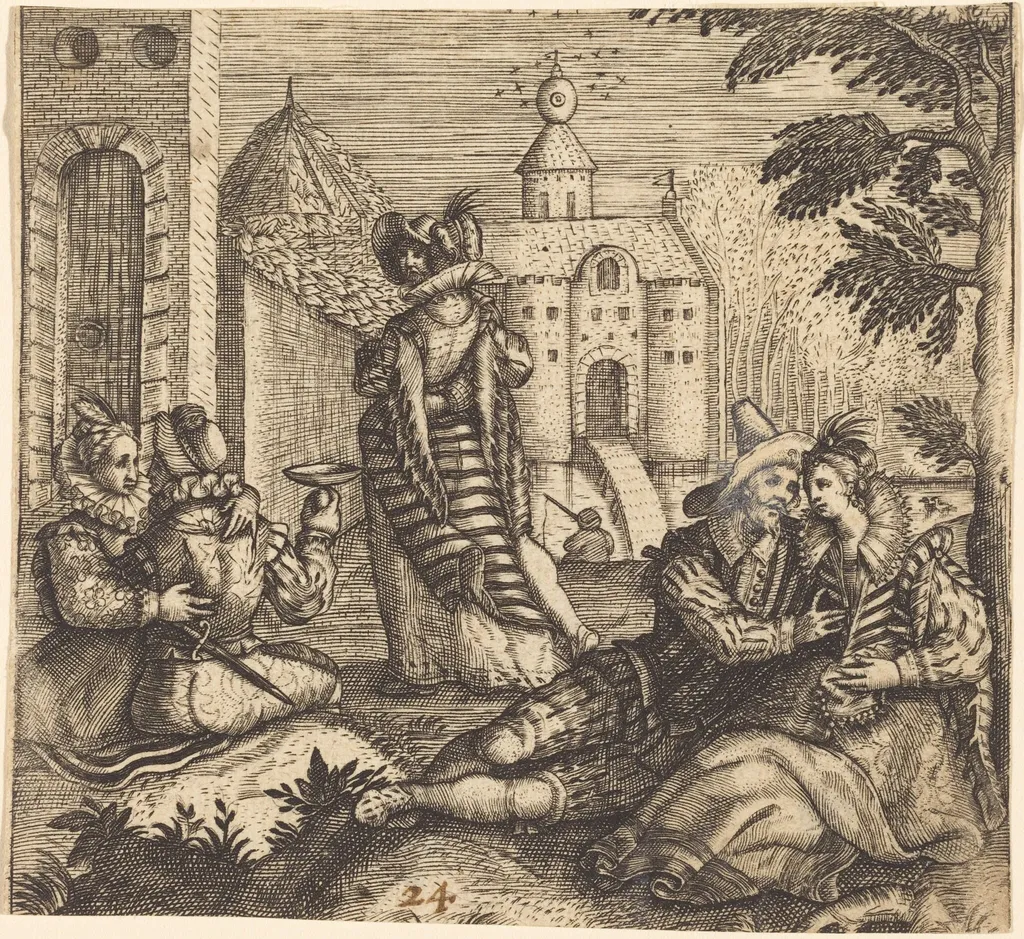
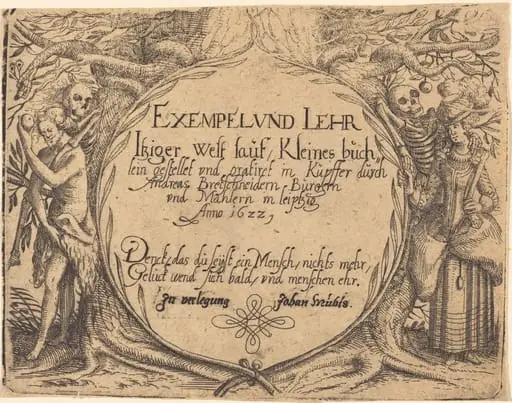
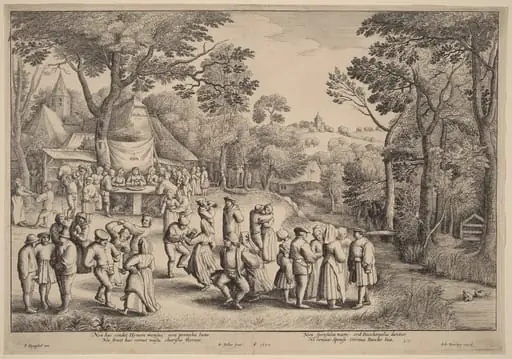
Exempel und Lehr Jetziger Welt Lauf is an ink print by the Baroque artist Andreas Bretschneider III. It dates from 1622 and is held in the collection of the National Gallery of Art.
About this work
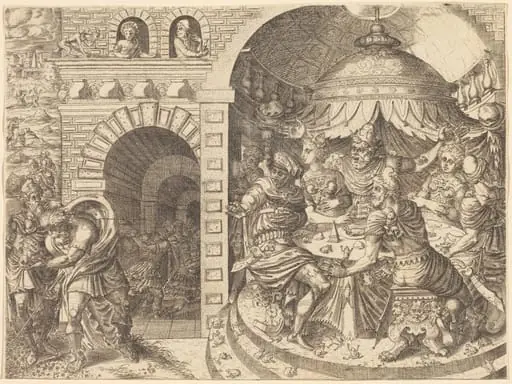
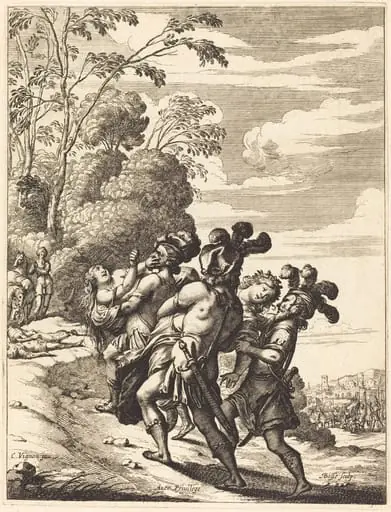
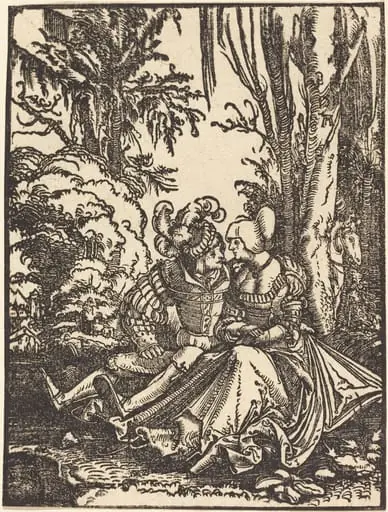
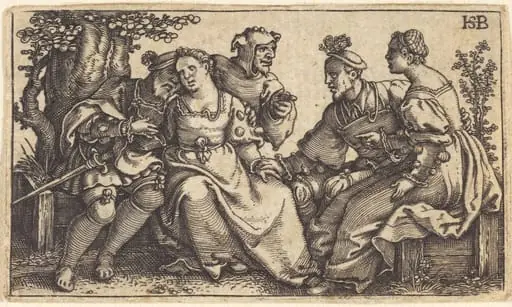
This etching shows a chaotic crowd in a forest, with people climbing a steep hill toward a walled city.
This etching shows a chaotic crowd in a forest, with people climbing a steep hill toward a walled city. The trees are tangled, and the figures look exhausted, some crawling while others struggle upward. The city has tall towers and arched windows, but the path to it is rough and crowded.
The artist packed a lot into this small scene—every face and gesture feels urgent, like a warning. This was made in 1622 as a moral lesson, using symbols to show how hard life can be.
Next, check out the technique: etching to see how artists like this carved images into metal.
Overview
Andreas Bretschneider III’s 1622 etching, titled Exempel und Lehr Jetziger Welt Lauf, presents a densely populated scene of figures moving through a tangled forest toward a fortified city. The composition is confined to a modestly sized print, yet it conveys a sense of urgency and struggle as the crowd ascends a steep, uneven path.
Subject & Meaning
The work depicts a weary multitude navigating a chaotic woodland, some crawling, others climbing, all directed toward a distant walled settlement with lofty towers and arched windows. The crowded ascent and exhausted gestures serve as a visual allegory for the hardships of worldly life, offering a moral lesson about perseverance and the perils of ambition.
Technique & Style
Executed in etching, Bretschneider incised the image onto a metal plate, allowing fine lines to render the intricate foliage and crowded figures. The contrast between delicate tree bark and the densely packed human forms creates a textured surface that emphasizes both the natural obstacles and the human tension within the scene.
History & Provenance
Created in 1622, the print reflects early‑17th‑century German printmaking practices. While specific ownership records are scarce, the work is attributed to Bretschneider III, a lesser‑known artist whose prints circulated among moral‑instructional texts of the period.
Context
The early 1600s saw a surge in didactic imagery, often used to illustrate sermons or pamphlets warning against moral decay. This etching aligns with that tradition, employing symbolic landscape and crowd motifs to communicate a cautionary narrative about the challenges of worldly pursuits.
Artist & collection