Artwork
Belshazzar's Feast
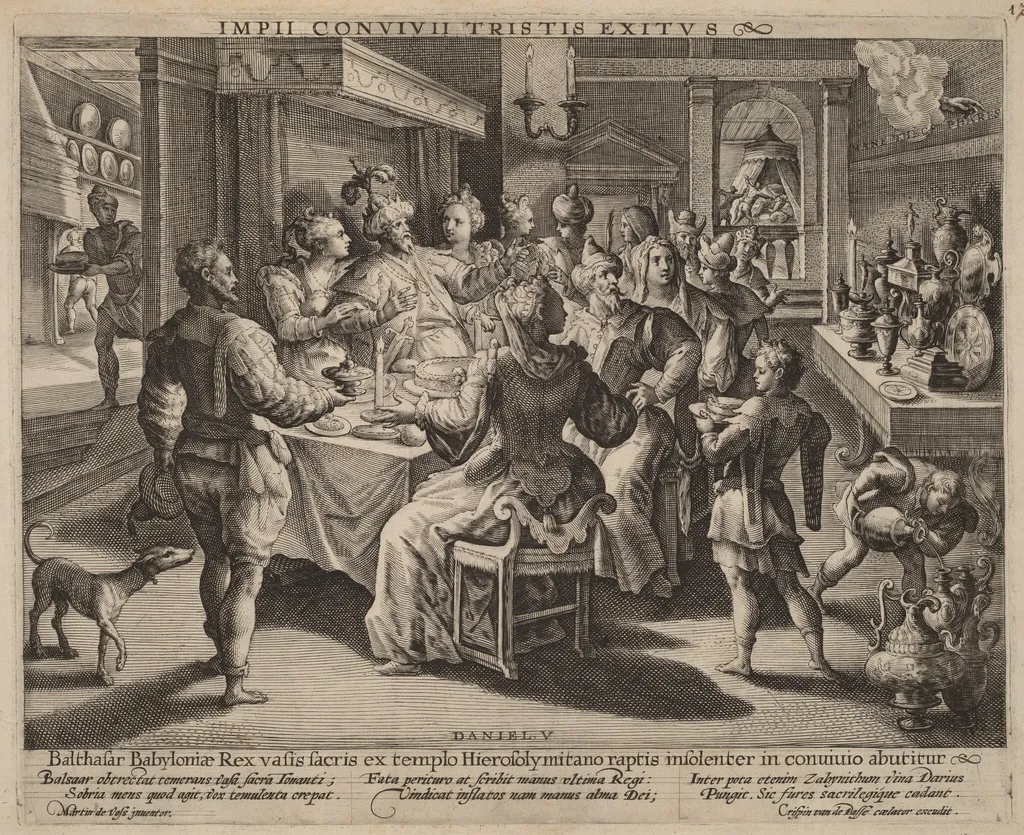
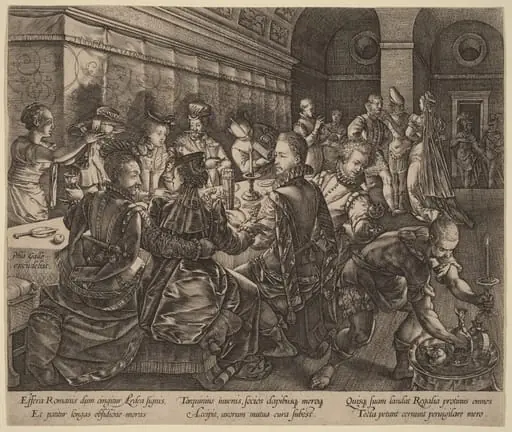
Belshazzar's Feast is an ink print by the Renaissance artist Crispijn van de Passe I. It dates from 1601 and is held in the collection of the National Gallery of Art.
About this work
Overview
The work’s title, rendered in Latin, alludes to a tragic conclusion, framing the scene as a cautionary tableau rather than a simple celebration.
Crispijn van de Passe I produced the print Belshazzar’s Feast in 1601, employing the engraving technique on laid paper. The composition captures a densely populated banquet hall where a monarch presides over an extravagant spread, surrounded by revelers whose gestures suggest excess and disorder. The work’s title, rendered in Latin, alludes to a tragic conclusion, framing the scene as a cautionary tableau rather than a simple celebration.
Subject & Meaning
The image presents a king seated at a long table laden with plates, goblets, and an oversized golden cup, while attendants and guests indulge in drinking, laughing, and brandishing unusual objects, including a severed hand. A servant pours wine and a dog sniffs the floor, adding to the sense of chaos. The narrative functions as a moralizing episode, warning of the perils that accompany hubristic feasting.
Technique & Style
Executed as an engraving, the print demonstrates van de Passe’s precise incising of lines into a copper plate, later transferred to laid paper. The artist employs cross‑hatching and varied line density to model light, texture, and the crowded interior. Architectural elements such as book‑filled shelves and carved reliefs are rendered with fine detail, while the figures are animated through dynamic poses and expressive gestures.
History & Provenance
Created in the early seventeenth century, the print was part of van de Passe’s prolific output of religious and historical subjects for the Northern European market. Original impressions circulated among collectors of prints and were likely bound into portfolios. Surviving copies are held in several major libraries and museums, reflecting the work’s continued relevance to studies of early modern print culture.
Context
The composition draws on the biblical story of King Belshazzar, whose lavish banquet precedes divine judgment. In the Protestant‑leaning artistic climate of the Dutch Republic, such moralizing subjects served didactic purposes, reinforcing warnings against pride and impiety. Van de Passe’s choice of an elaborate interior and chaotic crowd underscores the tension between worldly opulence and spiritual peril.
Artist & collection

Artist
Crispijn van de Passe I (1564–1637) was an artist, born in Arnemuiden.