Artwork
C: One Hundred Years
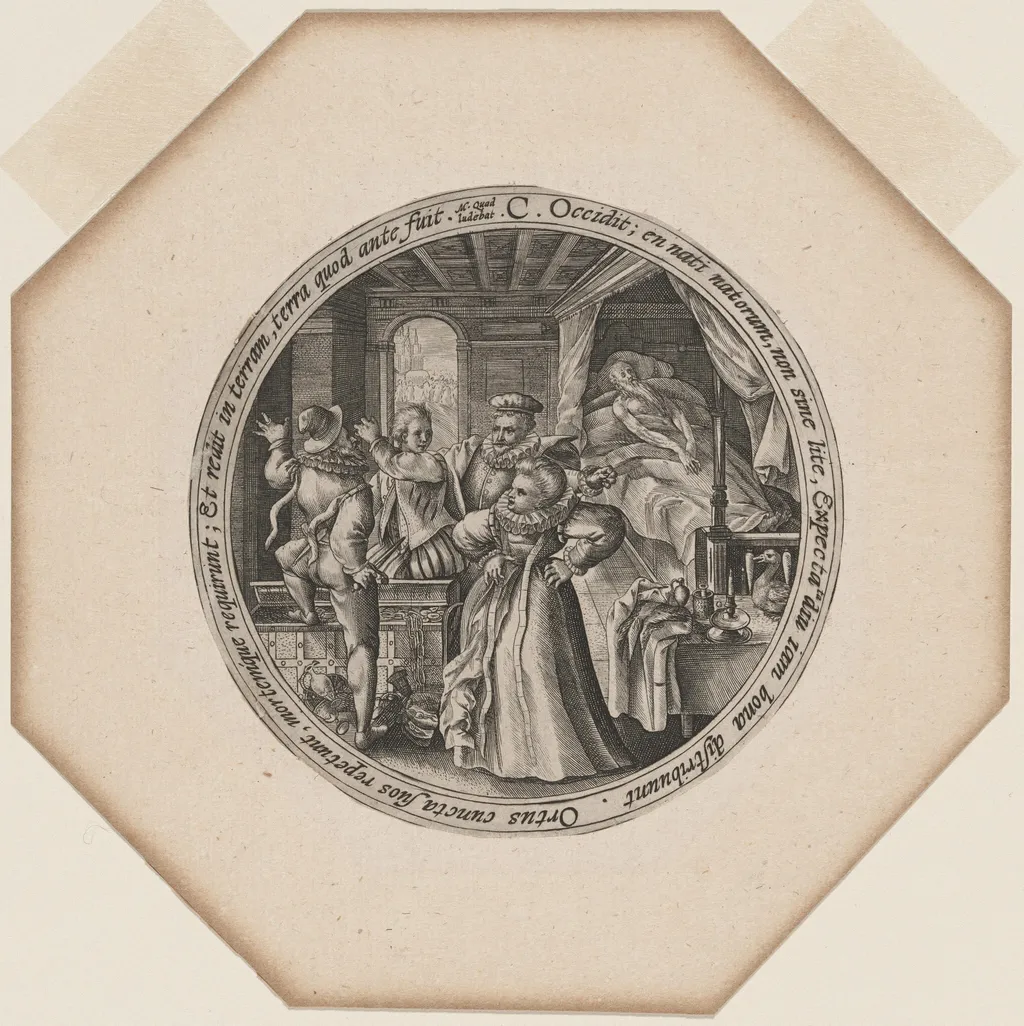
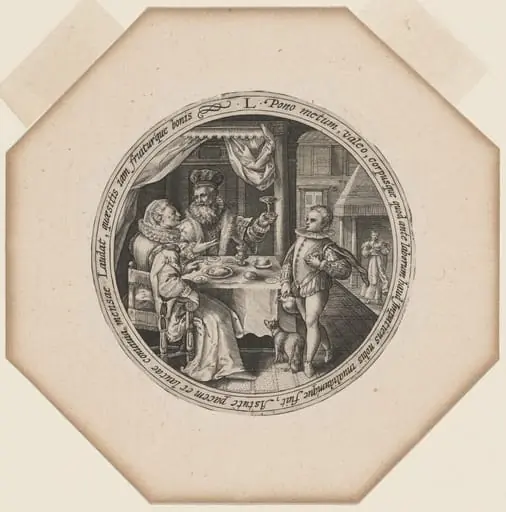
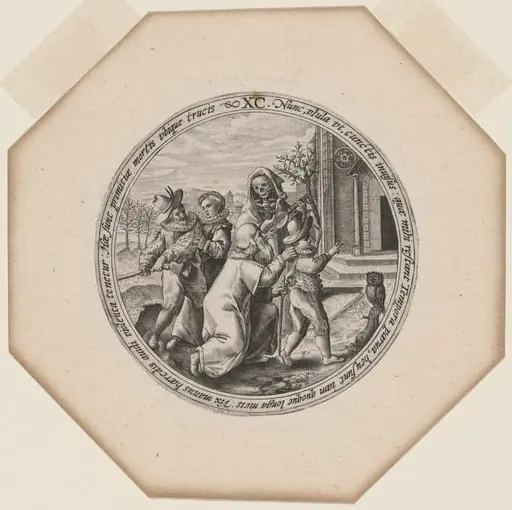
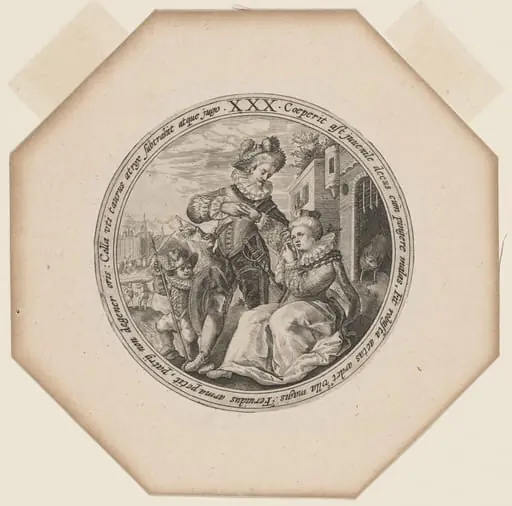
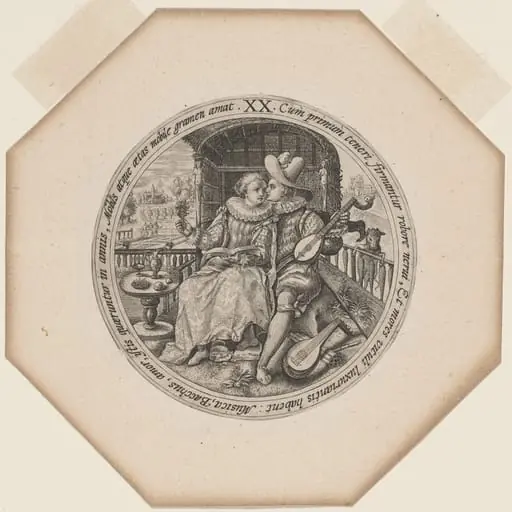
C: One Hundred Years is an ink print by the Renaissance artist Crispijn van de Passe I. It dates from 1599 and is held in the collection of the National Gallery of Art.
About this work
Overview
Its composition and inscriptions suggest a narrative tied to the passage of time and generational continuity.
C: One Hundred Years is a black-and-white engraving produced around 1599 by Crispijn van de Passe I. Executed on laid paper, it is part of the collection at the National Gallery of Art in Washington, D.C. The work presents a single interior scene populated by five figures, rendered with meticulous line work characteristic of late 16th-century Northern European printmaking. Its composition and inscriptions suggest a narrative tied to the passage of time and generational continuity.
Subject & Meaning
The scene depicts five individuals in period attire gathered in a modest room, their gestures implying a moment of transmission—perhaps the reading of a document or the passing of knowledge. A central figure holds a scroll, while another gestures toward a book; a woman reaches out, and a child clings to his leg. Surrounding Latin text alludes to themes of fate and longevity, framing the image as a meditation on inheritance and the weight of years across generations.
Technique & Style
Van de Passe employed fine, controlled engraving lines to model form and depth, creating subtle gradations of shadow without tone. The crowded composition is rendered with clarity, each figure and object defined by precise incisions. The dim interior, suggested by sparse lighting and minimal background detail, enhances the focus on the figures. The technique reflects the precision expected in reproductive prints of the period, balancing detail with narrative legibility.
History & Provenance
The engraving was produced in the Netherlands during a period of flourishing print culture. Crispijn van de Passe I, a member of a prominent family of engravers, was known for his portraiture and allegorical prints. The work entered the National Gallery of Art’s collection through established acquisition channels, likely as part of a broader effort to document Northern Renaissance graphic arts. Its survival in good condition reflects careful preservation over centuries.
Context
Created near the turn of the 17th century, the print emerged amid growing interest in allegorical and moralizing imagery in the Low Countries. Engravings like this served both educational and domestic purposes, often circulated as visual texts for reflection on life’s transience. The inclusion of Latin inscriptions indicates an audience familiar with classical and humanist traditions, aligning the work with broader intellectual currents of the time.
Legacy
C: One Hundred Years exemplifies the role of printmaking in disseminating complex ideas to a literate public. While not widely reproduced in later centuries, it remains a representative example of van de Passe’s skill and the era’s preoccupation with time and lineage. Its presence in a major American collection underscores its value as a historical document of visual culture rather than a celebrated artistic landmark.
Artist & collection

Artist
Crispijn van de Passe I (1564–1637) was an artist, born in Arnemuiden.