Artwork
XC: Ninety Years
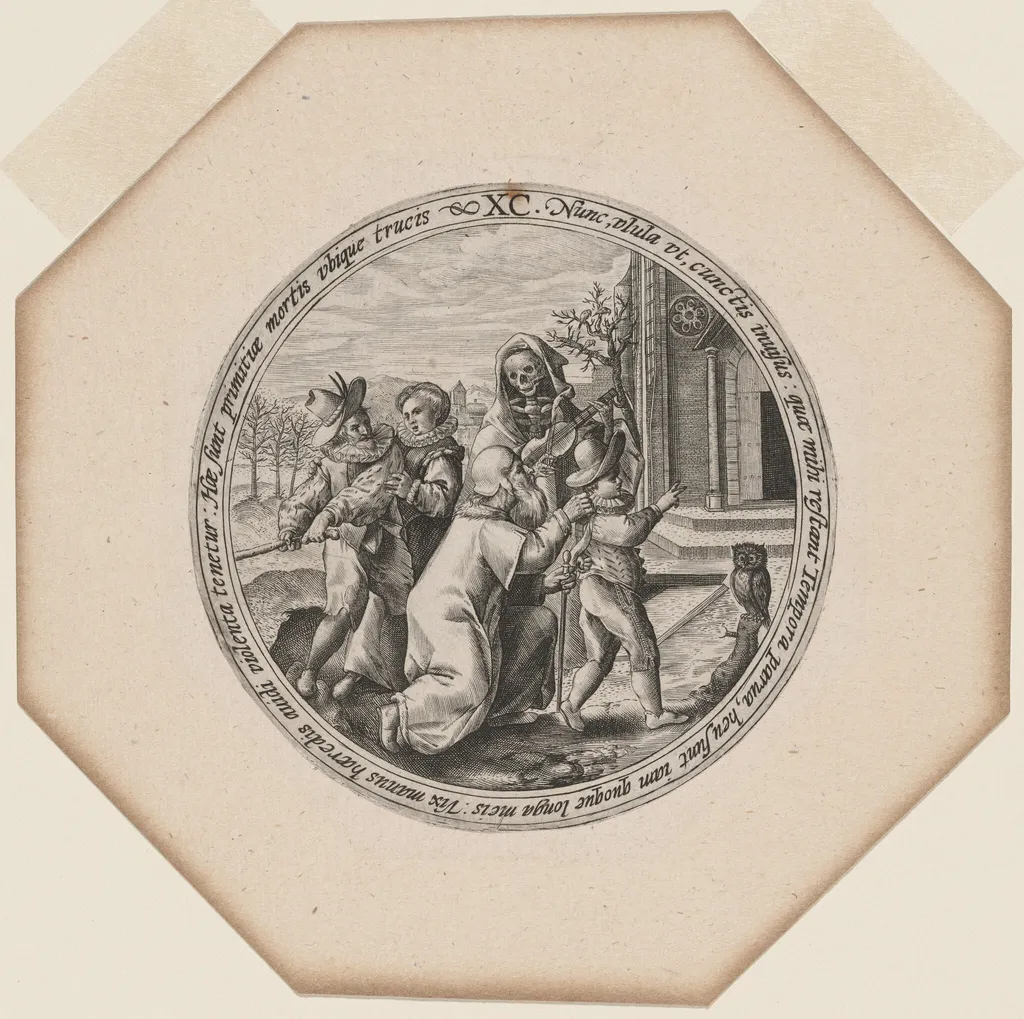
XC: Ninety Years is an ink print by the Renaissance artist Crispijn van de Passe I. It dates from 1599 and is held in the collection of the National Gallery of Art.
About this work
Overview
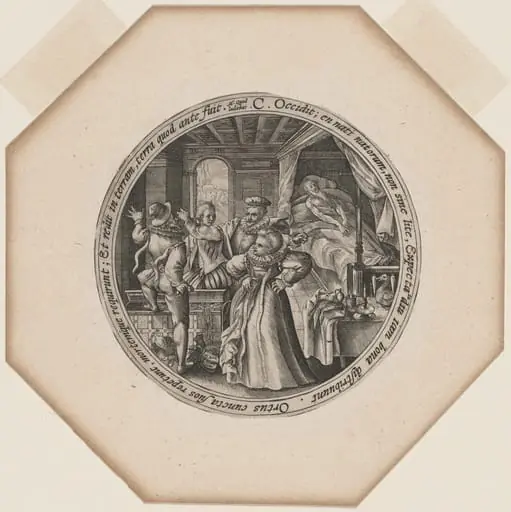
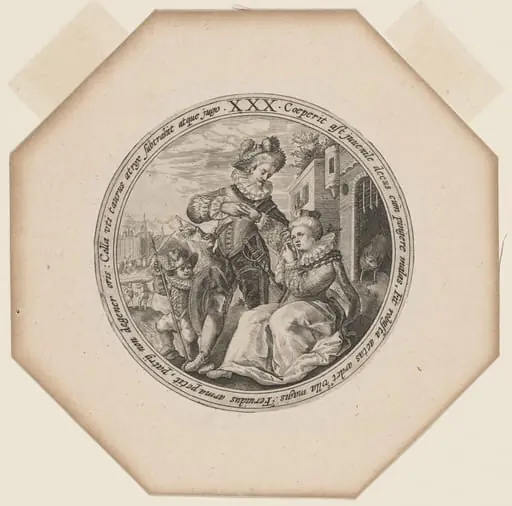
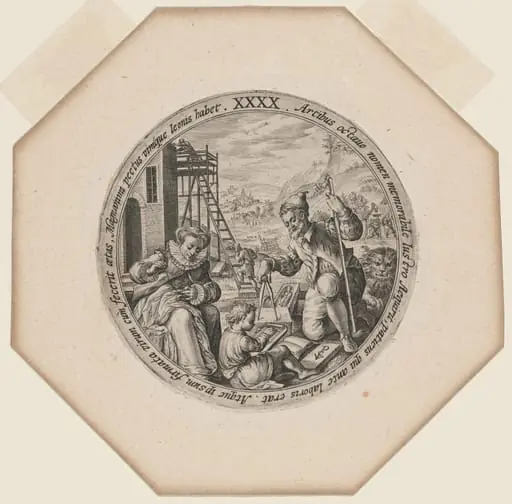
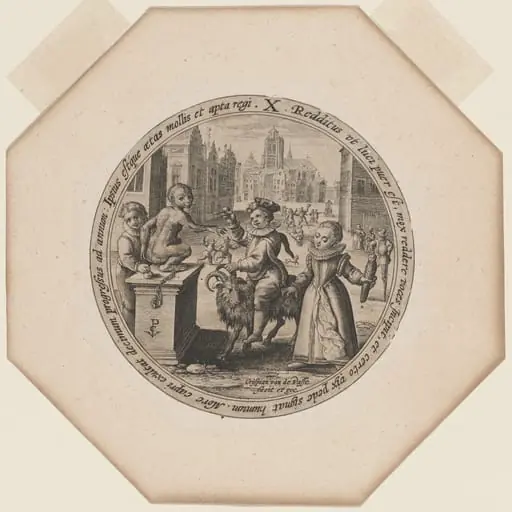
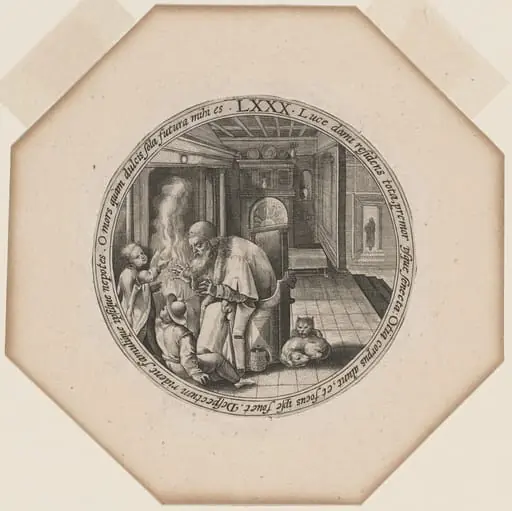
Crispijn van de Passe I’s print entitled *XC: Ninety Years* dates from around 1599. Executed as an engraving on laid paper, the work measures roughly a modest size and is part of the collection of the National Gallery of Art in Washington, D.C. The image is rendered in stark black‑and‑white, employing strong line work to create a compact interior scene.
Subject & Meaning
A cloaked figure swathed in a sheet bears a skull upon the head and clutches a branch, symbols traditionally linked to mortality and the passage of time.
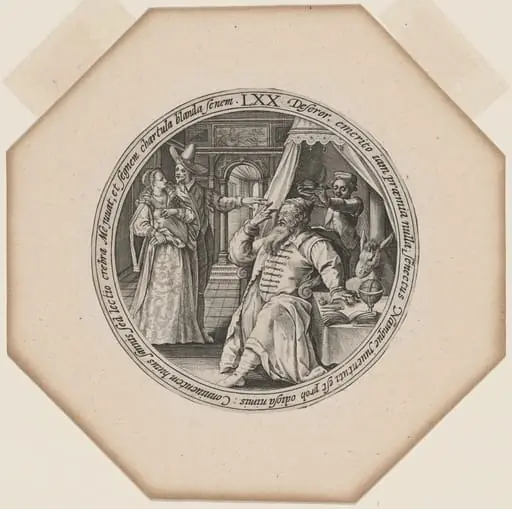
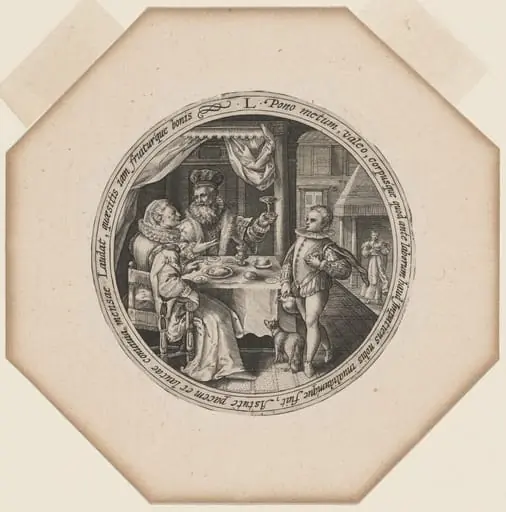
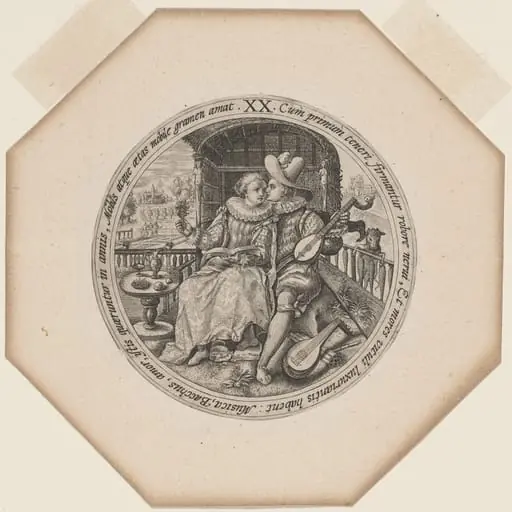
The composition presents four figures within a confined room. A cloaked figure swathed in a sheet bears a skull upon the head and clutches a branch, symbols traditionally linked to mortality and the passage of time. Adjacent, a hooded adult sits beside a child, while a richly dressed man gestures toward them. An owl perched on the windowsill adds a further emblem of wisdom or nocturnal vigilance. Latin inscriptions border the image, reinforcing a moral or philosophical tone.
Technique & Style
Van de Passe employed the intaglio engraving method, incising fine lines into a copper plate before transferring the image onto laid paper. The print is characterized by dense cross‑hatching and bold contouring that generate deep shadows and a dramatic chiaroscuro effect. The careful rendering of textures—from the softness of the sheet to the intricate detailing of the clothing—demonstrates the artist’s mastery of line to convey volume and atmosphere.
History & Provenance
Created at the close of the sixteenth century, the print reflects the Northern European tradition of moralizing engravings popular in the period. It entered the National Gallery of Art’s holdings through acquisition in the twentieth century, where it remains catalogued as a representative example of van de Passe’s early output and of the era’s didactic visual culture.
Artist & collection

Artist
Crispijn van de Passe I (1564–1637) was an artist, born in Arnemuiden.